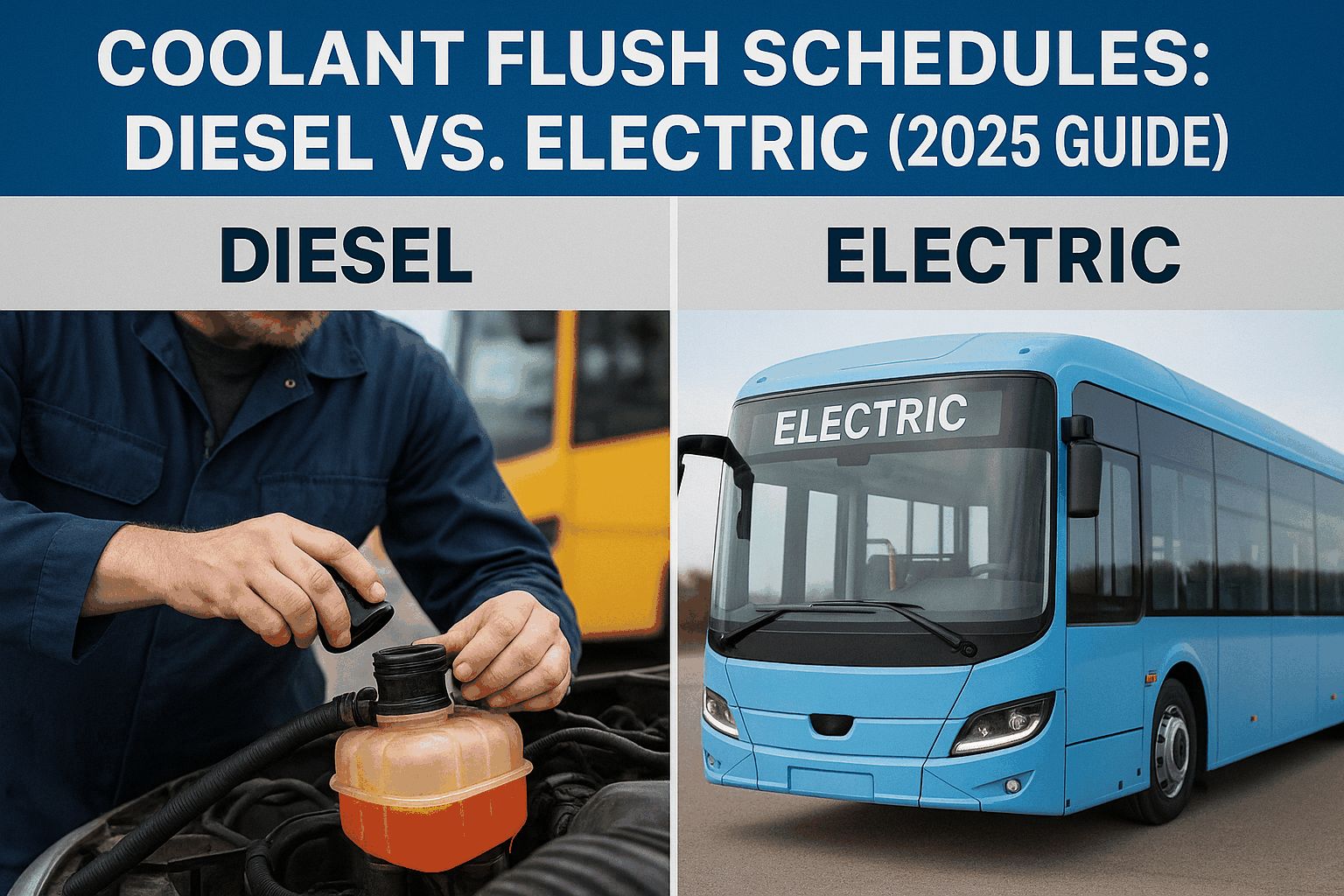
Managing coolant maintenance across a mixed fleet of diesel and electric buses isn't as simple as following one schedule anymore. Electric vehicles have completely different cooling requirements than their diesel counterparts, and the 2025 manufacturer recommendations reflect significant changes from previous years. Get the intervals wrong, and you're looking at premature component failures that cost thousands to repair.
This guide breaks down exactly what you need to know about coolant flush schedules for both powertrain types, including the specific intervals, coolant specifications, cost comparisons, and how to track everything efficiently in your maintenance management system.
Quick Navigation
Key Takeaway
Diesel buses typically require coolant flushes every 2-3 years or 100,000-150,000 miles. Electric buses need thermal management fluid service every 4-5 years or 150,000-200,000 miles, but use specialized coolants that cost 3-4x more per gallon. Tracking both in a unified CMMS prevents costly mistakes.
Diesel Bus Coolant Flush Schedules (2025 Standards)
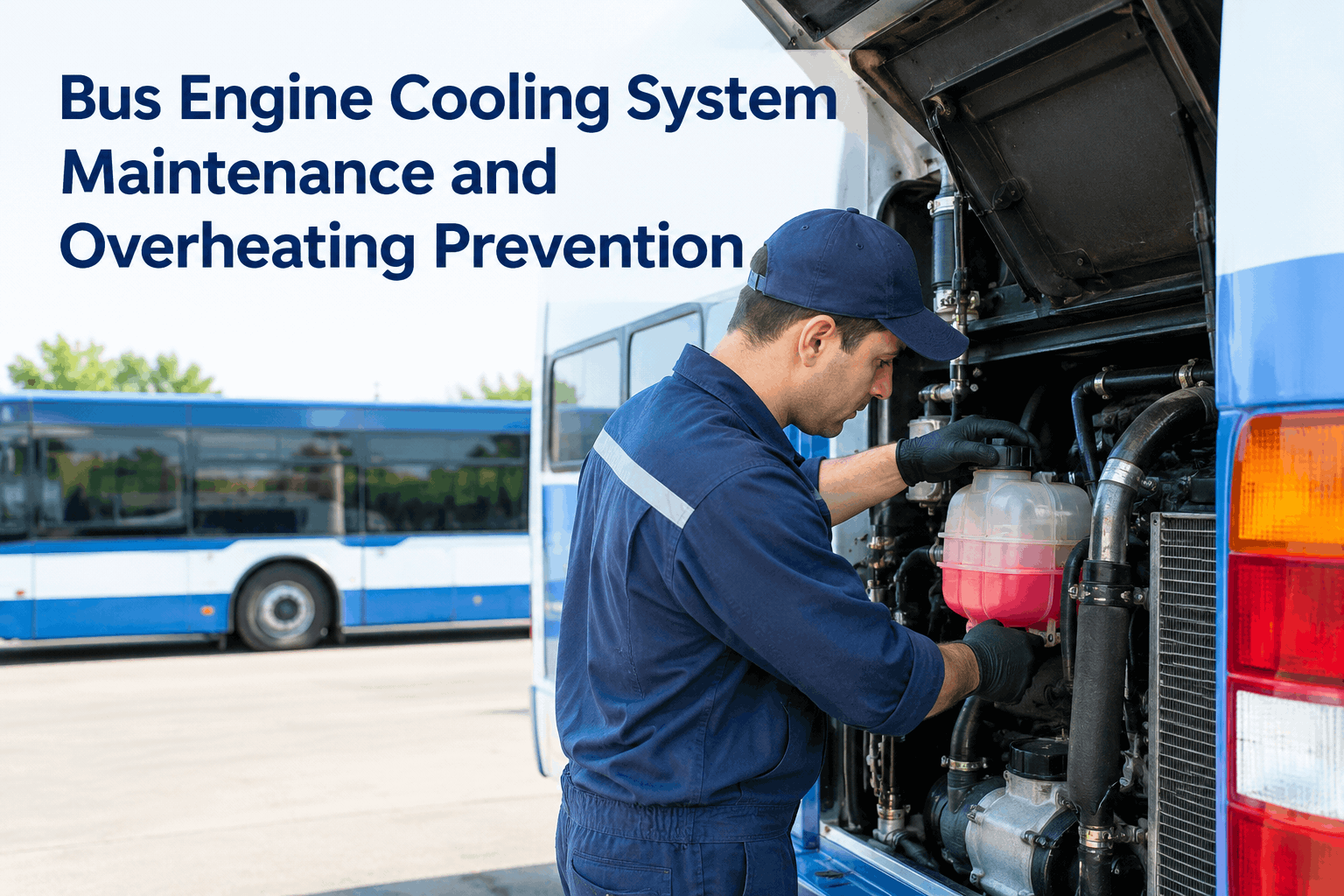
Diesel engines generate substantial heat through combustion, requiring robust cooling systems that work harder than most fleet managers realize. The coolant doesn't just prevent freezing—it transfers heat from cylinder walls, lubricates water pump seals, prevents corrosion on aluminum components, and maintains stable operating temperatures under heavy loads.
For 2025, major diesel engine manufacturers including Cummins, Detroit Diesel, and International have largely standardized their bus coolant maintenance recommendations. However, specific intervals depend on the coolant type your fleet uses.
Diesel Coolant Flush Intervals
Conventional (IAT) Coolant
24 months / 50,000 miles
Requires SCA additives every 6 months
Extended Life (OAT) Coolant
5 years / 300,000 miles
First service at 3 years with extender
Hybrid (HOAT) Coolant
3 years / 150,000 miles
Most common in 2018-2024 buses
The shift toward extended-life coolants has changed maintenance economics significantly. While OAT coolants cost more upfront ($15-22 per gallon versus $8-12 for conventional), the extended service intervals reduce total cost of ownership. A typical diesel school bus holding 8-10 gallons saves 4-6 flush cycles over a 15-year service life by using extended-life formulations.
Critical: Never Mix Coolant Types
Mixing IAT, OAT, and HOAT coolants causes chemical reactions that form gel deposits, clog heater cores, and accelerate corrosion. If you're unsure what's in a vehicle's system, a complete flush with proper neutralization is mandatory before refilling. Your CMMS should track coolant type for every vehicle.
Electric Bus Thermal Management (2025 Requirements)
Electric buses don't have combustion engines, but they absolutely require cooling systems—often more sophisticated ones than diesel vehicles. Battery packs, inverters, motor controllers, and drive motors all generate heat that must be managed precisely. Battery temperature directly affects range, charging speed, and longevity.
The diesel vs EV coolant distinction goes beyond just intervals. Electric buses use dielectric (non-conductive) coolants specifically formulated for high-voltage systems. Using the wrong coolant type in an electric bus isn't just ineffective—it's a serious safety hazard that can cause electrical shorts and fires.
Electric Bus Thermal Fluid Intervals
Battery Cooling Loop
5 years / 200,000 miles
Dielectric glycol-based fluid required
Inverter/Motor Loop
4 years / 150,000 miles
May share circuit with battery loop
HVAC Heat Pump System
6 years / 250,000 miles
Separate refrigerant circuit
Major electric bus manufacturers including Proterra, Blue Bird (electric models), Lion Electric, and Thomas Built (Jouley) each specify proprietary or approved coolant formulations. Cross-referencing your fleet's specific models against manufacturer requirements is essential—substituting an unapproved fluid typically voids warranty coverage for the entire thermal management system.
Managing different coolant schedules across diesel and electric fleets? See how unified CMMS tracking prevents maintenance gaps and ensures the right fluid goes in every vehicle.
Get Started Book a DemoHead-to-Head: Diesel vs. Electric Coolant Costs
Understanding the true cost difference between diesel and electric bus coolant maintenance requires looking beyond just fluid prices. Labor time, system complexity, and flush frequency all factor into total cost of ownership.
Diesel Bus
Electric Bus
Despite higher per-gallon costs, electric bus thermal management isn't dramatically more expensive over vehicle lifetime—the extended intervals offset much of the fluid cost difference. The real expense difference comes from labor: electric systems require more careful procedures, voltage isolation protocols, and often dealer-level training for technicians.
CMMS Coolant Tracking: Setup for Mixed Fleets
Effective CMMS coolant tracking becomes essential when your fleet includes both diesel and electric vehicles with different service intervals, coolant types, and maintenance procedures. Manual tracking methods that worked for homogeneous diesel fleets break down quickly with mixed powertrains.
Your maintenance management system should track multiple data points for each vehicle's cooling system. This goes beyond simple due-date reminders to include coolant specifications, test results, and service history that prevents costly cross-contamination mistakes.
CMMS Coolant Tracking Checklist
Per-Vehicle Data Fields
Automated Alert Configuration
Integrating coolant tracking with your broader preventive maintenance program ensures cooling system service doesn't get scheduled in isolation. A 2025 coolant guide implemented in your CMMS can coordinate flushes with other scheduled downtime—annual inspections, brake jobs, or transmission services—maximizing wrench time efficiency.
Simplify mixed-fleet coolant management with automated tracking, alerts, and service history. See how proper CMMS setup eliminates guesswork and prevents cross-contamination.
Get Started Book a DemoCoolant Testing Between Flushes
Flush intervals assume normal operating conditions. Actual coolant condition can degrade faster due to contamination, additive depletion, or operating environment factors. Regular testing between flushes catches problems before they cause damage and can justify extended intervals when coolant remains healthy.
Freeze Point Test
Every 6 months
Refractometer check ensures adequate freeze protection. Target -34°F or lower for most climates. Dilution from water leaks or improper top-offs raises freeze point.
pH Level Test
Every 6 months
Healthy coolant maintains pH between 8.5-11.0. Values below 8.0 indicate acidic conditions that accelerate corrosion. Test strips provide quick field checks.
SCA Concentration
Every 15,000 miles (diesel)
Supplemental Coolant Additives protect diesel wet-sleeve liners. Test strips measure nitrite levels. Add SCA treatment when readings drop below 800 ppm.
Conductivity Test
Annually (electric)
Critical for EV dielectric coolants. High conductivity indicates contamination that compromises electrical isolation. Requires specialized testing equipment.
Document all test results in your CMMS to build trending data over time. Patterns emerge—vehicles on certain routes may show faster coolant degradation due to operating conditions. This data enables smarter, condition-based maintenance decisions rather than rigid time/mileage intervals.
Track coolant test results alongside flush history for complete cooling system visibility. Automated trending identifies vehicles needing early attention before problems escalate.
Get Started Book a Demo2025 Coolant Flush Quick Reference
Diesel (HOAT)
3 years / 150K miles
Diesel (OAT)
5 years / 300K miles
Electric Battery
5 years / 200K miles
Electric Inverter
4 years / 150K miles
Managing coolant maintenance across mixed diesel and electric fleets requires understanding that these are fundamentally different systems with different requirements. The 2025 standards reflect lessons learned from early electric bus deployments—longer intervals where appropriate, but stricter fluid specifications that don't allow for shortcuts.
Success comes from treating coolant management as a data problem, not just a scheduling problem. Track coolant types per vehicle, automate service reminders based on both time and mileage, document test results, and use that information to make smarter maintenance decisions. Your CMMS becomes the single source of truth that prevents the contamination mistakes and missed services that lead to expensive cooling system failures.
Frequently Asked Questions
Q: How often should diesel bus coolant be flushed in 2025?
A: Diesel bus coolant flush intervals depend on coolant type. Conventional IAT coolant requires flushing every 24 months or 50,000 miles with SCA additives every 6 months. Extended-life OAT coolant lasts 5 years or 300,000 miles with an extender treatment at 3 years. HOAT hybrid coolants, most common in 2018-2024 buses, need service every 3 years or 150,000 miles.
Q: What's different about electric bus coolant maintenance?
A: Electric buses use specialized dielectric (non-conductive) coolants in their thermal management systems that cost 3-4 times more than diesel coolant. Service intervals are typically longer—5 years or 200,000 miles for battery cooling loops—but procedures are more complex, requiring voltage isolation protocols and often dealer-level technician training. Using non-approved coolants voids warranties and creates safety hazards.
Q: Can I mix different coolant types in a bus cooling system?
A: Never mix IAT, OAT, and HOAT coolant types. Mixing causes chemical reactions that form gel deposits, clog heater cores, and accelerate corrosion throughout the cooling system. If you're unsure what coolant is currently installed, perform a complete flush with proper neutralization before refilling with the correct fluid type. Track coolant type in your CMMS for every vehicle.
Q: How should I set up CMMS tracking for coolant maintenance?
A: Configure your CMMS to track coolant type installed, manufacturer-approved brands, system capacity, last flush date and mileage, and next service due dates. Set automated alerts for 30 days before scheduled flushes, mileage-based triggers, and annual testing reminders. For mixed diesel/electric fleets, ensure the system distinguishes between different vehicle types and their specific coolant requirements.
Q: What coolant tests should be performed between flush intervals?
A: Test freeze point and pH levels every 6 months using a refractometer and test strips. For diesel buses, check SCA (Supplemental Coolant Additive) concentration every 15,000 miles. Electric buses require annual conductivity testing to verify dielectric properties. Document all results in your CMMS to identify vehicles with accelerated coolant degradation that may need early service.