Daycare van transportation is more than scheduling pickups and drop-offs. Whether you run two vans or a mixed fleet of vans and minibuses across several sites, the same question decides everything: when a parent calls about a missed child check, a driver reports a defect, or a licensing reviewer asks for records, can you produce a clear, connected account of what happened? This page is about running childcare transportation so the answer is always yes, with child accountability, driver records, inspections, maintenance, incident documentation, and video evidence kept in one place instead of scattered across paper forms, spreadsheets, and phone apps. See how BusCMMS keeps daycare transportation records connected in one platform.
Updated September 2026 · Childcare transportation rules vary by state and program type; verify current requirements with your state licensing authority
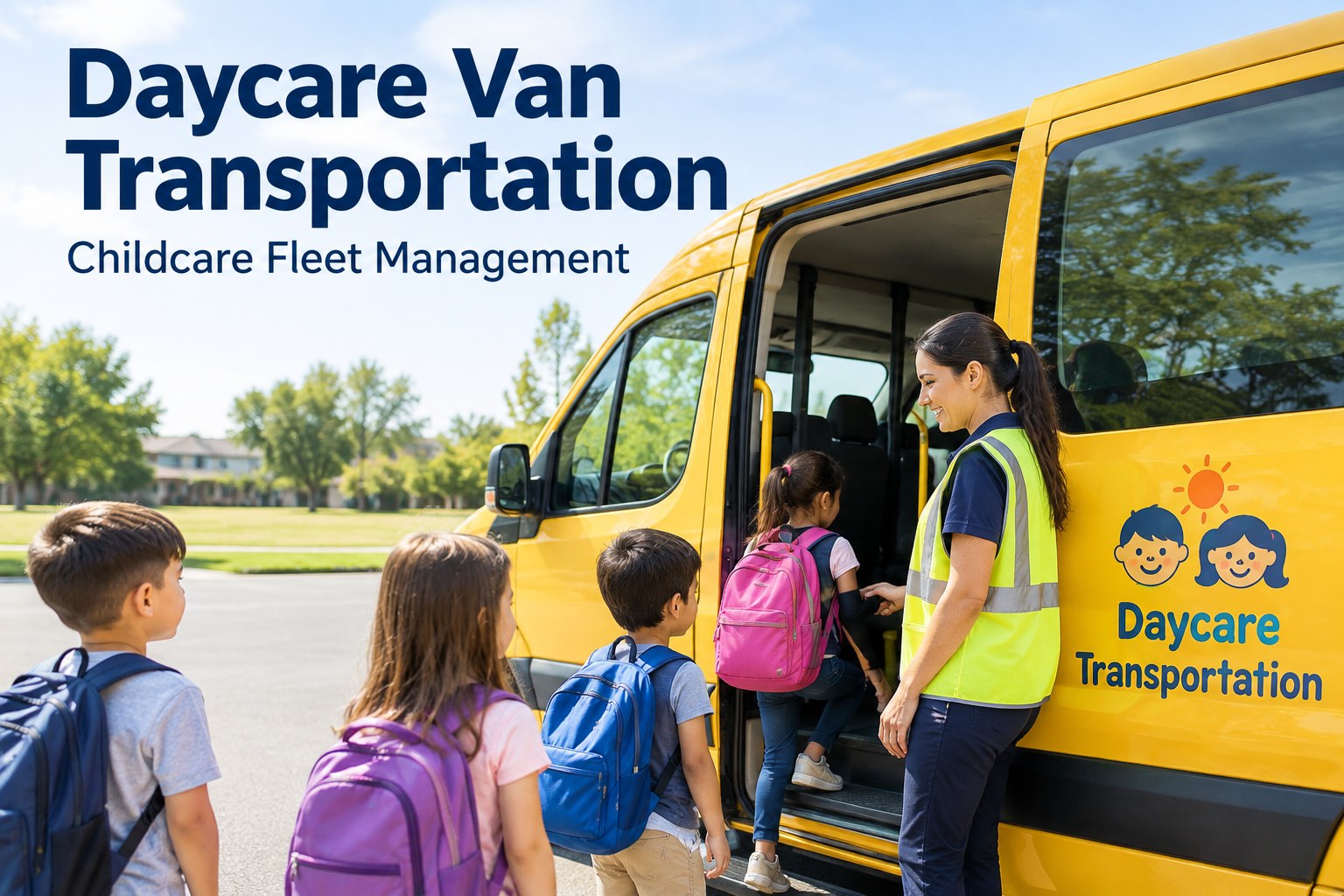
Daycare Van Transportation: Childcare Fleet Management
Child checks, rosters, driver records, inspections, maintenance, incidents, and video evidence, connected on one operational record per vehicle.
What Daycare Van Transportation Actually Involves
Childcare transportation covers a lot of ground under one label: daily home-to-daycare runs, transport to and from school for school-age programs, summer camp trips, and field trips. Most operators do it with a mixed fleet, a couple of passenger vans, a minibus or two, sometimes a vehicle built to school bus standards. That mix is exactly why it is harder to manage than it looks. Different vehicles, different drivers, different sites, and different rules, all needing the same disciplined records.
And the rules genuinely differ. Childcare transportation is governed largely at the state level, through childcare licensing and, where applicable, pupil transportation requirements, and it varies by the type of program, the vehicle, the driver, and the service arrangement. There is no single nationwide daycare transportation rule that covers every operator the same way. A van carrying nine or fewer children in one state may face different requirements than a vehicle registered as a school vehicle in another. The safe practice is to confirm your specific obligations with your state licensing authority rather than assume a federal standard applies. Book a demo to organize records around the requirements that apply to your program.
Child Checks and Roster Verification
Of everything on this page, this is the one that keeps operators up at night, and rightly so. A child left on a vehicle is the worst outcome in this industry, and it is preventable with two disciplined habits: an accurate roster and a physical child check after every route. These are widely recommended practices across childcare transportation guidance, though the exact procedures required of you depend on your state and program.
- Each child listed by first and last name, siblings listed separately, not as one entry
- Pickup and drop-off times recorded as they happen, not reconstructed later
- Up-to-date list of adults each child may be released to, with emergency alternates
- After the last drop-off, the driver physically walks the full vehicle
- Every seat, under every seat, and every compartment is inspected
- The check is documented, so there is proof it happened, not just an assumption
The failure mode is almost never a driver who does not care. It is a paper log that gets filled in from memory at the end of a long day, or a roster that was updated in a group chat and never made it to the vehicle. When the roster, the pickup and drop-off times, and the completed child check all live in one place and are captured in the moment, a parent question becomes a thirty-second lookup instead of a frightening scramble. Book a demo to capture rosters and child checks in the moment. Or start free and set it up per route.
Driver Records and Daily Van Inspections
Two record streams protect a childcare transportation operation more than any other: who is driving, and whether the vehicle is safe. Both are simple in principle and easy to let slip when you are short-staffed and the vans have to roll.
Driver management
Childcare transportation guidance commonly points to a valid license for the vehicle type, background checks, medical fitness to drive, drug testing, and child passenger safety training. What matters operationally is that each of those has a current date and a document behind it, and that an expired credential surfaces before the driver is behind the wheel, not after an incident.
Daily inspection
A documented pre-trip check before each transport: lights and signals, tires, brakes, wipers, mirrors, horn, plus the childcare-specific items, car seats and boosters installed correctly, first-aid kit stocked, and any lift or tie-down equipment tested. A defect found here should stop the vehicle and start a repair, not get mentioned and forgotten.
Here is the connection most systems miss: the inspection and the driver record and the vehicle are three parts of one story. When a driver logs a defect on the morning check, that defect should become a maintenance task tied to the specific van, the van should be flagged until it is cleared, and the whole thing should sit on a record you can pull up later. Paper forms and a maintenance spreadsheet cannot do that; they just create three places to look. Book a demo to connect driver records, inspections, and the vehicle in one place.
Incidents, Complaints, and Video Evidence
Sooner or later something happens: a parent complaint, a minor accident, a behavior incident, a near-miss at a curbside drop-off. What separates a calm resolution from a bad week is whether you can reconstruct the event quickly and completely. That is entirely a records problem, and it is where disconnected systems hurt most.
Picture the difference. In one operation, a complaint comes in and staff spend two days pulling a paper inspection form, hunting for the driver's file, checking a maintenance log, and trying to find the right clip on a separate camera system that may have already overwritten it. In the other, the incident record is opened and the relevant DVIR, the work order history for that van, the driver's current records, and the associated video evidence are all linked to the same event, retrievable in minutes. Same incident, completely different exposure. The strongest thing a childcare transportation operator can build is that connected, defensible history, before anyone ever asks for it. Book a demo to keep incidents, records, and video evidence linked to one event.
A Morning at a Multi-Site Childcare Fleet
Here is how the connected version works in practice. A childcare operator runs vans and minibuses across three locations. Follow one van through a single morning.
The morning inspection
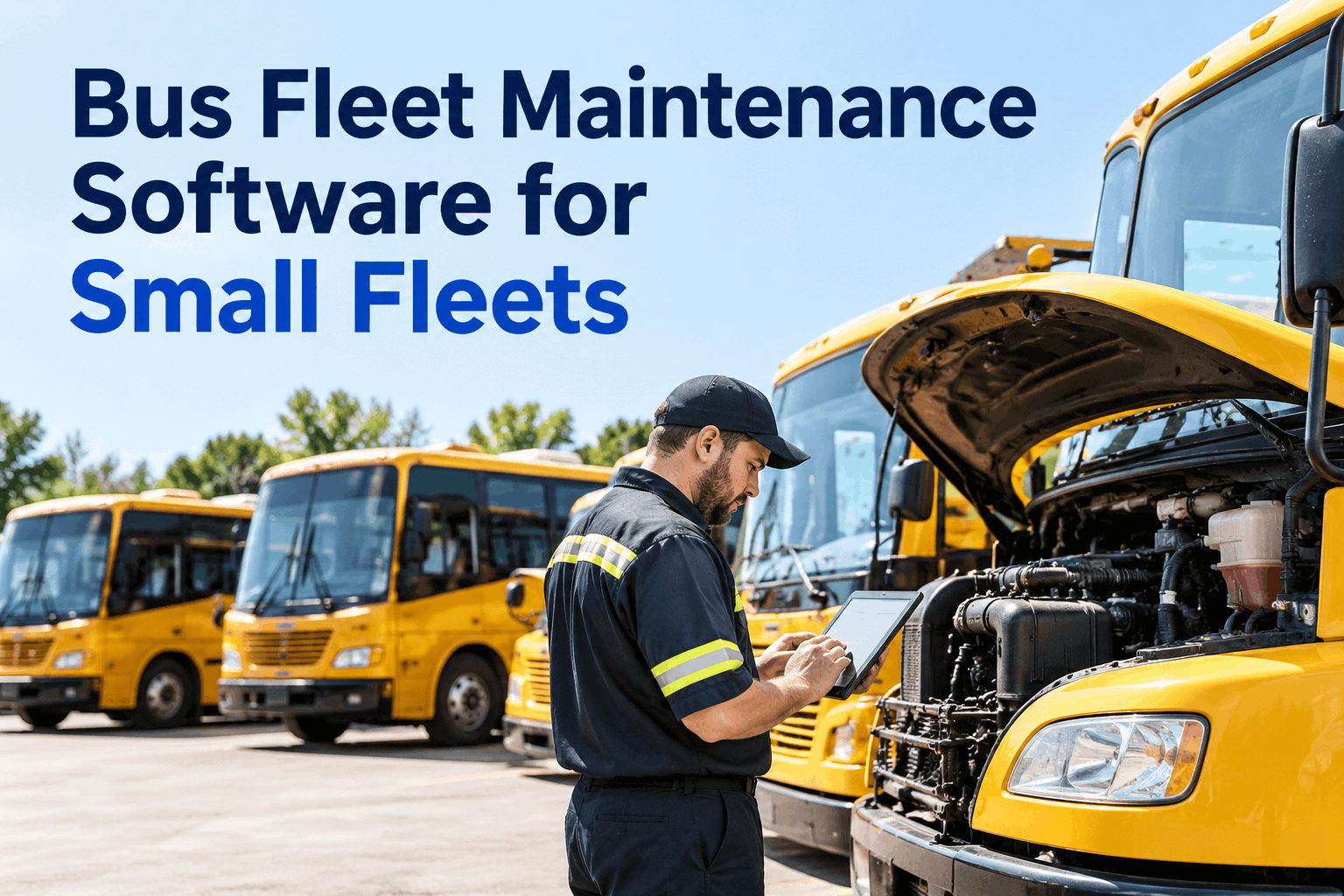
A driver at Site B runs the pre-trip check on a phone and flags a worn wiper and a soft brake feel on van 4.
The defect becomes a work order
The brake defect automatically creates a maintenance issue tied to van 4, and the van is flagged as not cleared for service.
A safe swap, not a risky run
Dispatch sees van 4 is down and moves the route to a cleared vehicle. No child rides in a van with an open safety defect.
Records stay connected
The inspection, the defect, the work order, and the driver who reported it all stay linked to van 4's history.
Evidence on demand
Weeks later, a question about that route pulls up the inspection, the repair, and any associated video evidence together, in one place.
Nothing in that morning is exotic. It is just the same inspection, the same repair, and the same records every operator already does, connected instead of scattered. The van with the brake issue never carried a child, and months later the operator can prove exactly that. That is the difference between a defensible operation and a hopeful one. Book a demo to see this run on a mixed fleet across your sites.
When Spreadsheets and Paper Stop Being Enough
Plenty of small operations run fine on paper and a spreadsheet, and if you have one van and one driver, you may not need more. The honest question is when manual processes stop being sufficient. They start to strain the moment you add a second vehicle, a second site, a second contract, or a driver you cannot personally watch every morning.
If two or more of those sound familiar, the cost of staying manual is no longer time; it is risk. BusCMMS is an AI-native bus fleet operations platform that brings vehicle maintenance, DVIRs, work orders, driver records, incidents, and video evidence into one operational record, with the traceability to associate video with the relevant inspection, work order, incident, and driver, so you can reconstruct what happened without searching across disconnected systems. It reduces administrative work, improves accountability, and gives you a defensible operational history, without promising to make compliance or safety automatic, because no software honestly can. Book a demo to see whether your operation has outgrown paper.
Running Daycare Van Transportation You Can Defend
Daycare van transportation lives or dies on accountability. The operators who sleep well are not the ones with the newest vans; they are the ones who can answer any question, about a child, a driver, a defect, or an incident, with a connected record instead of a scramble. Rosters and child checks captured in the moment, driver credentials that surface before they expire, inspections that turn defects into tracked repairs, and incidents linked to the video that explains them: that is what a defensible childcare transportation operation looks like. You are almost certainly already doing the work. The difference is whether it is connected enough to prove. See how BusCMMS keeps daycare transportation records connected in one platform.
What is daycare van transportation?
Daycare van transportation is the movement of children to and from a childcare, camp, or after-school program, typically using passenger vans, minibuses, or vehicles built to school bus standards. It goes well beyond scheduling: it involves child accountability through rosters and post-route child checks, driver qualification records, daily vehicle inspections, preventive maintenance, incident documentation, and often video evidence. Because children are the passengers, the accountability and documentation standards are high, and the specific requirements vary by state and program type.
How is daycare transportation different from school bus operations?
They overlap but are not the same. Traditional school bus operations are governed heavily by state pupil transportation programs and, in specific situations, federal motor carrier rules. Daycare and childcare transportation is governed largely through state childcare licensing, and it frequently uses smaller vehicles like vans and minibuses rather than full-size school buses. The exact rules depend on your state, your program type, the vehicle, and the driver. Rather than assume school bus rules or a federal standard applies, a childcare operator should confirm the specific requirements with their state licensing authority.
What is a child check, and why does it matter?
A child check is a physical walk-through of the vehicle after the last child is dropped off, in which the driver inspects every seat, under the seats, and all interior compartments to confirm no child remains on board. Paired with an accurate roster that records each child by name and logs pickup and drop-off times, it is the core defense against the worst outcome in this industry, a child left on a vehicle. Documenting the completed check matters as much as doing it, because it turns a safety practice into provable evidence. The specific procedures required of you depend on your state and program.
What should a daycare van inspection cover?
A daily pre-trip inspection commonly covers lights and turn signals, tires, brakes, windshield wipers, mirrors, and the horn, plus childcare-specific items such as correctly installed car seats and boosters, a stocked first-aid kit, and any lift or wheelchair tie-down equipment. Defects should be reported to management immediately and the vehicle kept out of service until repaired by a qualified mechanic. The most effective setups turn a reported defect directly into a maintenance work order tied to the specific vehicle, so nothing is noted and then forgotten. Verify any required inspection intervals or forms with your state.
How can software help a small childcare transportation fleet?
The main benefit is connection. Instead of rosters in one app, inspections on paper, maintenance in a spreadsheet, driver files in a drawer, and video on a separate system, a platform like BusCMMS keeps inspections, work orders, driver records, incidents, and video evidence on one operational record per vehicle. That makes a parent complaint or incident review a quick lookup rather than a multi-day search, surfaces expiring driver credentials before they lapse, and ensures a reported defect becomes a tracked repair. It reduces administrative work and creates a defensible history, without claiming to make safety or compliance automatic.