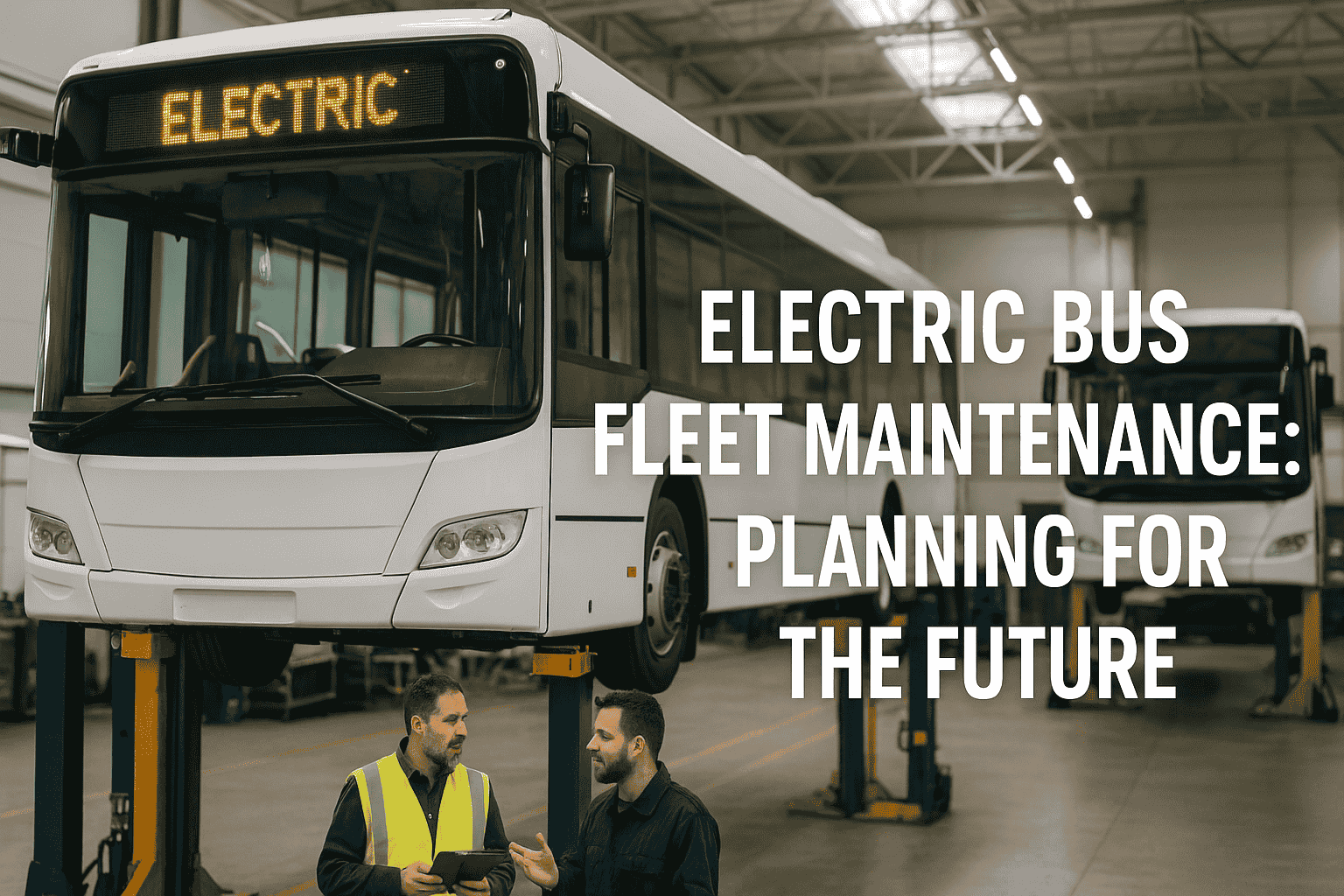
The transportation industry is experiencing a seismic shift toward electrification, and manufacturing professionals across the United States are at the forefront of this transformation. As electric buses become increasingly prevalent in public transit systems, corporate shuttles, and specialized transport applications, the need for strategic maintenance planning has never been more critical.
Electric bus fleets represent more than just a technological upgrade—they're a fundamental reimagining of how we approach vehicle maintenance and operational efficiency, and long-term sustainability. For manufacturing professionals responsible for fleet operations, understanding the nuances of electric bus maintenance isn't just about keeping vehicles running; it's about positioning your organization for success in an increasingly electrified future.
Industry Insight: According to recent industry data, electric buses can reduce maintenance costs by up to 40% compared to diesel counterparts when properly managed, but only with the right maintenance strategy in place.
Understanding the Electric Bus Maintenance Landscape
Electric buses operate fundamentally differently from their diesel and CNG counterparts, requiring a complete rethinking of maintenance approaches. Unlike traditional buses with complex internal combustion engines, electric buses feature fewer moving parts, regenerative braking systems, and sophisticated battery management systems that demand specialized attention.
The maintenance landscape for electric buses centers around three critical components: the electric drivetrain, battery systems, and supporting infrastructure. Each of these elements requires specific expertise, tools, and scheduling considerations that differ significantly from conventional vehicle maintenance protocols.
Key Maintenance Advantages of Electric Buses
Electric buses offer several maintenance advantages that forward-thinking manufacturing professionals are leveraging. The absence of oil changes, reduced brake wear due to regenerative braking, and fewer mechanical components translate to lower routine maintenance requirements. However, these advantages only materialize with proper planning and execution.
The electric drivetrain's simplicity means fewer scheduled maintenance intervals for mechanical components, but it introduces new requirements for electrical system diagnostics, software updates, and battery health monitoring. Manufacturing facilities that adapt their maintenance protocols to these realities see significant operational improvements.
Strategic Maintenance Planning Framework
Developing an effective maintenance strategy for electric bus fleets requires a systematic approach that addresses both immediate operational needs and long-term sustainability goals. Manufacturing professionals must consider vehicle utilization patterns, charging infrastructure integration, and workforce development as interconnected elements of their maintenance planning.
Predictive Maintenance Integration
Modern electric buses generate extensive data streams that enable predictive maintenance capabilities far beyond what's possible with conventional vehicles. Battery state-of-health monitoring, thermal management system analysis, and electric motor performance tracking provide unprecedented insights into vehicle condition and maintenance needs.
Manufacturing facilities implementing predictive maintenance for their electric bus fleets report maintenance cost reductions of 25-35% while improving vehicle availability. The key lies in establishing data collection protocols, training maintenance staff on new diagnostic tools, and integrating predictive insights into maintenance scheduling systems.
Maintenance Schedule Optimization
Electric buses require fundamentally different maintenance schedules compared to diesel buses. While traditional buses might require service every 5,000-10,000 miles, electric buses can often extend maintenance intervals to 15,000-25,000 miles for routine procedures. However, battery system checks, software updates, and charging system maintenance introduce new scheduling considerations.
Successful maintenance optimization involves developing custom maintenance schedules based on actual vehicle usage patterns, environmental conditions, and operational demands specific to manufacturing facility applications. This data-driven approach ensures maintenance resources are allocated effectively while maximizing vehicle uptime.
Battery Management and Lifecycle Planning
Battery systems represent the most critical and expensive component of electric buses, requiring specialized maintenance approaches that manufacturing professionals must master. Effective battery management extends beyond routine maintenance to encompass thermal management, state-of-charge optimization, and end-of-life planning.
Battery maintenance protocols should include regular capacity testing, thermal system inspection, and charging behavior analysis. Manufacturing facilities with comprehensive battery management programs report 15-20% longer battery life compared to those using basic maintenance approaches.
Charging Infrastructure Maintenance
Electric bus maintenance extends beyond the vehicles themselves to encompass charging infrastructure maintenance. Manufacturing professionals must develop integrated maintenance programs that address both vehicle and charging system requirements to ensure optimal fleet performance.
Charging station maintenance includes electrical connection inspection, software updates, cooling system servicing, and power quality monitoring. Facilities that treat charging infrastructure as an integral part of their electric bus maintenance program achieve higher fleet availability and lower total cost of ownership.
Workforce Development and Training
The transition to electric bus maintenance requires significant workforce development initiatives that manufacturing professionals must plan and execute effectively. Traditional mechanics need additional training on high-voltage systems, battery technologies, and specialized diagnostic equipment to maintain electric buses safely and effectively.
Successful workforce development programs combine formal certification training with hands-on experience and ongoing education as electric bus technology continues evolving. Manufacturing facilities investing in comprehensive training programs report higher maintenance quality, improved safety outcomes, and better employee retention.
Safety Protocols and Compliance
Electric bus maintenance introduces new safety considerations that require updated protocols and procedures. High-voltage systems, battery handling procedures, and emergency response protocols must be thoroughly understood and consistently implemented by maintenance staff.
Manufacturing facilities must establish comprehensive safety training programs, invest in appropriate personal protective equipment, and develop emergency response procedures specific to electric bus maintenance. These investments in safety infrastructure and training pay dividends through reduced incident rates and improved maintenance efficiency.
Technology Integration and Digital Tools
Modern electric bus maintenance relies heavily on digital tools and technology integration that manufacturing professionals must understand and implement effectively. Fleet management software, diagnostic systems, and predictive analytics platforms enable maintenance approaches that were previously impossible.
Successful technology integration requires careful selection of maintenance management systems, staff training on new tools, and development of data analysis capabilities. Manufacturing facilities that effectively leverage technology for electric bus maintenance report significant improvements in maintenance efficiency and vehicle reliability.
Implementation Tip: Start with basic digital maintenance tracking and gradually expand to more sophisticated predictive analytics as your team develops expertise and confidence with new technologies.
Future-Proofing Your Maintenance Strategy
Electric bus technology continues evolving rapidly, requiring maintenance strategies that can adapt to new developments while maintaining operational effectiveness. Manufacturing professionals must balance current operational needs with preparation for future technological advances.
Future-proofing strategies include investing in flexible maintenance infrastructure, developing adaptable training programs, and establishing relationships with technology providers who can support long-term fleet evolution. Organizations that plan for technological change rather than simply reacting to it achieve better outcomes and lower total costs.
As battery technology improves, charging speeds increase, and autonomous capabilities develop, maintenance requirements will continue evolving. Manufacturing facilities that build adaptable maintenance programs position themselves for success regardless of how electric bus technology develops.
Ready to Optimize Your Electric Bus Fleet Maintenance?
Transform your maintenance operations with proven strategies and cutting-edge tools designed for manufacturing professionals.
Getting StartedBook a Demo
Conclusion
Electric bus fleet maintenance represents both a challenge and an opportunity for manufacturing professionals across the United States. While the transition from conventional buses requires significant planning, training, and investment, the long-term benefits of properly executed electric bus maintenance programs are substantial.
Success in electric bus fleet maintenance comes from understanding the unique requirements of electric vehicles, developing comprehensive maintenance strategies, investing in workforce development, and leveraging technology to optimize operations. Manufacturing facilities that approach electric bus maintenance strategically position themselves for operational success and cost savings that compound over time.
The future of transportation is electric, and manufacturing professionals who master electric bus fleet maintenance today will lead their industries tomorrow. By implementing the strategies and best practices outlined in this guide, your organization can achieve the full potential of electric bus fleet operations while building capabilities that will serve you well as electrification continues advancing.