A bus is down for an after-treatment sensor, you call your usual supplier, and the answer is "six weeks" — the part used to ship in two days. Now you are hunting a vendor you never set up, paying for overnight freight, and explaining to the board why a route is short. Emergency bus parts sourcing is what happens when the supply chain fails and the clock is already running. You can see how to flag critical-spare risk early in a demo.
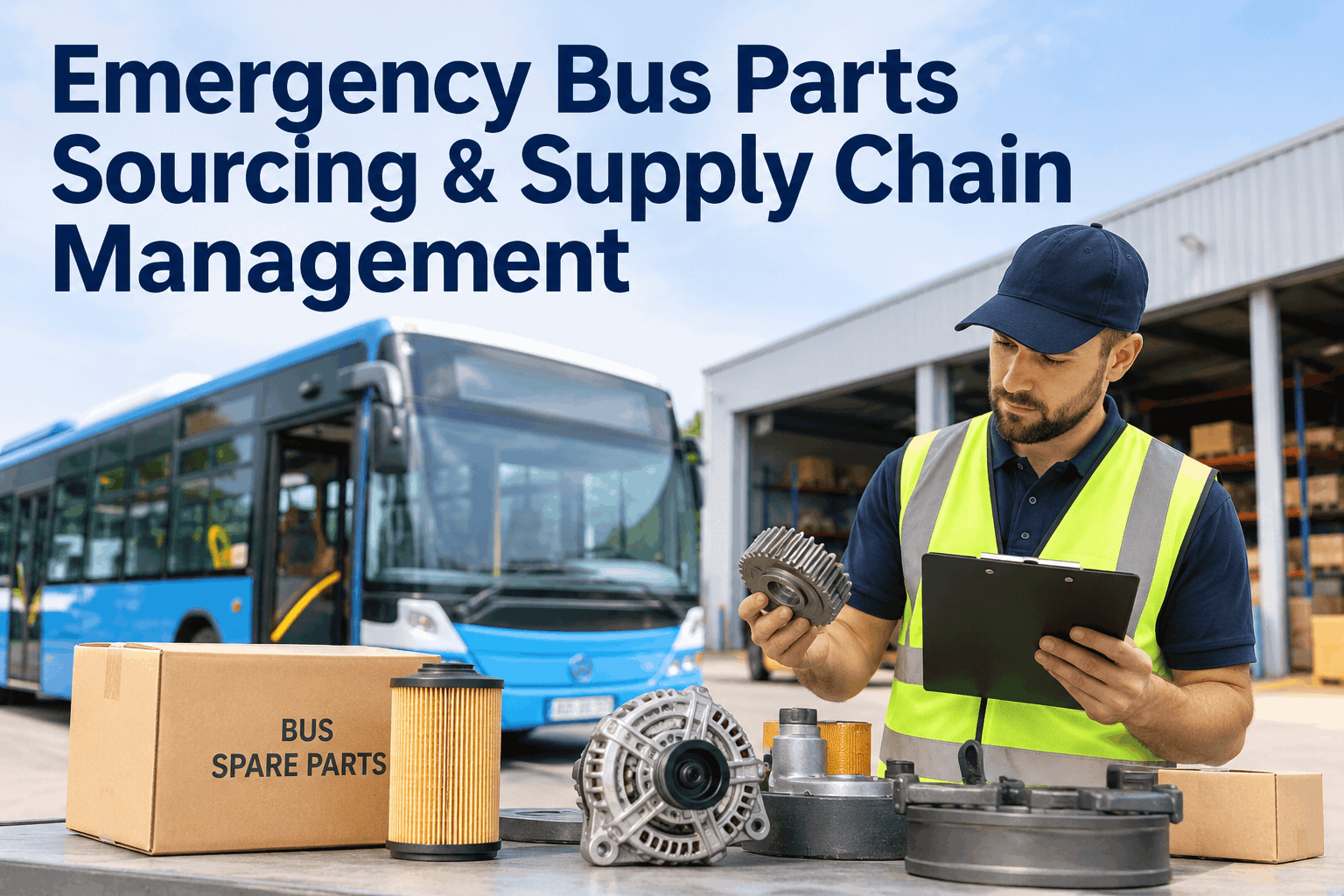
Emergency Bus Parts Sourcing & Supply Chain Management
Not every part deserves the same worry. The ones that strand a bus and are hard to source are the ones to protect — and knowing which those are, before a disruption, is the whole job.
The top-right corner — parts that both strand a bus and are slow or hard to source — is where your planning belongs. Everything else can mostly wait for a normal reorder.
Why a Parts Delay Becomes a Service Failure
A late part is never just a late part. It ties up a bay, pushes a bus out of service, and sets off a chain that costs far more than the component. Supply disruption shows up on your routes as missed runs, and it hits the budget hardest when you are buying in a panic.
The bus sits
A bus waiting on a part is a bus off a route. Industry estimates put that downtime in the hundreds of dollars per vehicle per day before rentals or penalties.
PM falls behind
Emergency jobs take the bays and the techs, so scheduled maintenance slips — which quietly breeds the next breakdown.
Costs spike
Rush freight, premium pricing, and overtime stack up. Industry estimates put an emergency repair at several times the cost of the same job done on schedule.
The cheapest emergency buy is the one you never have to make — because you saw the risk coming and had a plan for the part that mattered.
Seeing it coming is mostly a matter of watching the right numbers. You can sign up free and start tracking your critical-spare levels.
Lead Time Is Your Early-Warning Signal
Supply stress rarely arrives all at once. It creeps in as a lengthening lead time — the part that used to ship in days now quotes in weeks. Watch that curve on your critical spares and you get a head start to line up a backup before the shelf is empty.
Illustrative. The time to find a second source is when the lead time first starts stretching — not the week the bus is down and the only vendor says six weeks.
Tracking that trend turns a surprise into a schedule. You can walk through critical-spare and vendor tracking in a demo and spot your own lead-time creep.
Your Emergency Sourcing & Resilience Playbook
Resilience is built before the disruption, not during it. Run this so a supply shock is a managed event, not a fire drill. The CRITICAL items keep your most important buses moving; the BUILD items harden your supply so the next shock hurts less.
- Rank your critical spares by riskScore each part by how badly a shortage hurts and how hard it is to source — protect the top of the list.CRITICAL
- Set min/max on protected partsReorder triggers fire before a critical spare hits zero, sized for the real lead time plus a margin.CRITICAL
- Line up a backup vendor per critical partA second approved source, set up in advance — not a number you hunt for once the bus is already down.CRITICAL
- Watch lead times for creepA lengthening lead time is the earliest warning — act on the trend before it becomes a shortage.BUILD
- Flag single-source and discontinued partsWhere one supplier or a last-order notice is your only option, plan an alternative or a last-time buy early.BUILD
- Share your schedule with key suppliersGive trusted vendors your maintenance plan and expected needs, so they can stock ahead for you.BUILD
Most of this is planning you do once and the system keeps watching. You can sign up free and set reorder alerts on your critical spares.
How BusCMMS Makes Sourcing a Decision, Not a Scramble
When a part runs short, the questions are always the same: what do we have, what do we use, and who can supply it fast. BusCMMS keeps those answers current, so a disruption meets a plan instead of a panic. It is the record behind your procurement — not a marketplace that sells you parts.
Critical-spare min/max alerts
Reorder points sized for real lead time fire before a protected part hits zero, so you source on your schedule, not the shortage's.
Usage history by part and bus
Know exactly what each bus consumes and how fast, so you size buffers and emergency orders on data, not a guess.
Vendor and part records in one place
Keep approved suppliers, part numbers, and prior orders on the part itself, so the backup source is a click away when you need it.
Work orders linked to parts on hand
See whether the part a job needs is in stock before the bus is in the bay, so a repair never stalls waiting on a surprise order.
That is a parts operation that bends with a disruption instead of breaking — the same resilience that keeps your passenger transit operations on the road. To see it on your own critical spares, book a demo and bring your parts list.
A Parts & Procurement Lead's Take
Key Takeaways on Emergency Parts Sourcing
You cannot control the supply chain, but you can control how exposed you are to it. Four things to carry.
Protect the parts that matter
Rank spares by consequence and fragility — plan hardest for the top-right corner.
Watch lead time as a signal
A stretching lead time is your earliest warning — act on the trend, not the shortage.
Set up backups before you need them
A second source and a real reorder point beat a frantic search every time.
Panic buys are the costly path
Emergency repairs run several times the cost of the same job done on schedule.
Treat emergency parts sourcing as something you prevent, not just react to — rank your critical spares, watch the lead times, and line up backup vendors before a disruption — and a supply shock becomes a managed event instead of a parked bus and a premium invoice. The fleet that planned for the shortage is the one still running when it hits.