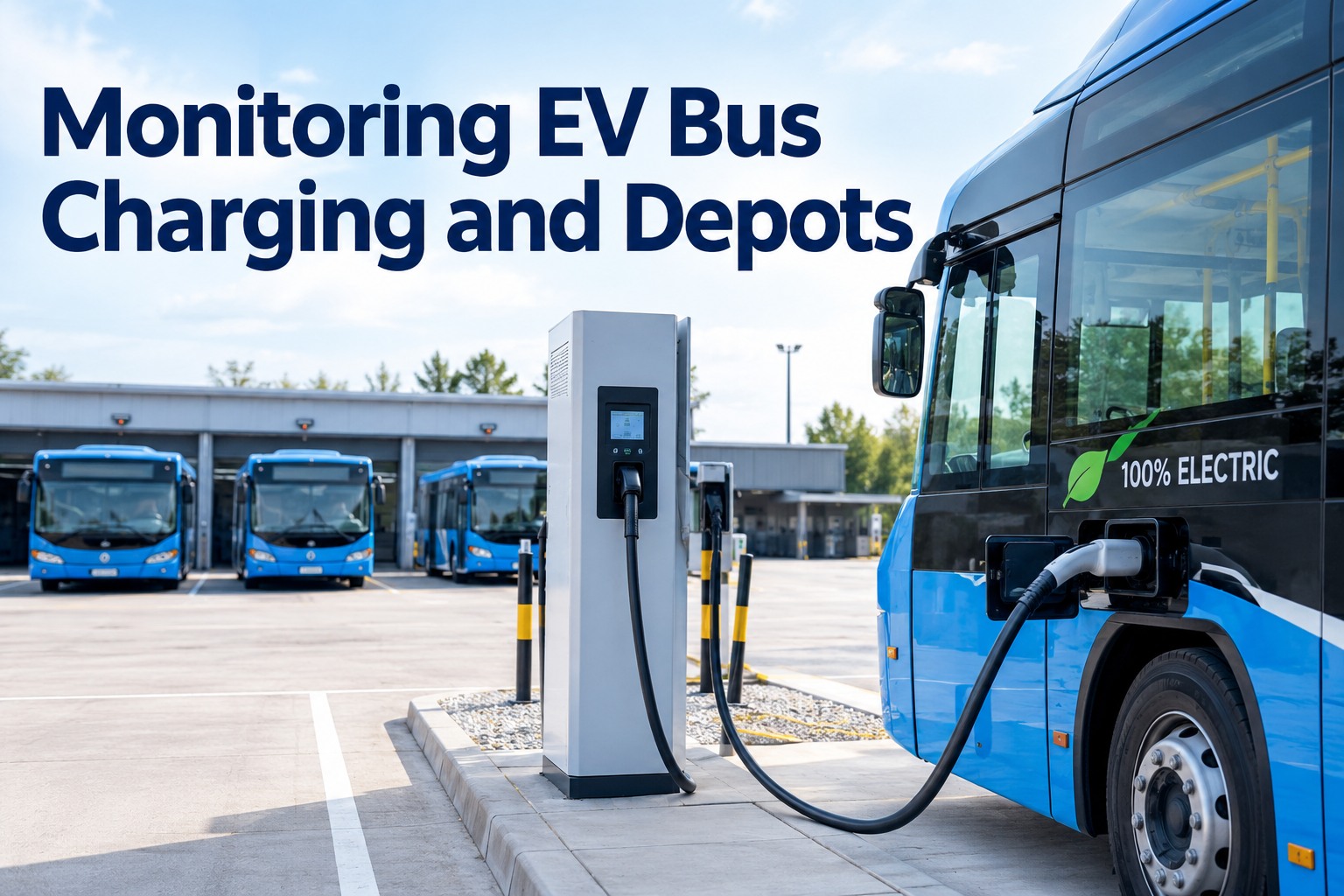
It's 5:40 AM and the first route pulls out in twenty minutes. Somewhere in the depot, one charger stopped delivering power at 2 AM and nobody noticed — the bus assigned to it is sitting at 61% state of charge instead of the 100% it needed. Electric bus charging monitoring exists so that this discovery happens at 2:05 AM on a dashboard, not at 5:40 AM in a parking lot. It tracks every charge session, every charger fault, and every bus's readiness against the route it's actually assigned to run.
What Charging Monitoring Actually Tracks
A useful charging dashboard goes beyond "plugged in or not." Here's what it needs to show for the readiness board above to mean anything.
None of this is useful as a raw feed nobody watches at 2 AM. Sign up to get charger faults and readiness alerts sent automatically.
From Fault to Fixed Before the First Route
Here's what a monitored fault resolution actually looks like, start to finish.
Most charger issues resolve remotely in minutes once someone actually sees them — the whole point is not needing a technician standing in the depot to notice. Book a demo to see fault alerts and remote resets in action.
Expert Review: A Depot Walk-Through vs. a Monitored Depot
Here's the same overnight charging cycle handled two ways — with a manual depot check versus continuous monitoring.
Charging Records Under 49 CFR 396.3 and District Fleet Policy
Charging session data isn't just an operational nicety — it's part of the same record-keeping discipline 396.3 already expects for every vehicle you control. When a charger fault or an interrupted session contributed to a maintenance issue, having that session history on file explains the "why" behind the repair. Most districts also layer their own depot inspection and reporting cadence on top of the federal baseline. Sign up to keep charging history alongside your standard maintenance records.
The goal isn't a prettier depot dashboard for its own sake. It's making sure the answer to "is this bus ready?" is known at 2 AM instead of guessed at 5:40. Talk to our team about setting up depot monitoring for your fleet.
Frequently Asked Questions
What does electric bus charging monitoring actually track?
It tracks charge sessions (start time, duration, energy delivered), charger faults and offline status, live state of charge for every bus, and whether each bus's charge level actually meets the range its assigned route requires — combined into a single readiness view for the depot.
Why do most charger failures go unnoticed until morning?
Charging typically happens overnight when depot staff aren't physically present. Without real-time alerts, a charger that goes offline or a session that gets interrupted isn't discovered until someone walks the lot or a driver finds a bus that isn't ready to depart.
Can charger faults be fixed without sending a technician to the depot?
Many charger issues can be resolved remotely — rebooting a charger, clearing a fault code, or reassigning a bus to a working stall — often within minutes. A technician visit is typically only needed for hardware issues that can't be cleared remotely.
How does charging monitoring relate to 49 CFR 396.3 recordkeeping?
Section 396.3 requires a systematic maintenance and repair record for every vehicle. Charging session history helps explain the operational context behind a maintenance event — for example, an interrupted charge that left a bus below its needed range — and most districts layer their own depot policies on top of that federal baseline.
Does charging monitoring work with our existing charger hardware?
Generally yes. Most depot monitoring platforms are built to connect to charging hardware from multiple manufacturers through standard protocols, pulling session and fault data into one dashboard rather than requiring a single-vendor charger fleet.