Carrier Safety Alliance (CSA) is the Federal Motor Carrier Safety Administration's (FMCSA) compliance and safety measurement system used to identify transportation companies that pose high safety risks. CSA scores are calculated for every commercial motor carrier (trucking companies, bus operators, transportation services) subject to FMCSA regulations. These scores are public information—insurance companies, freight brokers, customers, and other stakeholders can view a company's CSA scores and use them to make business decisions. A bus operator with poor CSA scores will find it difficult to secure contracts, will pay higher insurance premiums, and may face increased regulatory scrutiny and inspections. Conversely, an operator with excellent CSA scores demonstrates safety leadership and attracts quality customers and contract opportunities. For bus fleet managers, understanding CSA scoring and actively managing scores is essential for business competitiveness and compliance. CSA is not just a compliance checkbox—it's a measurement of fleet safety performance that directly impacts business success. Here's a comprehensive guide to understanding CSA scoring and managing your fleet's safety rating in 2026.
FMCSA CSA Scoring Explained
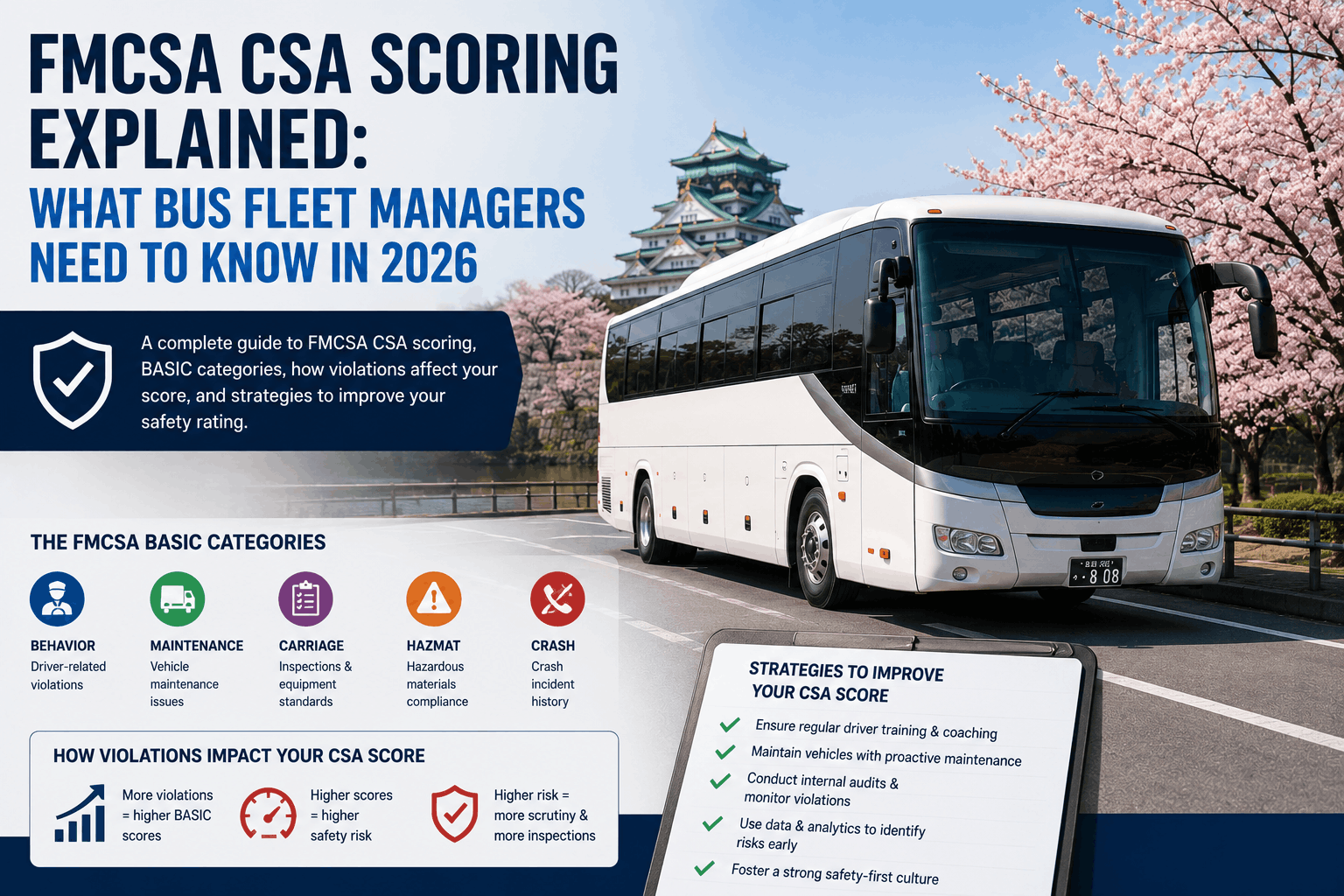
Complete guide to FMCSA CSA scoring for bus fleet managers in 2026. Explains BASIC categories, how violations affect your score, and strategies to improve your safety rating.
CSA Overview: What It Measures and Why It Matters
The purpose of CSA: CSA is designed to identify unsafe motor carriers before they cause accidents, injuries, or fatalities. By measuring safety performance systematically, FMCSA can focus regulatory resources on the most problematic carriers. For safe carriers, CSA scores demonstrate compliance and safety commitment. For unsafe carriers, poor CSA scores trigger additional inspections, audits, and potential regulatory action. Bus operators use CSA scores internally to track safety performance and identify areas for improvement.
How CSA scores are calculated: FMCSA collects safety data from multiple sources: roadside inspections conducted by state officers, crashes reported to FMCSA, complaints received from drivers and the public, and maintenance audits. This data is organized into categories called BASICS (Behavior Analysis Safety Improvement Categories), and each BASIC is scored independently. A carrier's overall CSA score is based on performance across all BASICS. Higher scores indicate worse safety performance. A CSA score of 70 is better than a CSA score of 85. The system continuously updates as new inspection and crash data is added.
Visibility and business impact: CSA scores are public information accessible through FMCSA's SafetyNet database. Insurance companies use CSA scores to set insurance premiums—a carrier with poor scores pays higher premiums or may be uninsurable. Freight brokers and charter customers check CSA scores before contracting with carriers. Some customers refuse to contract with carriers above certain CSA thresholds. For bus operators, public CSA scores directly impact business opportunity and insurance costs. A carrier with excellent CSA scores (low scores) is more attractive to customers and pays lower insurance premiums.
Regulatory consequences of poor CSA scores: Carriers with CSA scores above certain thresholds may be contacted by FMCSA for compliance review. FMCSA may conduct comprehensive audits, mandate safety training, or impose operational restrictions. In severe cases, carriers may lose operating authority. CSA scores therefore are not just performance metrics—they're regulatory risk indicators. A bus operator with poor CSA scores faces tangible regulatory and business consequences.
Understanding BASICS: The Seven Safety Categories
Unsafe Driving BASIC: This BASIC measures driver behavior: speeding, reckless driving, improper lane changes, safety belt violations, and other driving infractions. Violations are typically recorded during roadside inspections when officers observe drivers violating traffic laws. Crashes involving driver error (excessive speed for conditions, following too closely, improper turn) contribute to this BASIC. A bus operator can reduce unsafe driving violations through driver training, enforcement of safe driving policies, and disciplinary action for violators. Telematics systems that monitor driver behavior (harsh braking, aggressive acceleration, speeding) help identify and coach drivers on unsafe behaviors.
Crash Indicator BASIC: This BASIC measures the frequency and severity of crashes. A single crash from years ago may still appear in data for a period of time. Multiple crashes or a single severe crash (injury or fatality) significantly impacts this BASIC. Bus operators have limited control over this BASIC directly—crashes are often caused by driver error or unavoidable circumstances. However, prevention through driver training, vehicle maintenance (ensuring brakes and tires are safe), and route management (avoiding high-risk roads or times) reduces crash frequency. A bus operator cannot eliminate all crashes, but excellent safety culture and maintenance can minimize them.
HOS (Hours of Service) Compliance BASIC: This BASIC measures violations of federal hours of service regulations. Violations include drivers operating beyond 11-hour daily limits, operating beyond 60-hour weekly limits, or failing to take required rest breaks. For school buses, this is less relevant due to HOS exemptions, but charter and transit coaches are subject to HOS regulations. Violations are typically discovered during roadside inspections. A CMMS that tracks driver hours and alerts when drivers are approaching HOS limits helps operators stay compliant. Driver training on HOS requirements reduces unintentional violations.
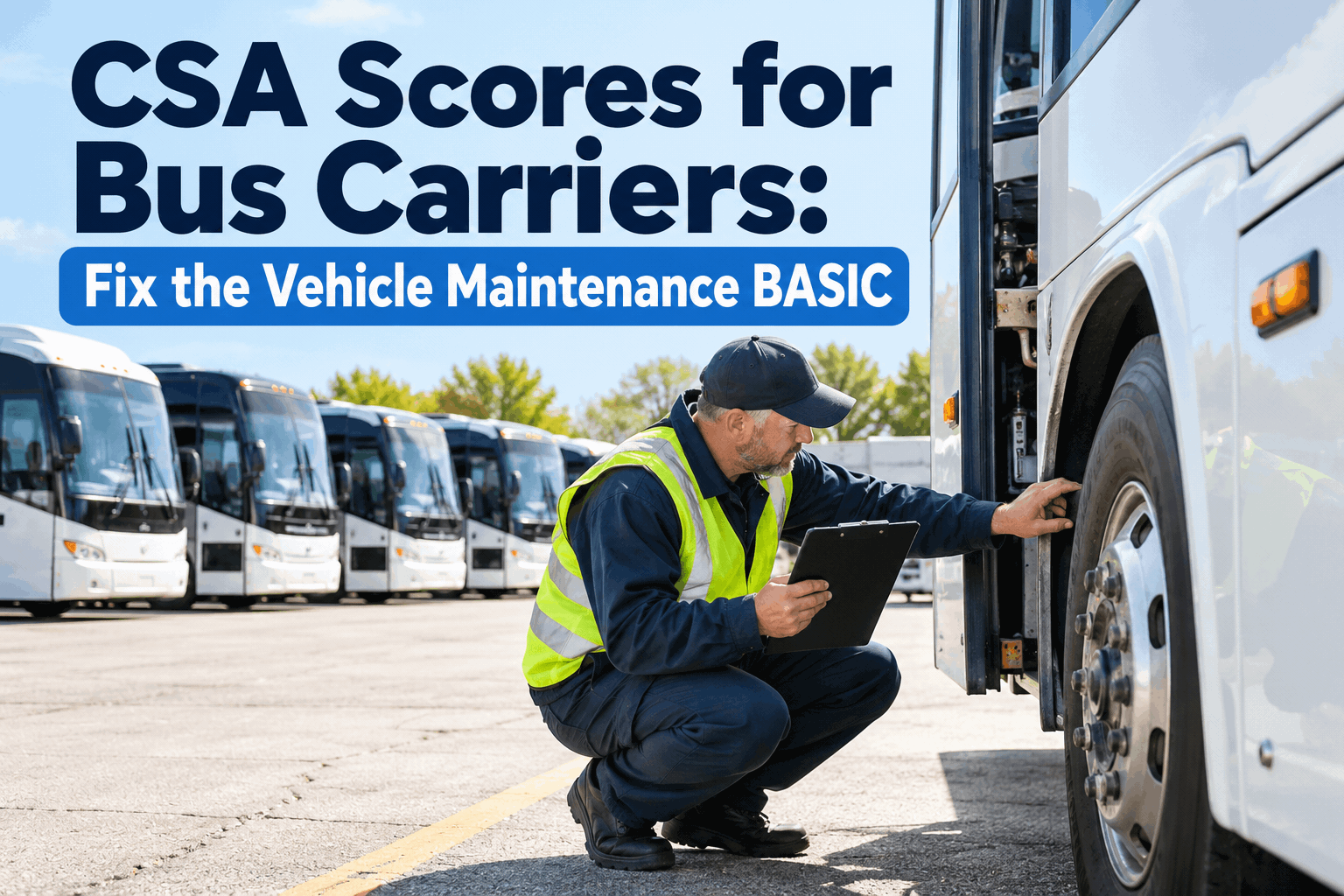
Vehicle Maintenance BASIC: This BASIC measures vehicle safety defects. Violations include inoperable brakes, worn tires, defective lights, faulty emergency equipment, and other safety defects discovered during roadside inspections. A bus operator can minimize vehicle maintenance violations through comprehensive preventive maintenance: regular brake inspection and service, tire replacement based on tread depth, light system checks, and emergency equipment inspection. A CMMS tracking maintenance and alerting when services are due helps prevent defects from developing. Carriers with poor vehicle maintenance BASIC scores face higher roadside violation rates.
Cargo-Related (for bus operators, not applicable): This BASIC applies to carriers transporting cargo. Buses primarily transport passengers, not cargo, so this BASIC is less relevant for bus operators. However, school bus operators transporting equipment or other cargo should ensure cargo is properly secured.
Driver Fitness BASIC: This BASIC measures violations related to driver qualification and licensing. Violations include drivers operating with expired commercial driver's licenses, missing medical certifications, unqualified drivers (lacking required endorsements), or drivers with disqualifying violations in their history. Bus operators prevent violations through systematic driver qualification file management: tracking license renewal dates, medical certificate expiration dates, and keeping records organized so expired credentials are caught before they become violations.
Controlled Substance and Alcohol (CSDA) BASIC: This BASIC measures drug and alcohol violations. Violations include drivers testing positive on mandatory drug tests, refusing drug tests, or violating alcohol policies. Transit agencies and charter operators subject to federal drug and alcohol testing programs should have comprehensive testing policies and document test results. A robust drug and alcohol testing program demonstrates compliance and reduces violations in this BASIC.
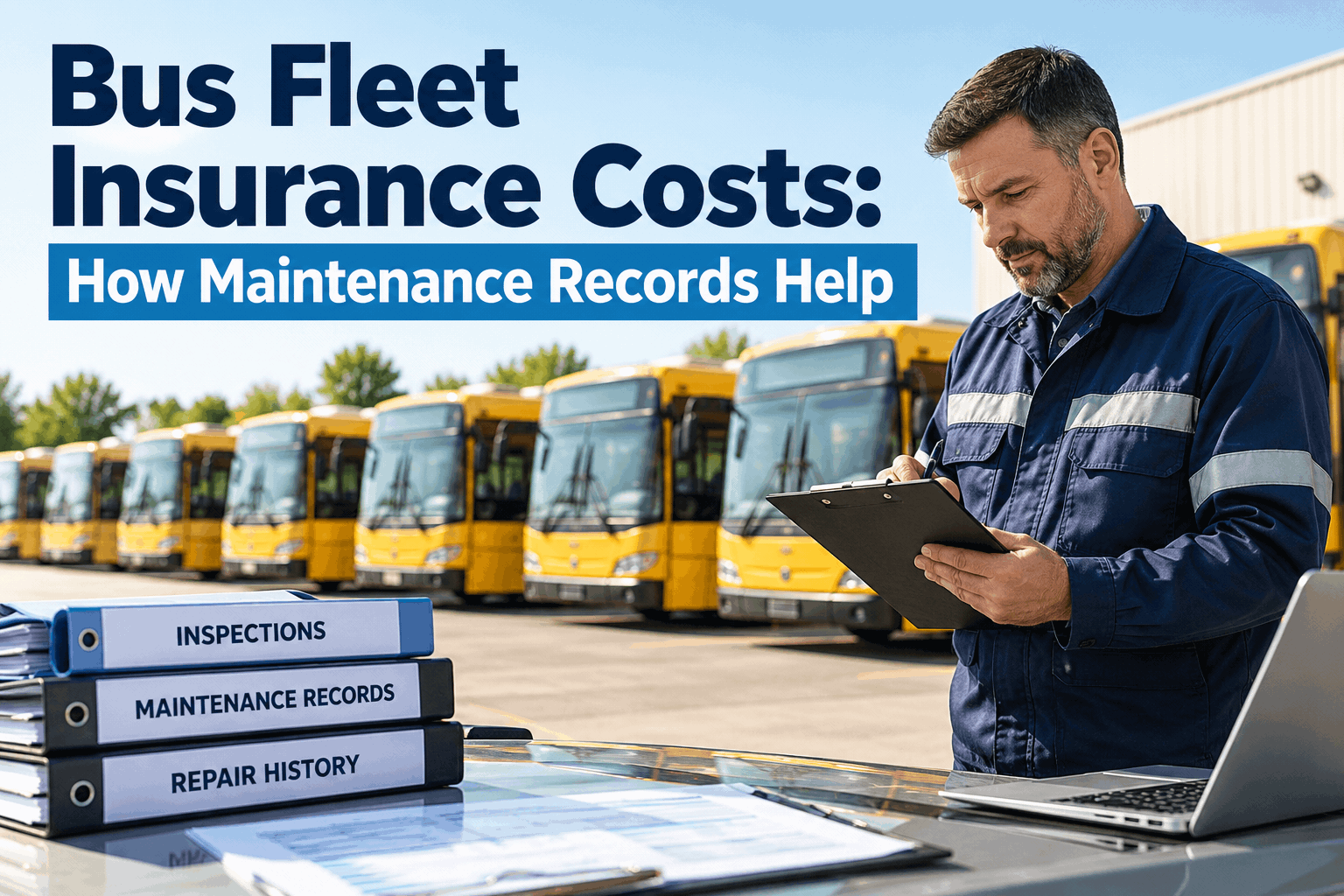
Vehicle Inspection, Repair, and Maintenance (VIRM) BASIC: This BASIC measures compliance with vehicle inspection and maintenance documentation requirements. Violations include failure to maintain required inspection reports, failure to document vehicle repairs, or inadequate maintenance records. A CMMS that documents all inspections and maintenance helps operators comply with VIRM requirements. Systematic documentation demonstrates the carrier is maintaining vehicles properly and documenting that maintenance.
How Violations Affect CSA Scores
Violation weighting and severity: Not all violations affect CSA scores equally. FMCSA weights violations based on severity: critical violations (directly related to safety) have higher weight than minor violations. A brake violation (safety-critical) has more impact on CSA scores than a documentation violation. Multiple violations in the same category accumulate, with each new violation further degrading the score. A single violation may not significantly impact CSA; a pattern of violations in the same BASIC drives poor CSA scores.
Recency decay: Violations are given more weight if they're recent. A violation from 6 months ago affects CSA scores more than a violation from 3 years ago. This recency-based weighting means operators can improve CSA scores over time by eliminating violations. An operator with poor CSA can recover by operating safely for 6-12 months without new violations. CSA scores are therefore not permanent judgments—they're current safety performance measures that improve when safety improves.
Number of violations and frequency: The total number of violations across all BASICS affects overall CSA scoring. A carrier with one violation in one BASIC scores better than a carrier with violations spread across multiple BASICS. This means operators should focus on eliminating violations systematically rather than ignoring chronic problems in one area. A carrier with consistent brake violations (indicating poor vehicle maintenance) should prioritize brake maintenance improvements.
Threshold levels and regulatory action: FMCSA defines threshold levels for CSA scores that trigger regulatory attention. A score above the threshold indicates the carrier may be contacted for compliance review. Scores well above the threshold may result in comprehensive audits or operating restrictions. The exact thresholds vary by BASIC and are periodically adjusted. Operators should know their current scores and thresholds, and aim to maintain scores below the regulatory attention level.
Strategies to Improve CSA Scores
Safety culture as the foundation: Improving CSA scores starts with organizational commitment to safety. This means drivers understand that safety is non-negotiable, management allocates resources to safety programs, and violations are taken seriously. A carrier with strong safety culture focuses on preventing violations rather than managing CSA scores reactively. Safety-first organizations naturally maintain lower CSA scores because safety-safe operations produce fewer violations.
Preventive maintenance to reduce vehicle violations: Vehicle maintenance BASIC scores improve through comprehensive preventive maintenance. Regular brake inspections and service, tire replacement based on tread depth, light system checks, and safety equipment maintenance reduce violations. A CMMS that schedules maintenance, documents completion, and alerts when services are due ensures preventive maintenance is consistent. Carriers that maintain vehicles well pass roadside inspections without violations.
Driver training and coaching to reduce unsafe driving: Unsafe driving violations decrease through driver training. All drivers should receive training on safe driving practices, hours of service regulations, and company safety policies. New drivers should receive more intensive training. Ongoing coaching of drivers with violations helps them improve behavior. Telematics monitoring allows identification of unsafe driving behaviors (speeding, harsh braking) followed by coaching conversations with drivers.
Driver qualification file management to prevent driver fitness violations: Maintaining complete and current driver qualification files prevents driver fitness violations. These files should include: current commercial driver's license (with verification of expiration date), medical certification (with tracking of renewal dates), proof of training and certification, and verification of driving record. A system that tracks these documents and alerts when renewals are approaching ensures files stay current.
Drug and alcohol testing program to manage CSDA violations: A comprehensive drug and alcohol testing program including pre-employment, random, reasonable-suspicion, and post-accident testing prevents CSDA violations. Testing should be documented systematically with records retained. Policies should clearly specify what positive results mean for employment. A documented testing program demonstrates the carrier takes substance abuse seriously.
Documentation and records management: Violations in VIRM (vehicle inspection and maintenance) BASIC are often documentation-related: failure to maintain inspection reports, incomplete maintenance records, missing documents. A CMMS that automatically documents maintenance and generates compliance reports reduces documentation violations. Digital records that are searchable and reportable demonstrate compliance more effectively than scattered paper files.
Continuous monitoring and improvement: Operators should monitor their CSA scores regularly (SafetyNet provides access to current scores). When violations occur, analyze root causes and implement corrective actions. If one driver has multiple unsafe driving violations, provide additional training or remove the driver from operation. If vehicle maintenance violations are occurring, conduct a fleet inspection and identify maintenance gaps. CSA improvement requires ongoing attention, not one-time interventions.
CSA Scores in Business Decisions
Insurance company use of CSA scores: Insurance companies use CSA scores to assess carrier risk and set premiums. A carrier with excellent CSA scores (low numbers indicating good performance) will pay lower insurance premiums. A carrier with poor CSA scores will pay higher premiums or may not qualify for insurance at all. For a bus operator, CSA score improvement directly translates to insurance savings. A 50-bus fleet paying $200,000 annually for insurance might save $20,000-$40,000 by improving CSA scores through better safety performance.
Customer and contract decisions: Charter customers, transit agencies, and other customers often require acceptable CSA scores as a contract condition. Some customers specify maximum acceptable CSA thresholds. A carrier with poor CSA scores loses contract opportunities. A carrier with excellent CSA scores can pursue higher-value contracts. For small charter operators competing for business, CSA scores can be a competitive differentiator. Operators with excellent CSA scores can market that distinction and charge premium pricing.
Financing and lending decisions: Lenders and financing companies consider CSA scores when evaluating carrier creditworthiness. A carrier with poor CSA scores is considered higher-risk and may face higher financing costs or inability to obtain credit. A carrier with excellent CSA demonstrates operational stability and safety, making financing more accessible.
Regulatory attention and operational burden: Carriers with poor CSA scores face increased regulatory attention: additional roadside inspections, comprehensive audits, mandatory safety training, and possible operating restrictions. These regulatory actions consume management time and resources. A carrier can avoid this burden through proactive safety improvement maintaining low CSA scores.
CSA Resources and Information
Accessing your CSA scores: All carriers subject to FMCSA regulations can access their CSA scores through the SafetyNet database at FMCSA's website. You need your USDOT number to log in. CSA scores are updated regularly as new inspection and crash data is added. Monitor your scores monthly to identify trends and violations requiring attention.
Understanding benchmark information: FMCSA publishes industry benchmarks showing average CSA scores by carrier type and BASIC. Comparing your scores to benchmarks shows whether your performance is better or worse than industry average. If your unsafe driving BASIC is significantly above benchmark, that indicates a problem relative to similar carriers. Benchmarks help operators understand their relative safety performance.
Using SAFETYNet data: In addition to CSA scores, SafetyNet provides detailed violation data: specific violations recorded, dates of violations, and roadside inspection reports. This detailed data helps operators identify patterns (which drivers have violations, which components are defective, which inspectors are finding violations). Detailed analysis drives targeted improvements.
CSA Scoring Questions
How often are CSA scores updated?
CSA scores are updated continuously as new violations are recorded. However, scores are typically updated monthly or quarterly with batch processing of inspection data. Operators should check their scores at least monthly. Violations from roadside inspections may take weeks to appear in CSA, so recent safe operations may not immediately improve scores, but continued safe operations will improve scores over time.
Can a single violation significantly damage CSA scores?
Not typically. A single minor violation has minimal impact on CSA scores. A single serious violation (crash with injuries, critical brake failure) may have noticeable impact, but one violation alone doesn't create poor CSA scores. Poor CSA scores result from patterns of violations over time. An operator with one safety violation likely has acceptable CSA scores.
How long do violations stay on CSA?
Violations affect CSA scores with a recency decay. Violations are weighted most heavily in the current period and gradually lose weight over time. A violation from 6 months ago still impacts CSA but less than a violation from last month. Violations effectively fall out of CSA scoring after approximately 3-4 years. This recency-based approach means operators can recover from past poor performance by operating safely going forward.
What CSA scores should I target?
FMCSA publishes threshold levels for each BASIC. Scores below the threshold indicate acceptable performance. Operators should aim for scores well below thresholds in all BASICS. Industry leaders typically have scores in the range of 40-60 (with lower being better). A new carrier with no violation history might have scores around 20-30. Target scores that place you in the safest quartile of carriers.
Do small violations (expired inspection sticker) affect CSA as much as safety violations?
No. FMCSA weights violations by severity. A safety-critical violation (brake failure, steering defect) has more impact than a documentation violation (missing inspection certificate). Operators should prioritize eliminating serious safety violations. Documentation violations are important for compliance but have less CSA impact than vehicle safety defects.
How can a manager improve CSA scores?
Preventive maintenance, driver training, hours of service compliance, drug and alcohol testing, and documentation practices all reduce CSA violations. Systematically addressing each BASIC improves overall scores. A CMMS that tracks maintenance due dates, maintains driver files, and documents compliance reduces violations. Safety-focused management and adequate resourcing of safety programs improve CSA scores over time.
Does CSA affect my ability to get new contracts?
Yes. Many customers require acceptable CSA scores as a contract condition. Customers want to work with safe carriers. Poor CSA scores indicate higher safety risk and may disqualify you from contracts. Excellent CSA scores are a selling point that attracts high-value contracts and customers willing to pay premium pricing for reliable, safe transportation.
Improve Your CSA Scores and Safety Performance
CSA scores directly impact insurance costs, contract opportunities, and regulatory burden. Understand your current scores, identify improvement opportunities, and implement systematic safety improvements. A CMMS designed for fleet operations helps you track maintenance, manage driver files, and document compliance, all of which support CSA score improvement.