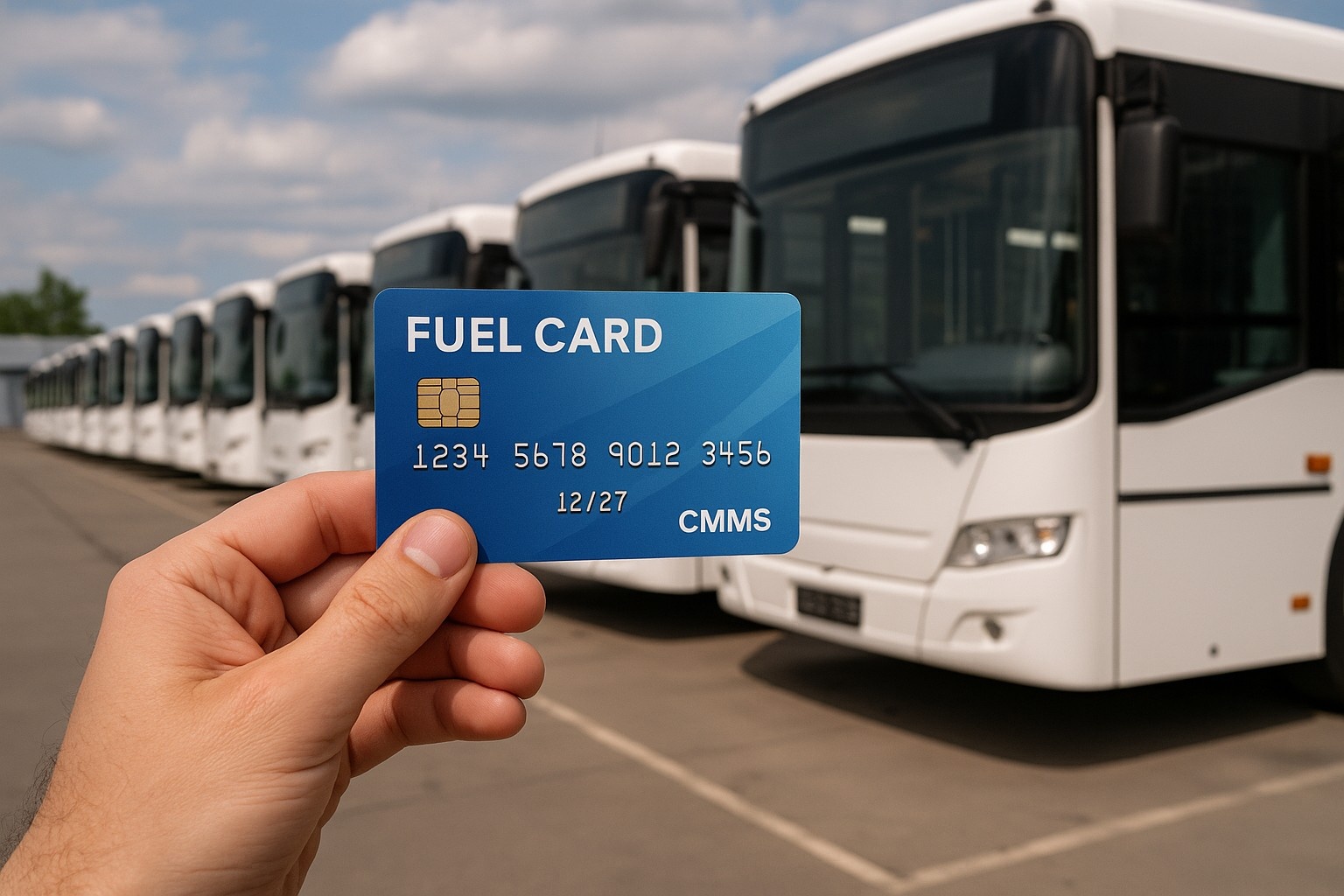
If you're managing a bus fleet in today's competitive manufacturing and transportation landscape, you know that every penny counts. The difference between profit and loss often comes down to how efficiently you manage two critical areas: fuel consumption and maintenance operations. Here's the game-changer: integrating your fuel card system with your Computerized Maintenance Management System (CMMS) can deliver ROI improvements of 25-40% within the first year alone.
Let's dive into how this powerful integration can transform your fleet operations and put more money back in your pocket.
The Hidden Cost Drain in Disconnected Systems
Picture this scenario: Your maintenance team notices Bus #47 consuming 20% more fuel than identical vehicles in your fleet. Meanwhile, your fuel card data sits in a separate system, requiring manual cross-referencing to identify patterns. By the time you connect the dots, you've already burned through thousands of dollars in excess fuel costs.
This disconnect between fuel management and maintenance systems costs US fleet operators an average of $3,200 per vehicle annually in:
- Undetected fuel inefficiencies
- Delayed maintenance interventions
- Administrative overhead from manual data reconciliation
- Missed opportunities for predictive maintenance
- Fuel theft or unauthorized usage going unnoticed
How Integration Supercharges Your Fleet Performance
When your fuel card system talks directly to your CMMS, magic happens. Real-time fuel consumption data flows seamlessly into your maintenance planning, creating a comprehensive view of each vehicle's health and efficiency.
1. Predictive Maintenance Based on Actual Usage
Instead of relying on mileage alone, integrated systems track actual fuel consumption patterns to predict maintenance needs more accurately. A sudden spike in fuel usage often indicates engine problems, tire pressure issues, or other maintenance concerns before they become costly breakdowns.
2. Automated Alerts and Workflows
Set up intelligent triggers that automatically create work orders when fuel efficiency drops below threshold levels. For example, if a bus shows a 10% increase in fuel consumption over a week, your CMMS can automatically schedule an inspection and notify the maintenance team.
3. Comprehensive Cost Analysis
See the complete picture of your total cost of ownership (TCO) per vehicle. Integration allows you to track fuel costs alongside maintenance expenses, parts usage, and labor hours in a single dashboard, making it easier to identify which vehicles are draining your profits.
Ready to Maximize Your Fleet ROI?
See how BusCMMS can integrate your fuel card data and transform your fleet operations
Getting StartedBook a Demo
Real-World ROI: The Numbers Don't Lie
Let's break down the actual financial impact with a real-world example from a 50-bus fleet operation in Ohio:
Before Integration:
- Annual fuel costs: $875,000
- Maintenance costs: $425,000
- Administrative overhead: $65,000
- Total operational costs: $1,365,000
After Integration (Year 1):
- Fuel costs reduced by 12%: $770,000 (saved $105,000)
- Maintenance costs reduced by 18%: $348,500 (saved $76,500)
- Administrative overhead reduced by 40%: $39,000 (saved $26,000)
- Total operational costs: $1,157,500
- Total savings: $207,500 (15.2% reduction)
The integration investment of $45,000 paid for itself in less than 3 months, with ongoing annual savings exceeding $200,000.
Implementation Best Practices for US Fleet Operators
Successfully integrating fuel cards with your bus fleet CMMS requires strategic planning and execution. Here's your roadmap to success:
1. Choose Compatible Systems
Ensure your CMMS supports API integration with major fuel card providers like WEX, Fuelman, or Fleet One. Modern CMMS platforms should offer pre-built integrations or flexible API capabilities.
2. Define Your KPIs
Establish clear metrics for success before implementation:
- Target fuel efficiency improvements (typically 10-15%)
- Maintenance cost reduction goals
- Administrative time savings
- Vehicle uptime improvements
3. Phase Your Rollout
Start with a pilot program on 5-10 vehicles to iron out any integration issues and demonstrate value before fleet-wide deployment. This approach minimizes risk and builds buy-in from skeptical team members.
4. Train Your Team
Invest in comprehensive training for both maintenance staff and drivers. When everyone understands how integrated data improves operations, adoption rates soar and ROI accelerates.
Overcoming Common Integration Challenges
While the benefits are clear, some fleet managers hesitate due to perceived challenges. Let's address the most common concerns:
Data Security Concerns: Modern integration uses encrypted APIs and secure data protocols. Your sensitive fuel and maintenance data remains protected while enabling powerful analytics.
Implementation Complexity: With the right CMMS partner, integration can be completed in days, not months. Cloud-based solutions eliminate the need for complex IT infrastructure.
Change Management: Yes, your team will need to adapt to new workflows. However, when they see how integration eliminates manual data entry and improves their daily work, resistance quickly turns to enthusiasm.
Transform Your Fleet Operations Today
Join hundreds of US fleet operators who've already discovered the power of integrated fuel and maintenance management
Getting StartedBook a Demo
Conclusion: Your Competitive Edge Awaits
In today's tight-margin transportation and manufacturing environment, integrated fuel card and CMMS systems aren't just nice-to-have—they're essential for survival and growth. The data is clear: fleets that embrace integration see immediate cost reductions, improved vehicle reliability, and enhanced operational efficiency.
The question isn't whether you should integrate your fuel cards with your bus fleet CMMS—it's how quickly you can implement this game-changing technology. Every day you wait is money left on the table and competitive advantage surrendered to more forward-thinking operators.
Take the first step toward maximizing your fleet ROI. Your bottom line—and your stress levels—will thank you.
Frequently Asked Questions
Most modern CMMS platforms can complete fuel card integration within 3-7 business days. The process includes API setup, data mapping, and testing. Cloud-based systems like BusCMMS often offer pre-built integrations that can be activated in as little as 24 hours, with full deployment across your fleet within two weeks.
Leading CMMS platforms support integration with major US fuel card providers including WEX, Fuelman, Fleet One, Comdata, and Voyager. Most systems use standard APIs, making it possible to integrate virtually any fuel card provider that offers data export capabilities. Always verify compatibility during your CMMS selection process.
Based on industry data, most fleet operators see positive ROI within 3-6 months. Initial savings come from reduced fuel consumption (10-15%) and decreased administrative time (30-40%). By month 12, typical fleets report total operational cost reductions of 15-25%, with some achieving up to 40% improvement in specific areas like fuel theft prevention.
Absolutely. Integration creates powerful anomaly detection capabilities. The system can flag unusual fuel purchases (wrong location, odd times, excessive amounts) and cross-reference them with vehicle assignments and routes. Many fleets report catching fuel theft within weeks of integration, often recovering the entire integration cost through theft prevention alone.
No. Modern cloud-based CMMS solutions handle all technical maintenance and updates automatically. Once initial integration is complete, the system runs autonomously. Your team focuses on using the insights, not maintaining the technology. Most providers offer 24/7 support for any issues, eliminating the need for specialized IT resources.
Start Saving Today
Don't let disconnected systems drain your profits. See how easy integration can be with a personalized demo.
Getting StartedBook a Demo