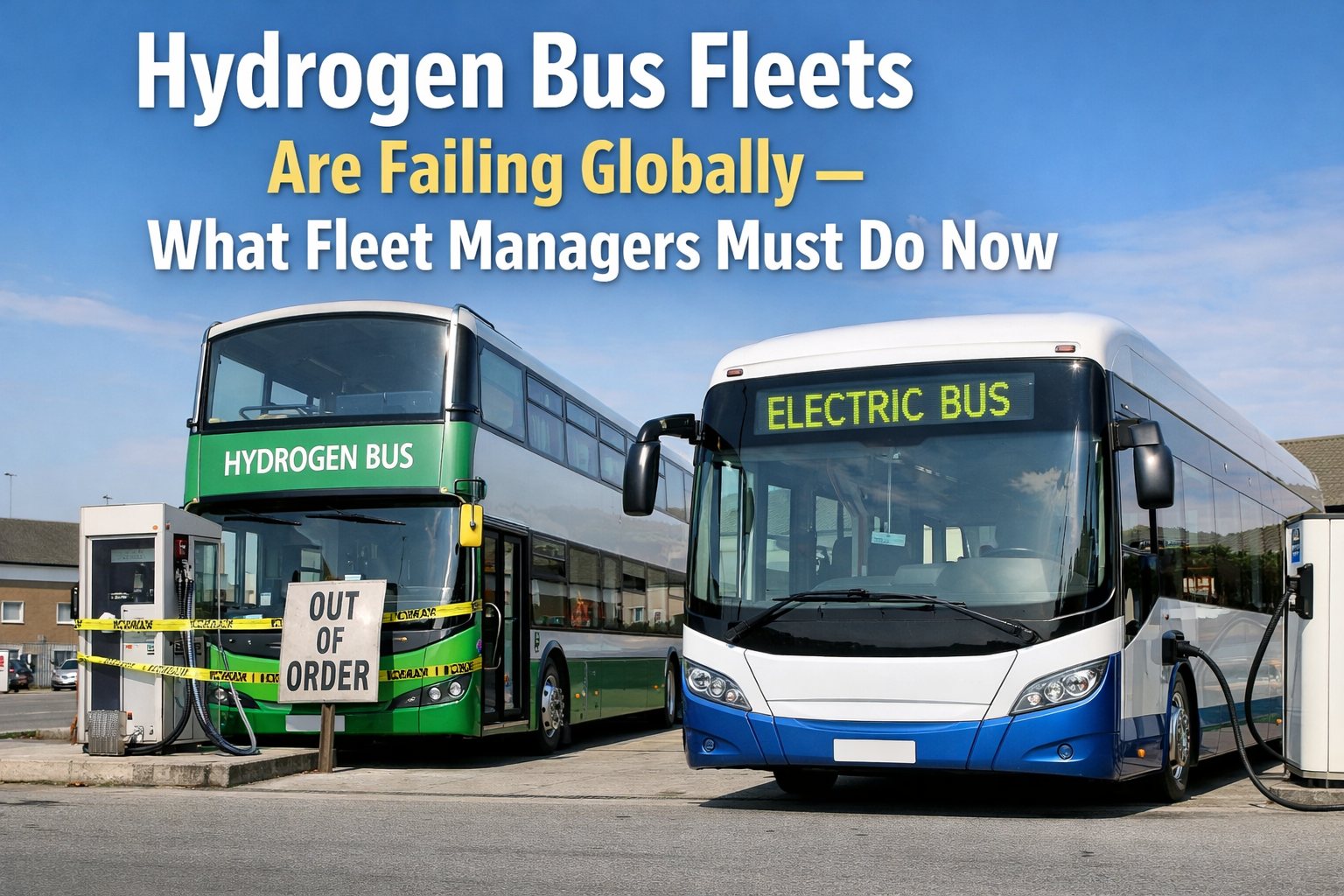
Aberdeen just scrapped the world's first hydrogen double-decker bus fleet after those buses sat idle for 18 months. Liverpool is converting its hydrogen fleet to battery electric—half of those buses never carried a single passenger. Paris shuttered the world's largest hydrogen taxi operation. Poland's hydrogen program is collapsing across 26 cities simultaneously. This isn't a technology hiccup. It is a pattern: refuelling infrastructure fails, hydrogen supply becomes unreliable, costs spiral, and battery electric buses sitting in the same depots keep running without drama. If your agency is evaluating hydrogen versus electric, this is the evidence-based comparison you need before committing millions to a technology that's failing everywhere it's been deployed at scale.
What Actually Happened: The Timeline
The failures followed identical patterns. Infrastructure promised but never delivered. Refuelling stations that couldn't maintain reliability. Operating costs that exceeded projections by 200-300%. And always, battery electric alternatives that simply worked.
Every failure followed the same sequence: infrastructure promised, supply chain collapsed, costs escalated, buses parked. Agencies managing this transition need systems that track both technologies simultaneously. Sign up for BusCMMS to manage your zero-emission fleet transition.
The Numbers That Killed Hydrogen
Real-world operating data from European fleets tells the story. These aren't projections—they're documented costs from cities that actually ran both technologies.
These aren't theoretical concerns. Aberdeen's entire fleet sat idle for 18 months because one refuelling station failed. Electric buses don't have this single-point-of-failure risk. Book a demo to see how to track electric fleet transitions.
Why Infrastructure Keeps Failing
The pattern across Aberdeen, Liverpool, Paris, and Poland reveals identical failure points. Hydrogen infrastructure isn't just expensive—it's fragile.
Battery electric buses connected to the grid don't face these cascading failures. Managing the transition requires tracking every asset, every charging session, and every maintenance event. Sign up for BusCMMS to track your fleet transition properly.
Expert Review: What Transit Agencies Are Actually Doing
The agencies that invested in hydrogen aren't doubling down—they're converting to electric. Here's what the decisions look like in real operations.
The shift is happening now. Agencies converting from hydrogen need maintenance systems that can handle both technologies during transition—and then scale with their electric fleet. Schedule a demo to see fleet transition management in action.
If You're Still Evaluating: The Decision Framework
The evidence from global deployments is now conclusive. Here's what the data says about each technology's fit.
Transit agencies that chose battery electric aren't scrambling to find hydrogen suppliers or watching fleets sit idle. They're running routes. Sign up now to set up your electric fleet maintenance system.
Frequently Asked Questions
Why did Aberdeen scrap its hydrogen bus fleet?
Aberdeen's 25 hydrogen double-decker buses were pulled from service in late 2024 when refuelling stations at Kittybrewster and Cove failed and couldn't be repaired. The buses sat idle for over 18 months. In early 2026, the council formally announced it would sell the fleet and dissolve its partnership with BP, pivoting entirely to battery electric buses. The council cited rapid advancement in EV technology and diminishing demand for hydrogen in transport as key factors.
How much more expensive are hydrogen buses to operate than electric?
Real-world data from European operations shows hydrogen buses cost 2.3× more per kilometer to operate than battery electric buses (Italian study of South Tyrol fleet). Energy costs alone are €0.74/km for hydrogen versus €0.21/km for battery electric. A French CATP study found hydrogen buses cost 41% more over their 15-year lifetime—approximately €1.3M versus €920K per bus. Infrastructure costs are also 3-4× higher for hydrogen.
What happened to Liverpool's hydrogen buses?
Liverpool received 20 hydrogen buses split between Arriva and Stagecoach in 2023. Despite the £10M investment, only 450 passenger journeys were completed. Stagecoach's 10 buses never carried a single passenger due to persistent hydrogen supply problems. In late 2025, Liverpool announced it would convert all 20 buses to battery electric, with the vehicle supplier covering conversion costs. The council called the original project "a waste of time and money."
Can hydrogen buses be converted to battery electric?
Yes, but conversion is expensive—typically $300,000 to $500,000 per bus. Liverpool is pursuing this route with the supplier covering costs. For many agencies, the economics favor purchasing new battery electric buses ($700,000-$900,000 with warranty and possible subsidies) rather than converting. Fuel cell buses already have motors and inverters but require complete removal and replacement of hydrogen storage, fuel cells, and structural modifications.
What maintenance system do I need for transitioning to electric buses?
Electric bus fleets require tracking battery State of Health, charging infrastructure uptime, high-voltage inspection protocols, warranty documentation, and thermal management systems. Your CMMS needs electric-specific inspection templates, automated alerts for battery degradation thresholds, and charging session logging. If transitioning from hydrogen, you'll need a system that can manage both technologies during the conversion period before scaling with your electric fleet.