In final-mile e-commerce logistics, delivery vans rack up miles at a relentless pace. Unlike long-haul over-the-road trucks, an e-commerce delivery vehicle undergoes a "severe duty" lifecycle characterized by hundreds of daily stops, constant idling, and rapid odometer accumulation. This unique operational profile breaks down standard maintenance schedules. If your fleet manages high-mileage assets using traditional calendar-based service windows, your cost per mile (CPM) will quickly spiral out of control due to unexpected roadside breakdowns and premature component failures. Keeping high-mileage vans safe and profitable requires a structural transition from reactive fixes to usage-driven, predictive maintenance tracking. This guide explores the mechanical realities of high-mileage delivery fleets, outlines key benchmarking metrics, and provides a step-by-step roadmap to automate severe-duty maintenance workflows.
E-commerce Logistics
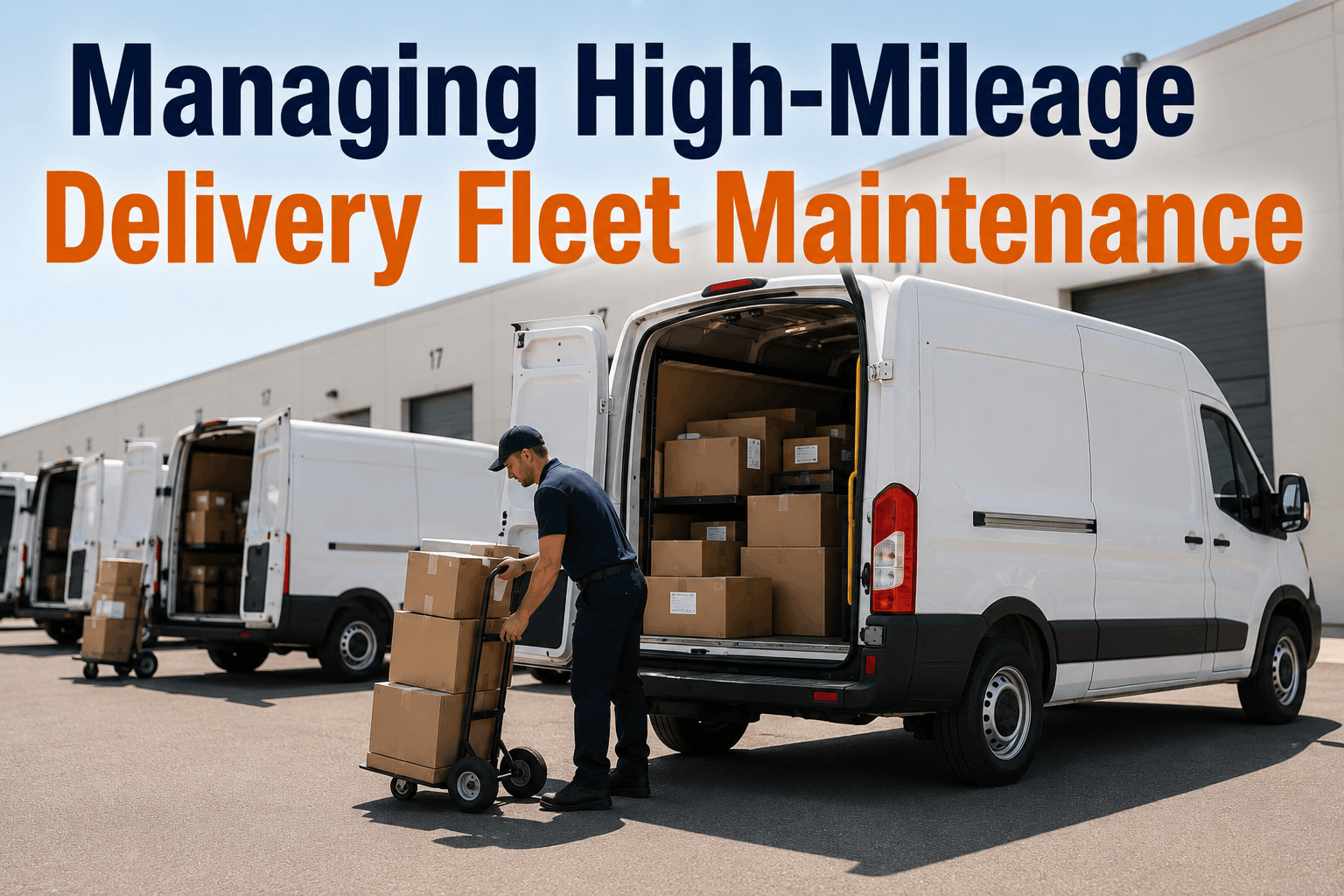
Managing High-Mileage Delivery Fleet Maintenance
Delivery vans rack up miles fast. Learn how to optimize severe-duty preventative maintenance routines, extend vehicle lifespans, and keep your cost per mile under control.
Why High-Mileage E-commerce Fleets Break Down Faster
High mileage on an e-commerce delivery vehicle is fundamentally different from high mileage on a highway cruiser. The constant stop-and-go nature of parcel delivery accelerates mechanical degradation, meaning standard wear-and-tear projections no longer apply once a van crosses critical mileage thresholds.
Reason 1: Severe Stop-and-Go Duty Cycles
Braking, accelerating, and turning hundreds of times per shift places immense thermal and mechanical stress on the braking system, transmission assemblies, and suspension components, compounding odometer wear.
Reason 2: High Engine Hours vs. Mileage
Delivery vans spend significant periods idling at loading docks and curbsides. The odometer doesn't capture these operational hours, leading to severely delayed oil changes and premature engine internal wear.
Reason 3: Peak Season Utilization Crises
During high-volume fulfillment peaks, operations often delay routine maintenance inspections to keep vans on delivery routes. For a high-mileage vehicle, skipping a single service window can cause catastrophic failure.
Reason 4: Fragmented Component Tracking
As vehicles age, components are replaced at various intervals. Without a centralized tracking system, fleet managers lose visibility over which secondary parts are nearing their individual operational limits.
The Strategic High-Mileage Tracking Framework
To effectively control your total cost per mile (CPM) as your fleet ages, your maintenance strategy must shift from treating the vehicle as a single asset to tracking it as an ecosystem of distinct lifecycles.
Key Maintenance Metrics & Target Areas
Target: Brake System Integrity
High-mileage final-mile vans consume friction material rapidly. Fleet managers must track exact pad thickness degradation trends rather than relying on standard time intervals.
Target: Fluid Degradation Indexes
Oil, transmission, and coolant fluids breakdown faster under high thermal engine loads. Regular fluid analysis alerts shops to internal engine wear before visible smoke or failure occurs.
Target: Electrical & Starter Health
Dozens of engine starts per day degrade starters, alternators, and auxiliary batteries. High-mileage checkups must include automated battery cranking health and charging system tests.
Target: Steering and Suspension Wear
Frequent curb-jumping and heavy cargo loads fatigue ball joints, tie rods, and struts. Routine suspension tolerance tracking prevents costly out-of-alignment tire wear.
The Action Plan: Implementing Usage-Driven Workflows
Stop guessing when an asset needs attention. Implement an automated, high-mileage preventative maintenance program within your fleet CMMS:
1
Transition to Telematics Meter Triggers
Link real-time odometer data directly to your CMMS. Service alerts will generate exactly when a van hits its designated mileage limit, removing human tracking errors.
2
Deploy Severe-Duty Inspection Checklists
Create high-mileage specific digital inspection forms that force technicians to check internal components, suspension tolerances, and belt wear on vehicles over 100k miles.
3
Establish Part-Level Lifecycle Tracking
Track the installation dates and precise mileages of replacement parts like alternators or water pumps. Anticipate secondary failures and schedule repairs before they happen.
4
Monitor Cost Per Mile (CPM) Anomalies
Run automated cost reports per vehicle asset. When an aging delivery van's maintenance costs spike above its residual value, the system flags it for structured replacement.
"We operate an e-commerce delivery fleet of 85 vans, and within 18 months, almost every vehicle enters a high-mileage status. We used to rely on standard calendar schedules for maintenance, which resulted in a massive surge of roadside breakdowns during the holiday peak season. Our cost per mile went completely out of control. Transitioning to telematics-triggered preventative work orders changed everything. We now catch suspension and starter issues before our drivers leave the warehouse. Our breakdown rate dropped by 41%, and we extended our average vehicle lifespan by an additional 40,000 profitable miles."
— Fleet Operations Manager, Final-Mile Logistics, California
Take Control of Your High-Mileage Fleet Metrics
Minimize costly roadside downtime and maximize asset utilization. Automate your final-mile delivery van preventative maintenance schedules today.