The chronic shortage of skilled heavy-duty diesel and alternative-fuel mechanics has turned workforce recruitment into a major bottleneck for transit and school bus operators. When a new technician joins your shop floor, an unstructured or slow training period can hurt your bottom line. It often takes months for a new hire to become fully profitable and comfortable working independently on complex air brake networks, high-pressure fuel lines, and multiplex electrical systems. During this slow ramp-up phase, shops frequently suffer from longer vehicle repair times, higher comeback rates (re-work due to initial repair errors), and increased safety risks in the bays. Leaving your onboarding process to informal "tribal knowledge" or unguided shop floor shadowing creates inconsistent habits and accelerates early employee turnover. To build a highly efficient, safety-first workforce, fleet managers must replace traditional verbal handoffs with digital, interactive training pathways. This comprehensive playbook explores the structural roadblocks that slow down new technicians, details critical competency checkpoints, and provides an actionable blueprint to digitize training procedures and cut ramp-up time by up to 50 percent.
Team Management
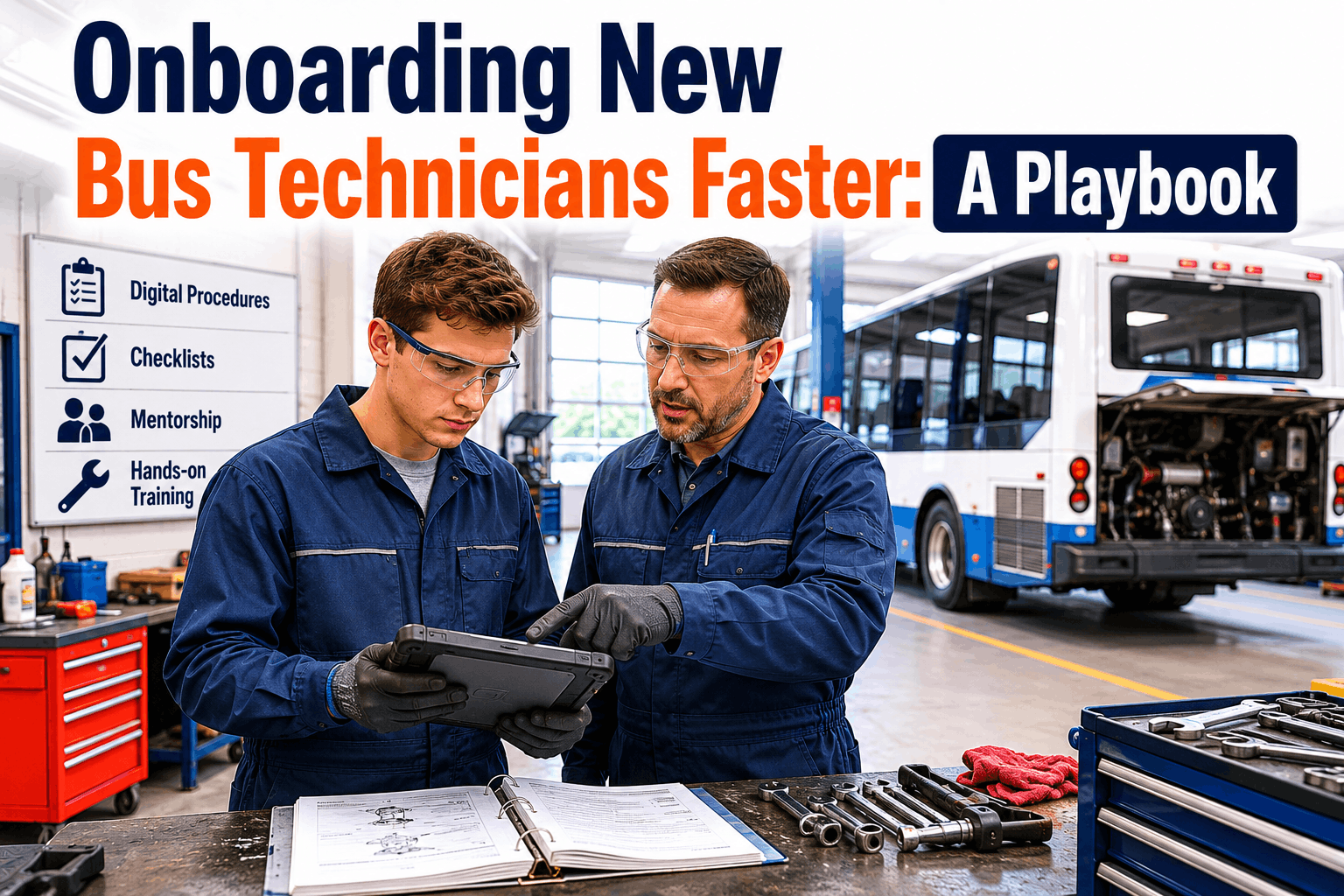
Onboarding New Bus Technicians Faster: A Playbook
New mechanics often take months to reach full productivity while risking costly early repair mistakes. Discover how standard digital procedures, automated checklists, and guided milestones accelerate technician efficiency.
Why Traditional Fleet Mechanic Training Falls Short
Most transit and school bus garages rely on an informal onboarding model: pairing a new hire with a senior technician and hoping the critical safety details are passed down verbally. While mentorship is incredibly valuable, an unstructured approach introduces significant operational vulnerabilities that delay independent work.
Reason 1: Over-Reliance on Toxic Tribal Knowledge
When standard operating procedures (SOPs) are not formally documented, new hires learn shortcuts or inconsistent habits from individual mentors. This lack of standardization makes tracking individual performance metrics across the shop impossible.
Reason 2: Multi-Platform System Overwhelm
Modern transit technicians must switch seamlessly between traditional diesel engines, high-pressure CNG systems, and high-voltage Electric Vehicle (EV) powertrains. Without clear, structured visual guides, diagnostic errors skyrocket.
Reason 3: Invisible Performance and Progress Gaps
Without a centralized, digital dashboard to track training milestones, service managers cannot accurately measure a new hire's speed, repair precision, or comprehension levels. This lack of data often results in premature independent assignments.
Reason 4: Frustration-Driven Early Turnover
A confusing, unorganized first few weeks makes technicians feel unsupported and disconnected from the team. In a highly competitive labor market, this administrative friction causes talented new hires to leave for organized competitor shops.
The Strategic Milestones of Modern Tech Onboarding
To transform a rookie hire or an automotive crossover mechanic into an elite, independent bus asset specialist, fleet management teams must replace vague training schedules with highly structured, clear competency targets.
Onboarding Target Checkpoints vs. Operational Risk
Target: Interactive Digital SOP Access
Shops must break down complex technical service bulletins into bite-sized, mobile-accessible digital work templates. Technicians should be able to view exact torque values, fluid specifications, and safety steps directly at the bumper.
Target: Phase-Gate Competency Architecture
Do not let new hires attempt complex engine overhauls or brake line re-plumbing on day one. Establish clear, formal milestones where simple preventive maintenance care must be mastered before moving on to heavy system diagnostics.
Target: Tooling & High-Voltage Shop Safety Rules
Enforce absolute compliance on lockout/tagout protocols, wheel-chocking procedures, and high-voltage safety apparel. Digital inspection templates should require safety confirmation photos before a technician can start a job.
Target: Comeback and Efficiency Tracking Analytics
Automate the monitoring of early work performance. Tracking the ratio of completed work orders to recurring component failures helps service managers spot specific training gaps before they turn into major audit penalties.
The Fix: Deploying a Digital Technician Onboarding Playbook
Stop losing valuable shop capacity to old-school, paper-based onboarding routines. Build an automated, guided technician ramp-up framework directly inside your fleet CMMS platform:
1
Embed Mandatory Guided Instructions in Work Orders
Build custom "Training Mode" PM templates within your software. These specialized checklists guide new hires step-by-step through complex procedures, ensuring they cannot skip critical inspection points.
2
Automate 30-60-90 Day Milestone Alerts
Program automated training intervals into your fleet tracking system. The software automatically alerts shop foremen when a new hire is due for practical skills testing, keeping training goals on track.
3
Enforce Digital Peer Verification Sign-offs
Require a digital co-signature from a certified mentor within the mobile app before a new hire can close out safety-critical work orders, such as steering overhauls or foundation brake replacements.
4
Monitor Individual Efficiency and Comeback Rates
Use clear dashboard analytics to review work quality during the onboarding period. Pinpointing where a mechanic struggles allows you to deliver targeted training and optimize overall shop bay efficiency.
"We used to struggle with a six-month ramp-up time for new bus mechanics, and early human errors frequently resulted in unexpected vehicle comebacks. It was a massive drain on our shop's productivity. Transitioning our onboarding tracking onto a structured, mobile CMMS platform changed everything. By embedding step-by-step digital instructions directly into daily repair orders and setting up mandatory peer sign-offs for safety tasks, we cut our onboarding time down to just four weeks. New mechanics now work independently with total confidence, our comeback rates have dropped significantly, and our senior mechanics can focus on keeping our fleet moving."
— VP of Maintenance, Regional Transit & Shuttle Fleet, Illinois
Build a Faster, Safer, More Productive Shop Floor
Stop letting unstructured training slow down your shop operations. Protect your fleet's uptime and streamline technician onboarding by deploying automated, digital step-by-step workflows today.