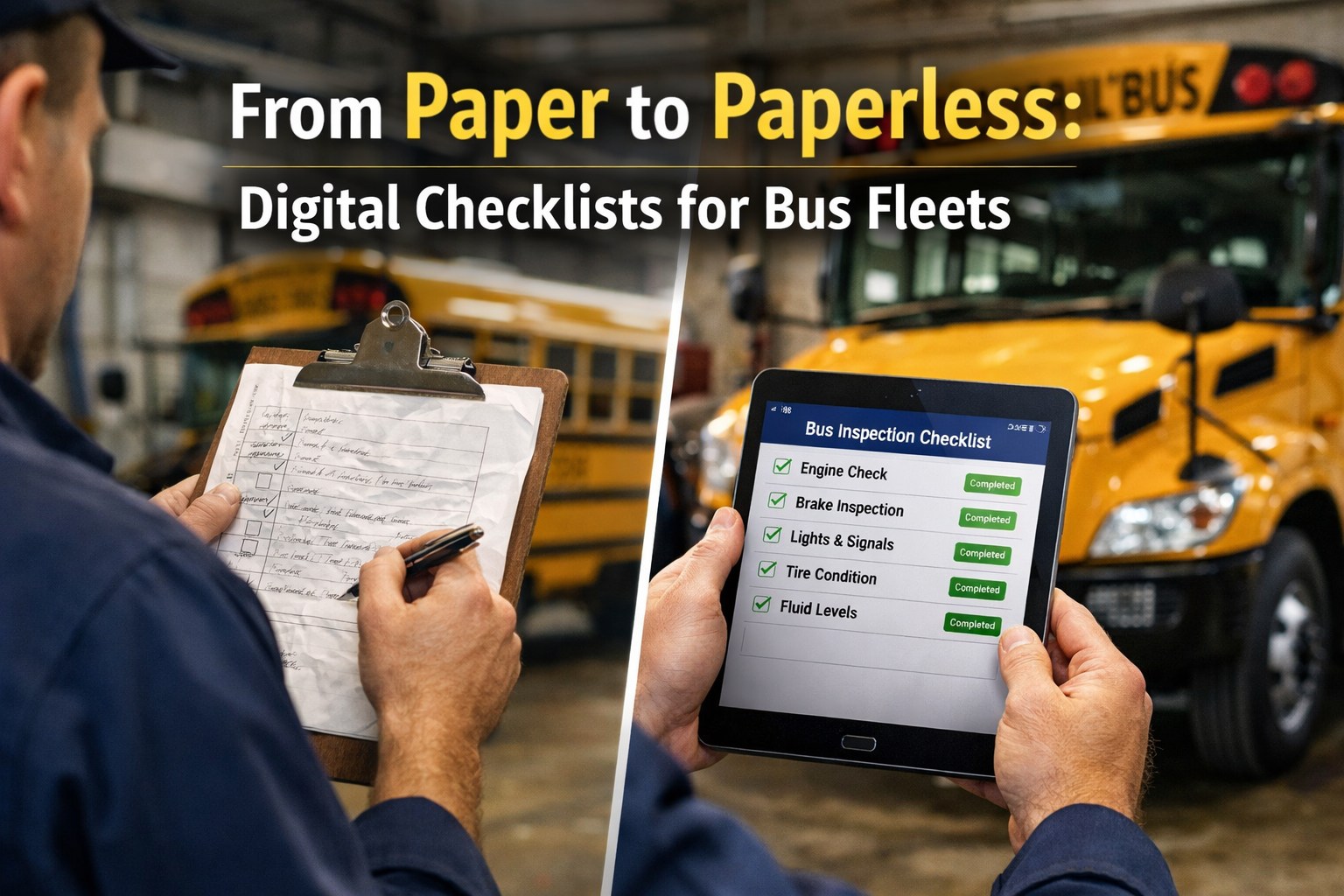
There's a term every fleet manager knows but rarely discusses openly: "pencil whipping." It's when drivers check every box on an inspection form without ever leaving their seat. The paper looks perfect. The vehicle? Never actually inspected.
This isn't a driver problem. It's a system problem. Paper forms have zero accountability—no timestamps proving when inspections happened, no GPS showing whether a walk-around occurred, no photos documenting actual conditions. The result? Defects go undetected. Breakdowns happen on routes. And when DOT shows up for an audit, those "completed" inspection forms become evidence of negligence.
Why Paper Inspections Fail
No Proof It Happened
Paper forms look identical whether the inspection took 20 minutes or 20 seconds
Days of Delay
Forms sit in folders until end of week—defects fester into major repairs
Illegible Records
Handwritten notes are useless during audits when no one can read them
Zero Accountability
No way to verify who inspected what, when, or if they actually did
29%
of trucks in injury/fatal crashes had brake problems that should have been caught in pre-trip inspections
— FMCSA Crash Data
How Digital Checklists Change Everything
Digital inspection apps don't just digitize paper—they fundamentally change what's possible. Here's how:
GPS-Verified Walk-Arounds
The app tracks location for every checklist item. If a driver completes the entire inspection from one spot, the system flags it. Managers see proof of genuine walk-arounds—or evidence of pencil whipping.
Photo Documentation
Drivers snap photos of damage, wear, or concerns directly in the app. Maintenance sees exactly what the driver saw—no miscommunication, no disputes about what was observed.
Instant Defect Alerts
Failed items trigger immediate notifications to maintenance. Work orders generate automatically. What took days with paper now happens in minutes.
Audit-Ready Records
Every inspection is timestamped, archived, and searchable. DOT audits become stress-free when you can pull any record in seconds.
See GPS-verified inspections in action
Watch DemoThe Numbers: Paper vs. Digital
Annual Savings Potential (50-Bus Fleet)
Paper & printing eliminated
$3,000
Admin time saved
$8,500
Faster repairs (less downtime)
$15,000
Total Annual Savings
$26,500+
What to Look for in Digital Inspection Software
Offline Functionality
Buses get inspected in yards with poor signal. The app must work offline and sync when connected.
Custom Checklist Templates
Different vehicle types need different inspections. Create unlimited templates for your specific needs.
Automatic Work Order Creation
Failed items should generate work orders instantly—no manual data entry, no delays.
Digital Signatures
Capture driver and mechanic signatures for complete accountability and compliance documentation.
Overdue Inspection Alerts
Get notified immediately when scheduled inspections are missed. Nothing falls through the cracks.
"The clipboard is dead. Paper work orders are extinct. Fleets still relying on paper inspections are leaving money on the table while increasing their compliance risk."
— 2025 Fleet Technology Report
Implementation Timeline
Setup & Configuration
Convert paper forms to digital. Many systems use AI to scan and convert existing forms automatically.
Driver Training
Train drivers on the mobile app. Digital is actually easier—most drivers prefer it immediately.
Pilot Launch
Start with a subset of vehicles. Monitor, gather feedback, refine before full rollout.
Full Deployment
Roll out fleet-wide. Early adopters help train others. ROI begins immediately.
Ready to Eliminate Pencil Whipping?
See how GPS-verified digital checklists ensure every inspection is genuine—and every defect gets reported instantly.
Frequently Asked Questions
How much faster are digital inspections vs. paper?
Digital inspections are 4x faster. What takes 20+ minutes with a clipboard takes just 5-7 minutes on a phone. Drivers tap through items, attach photos instantly, and submit with one click.
How do digital checklists prevent pencil whipping?
GPS tracking shows where each inspection item was completed. If everything is done from one spot (the driver's seat), the system flags it. Combined with required photo documentation and timestamps, accountability is built into the process.
What if there's no cell signal?
Quality apps work fully offline. Drivers complete inspections normally, and data syncs automatically when connectivity returns. Inspections can happen anywhere—yards, remote locations, dead zones.
Are digital records DOT-compliant?
Yes. FMCSA accepts electronic DVIRs. Digital records are actually preferred by auditors—they're organized, searchable, timestamped, and can't be altered after submission.
How long does implementation take?
Most fleets are fully operational in 2-4 weeks. Setup takes about a week, driver training is minimal (the apps are intuitive), and you can pilot before full rollout.