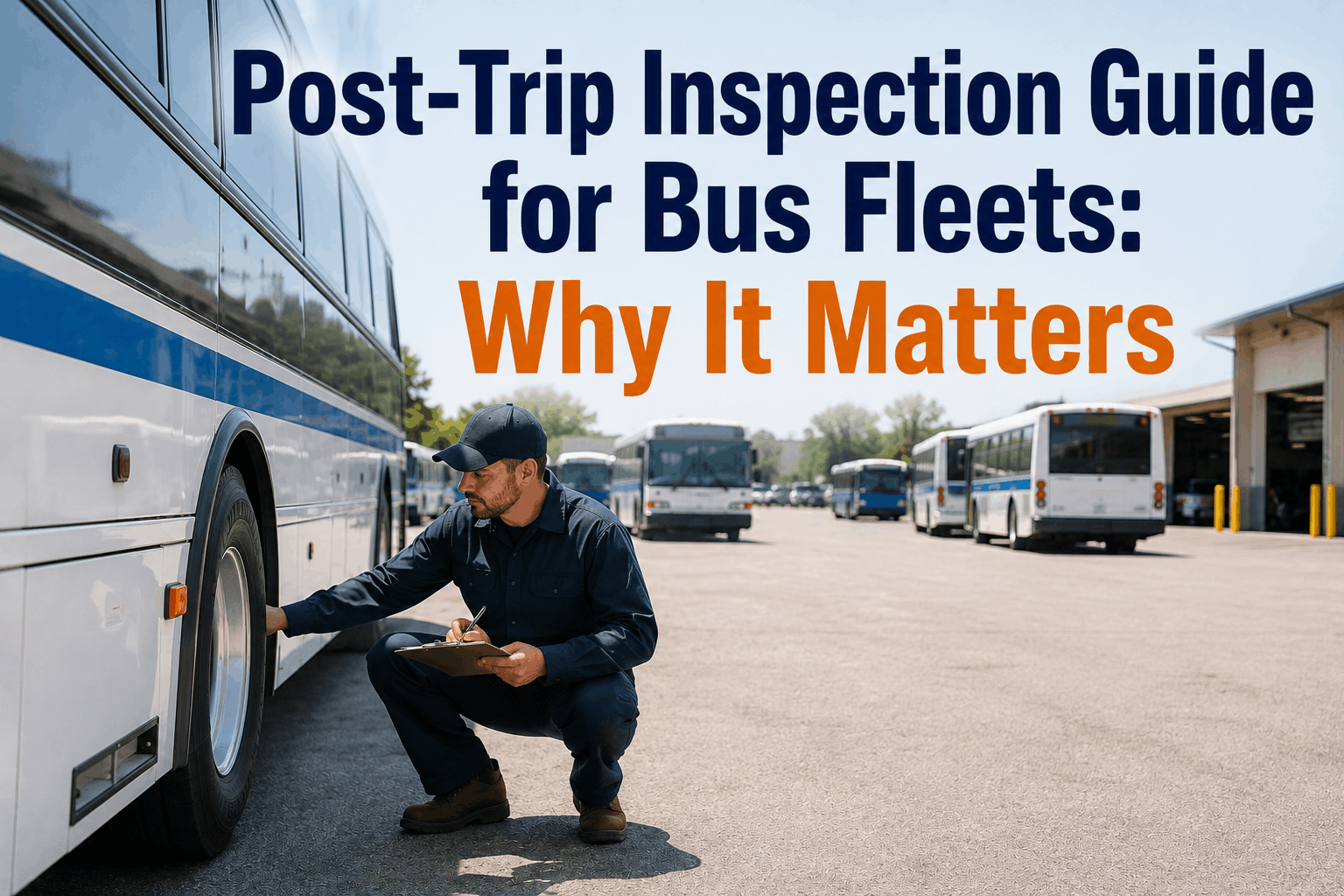
Your buses complete routes and drivers park them for the night without a post-trip inspection. They simply clock out and leave. Next morning, another driver discovers a flat tire, broken door latch, or non-functional light that developed during yesterday's route. If caught during pre-trip, it delays the route. If missed and discovered at roadside inspection, it's a violation. Post-trip inspections catch defects while they're fresh, prevent them from cascading, and ensure the next driver receives a bus known to be safe. Yet many fleets skip post-trip inspections entirely, treating them as optional paperwork. This guide explains why post-trip inspections are legally required under FMCSA regulations, what defects they catch, how they differ from pre-trip inspections, and how digital DVIR processes make post-trip accountability automatic and audit-proof.
Fleet Operations
Post-Trip Inspection Guide: Why End-of-Shift Checks Matter
FMCSA requires post-trip inspections. They catch defects before they cascade. Learn what to check, why drivers resist, and how digital DVIR solves both.
Is Post-Trip Inspection Required? What FMCSA Says
Yes. FMCSA 49 CFR 396.11 requires daily driver vehicle inspection reports (DVIRs). The regulation states: "Every motor carrier shall require the drivers of commercial motor vehicles to report…conditions observed that may affect the safe operation of a motor vehicle." This includes post-trip (end-of-day) inspections. The driver must report defects observed during the day, or certify that no defects were found. A bus that returned to depot at 4 PM with a defect that wasn't reported in a post-trip DVIR means either the driver missed it or didn't document it — both are non-compliance.
Legal Requirement
FMCSA 49 CFR 396.11 - Daily Vehicle Inspection Report
Frequency
Before and after each day of operation (interpretation: pre-trip and post-trip)
Documentation
Signed by driver. If defect found, must include mechanic certification or driver signature stating defect doesn't affect safety.
Retention
3 months minimum. Auditors will request sample of DVIRs to verify compliance.
What Gets Checked During Post-Trip vs. Pre-Trip
PRE-TRIP (Morning Inspection)
Goal: Verify bus is safe to operate for the day ahead
Brakes (check pressure, test response)
Lights (all on, no burnt bulbs)
Tires (pressure, tread, visual damage)
Fluid levels (coolant, oil, transmission)
Wipers (functionality, blade condition)
Emergency equipment (fire ext, first aid)
Steering (no excessive play)
POST-TRIP (End-of-Day Inspection)
Goal: Document any defects that developed during operation
Dashboard warning lights (engine, brakes, etc.)
Strange noises or vibrations noted during route
Lights (verify all still functional post-route)
Brakes (check responsiveness)
Doors (interior, emergency, sliding doors)
Interior damage (seats, rails, windows)
Fluid leaks under bus
Passenger-caused damage (graffiti, broken seats)
Why Drivers Resist Post-Trip Inspections (And How to Address It)
Objection: "I want to go home, not fill out paperwork"
Digital DVIR takes 5 minutes. Driver walks around, uses mobile app to check items, submits. Done. No paper, no filing. Faster than paper. Frames it as: "You're going home clean-handed, with documentation done."
Objection: "Defects I find will get my route delayed tomorrow"
Reframe: "Defects found today get fixed today. Defects NOT found get discovered at roadside inspection tomorrow and ground the bus." Make clear that reporting defects is the right thing and protects everyone (driver, passengers, fleet).
Objection: "I didn't cause the damage, why am I reporting it?"
Explain: "Post-trip isn't about blame. It's about knowing the bus condition." Passenger damage, road hazard damage, mechanical wear — all get documented so maintenance knows what to fix and what to monitor.
Defects Post-Trip Typically Catches
Interior door jams or handles breaking (caught during route, noticed at end)
Passenger-caused damage (graffiti, broken seats, damaged armrests)
Fluid leaks that developed during operation (transmission, coolant seeping)
Brake or engine warning lights that illuminated during route
Vibrations or noises in suspension (hitting pothole during route)
Air brake system hissing or unusual sounds
Lights that burned out during the day (tail light, interior lights)
Road debris stuck in wheels or undercarriage
Heating/cooling system issues (cab too cold or hot by end of route)
"We had drivers not doing post-trip inspections. A bus returned from route with a crack in the windshield (passenger threw something). No DVIR filed. Next morning, different driver went to use that bus, saw crack, filed pre-trip defect. Bus grounded for windshield replacement (one-day repair). If post-trip had been done the night before, we could have ordered windshield, scheduled repair for off-hours, had bus back in service before next morning. Now post-trip is digital and mandatory. Defects get reported same day, maintenance can prep parts and schedule repair windows efficiently."
— Fleet Manager, 50-bus transit agency, Pennsylvania
Make Post-Trip Inspections Automatic
Digital DVIR eliminates resistance and ensures every bus has documented condition at end of each day. Catch defects early, fix them off-schedule.