1
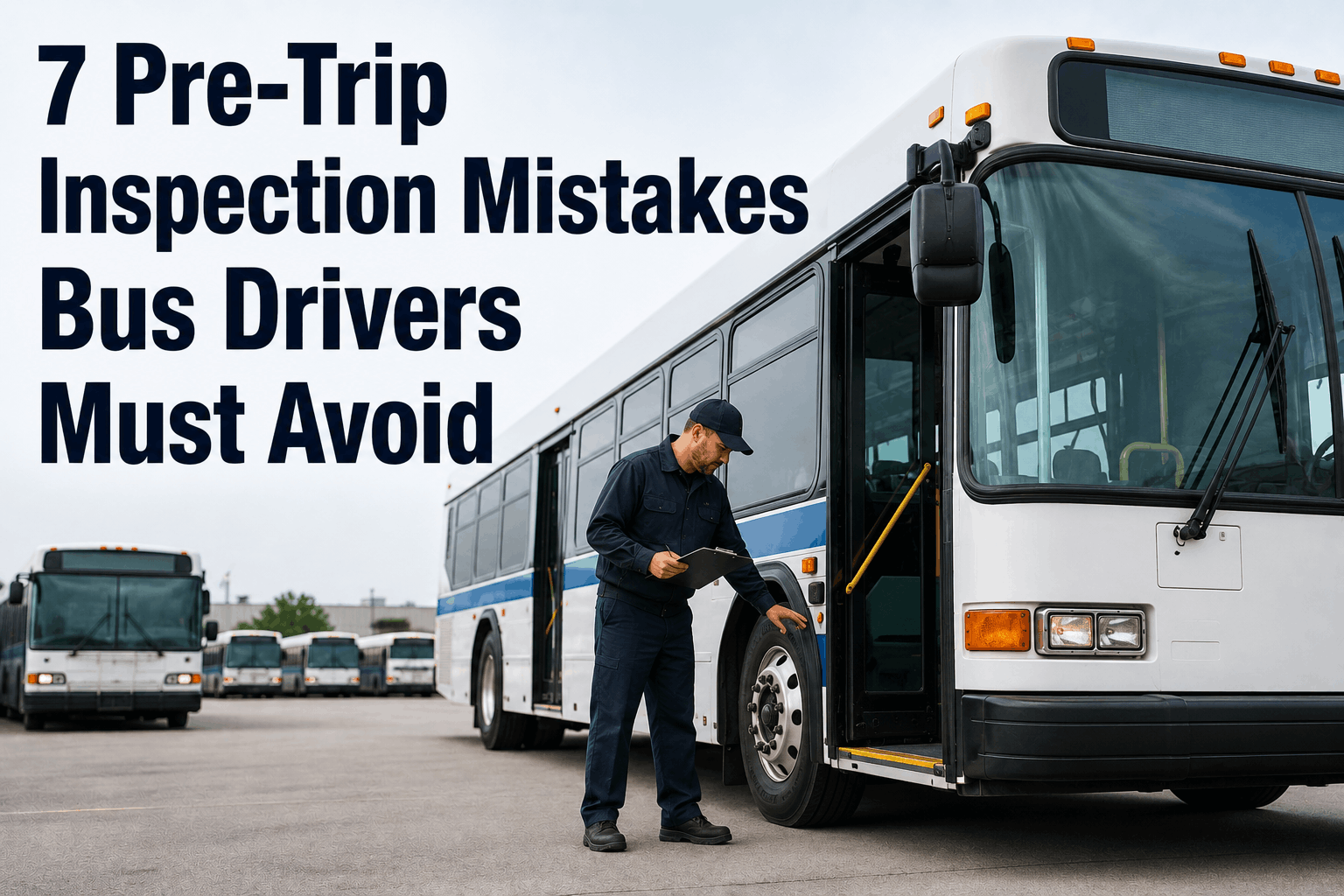
Skipping the Walkaround Entirely
Driver sits in cab, starts engine, checks a few gauges, and declares bus "ready to go." Never gets out of seat. Walkaround is skipped entirely.
❌ RESULT: Burnt-out headlights, flat tires, missing lug nuts, loose bumpers — all things visible from outside the bus — go unnoticed until roadside inspection.
✓ FIX: Mandatory walkaround every shift. Require driver to walk entire perimeter, observe lights, tires, fluid leaks, damage. Document in digital DVIR app. GPS timestamp proves walk-around happened.
2
Not Testing Brakes Actually (Just Checking Pressure Gauge)
Driver checks air pressure gauge on dashboard showing "normal" and considers brakes tested. But doesn't actually apply brakes or measure brake stroke. Defective brake adjustment goes undetected.
❌ RESULT: Roadside inspector measures brake stroke, finds out-of-adjustment brakes. Out-of-service violation. Bus grounded.
✓ FIX: Require drivers to APPLY brakes during walkaround (park on slight incline, verify holding). Measure brake stroke monthly (technician responsibility). Train drivers on how to feel brake response.
3
Not Actually Turning On All Lights
Driver flips headlight switch on, sees dashboard lights illuminate, assumes all lights work. Doesn't walk around to verify headlights, tail lights, marker lights, interior lights actually glow.
❌ RESULT: Burnt-out headlights, cracked tail light lenses, loose markers — discovered at roadside inspection. Lighting violations can cause out-of-service.
✓ FIX: Walk-around inspection includes turning on all lights and visually confirming illumination. In early-morning darkness, light failures are obvious. Digital checklist includes "All lights verified on" with driver sign-off.
4
Not Checking Tire Pressure or Tread Depth
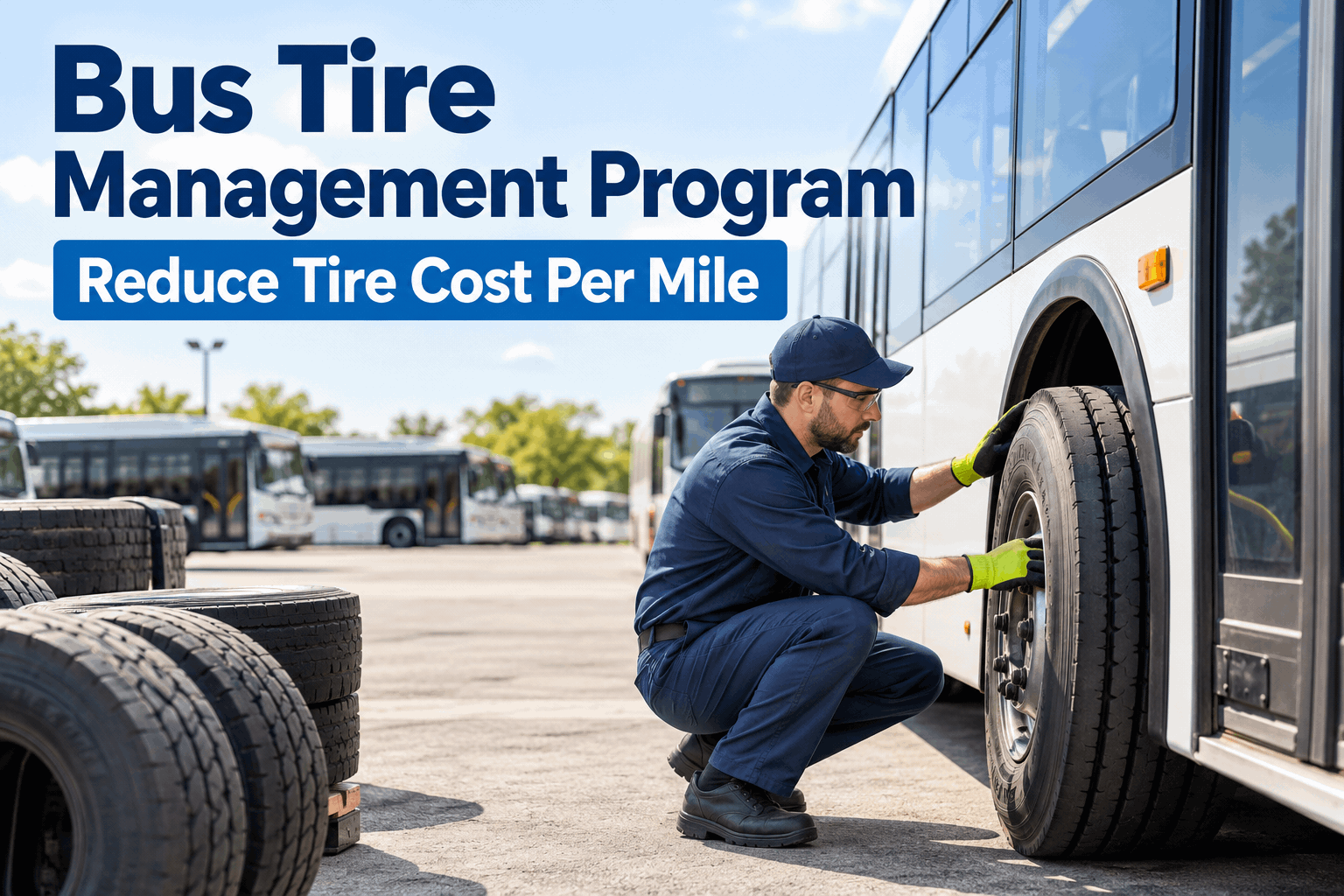
Driver visually inspects tires, sees they look "normal," and doesn't use pressure gauge or measure tread. Underinflated tire or worn tread goes undetected.
❌ RESULT: Roadside inspector uses pressure gauge, finds tires 8 PSI below spec. Or measures tread, finds <2/32" (legal minimum). Violation issued.
✓ FIX: Drivers should physically check pressure weekly (not daily). Measure tread at least monthly (technician task, but drivers should know how). Weekly visual inspection for obvious damage, bulges, flats. Use digital DVIR to log pressure readings and tread observations.
5
Checking Fluids Without Actually Opening the Hood
Driver sits in cab, checks fluid level indicator lights on dash (which show "OK") and assumes all fluids are good. Doesn't open hood to visually verify coolant, oil, transmission fluid levels.
❌ RESULT: Slow leak in coolant system went undetected. By third route, engine overheats and stalls. Bus disabled mid-route.
✓ FIX: Opening hood is part of pre-trip. Check fluid levels visually: coolant in overflow, oil dipstick reading, transmission dip levels. Look for leaks under bus. Document in DVIR: "Hood inspection completed — all fluids adequate."
6
Not Documenting Defects Found (Or Minimizing Them)
Driver notices a slight vibration during test drive but doesn't document it in DVIR. Or writes "slightly wobbly" instead of detailed description. Maintenance never investigates because report is too vague.
❌ RESULT: Vibration worsens over 3 days. Wheel bearing fails, bus breaks down. Downtime cost: $5,000+. Original defect in DVIR would have allowed technician to diagnose and repair proactively.
✓ FIX: Digital DVIR app requires drivers to describe defects in detail: "Vibration felt at steering wheel above 50 mph" or "Left rear tire pressure 6 PSI below normal." Detailed description + timestamp + photo triggers automatic work order for technician. Management can see all defect reports in real-time.
7
Rushing the Inspection (Completing 10-Minute Checklist in 2 Minutes)
Driver is running late, feels pressured to start route. Completes pre-trip inspection in 2 minutes by skipping actual checks and just signing the form as "complete."
❌ RESULT: Inoperable door, broken windshield wipers, blown fuse — none detected in rushed inspection. Problems cascade during the route.
✓ FIX: Minimum 10-minute inspection requirement (communicated to drivers and dispatch). GPS timestamp on DVIR submission proves inspection took reasonable time. Managers who push drivers to skip inspections create liability. Driver training emphasizes: "Bus doesn't leave lot until pre-trip is done correctly."