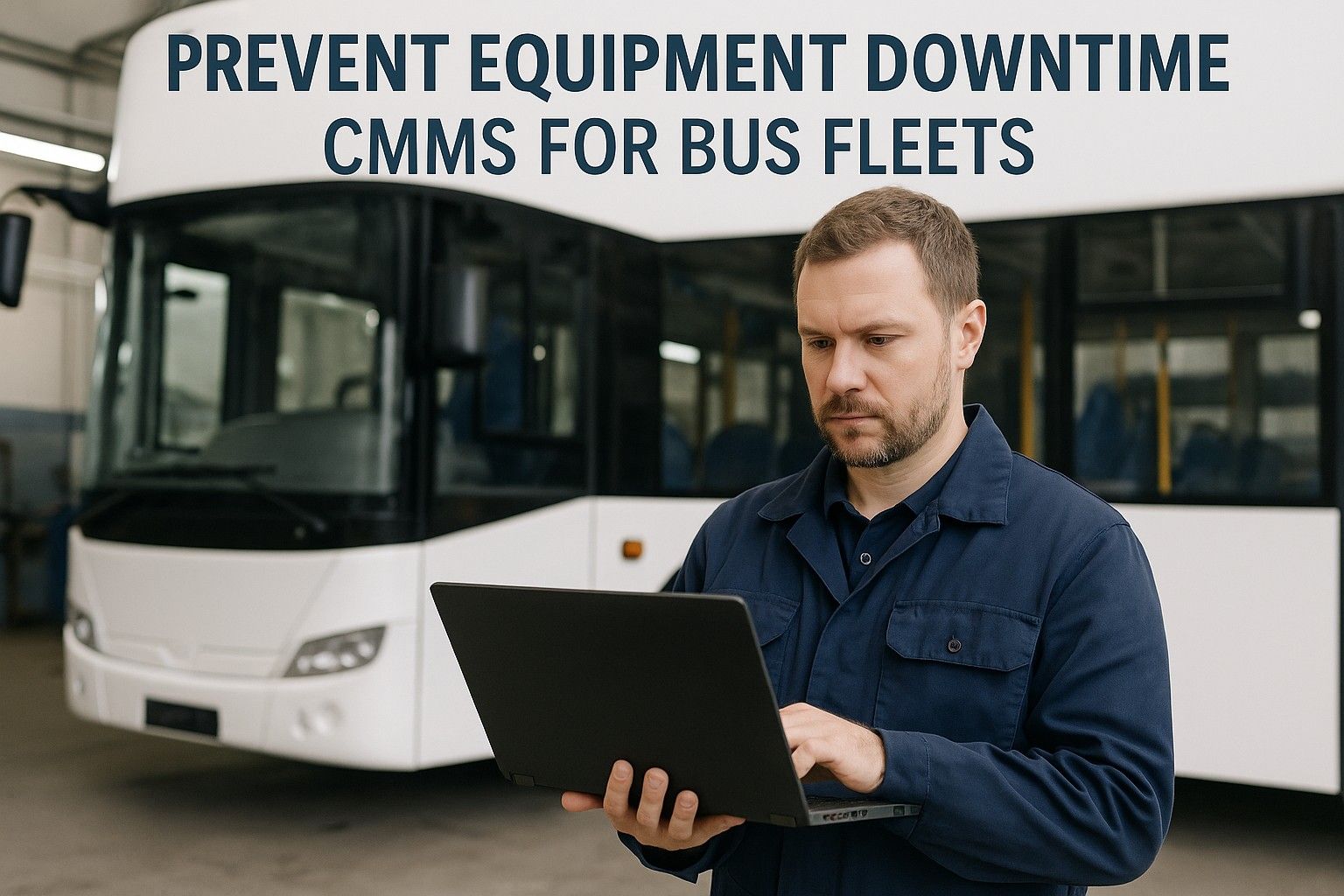
In the fast-paced world of public transportation and fleet management, every minute of downtime translates to lost revenue, frustrated passengers and mounting repair costs. For US manufacturing professionals overseeing bus fleets, implementing a robust Computerized Maintenance Management System (CMMS) isn't just a luxury—it's a necessity for staying competitive and profitable.
Bus fleet downtime costs the average transit agency over $400 per hour per vehicle, not including the cascading effects of service disruptions and passenger dissatisfaction. With the right CMMS solution, you can transform reactive maintenance into a proactive powerhouse that keeps your fleet running smoothly and your bottom line healthy.
The Hidden Costs of Bus Fleet Downtime
When a bus breaks down, the financial impact extends far beyond the immediate repair costs. Manufacturing professionals understand that unplanned downtime creates a domino effect throughout operations. For bus fleets, this means cancelled routes, overtime pay for mechanics, emergency part purchases at premium prices, and the intangible cost of damaged reputation.
Traditional paper-based maintenance systems or basic spreadsheets simply can't handle the complexity of modern fleet operations. They lead to missed inspections, overlooked maintenance schedules, and the inevitable breakdown at the worst possible moment. A CMMS bridges this gap by providing real-time visibility into every aspect of your fleet's health.
How CMMS Transforms Bus Fleet Maintenance
Predictive Maintenance Intelligence
Modern CMMS platforms leverage IoT sensors and telematics data to predict failures before they occur. Instead of waiting for a transmission to fail, the system alerts you when fluid temperatures exceed normal ranges or when vibration patterns indicate impending component wear. This predictive approach allows you to schedule maintenance during off-peak hours, minimizing service disruption.
Automated Work Order Management
Gone are the days of manually tracking maintenance requests on clipboards. A robust CMMS automatically generates work orders based on mileage, operating hours, or calendar intervals. Technicians receive detailed instructions, parts lists, and safety protocols directly on their mobile devices, streamlining the entire maintenance process.
Inventory Optimization
Effective inventory management is crucial for preventing downtime. CMMS systems track parts usage patterns, automatically reorder critical components, and maintain optimal stock levels. This ensures that when maintenance is needed, parts are available immediately, reducing vehicle downtime from days to hours.
Key Features That Prevent Downtime
When evaluating CMMS solutions for your bus fleet, focus on features that directly impact uptime and operational efficiency:
- Real-time Fleet Monitoring: Track vehicle health, fuel efficiency, and performance metrics in real-time
- Mobile Accessibility: Allow technicians to access work orders, update maintenance records, and request parts from anywhere
- Compliance Management: Automatically track DOT inspections, emissions testing, and safety certifications
- Route Integration: Coordinate maintenance schedules with route planning to minimize service disruptions
- Analytics Dashboard: Generate insights on maintenance trends, cost per mile, and fleet utilization
- Vendor Management: Streamline relationships with parts suppliers and external service providers
Implementation Best Practices for Manufacturing Professionals
Successfully implementing a CMMS requires strategic planning and buy-in from all stakeholders. Manufacturing professionals bring valuable process optimization experience to fleet management, and these principles apply directly to CMMS implementation.
Start with Data Migration
Begin by consolidating existing maintenance records, vehicle specifications, and historical failure data. Clean, organized data is the foundation of effective CMMS utilization. Import this information systematically, ensuring accuracy and completeness before going live.
Train Your Team Thoroughly
Resistance to change is natural, but proper training transforms skeptics into advocates. Provide comprehensive training sessions for mechanics, dispatchers, and management teams. Focus on how the CMMS will make their jobs easier and more efficient, not just on technical features.
Establish Clear Protocols
Develop standardized procedures for work order creation, completion, and documentation. Consistency in data entry and process adherence is crucial for generating accurate reports and maintaining system integrity.
ROI and Performance Metrics
Measuring the success of your CMMS implementation requires tracking specific key performance indicators that directly relate to downtime reduction and cost savings:
- Mean Time Between Failures (MTBF): Track how CMMS extends equipment life
- Mean Time to Repair (MTTR): Measure how quickly issues are resolved
- Schedule Adherence: Monitor compliance with preventive maintenance schedules
- Cost per Mile: Calculate the total cost of ownership for each vehicle
- Fleet Availability: Track the percentage of vehicles available for service
Conclusion: Your Fleet's Future Depends on Smart Maintenance
The transportation industry is evolving rapidly, and fleet managers who embrace technology-driven maintenance strategies will lead the pack. A comprehensive CMMS solution doesn't just prevent downtime—it transforms your entire operation into a data-driven, efficient machine that delivers consistent service while maximizing profitability.
For US manufacturing professionals managing bus fleets, the question isn't whether to implement a CMMS, but how quickly you can get started. Every day of delay is another day of potential downtime, unexpected costs, and missed opportunities for optimization.
Don't let reactive maintenance control your operations. Take charge with a modern CMMS solution that puts you ahead of problems before they impact your fleet.







