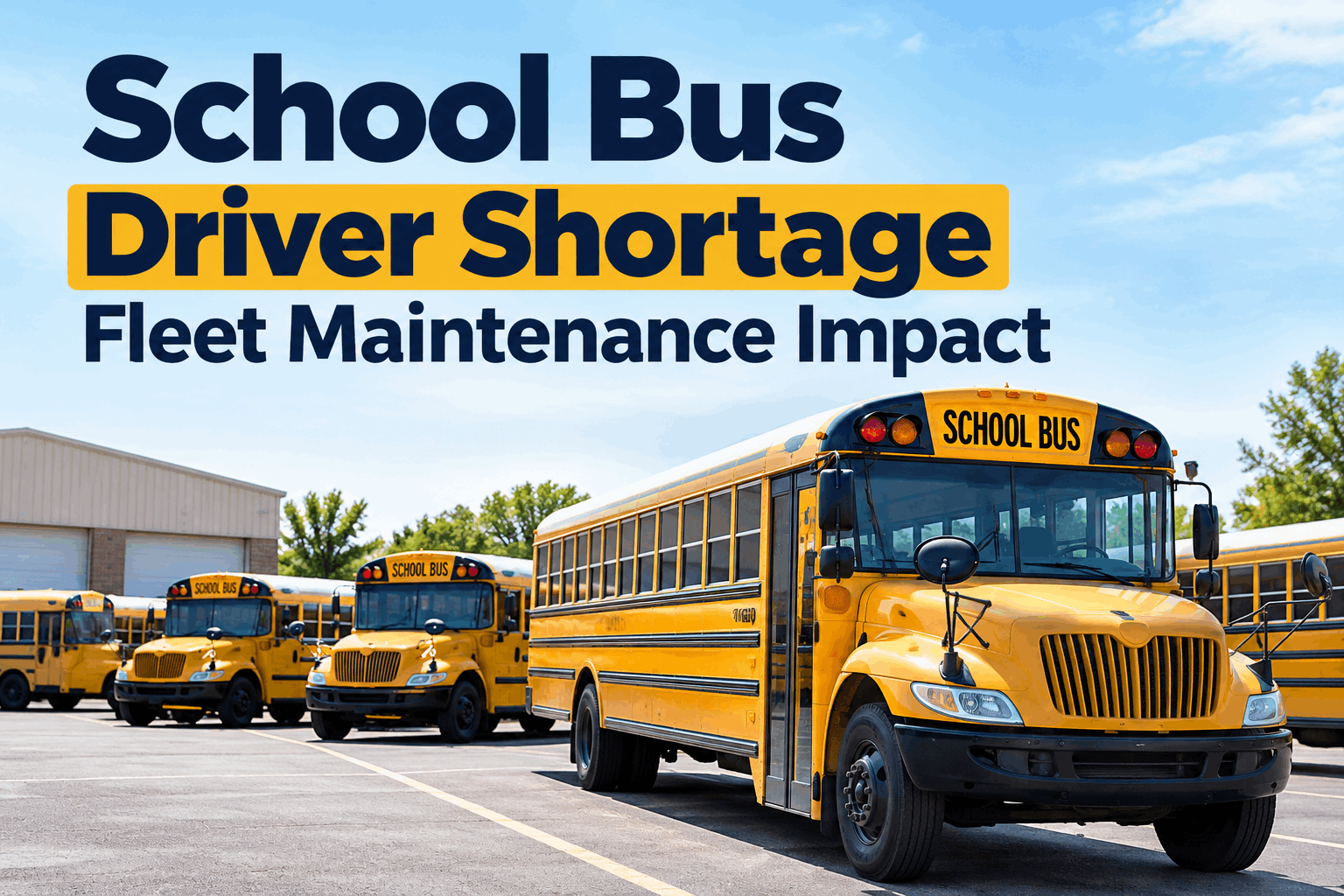
When you lose drivers, the buses do not get a break — they get busier. Routes get combined, runs get longer, and the miles that used to spread across your whole fleet pile onto the units you can still staff. The school bus driver shortage is usually treated as a hiring story, but it quietly rewrites your maintenance plan at the same time and the buses feel it first. If your remaining units are racking up miles faster than your PM schedule expects, you can see how to keep PM aligned with real usage in a demo.
School Bus Driver Shortage: What It Does to Your Fleet and Your Maintenance Plan
Fewer drivers means route consolidation, higher mileage on fewer buses, and wear that lands unevenly. Here is how to adjust maintenance planning so the shortage does not turn into a breakdown problem.
How the School Bus Driver Shortage Reaches Your Shop
The link from an empty driver seat to a bus on a lift is shorter than it looks. Each step forces the next, and the whole chain lands on a smaller set of buses than you planned to run.
Fewer drivers available to cover the same routes.
Routes get combined or doubled to cover every stop.
The buses that run rack up more miles, faster.
PM intervals arrive sooner — and wear outruns the schedule.
The driver shortage is also a hiring and safety challenge — our team covers that side in the guide on driver shortage challenges, risks, and solutions. This page is about what it does to your buses.
The Uneven-Mileage Problem the Driver Shortage Creates
Look at the fleet total and everything seems normal — total miles might even be down with fewer runs. The danger hides underneath, where a few workhorse buses are carrying a load they were never scheduled for.
- Total fleet milesFlat or down
- Average miles/busNormal
- PM on scheduleOn paper, yes
- Miles on run busesWell above plan
- PM intervalsHit early, slip late
- Breakdown riskClimbing
A calendar-based or fleet-average PM plan misses this entirely. The buses doing double duty need PM that follows their miles — you can see per-bus mileage and PM status in a demo.
What to Adjust in Maintenance Planning During a Driver Shortage
You cannot un-combine the routes overnight, but you can make sure maintenance keeps pace with how the buses are actually being used. These are the moves that keep a short-staffed operation from turning into a breakdown spiral.
- Trigger PM by actual mileage, not calendarWhen a bus suddenly runs two routes, a date-based oil change arrives far too late. Tie PM to real odometer or telematics mileage so the interval moves with the workload.DO FIRST
- Watch the high-mile units weeklyRank buses by miles accumulated since the shortage, not by the fleet average. The top few are your breakdown risk — inspect and service them ahead of the pack.MONITOR
- Rotate the load across the fleetWhere routing allows, spread the extra miles so no single bus absorbs all the consolidation. Even wear beats burning out three units while others sit idle.BALANCE
- Protect PM even when runs are tightWith fewer drivers, the temptation is to keep every bus moving and defer service. A deferred PM on an over-worked bus is the breakdown that cancels a route next week.HOLD THE LINE
- Keep spares inspection-readyA reserve bus does no good if it fails its pre-trip the morning you need it. Keep spares on a light PM cadence so they are ready the moment a run bus goes down.STAY READY
The through-line is simple: service the buses for the work they are actually doing now, not the plan from before the shortage. You can sign up free and set mileage-based PM for your run buses today.
How BusCMMS Keeps PM Aligned When Routes Shift
Route redistribution is a moving target, and a maintenance plan that cannot move with it falls behind fast. Because BusCMMS tracks every bus's real usage, the schedule follows the buses instead of a fixed calendar nobody updated.
Mileage-based PM triggers
PM fires on actual miles, so a bus that jumps to two routes gets serviced on time — not on a date that assumed one.
High-mileage unit flagging
See which buses are carrying the consolidated routes and surfacing the most wear, ranked — so you service the risk first.
Telematics-fed odometer
Pre-built Samsara and Geotab connectors feed real mileage in automatically, so the PM clock is always current.
BusCMMS reports that school districts and agencies on its platform hold 95 percent-plus fleet availability — a company-reported figure from its own customer data, and the kind of result that comes from catching an over-worked bus before it strands a route. To map it to your routes, book a demo and bring your current run plan.
A Transportation Director's Take
Key Takeaways on the School Bus Driver Shortage
A school bus driver shortage does not just leave seats empty — it redraws how your fleet is used and where the wear lands. Four things to carry into your maintenance planning.
It is a fleet problem too
Fewer drivers means more miles on fewer buses.
The average hides the risk
Fleet totals look fine while run buses redline.
PM must follow the miles
Mileage-based triggers beat a fixed calendar.
Never defer on a workhorse
A skipped PM there is next week's road call.
You may not fill every driver seat this term, but you can keep the school bus driver shortage from becoming a breakdown problem by servicing each bus for the miles it is actually running. You can sign up free and keep your run buses on the road — where kids are counting on them.