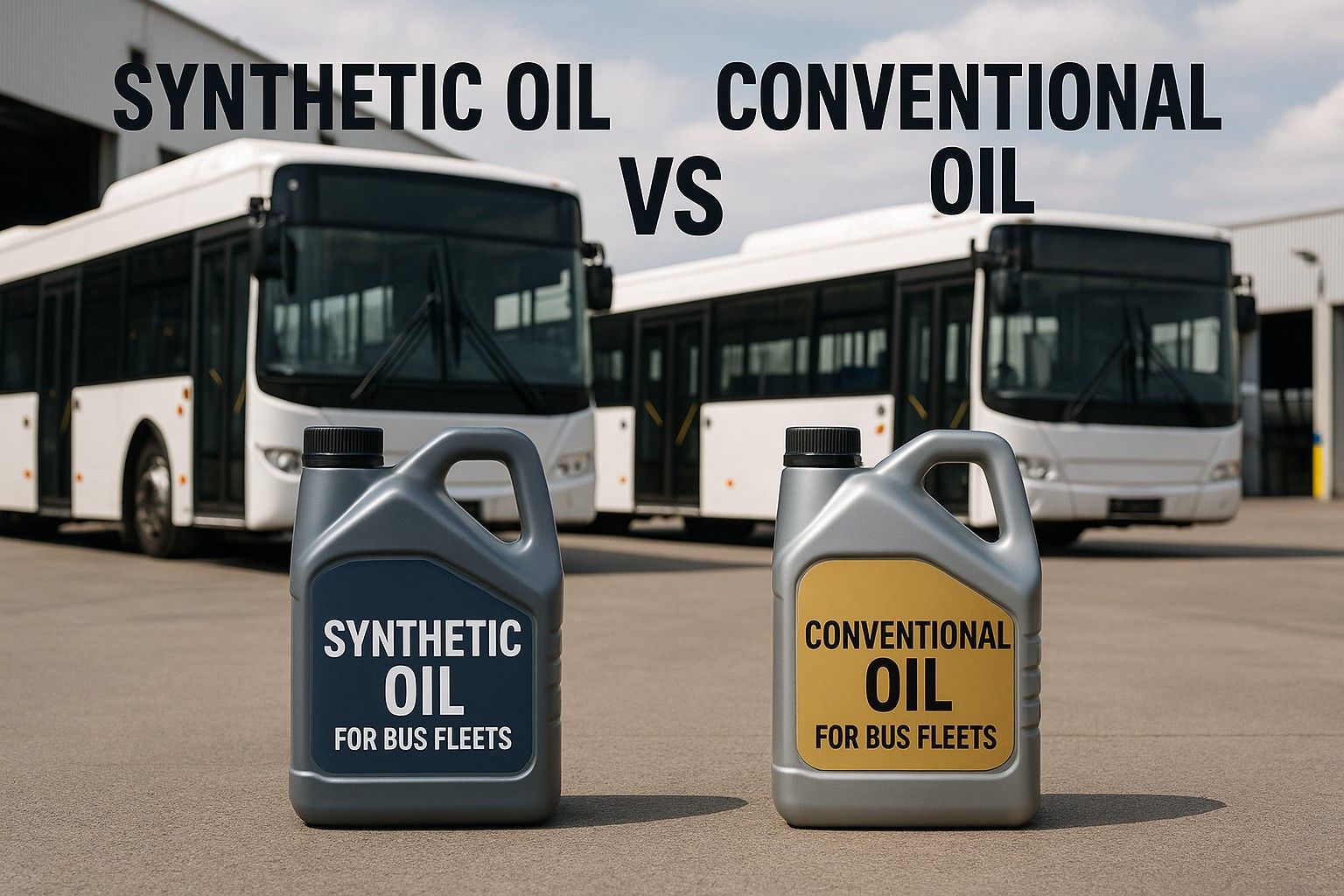
As a fleet manager in the manufacturing sector, you're constantly balancing performance, reliability, and cost-effectiveness. One of the most critical decisions you'll make is choosing between synthetic and conventional oil for your bus fleet. This choice directly impacts your bottom line, vehicle longevity, and operational efficiency. Let's dive into what really matters when making this decision for your American manufacturing operation.
Understanding the Fundamental Differences
Conventional oil comes straight from crude oil refinement, containing natural impurities and molecules of varying sizes. It's been the go-to choice for decades, offering decent protection at an affordable price point. Think of it as the reliable workhorse that's gotten the job done for generations of fleet operators.
Synthetic oil, on the other hand, is engineered in laboratories with uniform molecular structures and enhanced additives. This precision engineering results in superior performance characteristics that become especially apparent in demanding fleet applications. For manufacturing professionals managing multiple buses across varied routes and conditions, these engineered advantages translate into tangible operational benefits.
Real-World Performance in Fleet Applications
Your buses face unique challenges that passenger vehicles don't encounter. Frequent stops and starts, heavy loads, extended idle times, and varying weather conditions put enormous stress on engine oil. Here's how each type performs under these demanding conditions:
- Cold Start Protection: Synthetic oil flows better at low temperatures, providing immediate lubrication during those critical first moments. In northern US climates, this can mean the difference between smooth operations and costly morning delays.
- High-Temperature Stability: When your buses are grinding through summer heat or climbing grades with full loads, synthetic oil maintains its viscosity better, preventing breakdown and sludge formation.
- Extended Drain Intervals: While conventional oil typically requires changes every 3,000-5,000 miles in fleet applications, synthetic can often go 7,500-15,000 miles, dramatically reducing maintenance downtime.
Ready to optimize your fleet's performance and reduce maintenance costs? See how BusCMMS can help you track oil changes, monitor engine health, and make data-driven maintenance decisions.
Getting Started Book a DemoCost Analysis: Looking Beyond the Price Tag
Let's talk numbers that matter to your operation. A typical 40-foot transit bus holds about 7-9 gallons of engine oil. With conventional oil at $15-20 per gallon versus synthetic at $25-40 per gallon, the upfront difference is significant. However, the real calculation involves:
- Labor costs for oil changes (typically $50-100 per service)
- Vehicle downtime (lost revenue of $200-500 per day)
- Filter replacement frequency
- Potential engine life extension (synthetic can add 100,000+ miles to engine life)
- Fuel economy improvements (1-3% better with synthetic)
For a fleet of 50 buses running 40,000 miles annually, switching to synthetic oil with extended drain intervals can save $25,000-40,000 per year in maintenance costs alone, not counting the reduced downtime and extended engine life benefits.
Environmental and Compliance Considerations
US manufacturing facilities increasingly focus on sustainability metrics. Synthetic oil offers several environmental advantages that align with corporate responsibility goals:
Extended drain intervals mean less waste oil disposal—a significant consideration given that each oil change produces 7-9 gallons of hazardous waste requiring proper handling. Additionally, the improved fuel economy from synthetic oil reduces your fleet's carbon footprint, helping meet increasingly stringent emissions standards in states like California, New York, and across the Northeast corridor.
Many synthetic oils now meet or exceed API CK-4 and FA-4 specifications, ensuring compliance with the latest EPA requirements while providing superior protection for modern diesel engines equipped with emission control systems.
Making the Right Choice for Your Fleet
The decision between synthetic and conventional oil isn't one-size-fits-all. Consider these factors specific to your operation:
- Your buses accumulate more than 30,000 miles annually
- You operate in extreme temperatures (below 0°F or above 100°F)
- Your routes include significant stop-and-go traffic or steep grades
- You're focused on maximizing engine life and minimizing total cost of ownership
- Environmental compliance and sustainability are corporate priorities
Conventional oil might still make sense for older buses nearing retirement, backup vehicles with low annual mileage, or operations in moderate climates with less demanding duty cycles. However, most modern fleet operations find that synthetic oil's benefits far outweigh the higher upfront cost.
Implementation Strategy for Fleet Conversion
Transitioning your fleet to synthetic oil doesn't have to happen overnight. Smart fleet managers often use a phased approach:
Start with your newest, highest-mileage buses to maximize immediate benefits. Track performance metrics carefully—fuel economy, oil analysis results, and maintenance intervals. Use this data to build a business case for expanding the program. Most fleets see positive ROI within 6-12 months of switching to synthetic oil.
Partner with a reputable oil supplier who can provide bulk pricing and oil analysis services. Regular oil analysis (every 3-4 oil changes) helps optimize drain intervals and catch potential engine issues early, multiplying the value of your synthetic oil investment.
Transform your fleet maintenance strategy with data-driven insights. BusCMMS helps you track oil life, schedule changes efficiently, and prove ROI on your synthetic oil investment. Join hundreds of US fleet managers already saving time and money.
Getting Started Book a DemoConclusion: Investing in Your Fleet's Future
The synthetic versus conventional oil debate for bus fleets ultimately comes down to total value rather than upfront cost. For most US manufacturing operations running modern bus fleets, synthetic oil represents a smart investment that pays dividends through extended engine life, reduced maintenance downtime, and improved operational efficiency.
As you evaluate your fleet's needs, consider not just today's budget but tomorrow's operational demands. With tightening emissions standards, rising labor costs, and increasing pressure to maximize asset utilization, synthetic oil offers a proven path to keeping your buses running longer, cleaner, and more efficiently.
The question isn't whether synthetic oil is worth the extra cost—it's whether your operation can afford not to make the switch. By choosing the right oil for your fleet's specific needs and tracking results carefully, you'll position your operation for long-term success in an increasingly competitive market.