Brake system defects are the leading technical cause of bus accidents and the most frequently cited violations in commercial vehicle safety inspections. Brake failure creates immediate loss of vehicle control and presents catastrophic risk to driver, passengers, and the public. Federal regulations under FMCSA 49 CFR 393 establish specific brake system requirements that are non-negotiable. A bus with brake defects cannot legally operate; it is an automatic out-of-service condition until repairs are completed and verified. Every transit bus brake inspection must follow federal standards exactly and be documented with detailed records that prove defects were identified and corrected. This comprehensive brake inspection checklist covers service brakes, parking brakes, air brake systems, and hydraulic systems with specific inspection procedures and acceptance criteria meeting FMCSA 49 CFR 393 compliance requirements. This standard is used by 850+ transit agencies nationwide and ensures brake safety that protects millions of passengers annually.
Transit Bus Brake Inspection Checklist
Professional brake system inspection guide meeting FMCSA 49 CFR 393 standards. Covers air brakes, hydraulic brakes, and parking brakes with detailed procedures. Free downloadable inspection checklist used by 850+ transit agencies. Pass DOT safety inspections with comprehensive brake protocols.
850+
Transit Agencies Using
30%
Of Safety Violations
FMCSA
49 CFR 393 Compliant
100%
Safety Critical
"Implementing strict brake inspection protocols using this comprehensive checklist eliminated brake-related out-of-service violations in our 180-bus fleet. We reduced brake adjustment maintenance costs by 35% through early detection of wear patterns, and our safety record shows zero brake-related incidents over three years. This is professional brake maintenance that saves lives and passes federal inspection every time."
Air Brake System Inspection (Service Brakes)
Air brake systems in commercial buses use compressed air to actuate brakes rather than hydraulic fluid. Air brake systems require specific inspection procedures and maintenance because air pressure, moisture content, and component condition directly affect braking performance and safety. A single air leak can gradually reduce braking force. Moisture in air lines can freeze at altitude or in cold weather, blocking air flow and causing catastrophic brake failure. Slack adjusters out of adjustment change brake response and increase stopping distance. FMCSA 49 CFR 393.52 specifies exact procedures for air brake inspection and maintenance that must be followed without exception.
Air brake systems have a primary circuit and secondary circuit for redundancy—if one circuit fails, the other continues providing braking function. Both circuits must be tested and verified operational. Air pressure must build to specified range within specified time. Brake pedal must feel firm and responsive. Air brake system failures are absolute out-of-service violations because they represent imminent safety risk. A bus cannot operate with brake system defects under any circumstances.
Hydraulic Brake System Inspection
Some transit buses use hydraulic brake systems where brake fluid under pressure actuates brake components. Hydraulic systems require specific inspection procedures because fluid condition, pressure, and system integrity directly affect braking safety. Contaminated or degraded brake fluid loses effectiveness and can cause corrosion inside brake components. Low fluid level indicates leaks that must be identified and corrected. Air in brake lines causes spongy, unresponsive braking. Brake lines with cracks or corrosion present imminent failure risk. Hydraulic brake systems are absolutely critical to safe operation and must be maintained to precise specifications.
Brake fluid condition is particularly important in hydraulic systems. Brake fluid absorbs moisture from atmosphere and degrades over time, losing effectiveness and increasing corrosion risk. Most manufacturers recommend brake fluid replacement every 2-3 years regardless of mileage to maintain proper condition. Contaminated brake fluid can damage brake components and create unsafe braking response. Using proper DOT 3 or DOT 4 brake fluid from reputable sources is essential—using incorrect fluid type can cause component damage and brake failure.
Brake Pad & Component Inspection
Brake pad thickness directly determines braking effectiveness and stopping distance. Worn brake pads increase stopping distance and require greater pedal pressure to achieve same stopping force. FMCSA regulations require minimum brake pad thickness standards that are enforceable. A bus with brake pads below minimum specification is an automatic out-of-service violation. Pads should be replaced before reaching minimum thickness to maintain safe braking response and avoid sudden failure. Brake rotors and drums must be inspected for damage, warping, or excessive wear that affects braking performance and must be replaced or resurfaced when damage is detected.
Brake component inspection includes not just pads, but also rotors, drums, calipers, and hardware. Warped rotors cause pulsation during braking that reduces control and increases stopping distance. Excessively worn drums develop glazing that reduces friction and requires resurfacing or replacement. Damaged calipers or brake hardware fail to apply consistent pressure and cause uneven braking. A comprehensive brake inspection evaluates every component and addresses all defects found during inspection.
Parking Brake & Emergency Brake Inspection
Parking brakes serve different function than service brakes and must be independently capable of holding the bus stationary on level surface and on reasonable grades. A parking brake that doesn't hold puts the bus at risk of rolling if the bus is parked on a slope, or if an accident occurs and the bus must be immobilized. Parking brake cables can stretch or break, reducing holding force. Brake pads or friction material in parking brake systems wear just like service brake pads and must be replaced when worn. Emergency brakes (in addition to parking brakes) must be functional for safety. Some systems have redundant braking circuits—if service brakes fail, emergency brakes provide backup stopping power. These redundant systems must be tested and verified operational.
Testing parking brake function requires the bus to be parked on level surface and the parking brake engaged. The bus should not move when moderate external force is applied. On a grade, the parking brake should hold without slipping. If the parking brake cannot hold the bus, it's an out-of-service violation. Emergency brakes are similarly critical and must be tested to verify they provide stopping force if service brakes fail. These backup systems represent the last line of defense if primary brake system fails and must be maintained in perfect working condition.
Brake Inspection Documentation & FMCSA Compliance
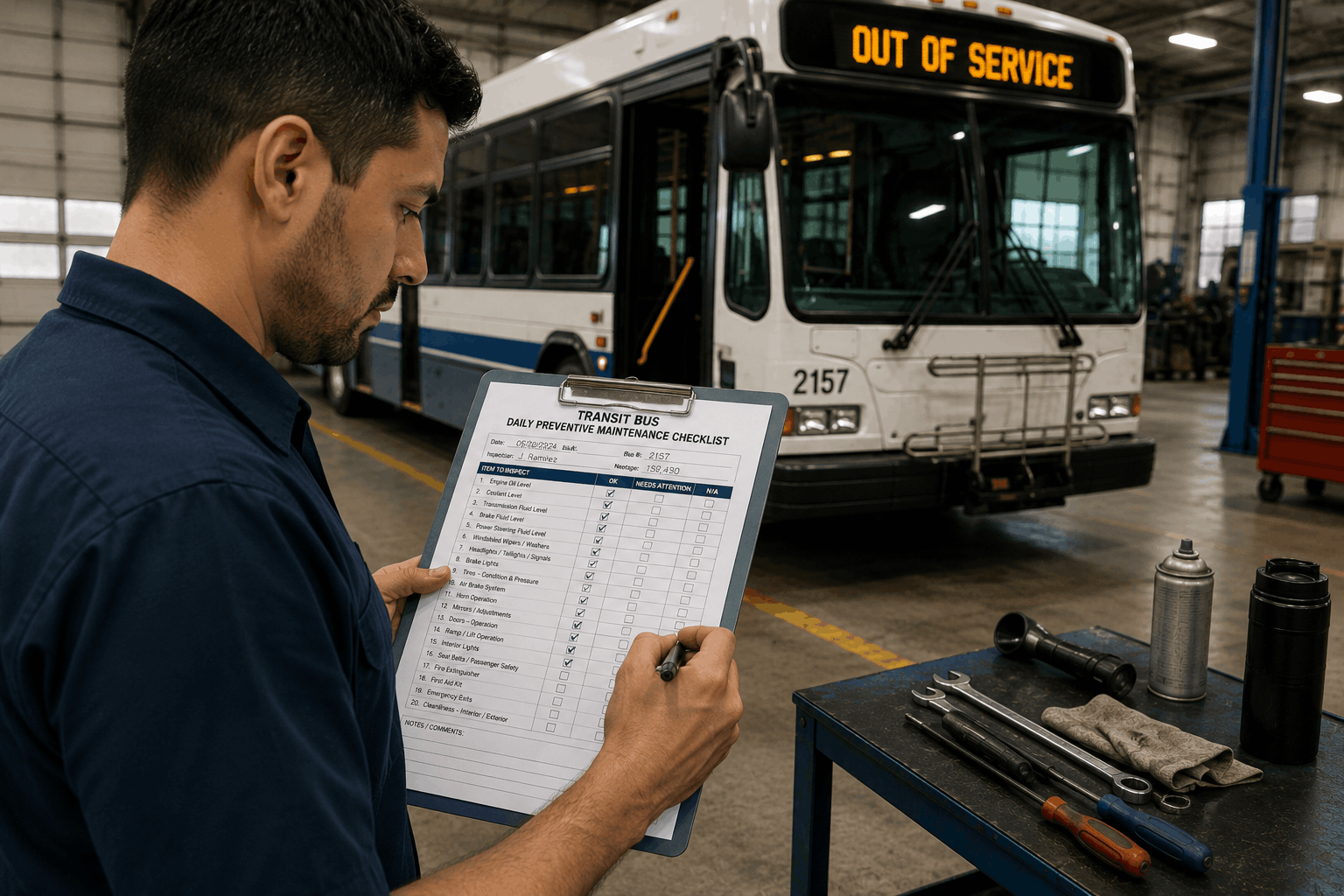
FMCSA regulations require that all brake inspections be documented with completed inspection forms that specify what was checked, results of checks, and any defects found. Inspection documentation creates a legal record of compliance and is critical evidence if disputes arise about whether brakes were properly maintained. Complete inspection forms must identify every component checked and results of checks. Defects must be clearly noted with specific descriptions. The documentation must be retained for compliance verification if federal inspectors conduct roadside safety audits or if accidents require investigation.
Documentation should include date of inspection, inspector name, bus identification, mileage, specific items tested, and quantitative results where applicable (air pressure PSI, pad thickness measurements, etc.). Any defects identified must be assigned to maintenance with repair completion deadlines and documentation confirming repairs were completed. A bus cannot return to service with identified brake defects. The out-of-service period remains in effect until defects are corrected and verified by inspection. This disciplined approach to brake documentation and out-of-service enforcement is what separates fleets with excellent safety records from those experiencing chronic brake problems and violations.
Brake System Failure Impact Analysis
Common Brake Defects Found During Inspections
Brake Inspection FAQs
What are the exact FMCSA requirements for brake system inspections?
FMCSA 49 CFR 393.52 specifies that brake systems must be inspected at prescribed intervals and all defects must be repaired before the bus operates. Brake systems must pass DOT inspection standards and be maintained according to manufacturer specifications without exception.
What is the minimum brake pad thickness required for commercial buses?
Minimum brake pad thickness is typically 3/16 inch (4.76mm) for service brakes. Pads should be replaced before reaching minimum to maintain safe braking response. Consult your manufacturer specifications and FMCSA standards for exact requirements.
How often should air brake systems be inspected for safety?
Air brake systems should be inspected before each route start and after operation daily. Quarterly comprehensive inspections should measure air pressure, test system components, and verify redundant circuit functionality. Annual inspections should include brake overhaul and complete system testing.
Can a bus operate with a brake warning light illuminated?
No. An illuminated brake warning light indicates a system fault and is an automatic out-of-service condition. The bus cannot legally operate until the warning light is addressed and the brake system is tested and certified safe by qualified mechanic.
What should be done if air brake pressure doesn't reach normal operating range?
If air pressure fails to build to normal range (100-120 PSI), the bus is immediately out-of-service. This indicates air compressor failure, major leak, or other serious system defect. Bus cannot operate until air pressure issue is diagnosed and repaired by qualified brake specialist.
How are brake system defects documented and tracked for compliance?
All brake defects must be documented on inspection forms with date, bus ID, specific defect description, and inspector signature. Defects must be assigned to maintenance with repair deadline. Repairs must be documented and verified before bus returns to service.
What is brake fade and how does it affect safety?
Brake fade occurs when brakes overheat and lose effectiveness, requiring longer stopping distance and harder pedal pressure. It's caused by excessive braking on long grades or in heavy traffic. Proper brake maintenance and inspection prevent fade by identifying components approaching wear limits.
Are there different DOT inspection standards for transit buses versus school buses?
Both transit and school buses must meet FMCSA 49 CFR 393 brake system standards. School buses have additional state-specific requirements. Both must pass DOT Vehicle Safety Inspection with identical brake system requirements regardless of bus type or use.
Ensure Brake Safety with Professional Inspections
Download our comprehensive brake inspection checklist meeting FMCSA 49 CFR 393 standards. Professional brake inspections detect defects before they cause accidents and ensure every bus passes DOT safety inspection. Transit agencies nationwide use structured brake protocols to maintain safety and compliance. BusCMMS automates brake inspection scheduling, documents defects, and tracks repairs to ensure discipline in your brake maintenance program.