Wheelchair lift maintenance is the discipline of keeping a bus lift operative through both scheduled preventive service and fast follow-up on faults — catching a hydraulic drift or a failing interlock before it strands a rider, and documenting every check and repair on the vehicle. Unlike most bus components, a lift is a complex electromechanical assembly with its own recurring fault modes, and when it goes down the cost is not just a work order, it is a passenger with no other way to board.
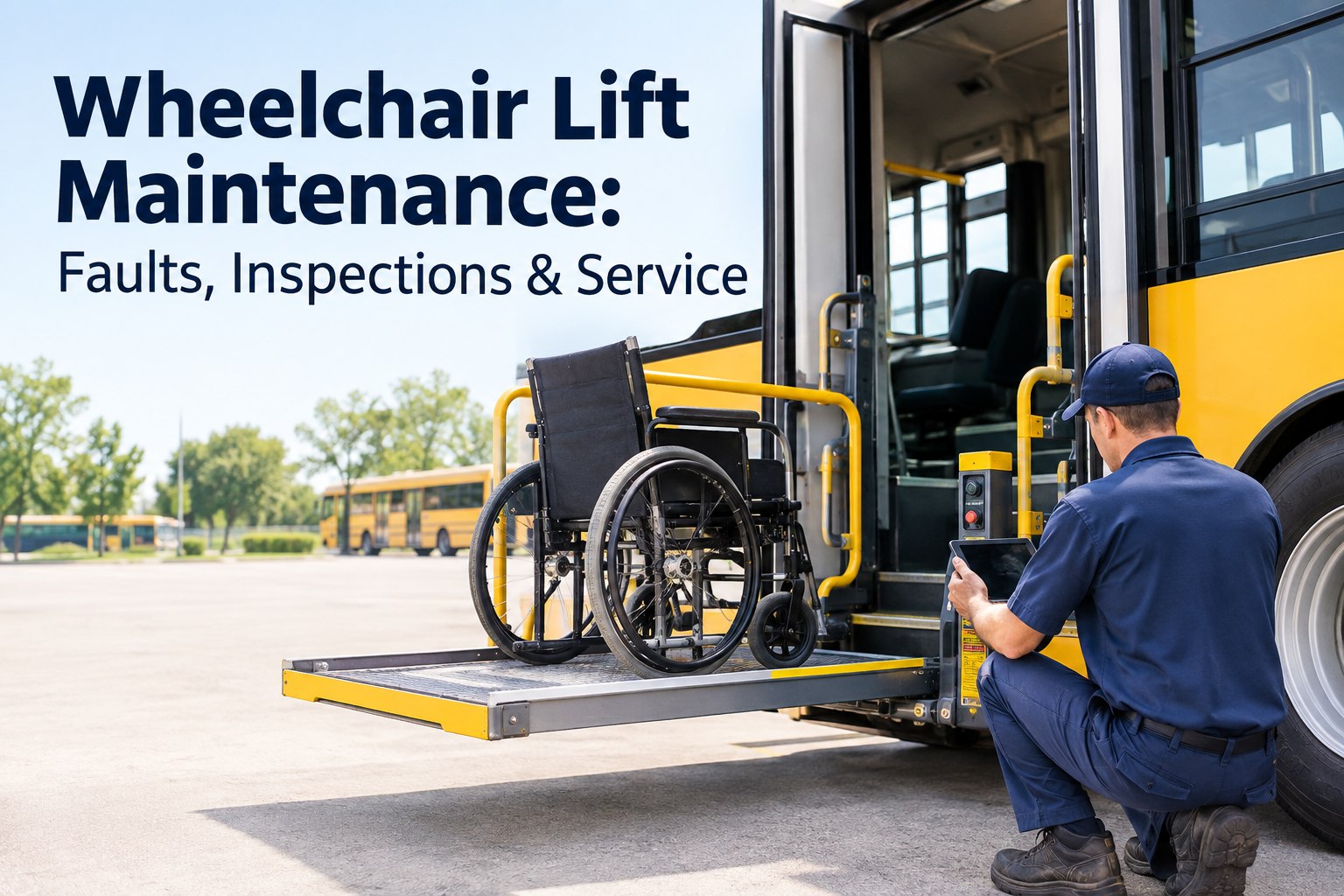
Wheelchair Lift Maintenance: Faults, Inspections and Service
A lift that half-works is a lift that fails at the curb. Keep it operative with preventive service on a cadence and fault follow-up that never gets forgotten.
Updated September 2026 · A practical guide, not legal advice; lift service requirements vary by manufacturer, vehicle, and jurisdiction.A wheelchair lift takes more punishment than almost anything else on the bus: it cycles under load, sits exposed to weather, and depends on hydraulics, a motor, sensors, and interlocks all working together. That complexity is why a lift needs its own maintenance approach — not just the occasional look, but scheduled preventive service and prompt follow-up whenever a fault appears. Both matter, because a lift that fails does not inconvenience a rider, it excludes one.
The faults a lift actually throws
Lift problems cluster in a handful of predictable places. Knowing them turns a vague "the lift is acting up" into a specific thing to check — and most start as a small symptom well before they become a stranded rider.
Drift, slow raise or lower, or a spongy stop points to a hydraulic leak, low fluid, or a failing valve — the most common lift complaint.
A laboring motor, tripping breaker, or a lift that struggles under load signals a motor, pump, or electrical fault building toward a stall.
An outer barrier or roll-stop that is slow to raise, will not latch, or sits below height is a direct safety fault — it is what keeps a chair from rolling off.
Faulty interlocks or sensors can let the lift operate out of sequence or refuse to run at all — often an intermittent fault that is easy to dismiss.
A cracked platform, worn slip-resistant surface, or bent handrail is a fall risk that degrades slowly and gets overlooked.
Unresponsive controls or a manual backup that will not operate leaves no safe way to complete a cycle if power or hydraulics fail mid-lift.
Nearly all of these announce themselves early — a slower cycle, a hesitation, a warning — and nearly all get shrugged off because the lift still technically works. Catching the symptom is the whole game, because the alternative is discovering it with a rider waiting. Book a demo to catch lift faults before they strand a rider
Two kinds of lift work: on a cadence and on a fault
Keeping a lift operative takes two distinct workflows, and fleets that only do one keep getting surprised. Preventive service on a schedule heads off the wear-driven failures; fault-triggered service handles the ones that appear between checks. You need both.
The preventive cadence is what a manufacturer's schedule and your maintenance program drive; the fault path is what keeps a bus with a compromised lift off the road until it is fixed. Run both on one record and nothing falls between them — the scheduled service happens on time, and the between-check faults get caught and closed. Start free and run lift PM and fault service together
From fault to back-in-service: the loop
When a lift fault appears, what matters is that it moves through a clear sequence to a verified fix — not that it gets mentioned and forgotten while the bus keeps running. A connected loop takes the fault from detection to a documented, verified repair.
Detect the fault
A driver, technician, or camera event flags a lift symptom, tied to the bus.
Remove from service
The lift, and the bus for accessible runs, is flagged out until the fault is resolved.
Inspect & diagnose
The lift is operated and checked against the fault, with findings and a photo or clip recorded.
Work order
A service work order opens against the bus with the evidence and diagnosis attached.
Repair & verify
The fix is completed, then the lift is cycled under load to confirm it is fully operative.
Record
The fault, repair, and verification stay on the bus's lift history, ready for review.
The verify step is the one lifts especially need: a lift is not fixed until it has cycled correctly under load, because a bench-clear repair can still fail with weight on the platform. Closing the loop with a real verification is what makes "repaired" mean operative. Book a demo to see the lift fault-to-service loop on one record
Why lift problems recur: the record is split
The failure that keeps lifts unreliable is the same split seen across the shop: a camera or telematics event may register a lift fault, but it lives in the vendor portal, while lift inspections, PM schedules, and repairs sit in separate systems. So a flagged fault never opens a service order, a due PM slips unnoticed, and no single record shows whether the lift is actually operative right now.
BusCMMS is an AI-native, hardware-agnostic bus fleet operations platform that closes that gap. It connects lift-fault events from the MDVR or AI camera and telematics systems you already run — no rip-and-replace — to bus asset records, incidents, and maintenance work orders, and drives preventive-maintenance triggers on the lift. A fault links to the bus and lift, opens a service work order, flags the vehicle out of accessible service, and keeps the fault, the PM cadence, and the repair on one record — so the lift's true status is always clear. Start free and keep lift status on one record
What the regulations and standards involve
A careful, non-legal note on the backdrop: accessibility and maintenance rules shape why lift upkeep matters, but the specific service process is yours to define with the manufacturer and your policy.
ADA accessibility requirements may apply to transportation services and accessible vehicles, and an operative lift is central to providing accessible service — which is why a lift fault is treated as more than routine downtime. How these requirements apply depends on your operation.
Part 396 covers systematic inspection, repair, and maintenance for applicable commercial motor vehicles and the records to show it — which supports keeping the lift in safe operating condition and documenting service, without prescribing a specific lift workflow.
Beyond these, specific lift inspection and service requirements can depend on the lift manufacturer, the vehicle type, your jurisdiction, and district policy. This page is a practical guide, not legal advice — follow your lift manufacturer's service schedule and confirm your obligations with the appropriate authorities and counsel. Book a demo to keep lift service documented to your schedule
See how a lift fault becomes a closed work order in BusCMMS
Watch a lift fault link to the right bus, flag it out of accessible service, open a work order, and close as a verified, cycled-under-load repair — while preventive checks fire on schedule, all on one lift record. Uses your existing MDVR, AI camera, or telematics events. Hardware-agnostic, no rip-and-replace.
Hardware-agnostic · Works with your existing cameras and telematics · One record per bus
Frequently asked questions
What does wheelchair lift maintenance involve?
Wheelchair lift maintenance involves two things working together: preventive service on a schedule and prompt follow-up on faults. Preventive service means checking and servicing the lift at set intervals — hydraulic fluid, a cycle test under load, the roll-stop, interlocks, and controls — to catch wear before it fails. Fault follow-up means that whenever a driver, technician, or camera event flags a lift symptom, the lift is taken out of accessible service, inspected, diagnosed, repaired, and verified. Because a lift is a complex electromechanical assembly that cycles under load and is exposed to weather, it needs this combined approach rather than the occasional glance, and every check and repair should be documented on the vehicle.
What are the most common wheelchair lift faults?
They cluster in a few predictable areas. Hydraulic problems — drift, slow raise or lower, a spongy stop — are the most common, usually a leak, low fluid, or a failing valve. Motor and pump faults show up as a laboring motor, a tripping breaker, or struggling under load. Roll-stop or outer-barrier faults, where it is slow to raise or will not latch, are direct safety issues. Interlock and sensor faults can make the lift operate out of sequence or refuse to run, often intermittently. Platform and surface wear — cracks, worn slip-resistant surface, bent handrails — is a fall risk that degrades slowly. Most of these begin as a minor symptom well before a full failure, which is why catching them early matters.
How often should a wheelchair lift be serviced?
On the schedule set by the lift manufacturer and your maintenance program, combined with fault-triggered service whenever a symptom appears. Preventive service runs on a time or usage cadence to head off wear-driven failures, while fault follow-up handles problems that arise between scheduled checks. There is no single universal interval that fits every lift — the right cadence depends on the manufacturer's guidance, the vehicle, how heavily the lift is used, and your jurisdiction and district policy. The practical approach is to follow the manufacturer's service schedule as the baseline, layer in fault-triggered service, and keep both on one record so scheduled checks happen on time and between-check faults are not missed.
What rules apply to wheelchair lift maintenance?
Accessibility and maintenance rules shape why lift upkeep matters, but they do not hand you a specific service process. ADA accessibility requirements may apply to transportation services and accessible vehicles, and an operative lift is central to providing accessible service, which is why a lift fault is treated as more than routine downtime. 49 CFR Part 396 covers systematic inspection, repair, and maintenance for applicable commercial motor vehicles and the associated records, supporting keeping the lift safe and documented. Beyond these, specific lift inspection and service requirements can depend on the lift manufacturer, vehicle type, jurisdiction, and district policy. This is a practical guide, not legal advice; follow your manufacturer's schedule and confirm your obligations with the appropriate authorities.
Do we need new cameras to track lift faults?
No. BusCMMS is hardware-agnostic and is designed to connect lift-fault events from the MDVR, AI camera, or telematics systems you already operate to bus asset records, incidents, and maintenance work orders, and to drive preventive-maintenance triggers on the lift, without a rip-and-replace deployment. A detected fault links to the correct bus and lift, opens a service work order, flags the vehicle out of accessible service until it is cleared, and keeps the fault, the PM cadence, and the repair on one record. The aim is to connect the detection you already have with the lift's inspection, PM, and repair workflow, using your current hardware, so a fault is never flagged and forgotten and the lift's status is always clear.