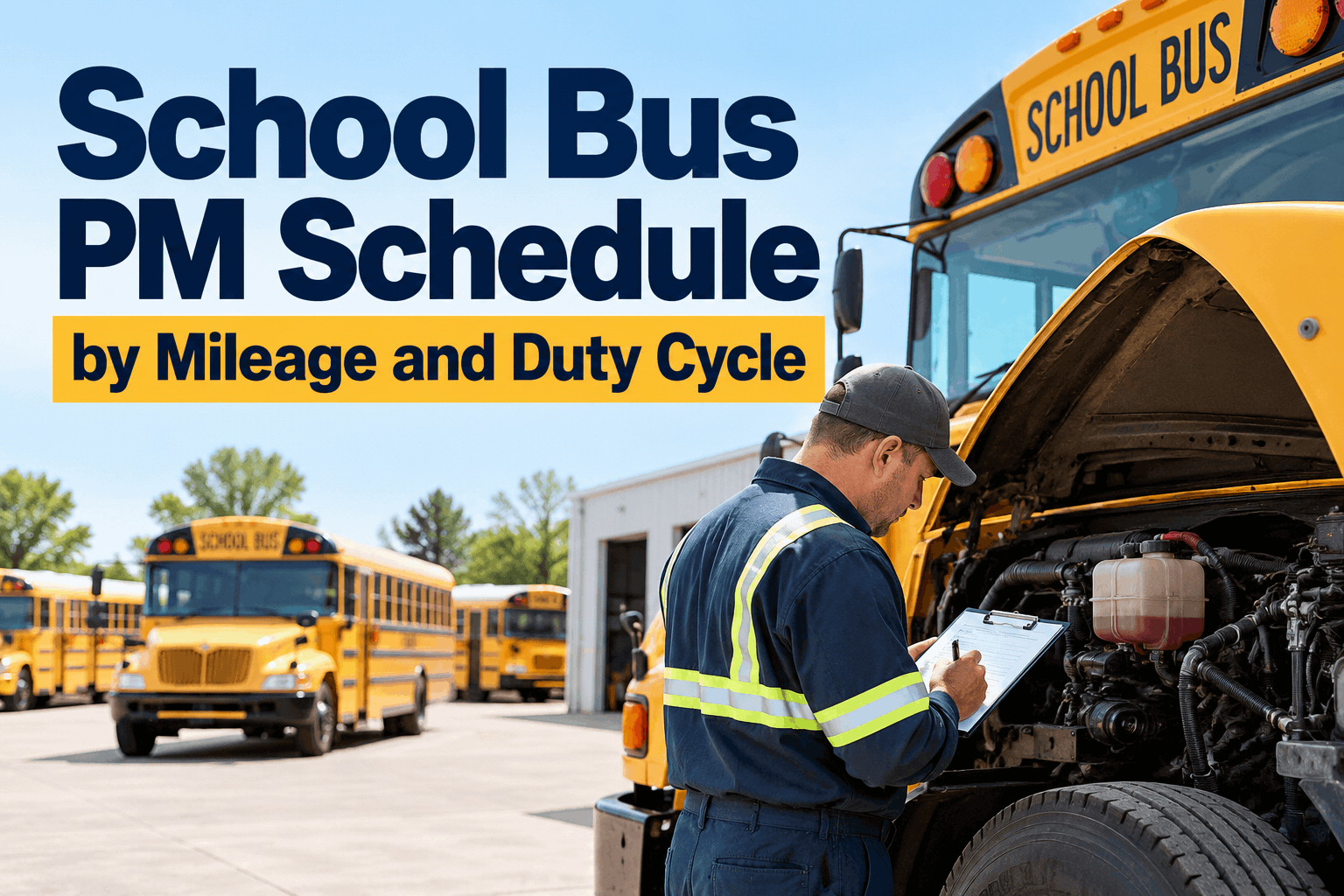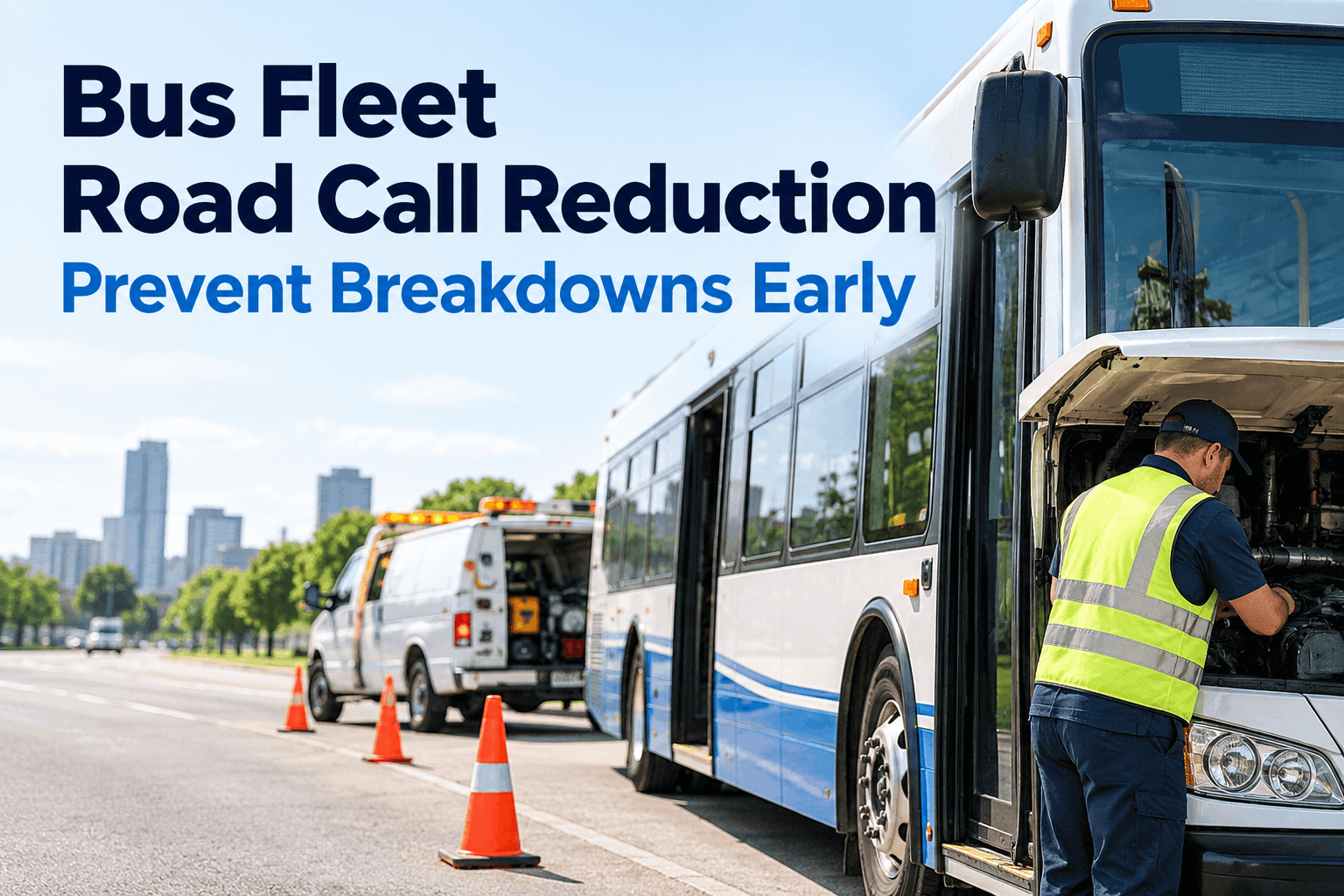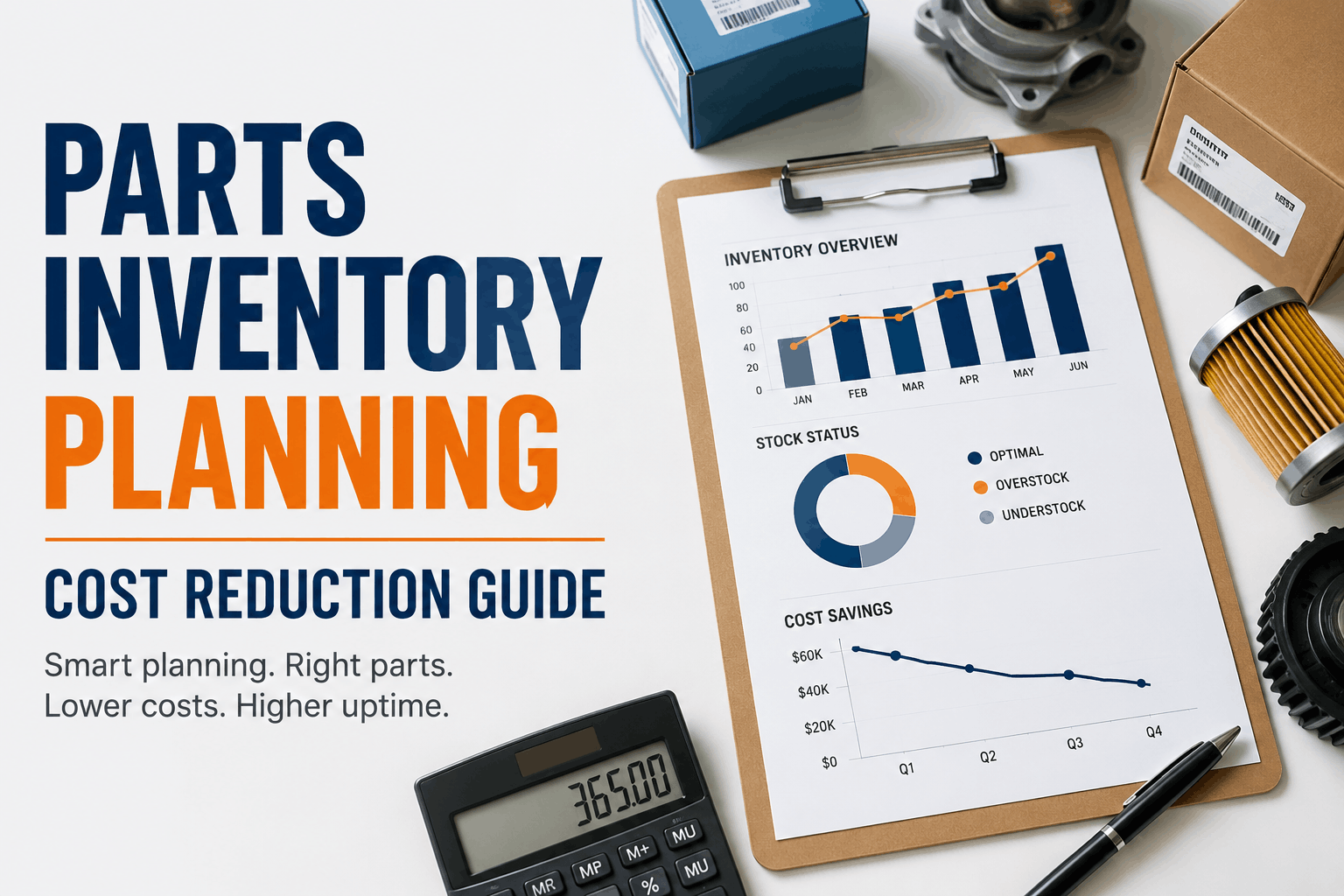
When a school bus sits idle waiting for a brake drum that should have been on the shelf three days ago, the entire route schedule unravels. School bus scheduling performance depends on a quiet, well‑fed parts room just as much as it does on engine hours and driver availability. Yet most U.S. districts treat parts inventory as an afterthought — a stack of sticky notes on a technician’s toolbox — rather than a precision‑managed asset. Research from the American School Bus Council shows that reactive parts replenishment causes 34% of all unscheduled maintenance downtime, and the average cost of a single road‑call triggered by a missing filter or belt exceeds $4,200 when you factor in route substitution, driver overtime, and parent complaint resolution. BusCMMS replaces guesswork with structured fleet maintenance scheduling that ties every part to an open work order, tracks consumption by vehicle make and model, and flags reorder points before the bin runs dry. This guide shows exactly how proactive parts inventory planning reduces fleet cost per mile, keeps buses available at pull‑out, and eliminates the emergency parts scrambles that erode transportation director confidence.
Stop Stockouts From Wrecking Your Route Coverage
BusCMMS pre‑loads parts‑to‑PM linkages for school bus fleets — diesel, propane, electric — so your shop never waits on a part that should already be on hand.
Why Parts Inventory Blindness Costs Districts More Than They Realize
The National Association for Pupil Transportation reports that school bus maintenance costs have risen 23% over the past five years, yet parts budgets often remain flat. The disconnect lies not in over‑ordering but in under‑planning. A fleet that runs reactive parts management typically carries 22% excess inventory of low‑use items while running out of fast‑moving consumables — filters, belts, pads, and glow plugs — at the worst possible moment. BusCMMS’s repair management module ties every installed part to a specific work order, building a consumption history that lets the system calculate reorder minimums for each bus model in the yard. Districts that adopt structured parts planning reduce emergency parts orders by 50% or more within six months, slash overnight shipping fees, and reclaim thousands of dollars in wasted inventory carrying costs.
Five Parts Inventory Strategies That Build Route Reliability
The difference between a fleet that runs 99% availability and one that loses three buses every morning rarely shows up on a balance sheet — it lives in the parts room. BusCMMS bakes these five disciplines into its fleet operations platform so transportation directors gain control without adding administrative headcount.
BusCMMS auto‑generates PM‑A, PM‑B, and PM‑C work orders and attaches the exact bill of materials — filter, gasket, belt — for each service interval. When a bus hits a mileage trigger, the required parts appear on the shop’s pick list, not on a sticky note the night before.
A Thomas Built Bus uses different brake components than a Blue Bird. BusCMMS tracks consumption per model and automatically flags when brake pads, air filters, or belts dip below your chosen threshold — no manual counting.
When a driver flags a worn wiper blade during a pre‑trip, one click turns that defect into an assigned work order with the required part listed. The 24‑hour paper lag disappears, and the part is reserved before the bus returns to the barn.
BusCMMS shows upcoming service windows alongside the school calendar. Major parts orders are placed to arrive during spring break or professional development days, so buses are off the road for service, not waiting on a shipment.
Every filter, battery, and alternator rolls into a cumulative cost‑per‑mile metric for each asset. When a bus’s parts spend starts rising, BusCMMS gives you the data to justify replacement before the next breakdown.
Reactive vs. Proactive Parts Management: By the Numbers
| Inventory Metric | Reactive (Paper / Spreadsheet) | Proactive (BusCMMS) |
|---|---|---|
| Stockout Rate on PM Parts | 17% | Below 2% |
| Emergency Parts Orders per Month | 8–12 | 1–2 |
| Time Spent on Parts Research per WO | 22 minutes | Under 2 minutes |
| Parts Cost as % of Total Maintenance | 42% | 31% |
| Annual Overnight Shipping Spend | $3,800–$5,200 | Under $600 |
| Inventory Accuracy (system vs. physical) | 68% | 96%+ |
How BusCMMS Parts Planning Works Inside a School Bus Fleet
Unlike generic CMMS platforms that require months of configuration, BusCMMS ships with school‑bus‑specific parts libraries, PM‑to‑parts mappings, and automatic reorder calculations. The platform connects the three pillars of fleet planning — preventive maintenance schedules, real‑time work order completion, and parts consumption history — into a single view that the transportation director can review in 15 minutes each week. Here is the typical parts workflow that high‑performing districts adopt.
BusCMMS comes pre‑loaded with common school bus parts catalogs — International, Blue Bird, Thomas — so your shop starts with a ready‑to‑use inventory record, not a blank spreadsheet.
For every fast‑moving item, define a minimum stock level that triggers an alert. BusCMMS compares consumption velocity from closed work orders and tells you when a reorder is coming, not after the bin is empty.
Every PM‑A, PM‑B, or PM‑C generates a pick list automatically. As the work order is completed, parts are decremented and actual cost data flows into the asset history — zero data entry.
When a driver defect flags a part need during an inspection, the system reserves the item immediately. The shop knows what to pull before the bus arrives, cutting cycle time by hours.
A single screen shows stockout risks, open purchase requests, and cost trends per bus. The transportation director spots a parts issue on Tuesday, not Friday afternoon when the supplier is closed.
Every quarter, pull a report that shows parts spend per mile for every bus. Use it to forecast replacements, justify budget increases, and prove ROI to the school board.
Before BusCMMS, our parts ordering was pure memory — we’d realize we were out of air filters when a PM was already overdue. Now the system tells us what to order and when, based on actual consumption. Our road calls for missing parts dropped from six a month to one, and we cut overnight shipping costs by 80%.
Frequently Asked Questions
How does BusCMMS determine when to reorder a part?
BusCMMS calculates consumption velocity from completed work orders and compares it against the minimum stock level you set for each part. When inventory approaches that floor, the system flags the item on the weekly dashboard.
Can BusCMMS handle mixed diesel, propane, and electric bus parts in the same inventory view?
Yes. The platform maintains separate parts catalogs and PM schedules for each fuel type simultaneously, so a diesel glow plug and an electric bus contactor appear alongside one another in the same inventory dashboard.
What if our fleet uses a custom part numbering system?
BusCMMS supports both manufacturer part numbers and your internal numbering. During implementation, the pre‑loaded bus parts library can be mapped to your existing codes in under two days.
How quickly can we see a reduction in emergency parts spend?
Most districts report a measurable drop in emergency orders within the first 60 days, because the first PM cycle exposes stock gaps and reorder minimums begin triggering before critical levels are reached.
Does BusCMMS integrate with our existing parts suppliers?
While BusCMMS does not place orders automatically, the system exports purchase request summaries that can be emailed directly to your preferred vendor, eliminating manual list compilation.
Is the parts module included in the free tier for fleets under 75 buses?
Yes. The free BusCMMS tier includes full parts inventory functionality — reorder minimums, work‑order linkage, and consumption tracking — for fleets up to 75 buses.
What happens if a part is used but not recorded in a work order?
BusCMMS requires a part to be assigned to a work order before it is decremented, creating an audit trail. If a part is taken without a WO, the discrepancy appears during the next physical inventory count and can be corrected.
How does parts inventory planning tie to DOT compliance?
FMCSA regulations require documentation that safety‑critical components were replaced during routine inspections. BusCMMS automatically logs the part serial number and installation date into the vehicle record, ensuring audit‑ready proof of compliance.
Turn Your Parts Room into a Reliability Engine
BusCMMS gives your shop the parts‑planning discipline that keeps buses on the road and emergency orders off the credit card. Start in under three weeks, with zero customization.