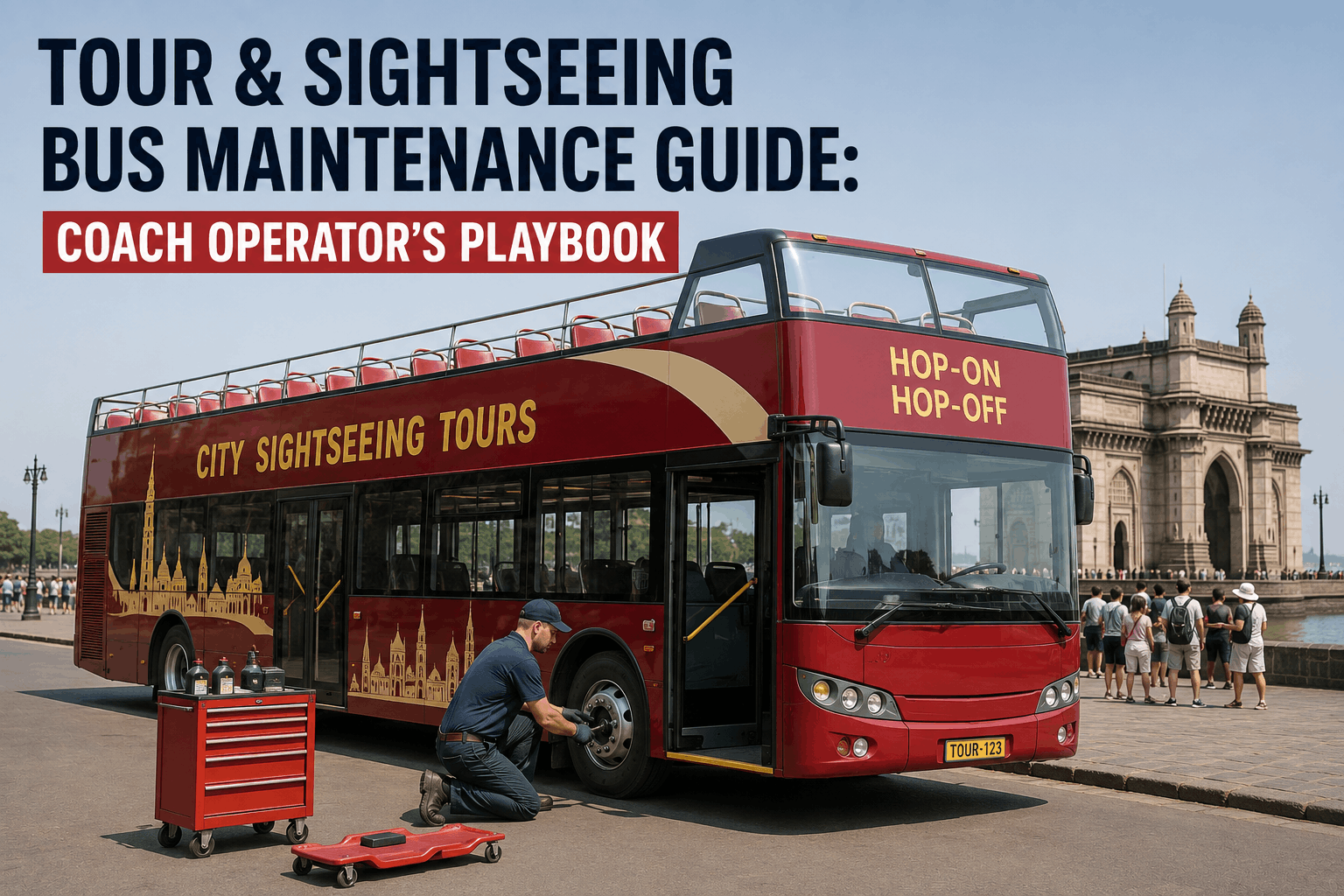
Tour and sightseeing bus operators face maintenance challenges that differ significantly from line-haul motorcoach fleets. Open-top deck inspections, high-cycle braking from repeated stop-and-go city driving, low-speed cooling system stress, all-day idling at tour stops, and accelerated tire wear from urban street conditions create a unique maintenance profile. This tour and sightseeing bus maintenance guide provides a comprehensive playbook for coach operators to optimize preventive maintenance (PM) schedules, address common failure points, and extend vehicle life while minimizing downtime during peak tourist seasons. By understanding the specific wear patterns of sightseeing operations and implementing structured maintenance programs, operators can improve reliability, reduce operating costs, and protect their reputation with tour operators and passengers.
Keep Your Sightseeing Fleet on the Road with Proactive Maintenance
BusCMSS helps tour and sightseeing operators track PM schedules, document inspections, and monitor component wear — reducing unplanned downtime and extending vehicle life.
Key Maintenance Areas for Tour and Sightseeing Bus Fleets
Sightseeing bus operations place distinct demands on every vehicle system. Understanding these specific stress points enables maintenance teams to prioritize inspections and interventions where they matter most. The following areas represent the most critical maintenance focuses for tour and sightseeing fleets.
Open-Top Deck Inspection and Structural Integrity
Open-top or open-deck buses require frequent structural inspections of upper deck framing, flooring, and railings. Inspect for corrosion, loose fasteners, and stress cracks from passenger loads and weather exposure.
High-Cycle Braking Systems
City tour routes involve frequent stops, steep gradients, and heavy passenger loads, causing accelerated brake wear. Inspect brake pads, rotors, and air systems monthly; consider upgraded brake materials for high-cycle duty.
Low-Speed Cooling System Performance
Sightseeing buses spend extended periods at low speeds or idling, reducing airflow through radiators and cooling packs. Monitor coolant levels, fan operation, and radiator cleanliness to prevent overheating.
All-Day Idling and Engine Health
Engines may idle for hours at tour stops, leading to soot accumulation, oil degradation, and turbocharger deposits. Implement extended idle maintenance protocols and consider auxiliary power units to reduce engine wear.
Urban Tour Route Wear on Suspension and Tires
Potholes, curb strikes, and rough city streets accelerate suspension component wear and cause irregular tire wear. Inspect shock absorbers, bushings, and alignment monthly; rotate tires frequently.
Coach Body, Interior, and Passenger Amenities
Passenger comfort is paramount in tour operations. Inspect seating, flooring, grab handles, air conditioning, and audio/visual systems regularly to maintain a premium passenger experience.
Tour Bus Preventive Maintenance Playbook: Critical Tasks and Intervals
Effective preventive maintenance for sightseeing fleets requires a structured schedule that accounts for the unique operating conditions of city tours. The following tasks and recommended intervals represent best practices for tour and sightseeing bus operators.
Daily Inspections (Pre- and Post-Trip)
Safety Foundation
Conduct comprehensive walk-around inspections before and after each shift. Check lights, signals, brakes, tires, fluid levels, and emergency equipment. Pay special attention to open-top deck barriers, railings, and walkway surfaces. Document any defects and address them before the next trip.
Focus Areas
Brakes, tires, lights, deck security
Documentation
Defect report, repair order
Best Practice
Use digital checklist for consistency
Weekly Brake System Deep Inspection
High-Wear Component
Due to high-cycle braking, inspect brake linings, drums/rotors, air chambers, slack adjusters, and hoses weekly. Measure lining thickness and compare to minimum specifications. Check for air leaks and proper brake balance.
Focus Areas
Brake pads, rotors, air systems
Documentation
Brake measurement logs
Best Practice
Replace pads in axle sets
Monthly Cooling System Service
Overheat Prevention
Clean radiators, charge-air coolers, and oil coolers monthly to remove debris and dust accumulation. Inspect coolant levels, test freeze/boil point, and check all hoses and clamps. Replace coolant per manufacturer recommendations.
Focus Areas
Radiator cleanliness, coolant condition
Documentation
Coolant test results, service log
Best Practice
Use extended-life coolant for longer intervals
Quarterly Suspension and Steering Inspection
Urban Road Wear
Inspect shock absorbers, air springs, ball joints, tie rods, and wheel bearings for wear or damage. Check alignment and tire wear patterns. Torque critical fasteners to specifications.
Focus Areas
Suspension components, steering linkage
Documentation
Inspection checklist, alignment records
Best Practice
Rotate tires every 6,000 miles
Semi-Annual Engine Oil and Filter Change
Idling and Soot Management
Given extended idle hours, consider shortening oil change intervals to 6 months or 10,000 miles, whichever comes first. Use high-quality oils and filters. Perform oil analysis to monitor engine health and detect early wear.
Focus Areas
Oil quality, soot levels, viscosity
Documentation
Oil analysis reports, service records
Best Practice
Use low-ash oil for DPF-equipped engines
Annual Comprehensive Structural and Safety Audit
Regulatory and Passenger Safety
Conduct a full structural inspection of the body, deck, and passenger areas. Check emergency exits, fire suppression systems, seat belts, and first aid kits. Review all safety systems and update emergency procedures.
Focus Areas
Structural integrity, emergency equipment
Documentation
Safety audit report, certifications
Best Practice
Align with annual DOT inspection
Top Maintenance Issues in Sightseeing Bus Fleets: Visual Overview
Based on industry data and operator feedback, the following chart illustrates the most common maintenance issues affecting sightseeing bus operations. Understanding these problem areas helps maintenance teams allocate resources effectively and prioritize preventive actions.
Brake Wear (High-cycle braking)
92%
Cooling System Overheating (Low-speed/idle)
78%
Tire Wear (Urban road conditions)
65%
Suspension Component Failure (Curb strikes, potholes)
53%
Electrical and Lighting Issues (Vibration)
47%
Tour Bus Maintenance Reference Matrix
| Component System | Inspection Interval | Key Checks | Common Failure | Preventive Action |
|---|---|---|---|---|
| Braking System | Weekly | Lining thickness, air leaks, adjusters | Premature pad/rotor wear | Upgrade to ceramic/metallic pads |
| Cooling System | Monthly | Radiator cleanliness, coolant level | Overheating at idle | Clean coolers, use auxiliary fan |
| Tires and Wheels | Weekly | Pressure, tread depth, irregular wear | Curb damage, rapid shoulder wear | Rotate tires, align regularly |
| Suspension and Steering | Quarterly | Bushings, shocks, tie rods | Worn ball joints, air spring leaks | Replace with heavy-duty components |
| Engine (Idle-heavy) | Semi-annual | Oil analysis, soot, turbocharger | Oil degradation, turbo deposits | Shorter oil intervals, anti-idle systems |
How BusCMSS Supports Tour and Sightseeing Bus Maintenance
BusCMSS provides tour and sightseeing operators with the tools to manage maintenance schedules, track inspections, and document repairs efficiently. The system automates PM scheduling, records defect findings, and provides visibility into component wear trends. By centralizing maintenance data, BusCMSS helps operators optimize parts inventory, reduce unplanned downtime, and ensure that vehicles are tour-ready for peak seasons.
PM Schedule Automation
BusCMSS automates preventive maintenance scheduling based on mileage, engine hours, or calendar intervals — ensuring no inspection or service is missed.
Defect and Repair Tracking
BusCMSS captures daily inspection findings, tracks repair status, and generates work orders — providing a complete maintenance history for each vehicle.
Component Wear Monitoring
BusCMSS records component replacement dates and mileage, enabling operators to predict wear patterns and plan proactive replacements before failure occurs.
Parts Inventory Management
BusCMSS tracks parts usage and reorder points, ensuring that critical components are available when needed to minimize downtime during the busy tour season.
Tour and Sightseeing Bus Maintenance Program: Implementation Steps
Audit Existing Maintenance Practices
Review current PM schedules, inspection forms, and repair records for the fleet. Identify gaps and areas where sightseeing-specific wear is not being adequately addressed.
Define Fleet-Specific PM Intervals
Adjust standard PM intervals to account for the unique operating conditions of tour buses — higher brake wear, extended idling, and city road damage.
Implement Digital Inspection Checklists
Deploy BusCMSS to digitize daily and weekly inspection checklists. Ensure drivers and technicians can easily report defects and track corrections.
Train Maintenance Staff and Drivers
Provide training on sightseeing-specific inspection points — deck railings, braking system high-cycle signs, cooling system cleanliness, and tire wear patterns.
Monitor and Analyze Maintenance Data
Use BusCMSS reporting to track repeat failures, component life, and maintenance costs. Adjust PM schedules based on data-driven insights.
Schedule Peak-Season Readiness Inspections
Before peak tour season, conduct comprehensive inspections of all vehicles, focusing on high-wear components. Pre-position critical parts to minimize downtime. Book Demo to see BusCMSS's fleet maintenance tools.
Frequently Asked Questions
What makes tour bus maintenance different from line-haul motorcoaches?
Tour buses experience more frequent braking, extended idling, low-speed operation, and urban road conditions, leading to accelerated wear on brakes, cooling systems, tires, and suspension compared to highway-mileage motorcoaches.
How often should open-top deck inspections be performed?
Visual inspections of open-top decks should be performed daily before each shift. A more thorough structural inspection, including fasteners, welds, and corrosion checks, should be conducted monthly.
What are the signs of brake fade in sightseeing buses?
Brake fade manifests as a longer stopping distance, a soft or spongy pedal feel, or a burning smell. This is common after repeated heavy braking on steep descents. Immediate inspection and replacement of brake components are required.
How can BusCMSS help manage tour bus maintenance?
BusCMSS automates PM scheduling, digitizes inspection checklists, tracks repairs, and monitors component wear — helping tour operators reduce downtime and extend vehicle life.
What is the recommended oil change interval for sightseeing buses with extended idling?
For buses that idle extensively, consider oil changes every 6 months or 10,000 miles, whichever comes first. Oil analysis can help determine optimal intervals based on actual engine wear.
Keep Your Sightseeing Fleet Tour-Ready
BusCMSS gives tour and sightseeing operators the maintenance management tools needed to reduce downtime, control costs, and ensure passenger safety — throughout the busy season and beyond.