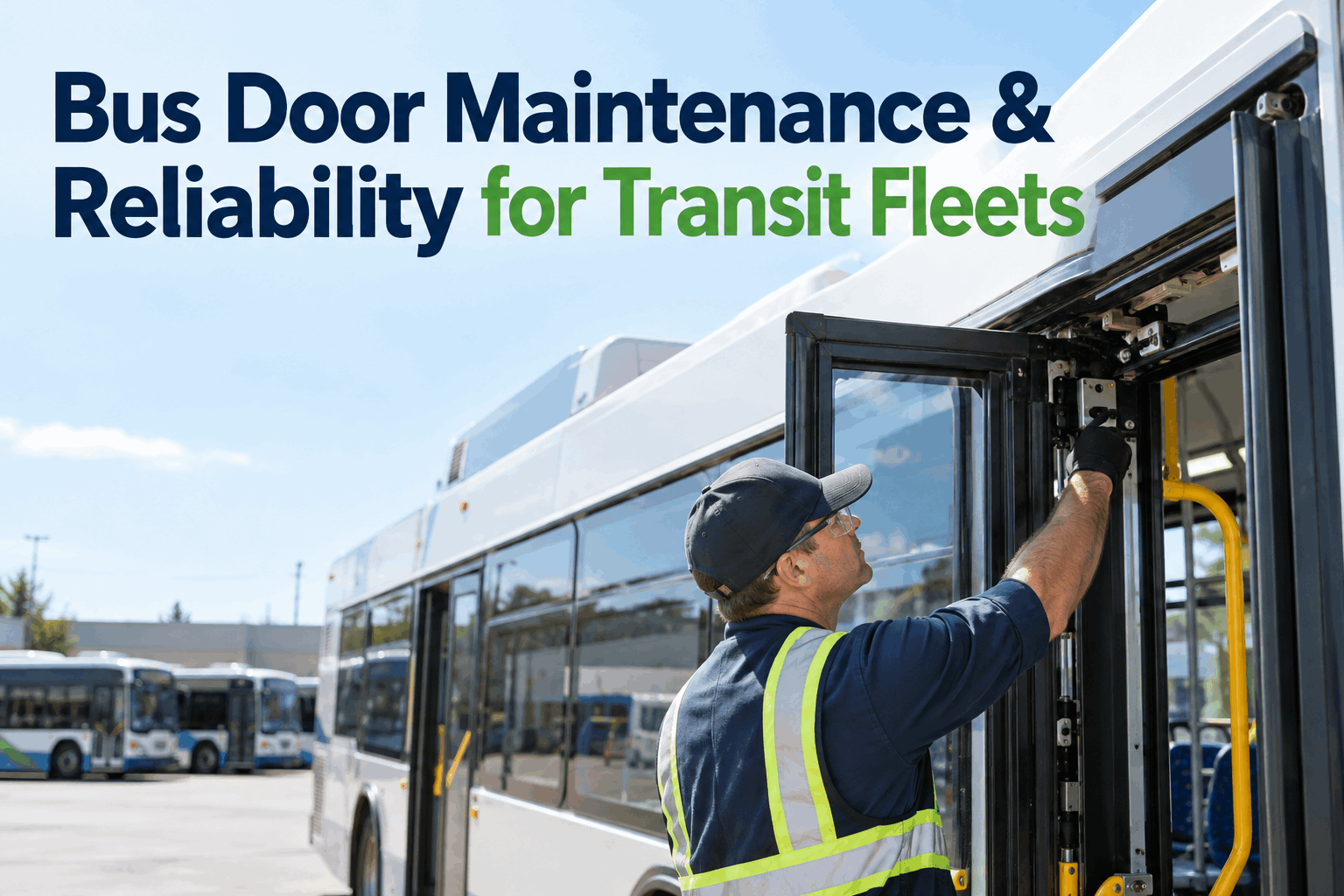
A transit bus door opens and closes thousands of times a day, every day, in all weather, slammed by riders and road grime. It is the single busiest moving part on the bus — which is exactly why it is the one that strands a bus mid-route with doors that won't seal. Smart bus door maintenance is less about the door and more about catching the fault that keeps coming back.
Bus Door Maintenance: Keeping Transit Doors Reliable and Buses in Service
Doors cycle more than any other system on a transit bus, so they fail more than anything else — and a door fault pulls the whole bus out of service. Here is how to keep doors reliable by tracking faults, catching repeat failures, and servicing before they strand a route.
High cycles, high fault rate, zero tolerance for a door that fails on a route — that is why doors earn their own maintenance plan, not a line in a general PM.
Why bus doors fail more than almost anything else
A door is not one part — it is a system of mechanical, pneumatic or electric, and sensor components that all have to agree, thousands of times a day. Three things make it the most fault-prone system on the bus.
Relentless cycling
Every stop is another open-close. On a busy route that is thousands of cycles a day, and every cycle wears hinges, seals, rollers, and the actuator a little more. No other system works that hard.
Many parts, one job
Actuator, linkage, sensors, seals, control, interlock — a fault in any one shows up as the same symptom: a door that won't open, close, or seal. That is what makes doors hard to fix for good.
Zero tolerance in service
A worn belt can wait; a door that won't seal cannot carry passengers. So a door fault does not just need fixing — it pulls the bus out of service now, which is why reliability matters more here than almost anywhere.
Put those together and the door becomes the component most likely to take a bus off the road on any given day. The fix is not working harder on each repair — it is tracking what fails so the same door stops coming back — you can book a walkthrough of door fault tracking to see how. When a mechanism keeps failing, the question shifts to whether to repair or replace that component, which our component decision guide covers.
The repeat-failure trap in bus door maintenance
The same door comes back every few weeks. Each time it gets fixed, closed out, and sent back — and each time the real cause goes untouched. Here is how a repeat failure plays out, and where it should have been caught.
Door won't seal — adjust and return
The tech adjusts the linkage, the door seals, the work order closes. Reasonable first response — nothing says it is anything more than a one-off.
Same door, three weeks later
Fault's back. Without a record linking it to last time, it is treated as new and adjusted again — the point where a repeat should have been flagged, not re-patched.
Fourth visit — the actuator was failing all along
The adjustments were masking a dying actuator. Three repairs and three service interruptions that one root-cause fix would have prevented — if the failure count had been visible.
The lesson every shop learns the hard way: a door fault's history matters more than any single repair. When the system counts how many times a specific door has failed, the second occurrence triggers a real diagnosis instead of a fourth adjustment. You can see repeat-failure flagging on a live fleet and check it against your own problem doors.
A preventive bus door maintenance checklist that holds up
Doors reward a short, regular check far more than a big annual one, because wear is constant. These five items, on a set interval, catch most faults before they become a road call — and you can start free and put door PM on a schedule.
Seals and weatherstrip
Check for hardening, tears, and gaps. A failed seal is the most common "won't close right" complaint and the cheapest to catch early.
Actuator and linkage
Listen and watch for hesitation, slow travel, or uneven force — the early signs of a tiring actuator before it quits mid-route.
Rollers, hinges, tracks
Clean and lubricate the moving path. Grit and dry tracks add drag that wears the actuator and throws off sealing.
Sensors and safety interlock
Verify the obstruction sensor and the interlock that stops the bus from moving with a door open — a safety item, not just a reliability one.
Log it against the door's history
Record each check so a pattern on one door shows up — the step that turns a checklist into repeat-failure prevention.
Stop fixing the same door twice
BusCMMS logs every door fault, counts repeat failures on each bus, and schedules door PM on the right interval — so a recurring fault triggers a real fix, not a fourth adjustment.
How BusCMMS keeps bus doors reliable
Door reliability comes down to three things working together — scheduled service, fault history, and repeat-failure visibility — and BusCMMS runs all three for buses specifically.
Scheduled door PM
Door checks on a mileage or calendar interval, auto-generated as work orders — so the busiest system on the bus gets service on time, not when it fails.
Fault and defect history
Every door fault logged to the specific bus, from the DVIR or the shop — so the door's whole history is in one place, not scattered across work orders.
Repeat-failure flagging
Count how many times a door has failed, so the second occurrence surfaces for root-cause diagnosis instead of another quick adjustment.
Because BusCMMS is built for buses, door faults sit alongside stop arms, lifts, and every other bus-specific item — not buried in generic fleet fields. You can start a free account and track your doors the same way.
Doors are my number-one road call, every year, by a mile. For a long time we just kept adjusting them — same buses, same complaint, over and over. The thing that actually moved the needle was seeing the failure count per door. Once I could tell the difference between a one-off and a door that had failed four times, I stopped letting my guys re-adjust a dying actuator and started replacing it. My door road calls dropped, and so did the overtime chasing them.
Key takeaways on bus door maintenance
Doors cycle more than any other system on a transit bus, so they fail more — and a door fault pulls the whole bus out of service immediately.
A door is a system of parts that all show the same symptom, which makes repeat failures easy — adjust the symptom and the real cause keeps coming back.
Short, regular PM beats a big annual one: seals, actuator, tracks, sensors — and logging each check against the door's history is what prevents repeats.
The win is counting failures per door, so the second occurrence triggers root-cause diagnosis instead of a fourth adjustment and a fourth road call.
The busiest part on the bus deserves its own plan. Treat bus door maintenance as fault-history tracking, not one repair at a time, and the doors that used to strand your routes become the ones you fixed for good — keeping buses available and riders moving. To see it on your own problem doors, a quick demo is the fastest way in.
Keep every door reliable and every bus in service
Set up BusCMMS to schedule door PM, log every fault, and flag the doors that keep failing — so your busiest component stops being your top road call. Rollout typically takes two to four weeks.
Bus door maintenance: frequently asked questions
Why do transit bus doors fail so often?
Because they work harder than any other system on the bus. A door opens and closes thousands of times a day in all weather, so its seals, actuator, linkage, rollers, and sensors wear fast. It is also a multi-part system where any one failure shows the same symptom, which makes doors both the most frequent fault and one of the hardest to fix permanently.
How often should bus doors be serviced?
Doors reward short, regular checks over one big annual service, because wear is continuous. Many fleets fold a quick door inspection — seals, actuator, tracks, sensors — into their routine PM interval rather than waiting for an annual. The right interval depends on how heavily the route cycles the doors, which is why tracking cycles and faults per bus helps set it.
What causes a bus door to repeatedly fail?
Usually a root cause being masked by repeated adjustments — most often a tiring actuator, a failing sensor, or worn linkage that an adjustment hides for a few weeks before the fault returns. The pattern only becomes obvious when you count how many times that specific door has failed, which is what separates a one-off from a part that needs replacing.
Why does a door fault take a whole bus out of service?
A door that won't open, close, or seal cannot safely carry passengers, and the interlock may prevent the bus from moving with a door fault. Unlike a worn belt that can wait for the next PM, a door problem grounds the bus immediately — which is why door reliability has an outsized effect on fleet availability.
How does BusCMMS help with bus door maintenance?
BusCMMS schedules door PM as automatic work orders, logs every door fault to the specific bus from the DVIR or shop, and counts repeat failures so a recurring door surfaces for root-cause diagnosis instead of another adjustment. Because it is built for buses, door faults live alongside stop arms, lifts, and other bus-specific items rather than in generic fleet fields.