A wheel bearing rarely fails without warning — it hums, then growls, then runs hot, then seizes. The problem is that the early hum is easy to ignore until it becomes a wheel that locks on a route or, worst case, comes off entirely. Catching bus wheel bearing failure early is one of the highest-stakes calls in the shop, because the signs are there long before the danger is.
Bus Wheel Bearing Failure: Signs, Inspection, and Prevention
A failing wheel bearing gives you a window — noise, heat, play, vibration — before it becomes a safety emergency. Here is how to read the signs, inspect the hub, and catch a bad bearing while it is still a planned repair.
The whole job of wheel-bearing maintenance is to act in the first stage, not the last.
The four warning signs of bus wheel bearing failure
A bad bearing announces itself in four ways, usually in this order. Train drivers and techs to report any one of them, because the earliest is the cheapest to fix and the latest is a safety call.
Noise
A hum, growl, or rumble that rises with speed and often changes when turning. The first and most reliable early warning — a driver complaint of "a noise from a wheel" is worth a look, not a shrug.
Heat at the hub
A wheel end running hotter than the others after a run means friction where there should be smooth rotation. A hub noticeably warm to a temp check is a bearing working too hard.
Play or looseness
Rock the wheel at twelve and six o'clock — any detectable movement or clunk points to a worn bearing or loose adjustment. Play is a bearing already past its prime.
Vibration
A vibration through the floor or steering that tracks with wheel speed. By the time a bearing vibrates, it is well into failure — this is a pull-it-now sign, not a watch-it one.
The trap is treating each report as a one-off. A noise logged last month and a hot hub logged this month are the same bearing getting worse — but only if the history connects them — you can book a walkthrough of wheel-end tracking to see the connection made. When a bearing keeps getting written up, the question becomes whether to repair or replace that component, which our decision guide covers.
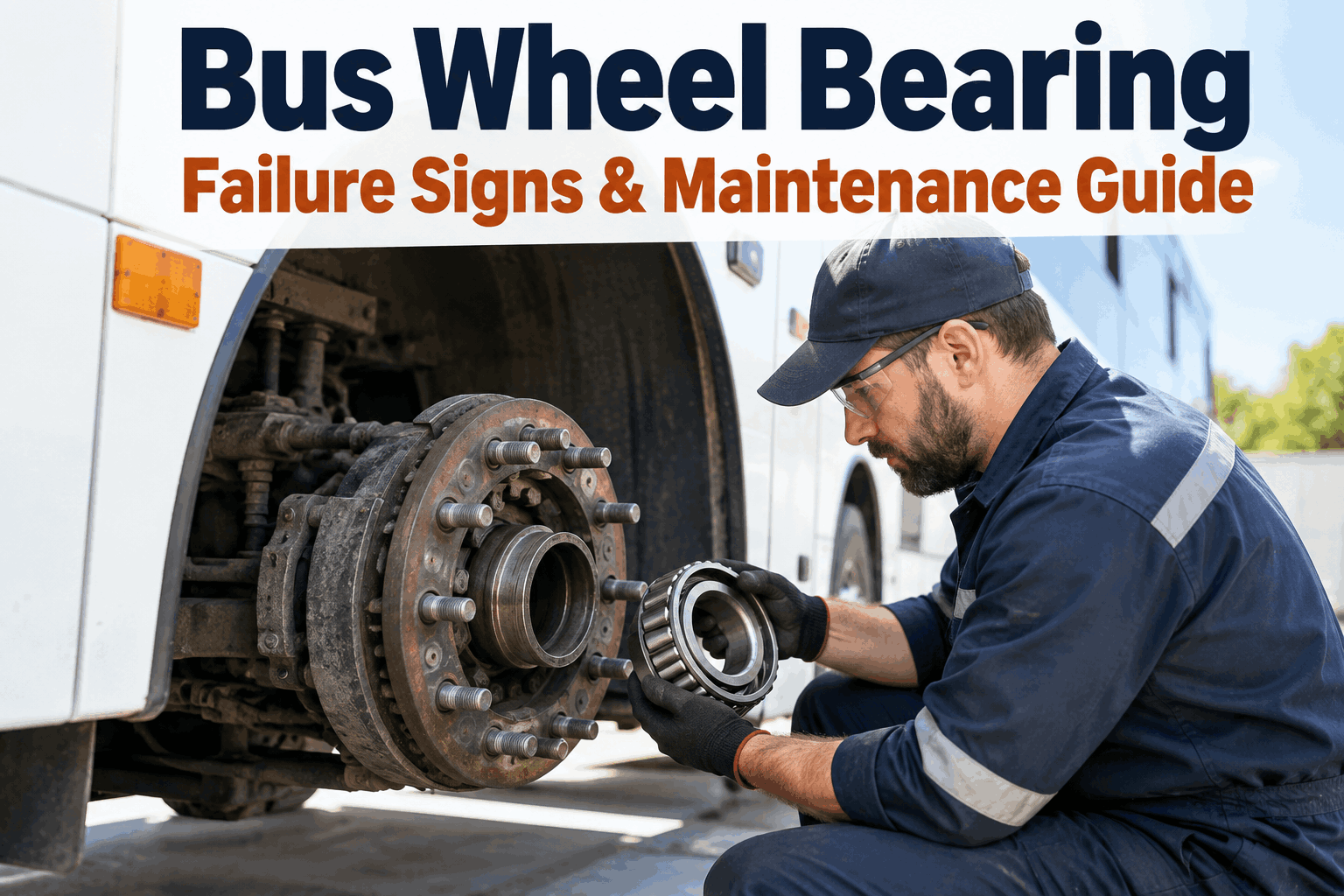
A wheel bearing inspection routine that catches failures early
Wheel-end checks reward consistency. These five, on the manufacturer's interval and whenever a sign is reported, catch most bearing failures while they are still a scheduled repair — never a road emergency. You can start free and put wheel-end checks on a schedule.
Check for play
Rock each wheel top-to-bottom and side-to-side for movement, and spin for roughness or noise — the fastest hands-on bearing check.
Temperature after a run
Compare hub temperatures across wheel ends. An outlier running hot is a bearing under stress before it ever makes noise you can hear at idle.
Lubrication and seals
Check hub oil level and condition or grease state, and look for seal leaks — lost lubrication is the most common root cause of bearing failure.
Correct adjustment and torque
Follow the manufacturer's bearing adjustment and torque procedure — over- or under-tight is a failure cause all its own.
Log it against the wheel end
Record each check to the specific bus and wheel position, so a noise, a hot hub, and play on the same corner connect into one failing bearing.
Catch the hum before it's a wheel-off
BusCMMS logs every bearing sign to the specific wheel end, schedules wheel-end inspections, and flags a corner that keeps getting written up — so a failing bearing is a planned repair, not a roadside emergency.
How BusCMMS helps prevent wheel bearing failure
Preventing a bearing failure is about connecting signs over time — and that is exactly what a bus-specific inspection and history system does that a paper log cannot — you can see it on a live demo.
Signs logged by wheel end
Noise, heat, and play recorded to the specific bus and corner from the DVIR or shop — so a pattern on one wheel end becomes visible instead of scattered across reports.
Scheduled wheel-end PM
Bearing and hub checks on the manufacturer's interval, auto-generated as work orders, so lubrication, seals, and adjustment get verified on time.
Repeat-fault flagging
Count the write-ups on a wheel end, so a corner that keeps coming back gets a bearing replacement before it fails, not another adjustment.
Because BusCMMS is built for buses, wheel-end checks follow your axle maker's procedures and sit with every other bus-specific item. You can start a free account and track your wheel ends this way.
A wheel bearing is the one failure that keeps me up at night, because the worst case is a wheel coming off on a bus full of people. The buses almost always warn you — a driver reports a hum, then weeks later it's a hot hub. For years those reports lived in different places and nobody connected them. Now every sign is logged to the wheel end, so when the same corner shows up twice, we pull it and replace the bearing. I would rather schedule that repair ten times than have one let go on the road.
Key takeaways on bus wheel bearing failure
A wheel bearing rarely fails without warning — noise, then heat, then play, then vibration. The early hum is the cheap fix; the late stage is a safety emergency.
Treat any of the four signs as worth a look, and inspect the hub: play, temperature, lubrication and seals, and correct adjustment to the manufacturer's spec.
The real risk is a disconnected history — a noise and a hot hub on the same corner are one failing bearing only if the records link them by wheel end.
Log signs to the wheel end and flag repeats, and a failing bearing becomes a planned replacement caught early — never a seizure or a wheel-off on the road.
The window is always there before a wheel bearing fails — the question is whether your system catches it. Track bus wheel bearing failure by the signs and the wheel end, and the bearing that could have stranded or endangered a bus becomes a quiet, scheduled repair instead. To see it on your own fleet, a quick demo is the fastest way in.
Turn bearing failures into planned repairs
Set up BusCMMS to log every wheel-end sign, schedule hub inspections, and flag the corners that keep coming back — so no bearing ever reaches the point of seizing on a route. Rollout typically takes two to four weeks.
Bus wheel bearing failure: frequently asked questions
What are the symptoms of a bad bus wheel bearing?
The classic symptoms, roughly in order of severity, are noise (a hum or growl that rises with speed), heat at the hub after a run, play or looseness when you rock the wheel, and vibration through the floor or steering. Noise is usually the earliest and most reliable warning; vibration means the bearing is well into failure and needs to come out now.
How do you inspect a bus wheel bearing?
Rock the wheel top-to-bottom and side-to-side for play and spin it for roughness, compare hub temperatures across wheel ends after a run, check hub oil or grease and look for seal leaks, and verify adjustment and torque to the manufacturer's spec. Logging each result to the specific wheel end lets you see a pattern develop instead of judging each check in isolation.
What causes wheel bearings to fail on buses?
The most common cause is lost lubrication — a seal leak or low hub oil — followed by incorrect adjustment or torque, contamination, and simple high-mileage wear. Heavy duty cycles and heat accelerate all of them. Because several causes end in the same symptoms, tracking the signs over time is what separates a one-off from a bearing heading for failure.
How dangerous is a failing wheel bearing?
Very — it is one of the few component failures that can seize a wheel or lead to a wheel separating from the bus, which is why wheel-bearing signs are treated as high priority. The good news is that bearings almost always warn you well before that point, so a fleet that catches and acts on the early signs rarely sees the dangerous end.
How does BusCMMS help with wheel bearing maintenance?
BusCMMS logs every wheel-end sign — noise, heat, play — to the specific bus and corner, schedules hub and bearing inspections on the manufacturer's interval as work orders, and counts repeat write-ups so a recurring wheel end gets a bearing replaced before it fails. Because it is built for buses, wheel-end items follow your axle maker's procedures and live with every other inspection.