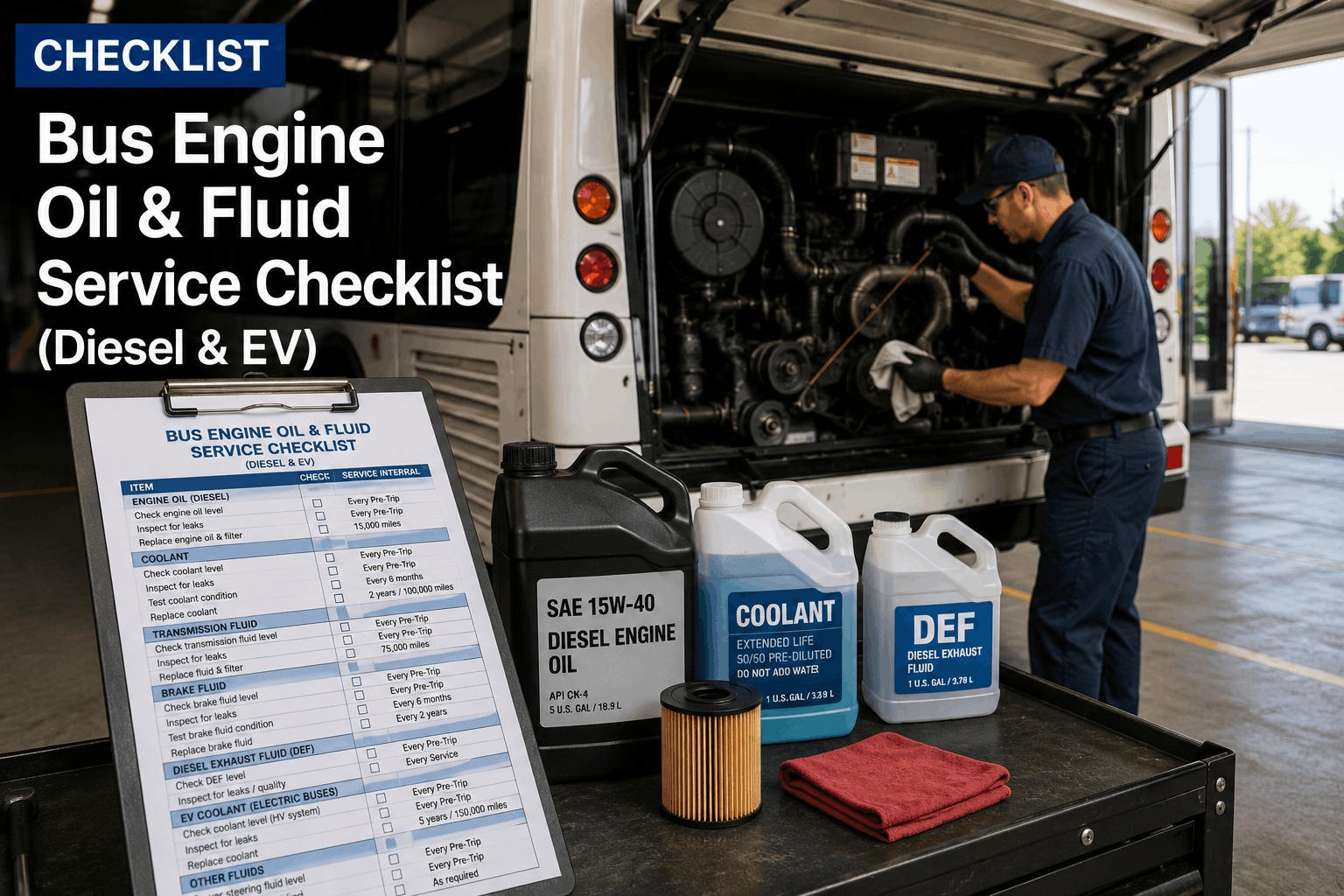
Engine oil is the lifeblood of a diesel bus. Coolant prevents catastrophic overheating. Brake fluid stops 20 tons of transit bus. DEF treats exhaust emissions. Transmission fluid keeps power flowing to the wheels. Any fluid service failure—low oil, contaminated coolant, water in brake lines, empty DEF tank—can destroy an engine, disable brakes, or put a bus out of service for days. Yet many maintenance shops rely on memory rather than documented fluid service intervals. A missed oil change by 5,000 miles accelerates wear. Old coolant loses corrosion protection. The wrong fluid viscosity causes cold-start failures. Electric buses add new fluids: battery coolant, thermal management fluids, and dielectric oils. This checklist covers all bus fluid systems: engine oil, coolant, DEF, brake fluid, transmission fluid, power steering, and EV-specific coolants. Use this checklist for every PM service. Track intervals by mileage or calendar days. Document fluid types, quantities, and test results. Keep your fleet running with proper fluid maintenance.
Bus Engine Oil & Fluid Service Checklist
Complete fluid service checklist for diesel and electric buses: engine oil, coolant, DEF, brake fluid, transmission, and EV thermal management.
Complete this fluid service checklist at every PM interval (oil change) and monthly fluid inspection. Items marked Critical affect engine life and safety. Items marked Recommended extend component life. Document fluid types, quantities, and test results. Follow manufacturer-specified intervals for diesel and electric bus powertrains.
Engine Life Extension
+42%
With documented fluid analysis
Unplanned Downtime
-57%
With scheduled fluid services
Fluid Service Focus
Oil, coolant, DEF top priorities
Engine Oil & Filter Service
CriticalCoolant System Service
CriticalDEF (Diesel Exhaust Fluid) Service
CriticalBrake Fluid & Hydraulic Systems
CriticalTransmission & Drivetrain Fluids
CriticalElectric Bus Fluid Systems (EV Specific)
CriticalPower Steering & Accessory Fluids
CriticalFluid Service Documentation & Tracking
Critical"We transitioned from paper logs to BusCMMS for fluid service tracking across 210 diesel and 35 electric buses. Oil change compliance went from 73% to 98%. We caught a coolant leak in an EV battery loop before it caused thermal damage. Documented fluid analysis helped us extend oil drain intervals safely by 5,000 miles. This checklist is our PM bible."
Fluid Service & PM Protocol
At each oil change interval: Complete all Critical items for engine oil, filters, and fluid inspections. Replace all consumable filters. Document fluid types and quantities used.
Monthly fluid checks: Verify coolant freeze protection, DEF concentration, brake fluid moisture, and EV coolant levels. Top off as needed. Inspect for leaks.
Fluid analysis program: Sample engine oil, coolant, and transmission fluid at recommended intervals. Track trends to predict failures and extend drain intervals safely.
BusCMMS fluid tracking: Automate PM scheduling by mileage or calendar days. Track fluid types across fleet. Set alerts for DEF refills and fluid analysis due dates. Maintain complete service history for warranty and resale value.
Bus Fluid Service FAQs (2026)
How often should engine oil be changed on a transit diesel bus?
Typical interval 10,000-15,000 miles or 250-350 hours. Oil analysis can extend intervals safely. Follow OEM specifications.
What coolant is required for electric bus battery thermal management?
Low-conductivity coolant (typically deionized water with specific additives) to prevent electrical shorts. Never use standard engine coolant.
How often must DEF quality be tested on transit buses?
Test DEF concentration monthly using refractometer. Replace if below 31.8% or above 33.2% urea concentration.
What is the maximum acceptable brake fluid moisture content?
Maximum 3% water content. Higher moisture lowers boiling point and causes internal corrosion. Replace fluid if above 3%.
Can diesel and electric buses share the same coolant?
No. EV battery loops require low-conductivity coolant. Diesel engines require conventional coolant with SCA additives. Never mix.
How often should transmission fluid be changed on a transit bus?
Typically 25,000-50,000 miles or 12-24 months. Severe duty (stop-and-go) requires shorter intervals. Verify with oil analysis.
What engine oil viscosity is best for cold-weather bus operations?
5W-40 synthetic provides best cold-start protection below 0°F. 15W-40 acceptable above 10°F. Follow ambient temperature chart.
How does BusCMMS help track fluid service intervals across a mixed fleet?
Set separate PM schedules for diesel vs EV buses. Track fluid types by VIN. Auto-generate work orders. Store oil analysis reports.
Never miss a fluid service again. BusCMMS automates PM scheduling by mileage or calendar days, tracks fluid types across diesel and electric fleets, stores oil analysis reports, and maintains complete service history for every bus.