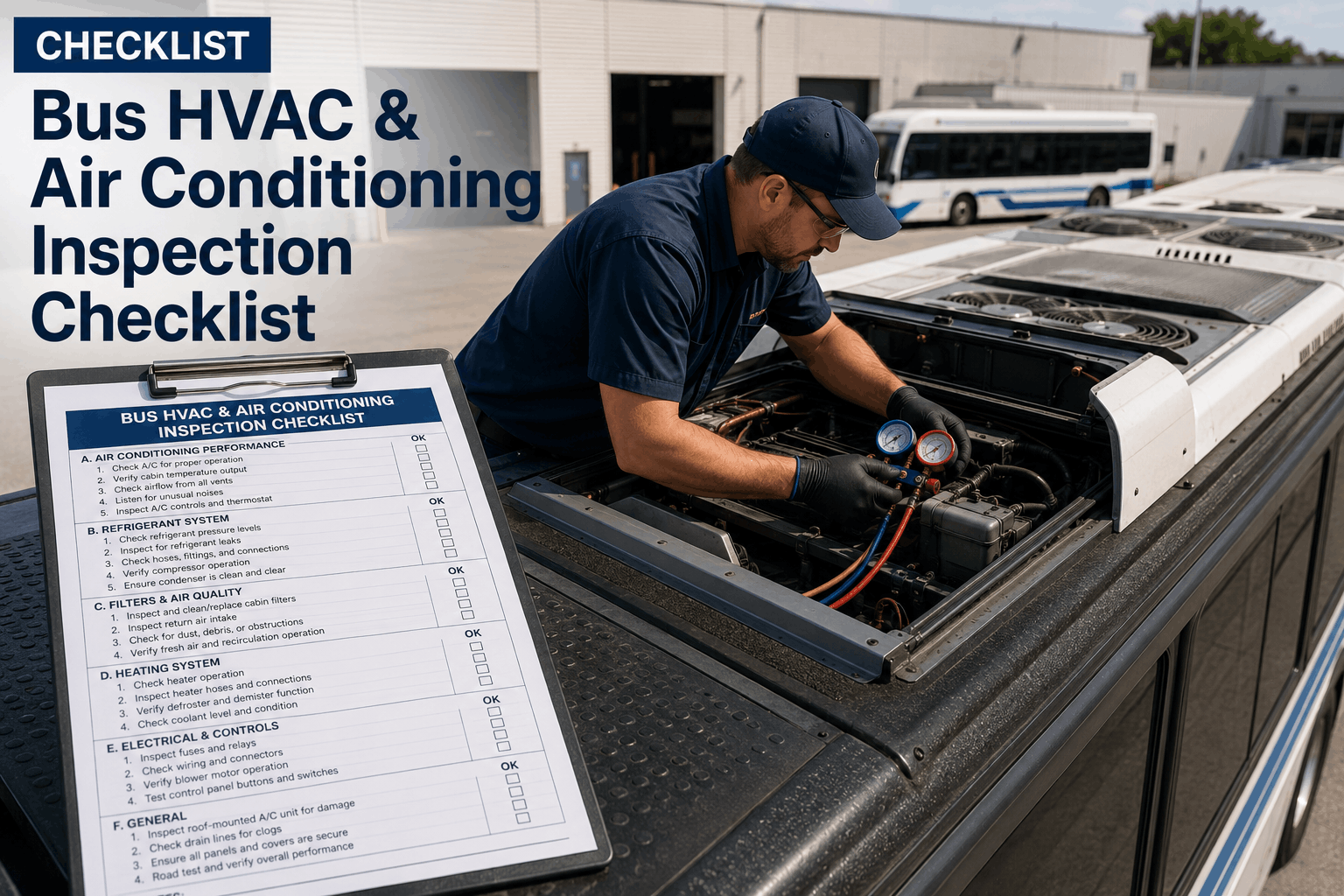
A malfunctioning HVAC system on a transit bus turns summer trips into rolling greenhouses and winter routes into freezers. Passengers abandon buses without air conditioning on 95-degree days. Drivers struggle with fogged windshields when defrosters fail. Complaints flood dispatch. Yet many maintenance shops treat bus HVAC as an afterthought, addressing issues only after passengers suffer through uncomfortable rides. A bus HVAC system is complex: roof-mounted condensers, multiple evaporators, refrigerant lines running the length of the coach, electric blowers, and heater cores. One low refrigerant charge reduces cooling capacity by 50%. A clogged cabin air filter cuts airflow. A failed heater control valve leaves passengers shivering. This checklist covers HVAC preventive maintenance: refrigerant level verification, filter replacement, condenser and evaporator cleaning, heater performance testing, and climate control system diagnostics. Use this checklist seasonally—spring for AC readiness, fall for heater prep, and monthly during peak operation.
Bus HVAC & Air Conditioning Inspection Checklist
Complete HVAC inspection for transit buses: AC performance testing, refrigerant checks, filter replacement, condenser cleaning, and heater function verification.
Complete this HVAC inspection checklist seasonally (spring for AC readiness, fall for heating) and monthly during peak operation. Items marked Critical affect passenger comfort and safety. Items marked Recommended optimize system efficiency and extend component life. Document refrigerant pressures, vent temperatures, and filter replacement dates.
Passenger Comfort Rating
+58%
With functional HVAC system
HVAC-Related Complaints
-72%
After seasonal inspection
HVAC Failure Areas
Refrigerant leaks, electrical, compressors
Air Conditioning System Performance
CriticalHeater & Defroster Function
CriticalFilters & Airflow Systems
CriticalCondenser & Evaporator Coils
CriticalElectrical & Control Systems
CriticalRefrigerant System & Leak Testing
CriticalSeasonal HVAC Changeover
RecommendedDocumentation & Service Records
Critical"Before we implemented this HVAC inspection checklist, our summer passenger complaints were overwhelming—over 200 heat-related complaints in July alone. After one season of systematic AC checks, refrigerant top-ups, and filter replacements, complaints dropped to 18. Our driver retention improved because cabs are comfortable. Passengers actually thank us now. This checklist is non-negotiable for any transit agency."
Bus HVAC Maintenance Protocol
Monthly inspections: Check vent temperatures, listen for compressor noise, verify airflow at all outlets. Document readings. Replace cabin air filters every 6 months minimum.
Spring AC readiness (March-April): Complete full AC inspection: refrigerant charge verification, leak detection, coil cleaning, condenser fan test. Prepare for summer heat.
Fall heating prep (September-October): Test heater output, flush heater core if needed, verify defroster performance, check control valves. Prepare for winter operation.
Refrigerant management: Only EPA-certified technicians may handle refrigerants. Track charge weights. Repair leaks, don't just top off. Use proper recovery equipment.
BusCMMS HVAC tracking: Schedule seasonal HVAC inspections, track filter replacement dates, log refrigerant pressures and vent temperatures, set alerts for upcoming PM, document EPA certifications.
Bus HVAC & Air Conditioning FAQs (2026)
What is the proper vent temperature for bus air conditioning?
Center vent temperature should read 38-50°F at max cool, high blower, recirculation mode on a 75-85°F ambient day.
How often should bus cabin air filters be replaced?
Every 12,000 miles or 6 months minimum. High-ridership shuttle buses may need replacement every 3 months due to debris.
What causes weak airflow from bus HVAC vents?
Clogged cabin air filter, blocked evaporator coil, failed blower motor resistor, or duct disconnection.
How often should bus AC refrigerant be recharged?
Properly sealed systems never need recharging. Annual recharge indicates a leak requiring repair per EPA regulations.
What is the expected temperature drop across a bus evaporator coil?
15-25°F temperature drop from return air to supply vent indicates proper AC operation. Less suggests low refrigerant or airflow issues.
Why does my bus defroster perform poorly in winter?
Low coolant level, stuck heater control valve, clogged heater core, or failed blend door actuator common causes.
Who can legally service bus air conditioning refrigerant systems?
EPA Section 609 certified technicians only. Violations carry fines up to $37,500 per day for improper refrigerant handling.
How does BusCMMS help track bus HVAC maintenance?
Schedule seasonal AC and heating inspections, track filter changes, log vent temperatures, set EPA certification reminders, document refrigerant usage.
Keep passengers comfortable year-round with documented HVAC inspections. BusCMMS helps schedule seasonal AC and heater checks, track filter replacements, log vent temperatures, and maintain EPA compliance records for your entire bus fleet.