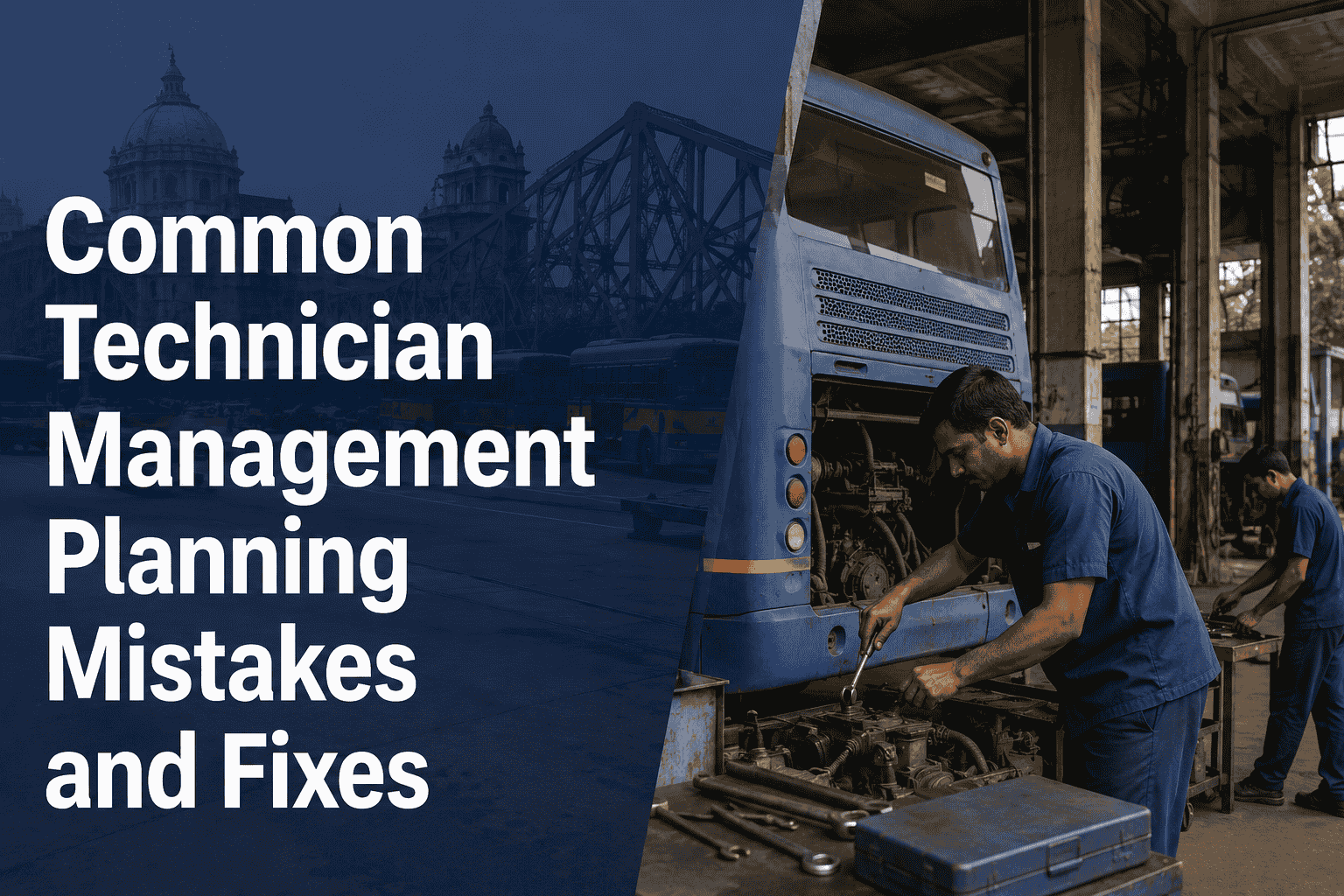
A large municipal transit system employing 45 full-time technicians continuously missed its weekly production targets. Despite an increasing overtime budget, vehicles languished in repair bays for days while critical preventive maintenance tasks fell behind. Management assumed they had a labor shortage. However, an operational audit revealed a planning mismatch: technicians spent 40% of their shifts hunting for parts, waiting for bays to clear, or manually filling out paper repair logs. After transforming their technician management planning approach with automated scheduling and real-time bay routing, wrench time surged from 45% to an optimized 82%. Overtime expenses plummeted by 55% within 90 days, and the garage resolved backlogs without adding a single line item to their headcount. Optimizing technician management planning isn't about pushing mechanics to work faster—it's about building data-driven systems that eliminate administrative friction before the wrench ever meets the bolt.
Technician Management Planning: Overcoming Costly Shop Bottlenecks
Stop wasting skilled labor on administrative tasks. Learn to streamline workflows, maximize active wrench time, and lower vehicle dwell times.
The most common error in technician management planning is treating labor availability as a static number. When a shop falls behind, management often assumes they need more personnel on the payroll. However, hidden operational friction frequently drains active wrench time throughout the day. When a highly skilled mechanic spends an hour searching through unorganized tool cribs, waiting on inventory delivery, or matching physical paper work orders, you are paying premium emergency rates for administrative errors. Industry data shows that unoptimized transit garages operate at an average wrench time of just 45%. By modernizing labor planning—linking parts availability, step-by-step digital inspection checklists, and bay tracking into a unified view—you return your team to their primary roles, immediately saving thousands in overhead.
Three core management errors typically compromise fleet shop productivity. First: **Blind Assignment**. Dispatching work orders based on raw availability rather than specific technician certification levels often creates repair delays. Second: **Disconnected Inventory Tracking**. Assigning an emergency brake job to a bay before checking if the required pads or calipers are in stock forces technicians to pause mid-job. Third: **Paper-Based Form Delays**. Using physical paper checklists delays critical data entry by up to 48 hours, leaving dispatch teams completely blind to real-time asset updates. Resolving these tracking gaps requires cross-linking parts, schedules, and active workflows into a unified cloud interface.
A regional student transportation fleet running 130 school buses struggled with excessive labor costs during morning inspection cycles. Their paper-based inspection process created data backlogs, making it difficult to track identical recurrent faults across different vehicles. To solve this, they implemented a mobile DVIR framework linked to their technician dispatch system. Now, when a driver flags a safety defect on a digital inspection checklist, the platform calculates repair times, verifies parts availability, and schedules the fix for the correct bay automatically. This adjustment cut the fleet's average time-to-repair from 6.2 days down to 1.8 days. By avoiding emergency component orders and route delays, the organization saved $54,000 in annual operating capital.
Optimizing your labor management system does not require stopping daily maintenance routines. A gradual 90-day implementation plan keeps setup simple and practical. Month one centers on updating skill profiles, cataloging certifications, and connecting inventory systems. Month two transitions the team to mobile applications, replacing paper forms with digital updates from the bays. The final month applies automated routing rules, optimizing workflows so your team can focus exclusively on repairs. This step-by-step process builds structural efficiency without interrupting your garage operations.
Accepting low shop utilization rates because of disconnected tracking systems creates artificial limits on fleet performance. Moving to an optimized technician management planning platform lets you coordinate parts inventory, vehicle safety records, and mechanic workflows simultaneously. Instead of resolving communication delays manually, digital platforms allocate components and assign tasks automatically. This structure keeps your mechanics focused directly on high-value repairs, driving down overhead while extending vehicle lifespans. Centralizing these workflows is a proven way to reduce overtime and confirm safe operations to stakeholders. BusCMMS provides the backend tools needed to automate tracking, evaluate team productivity, and coordinate daily shop schedules inside a single platform.