Electric Bus Maintenance Requirements: Complete EV Guide
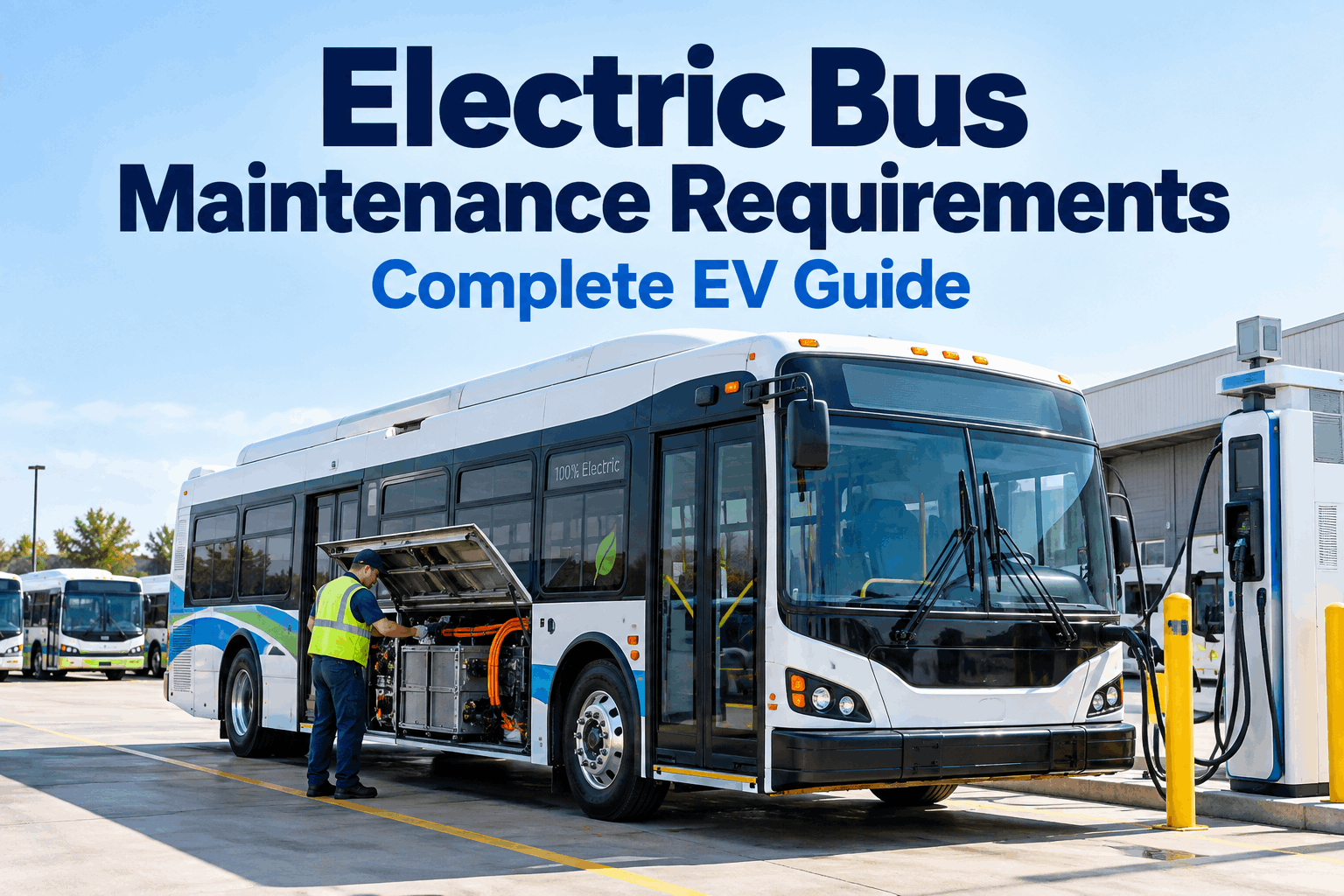
Going electric doesn't mean less maintenance so much as different maintenance — and the electric bus maintenance requirements catch fleets that expected "no oil changes, done." The engine work mostly vanishes, but a high-voltage battery, a liquid thermal loop, and a charging system take its place, each with its own must-do checks and a technician qualified to touch 400–800 volts.
PM + WORK ORDERS + COMPLIANCE · EV
Electric Bus Maintenance Requirements: Complete EV Guide
Engine tasks disappear; a battery, thermal loop, charging system, and high-voltage safety burden take their place. Here's what an electric bus actually requires, system by system.
400–800Vsystem voltage — needs HV-certified techs
20–30%faster tire wear from weight & instant torque
6systems with their own requirements to track
SIX SYSTEMS, SIX REQUIREMENTS
01HV battery & energy
02Charging system
03Thermal management
04Regen & friction brakes
05Tires & suspension
06High-voltage safety
What Electric Bus Maintenance Requirements Remove — and Add
The EV program isn't "diesel minus the engine." A whole category of routine work goes away, but new high-voltage and thermal obligations replace it — ones diesel techs have never had to manage.
GOES AWAY
Engine workno oil, filters, or aftertreatment
Fuel systemno fuel, no emissions service
Brake wearregen means pads last far longer
Moving partsfar fewer to wear or fail
IS REQUIRED
HV batteryhealth, cables, insulation checks
Thermal loopcoolant & pump checks, temp logs
Chargingport, charger, depot equipment
HV-safe workcertified techs + specialized tools
The paradox of EV maintenance: less frequent work, but higher-stakes work. Fewer tasks, yet every one touching the HV system needs a qualified tech and the right tooling — you can't wing it.
An electric bus splits into six maintenance domains, each with a defined requirement and a reason behind it. This is the core of what "EV maintenance" actually means in practice.
Why: 400–800V can be lethal on contact — this is non-negotiable, not best practice.
The one that surprises fleets most is brakes: because regen does most of the stopping, friction brakes are used so little that rotors corrode — a "less wear" system that still needs eyes on it.
Half of EV maintenance readiness isn't the bus — it's the shop and the people. These are the transition requirements a fleet must have in place before the first electric bus rolls in.
HV-certified technicians
Techs trained and certified to work on high-voltage systems — a real cost and lead time, not a same-day switch.
Specialized tooling
Insulated tools, diagnostic gear, and PPE for HV work — a shop-tooling investment beyond the standard bay.
Charging infrastructure
Depot chargers become fleet assets with their own upkeep — uptime of the charger equals uptime of the bus.
Documentation & warranty
Battery warranties often hinge on documented care — missing records can put a six-figure pack claim at risk.
How BusCMMS Handles Electric Bus Maintenance Requirements
EV requirements are a scheduling, documentation, and safety problem at once. BusCMMS runs EV-specific PM, ties HV-safe procedures to work orders, and keeps the records that protect warranties and pass inspections.
EV-Specific PM Scheduling
Battery, thermal, charging, and brake-corrosion checks run on EV logic — separate from diesel, CNG, and propane.
EV's own plan
Battery Health Tracking
Log state-of-health and thermal data over time, so degradation shows as a trend — and warranty claims have a record.
protect the pack
HV-Safe Work Orders
Attach lockout steps and certified-tech sign-off to each HV job, so safety procedure is documented, not assumed.
safety on record
Charger Asset Tracking
Treat depot chargers as maintained assets with their own PM, so charging uptime gets the same attention as the buses.
chargers as assets
Audit & DOT-Ready Records
Pull EV maintenance and inspection history on demand — the record a DOT inspection or warranty audit asks for.
produce on demand
Mixed-Fleet Dashboard
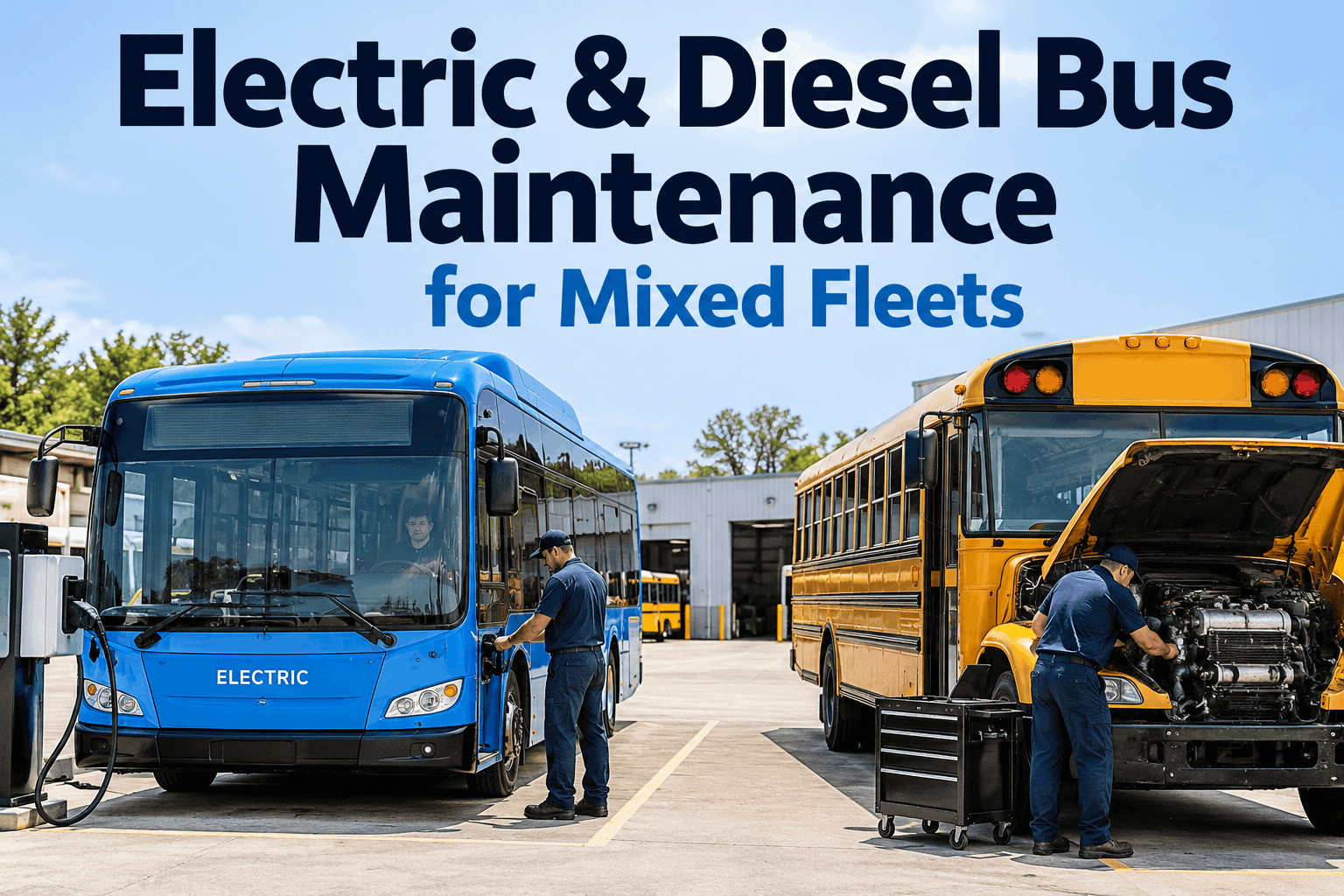
Electric, diesel, CNG, and propane each on their correct logic — one screen through a multi-year transition.
one dashboard
A diesel-first tool has no concept of a battery-health trend or a certified-tech sign-off — BusCMMS ships with EV logic built in and is typically live in 2–4 weeks. Sign up free and run EV requirements on rails.
A Fleet Director's Take
Key Takeaways on Electric Bus Maintenance Requirements
EV is less frequent but higher-stakes maintenance — and only cheaper if you meet the new requirements. Five to lock in.
Electric Bus Maintenance Requirements: Common Questions
Do electric buses really need less maintenance?+
In raw hours and routine tasks, yes — but "less" doesn't mean "hands-off." An electric bus eliminates a whole category of diesel work: no engine oil, filters, or emissions aftertreatment, no fuel system, and far fewer moving parts to wear out. Regenerative braking means friction brake pads barely wear, so brakes last dramatically longer. On an industry basis, EV maintenance runs meaningfully cheaper per mile than diesel. The catch is that EVs replace those tasks with new required work that's less frequent but higher-stakes: high-voltage battery health monitoring, a liquid thermal-management loop, charging-system upkeep, and mandatory high-voltage safety procedures. Some tasks even get more demanding — tires wear roughly 20–30% faster due to battery weight and instant torque, and brake rotors can corrode precisely because they're used so little. So the honest answer is that electric buses need different maintenance, and the cost savings are real but conditional on actually meeting the new requirements rather than assuming EV means maintenance-free.
What are the main electric bus maintenance requirements by system?+
An electric bus splits into six maintenance domains, each with its own requirement. The HV battery and energy system needs state-of-health monitoring, cable integrity checks, insulation-resistance testing, and BMS diagnostics — it's the most valuable asset on the bus. The charging system requires charge-port and onboard-charger checks plus depot charger upkeep and firmware updates, since a bus that can't charge can't run. Thermal management needs coolant level and condition checks, pump function verification, and temperature logging, because heat shortens battery life. Regenerative and friction brakes require verifying regen function and inspecting pads and rotors for corrosion from disuse. Tires and suspension need more frequent attention due to the added weight and torque. And high-voltage safety requires certified technicians, de-energizing/lockout procedures, and insulated tooling, since 400–800V systems can be lethal on contact. The practical takeaway is to treat each system as its own scheduled requirement rather than folding EVs into a generic PM routine.
Why do electric bus brakes need attention if they wear less?+
This is one of the most counterintuitive electric bus maintenance requirements. Regenerative braking recovers energy by using the motor to slow the bus, which means the friction brakes — the traditional pads and rotors — do far less of the actual stopping. That's great for pad life, which can last dramatically longer than on a diesel bus. But the flip side is that friction brakes used very little can develop corrosion on the rotors, since the light, regular contact that normally keeps a rotor surface clean isn't happening. Rust and surface degradation can build up on components that are barely being exercised. So the requirement isn't about wear in the usual sense — it's about inspecting for corrosion, verifying the friction brakes still function properly for the situations where they're needed (like a full emergency stop or when regen is limited), and confirming the regen system itself is working. It's a case where "less wear" doesn't mean "no maintenance" — it means a different kind of watching.
What does a fleet need in place before going electric?+
Much of EV readiness is about the shop and the people, not just the bus. First, technicians must be trained and certified to work on high-voltage systems — this takes real time and money and can't happen the day the buses arrive. Second, the shop needs specialized tooling: insulated hand tools, HV diagnostic equipment, and appropriate personal protective equipment, which is an investment beyond a standard maintenance bay. Third, charging infrastructure becomes a fleet asset in its own right — depot chargers need their own maintenance and monitoring, because charger downtime equals bus downtime. Fourth, documentation and warranty processes matter more than fleets expect: battery warranties often depend on demonstrating proper, documented care, so missing maintenance records can jeopardize a six-figure battery pack claim. Planning these requirements before the first electric bus rolls in is what separates a smooth transition from an expensive scramble. The buses are only part of the picture; the maintenance ecosystem around them is the rest.
How does BusCMMS help manage electric bus maintenance?+
BusCMMS treats electric buses as their own maintenance track with EV-specific logic rather than a diesel variant. EV-specific PM scheduling runs battery, thermal, charging, and brake-corrosion checks on the right intervals, separate from diesel, CNG, and propane but visible on one dashboard. Battery health tracking logs state-of-health and thermal data over time so degradation appears as a trend and warranty claims have a documented record. HV-safe work orders let you attach lockout/de-energize steps and certified-technician sign-off to each high-voltage job, so safety procedure is documented rather than assumed. Charger asset tracking treats depot chargers as maintained assets with their own PM, giving charging uptime the same attention as the buses. Audit- and DOT-ready records let you pull EV maintenance and inspection history on demand, exactly what an inspection or warranty audit requires. And a mixed-fleet dashboard keeps electric, diesel, CNG, and propane buses each on their correct maintenance logic through a multi-year transition. Because it's purpose-built for bus fleets, it's typically live in two to four weeks.