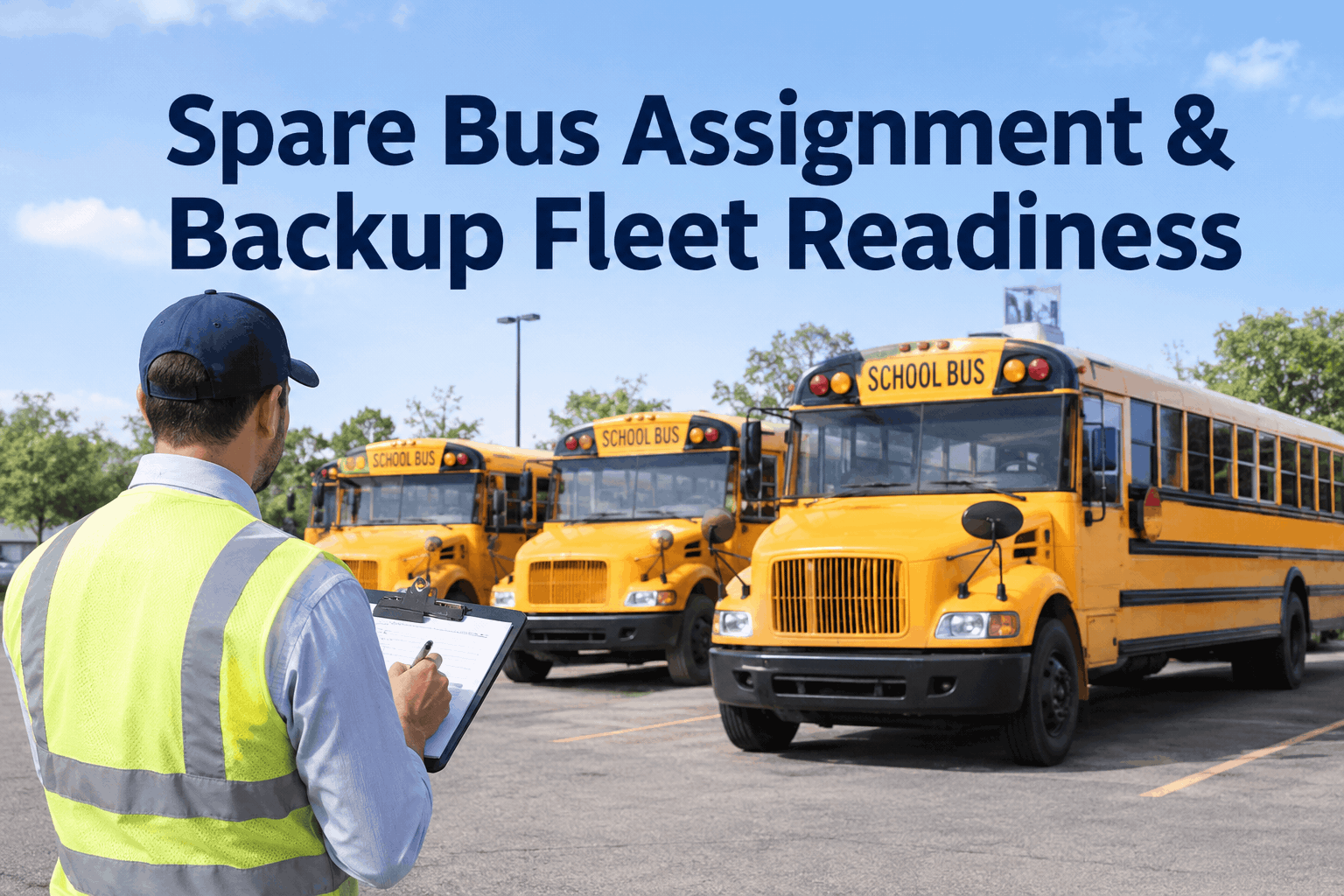
The eighth-grade science trip is approved — principal signed, budget cleared, slips in. Then, two days out, the transportation office realizes the assigned bus is down for its PM and the only other big bus is on an athletic run. The trip was approved on paper, but nobody checked whether a bus was ready and free for the date. School bus trip approval breaks right there. You can see how to make readiness part of the approval in a demo.
School Bus Trip Approval & Vehicle Readiness Management
Most field trip approvals move cleanly through the paperwork — teacher, principal, budget. The step that gets skipped is the one that actually puts a safe bus on the road: is a vehicle ready and free for that date?
Stages one through three are paperwork, and they rarely fail. The fourth — a bus that is actually free, inspection-ready, and the right size — is the one that strands a trip when nobody owns it.
Approval Answers "Should It Happen" — Not "Can It"
A clean field trip approval confirms the trip is worth doing and paid for. It does not, on its own, confirm that a bus can carry it. Three readiness questions sit outside the paperwork, and all three decide whether the approved trip actually rolls.
Is a bus free that day?
Field trips share buses with daily routes and athletics. An approved date means nothing if every bus is already on a run or in for service.
Is that bus actually ready?
No PM due on the date, no open defect, a current inspection. A bus that is free but not road-ready is not a bus you can send with students.
Does it fit the group?
Enough seats for students and chaperones, and a wheelchair lift if a rider needs one. The right-size, right-equipped bus, not just any bus.
The approval portal handles the permissions and the billing. The vehicle-readiness answer lives in maintenance records — which is exactly why it should be checked there before the trip is final.
Adding that check does not slow the approval down — it just moves the surprise out of it. You can sign up free and check a bus before you approve a trip.
Make Vehicle Readiness a Checkable Step
The fix is not another signature — it is turning "is a bus ready?" into a quick, visible check against real records before the trip is locked. Picture the readiness scorecard for the bus you are about to assign: every item has to read clear before it rolls.
Illustrative. The point is a single, honest read: four greens and one red means not yet — caught at approval, not discovered the morning of the trip.
That one view turns a two-day-out surprise into a thirty-second check. You can walk through a trip-readiness check in a demo against your own bus list.
The Pre-Approval Readiness Check
Run this before a field trip is locked, on the specific bus you plan to send. The CRITICAL items decide whether the trip can legally and safely roll at all; the CONFIRM items keep the group from being stranded by a detail. If an item cannot be verified from a record, treat the bus as not confirmed.
- A bus is free for the full trip windowNot on a route, athletic run, or other trip that day — checked against one shared calendar.CRITICAL
- No PM due and no open defect on the datePreventive maintenance is current through the trip, and there is no unresolved safety write-up.CRITICAL
- A qualified driver is cleared for the runRight CDL and endorsements, in date, and available for the trip's hours.CRITICAL
- Capacity and lift fit the groupSeats for every student and chaperone, plus a wheelchair lift if any rider needs one.CONFIRM
- Fuel or charge covers the round tripDiesel, CNG, or battery range handles the destination and back with margin to spare.CONFIRM
- The assignment is logged against the busRecord the trip on the bus's calendar so it cannot be double-booked for the same date.CONFIRM
Done on paper it is a lap around the yard; done in the system it is one screen before you hit approve. You can sign up free and put a readiness check behind every trip.
How BusCMMS Handles the Readiness Side of Trip Approval
BusCMMS does not replace your field trip request portal — it answers the one question that portal cannot: is a bus genuinely ready and free. It keeps the maintenance and availability facts where your team can check them before a trip is final. Here is more on what a bus CMMS does.
Availability on one calendar
Routes, athletics, and trips on a single view, so you see which buses are genuinely free on a trip date — and never double-book one.
PM schedules that flag conflicts
A bus with a PM due during the trip shows as unavailable, so a service date is never accidentally sent out on a field trip.
Open defects block assignment
An unresolved write-up marks a bus not trip-ready, so a known problem never goes out carrying a class full of students.
Digital DVIRs and a full record
Pre-trip inspections and trip history captured for every bus, keeping you FMCSA and state-DOT ready without extra paperwork.
That is a field trip you approve once and never have to un-approve two days later. To set it up alongside your approval process, book a demo and bring next month's trip calendar.
A Transportation Director's Take
Key Takeaways on Trip Approval & Readiness
A field trip approval is only as good as the bus behind it. Four things to carry into your next trip season.
Approval is not readiness
The paperwork says the trip should happen; only a bus check says it can.
Three questions outside the portal
Free that day, truly ready, and the right size for the group.
Make readiness a gate
A quick check against real records before the trip locks beats a day-of scramble.
Let the records answer it
Availability, PM, and defects already live in maintenance — check there.
Make vehicle readiness a step in school bus trip approval, not a hope after it — one quick check that a bus is free, inspected, and the right fit before the trip is final — and the approved field trip rolls on schedule with a safe bus every time. The sign-off stays with the school; the confidence that a bus is ready comes from the records.