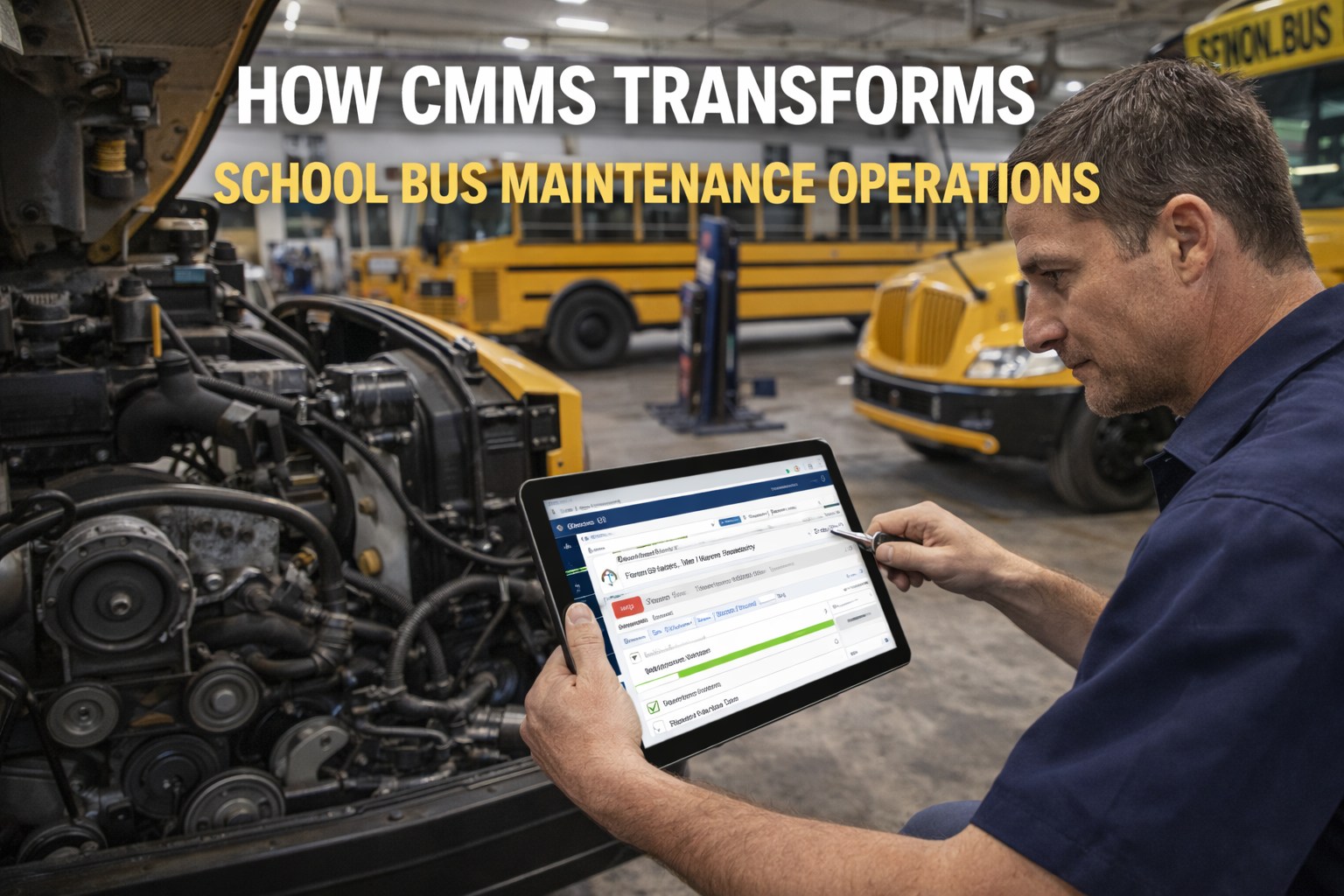
Every morning, over 480,000 school buses transport 26 million students across America. For transportation directors and fleet managers, ensuring these buses operate safely and reliably isn't just about logistics—it's about protecting precious cargo. Yet, many districts still rely on paper logs and reactive maintenance strategies that lead to unexpected breakdowns, compliance headaches, and budget overruns.
Enter Computerized Maintenance Management Systems (CMMS)—a game-changing technology that's revolutionizing how school districts manage their fleet maintenance operations. By digitizing maintenance workflows, automating preventive schedules, and providing real-time insights and CMMS platforms are helping transportation departments slash downtime, extend vehicle lifespans and most importantly, keep students safe.
The Hidden Costs of Traditional School Bus Maintenance
Traditional paper-based maintenance systems create a cascade of inefficiencies that impact everything from daily operations to long-term budget planning. When mechanics rely on clipboards and filing cabinets, critical information gets lost, preventive maintenance gets overlooked, and small issues snowball into major repairs.
Consider the typical scenario: A driver reports an unusual engine noise, but the paper form gets buried on a desk. Two weeks later, that minor issue becomes a blown head gasket, taking the bus out of service for days and triggering expensive emergency repairs. Meanwhile, parents are calling about route delays, and administrators are scrambling to find replacement transportation.
The financial impact extends beyond repair costs. Every unexpected breakdown means:
- Overtime pay for mechanics working emergency repairs
- Rental costs for replacement buses averaging $300-500 per day
- Potential liability issues if maintenance records can't be produced during audits
- Shortened vehicle lifespan due to deferred maintenance
- Lost confidence from parents and school boards
How CMMS Revolutionizes Fleet Operations
Modern CMMS platforms transform chaotic maintenance operations into streamlined, data-driven processes. By centralizing all maintenance activities in a cloud-based system, fleet managers gain unprecedented visibility and control over their operations.
Automated Preventive Maintenance Scheduling
Instead of relying on memory or manual calendars, CMMS automatically triggers maintenance tasks based on mileage, engine hours, or time intervals. When Bus #47 hits 5,000 miles, the system automatically generates a work order for oil changes, tire rotations, and multi-point inspections. Mechanics receive notifications on their tablets, parts are pre-ordered, and maintenance gets completed before problems arise.
This proactive approach dramatically reduces emergency breakdowns. Districts report that automated PM scheduling alone cuts unplanned downtime by 35-50%, ensuring buses stay on the road instead of in the shop.
Real-Time Work Order Management
Digital work orders eliminate the paper trail nightmare. Drivers submit issues through a mobile app with photos and descriptions. Dispatchers instantly see new requests, assign priority levels, and route them to available technicians. Mechanics access complete vehicle histories on tablets, order parts with one click, and document repairs with time stamps and photos.
This digital workflow creates accountability at every step. Managers can track repair times, identify bottlenecks, and ensure critical safety repairs never slip through the cracks. The result? Faster turnaround times and buses that return to service days sooner.
Compliance and Audit Trail Documentation
Federal Motor Carrier Safety Administration (FMCSA) regulations require meticulous maintenance records. CMMS platforms automatically generate and store all required documentation, from pre-trip inspection reports to detailed repair histories. When DOT inspectors arrive, fleet managers can pull comprehensive reports in seconds rather than digging through file cabinets.
This digital documentation protects districts from costly fines and legal liability. In case of accidents, complete maintenance records prove due diligence and proper care. Several districts have successfully defended against lawsuits simply by demonstrating their rigorous, CMMS-documented maintenance programs.
Ready to Transform Your Fleet Maintenance?
See how leading school districts are using CMMS to improve safety, reduce costs, and streamline operations.
Getting StartedBook a Demo
Predictive Analytics: The Future of Fleet Maintenance
Advanced CMMS platforms go beyond basic scheduling by leveraging predictive analytics. By analyzing historical maintenance data, usage patterns, and component failure rates, these systems predict when parts will likely fail and recommend preemptive replacements.
For example, if transmission failures typically occur around 150,000 miles in your fleet, the CMMS will flag buses approaching this threshold for intensive inspections. This predictive approach has helped districts reduce catastrophic failures by up to 75%, avoiding the nightmare scenario of buses breaking down with students aboard.
Measuring ROI: Real Results from Real Districts
The return on investment for CMMS implementation is both immediate and substantial. Let's examine the typical results districts experience:
• 40% reduction in emergency repairs
• 25% decrease in overall maintenance costs
• 60% faster work order completion times
• 90% improvement in PM compliance rates
• 30% extension in average vehicle lifespan
Beyond the numbers, CMMS delivers intangible benefits that reshape transportation operations. Mechanics report higher job satisfaction when equipped with modern tools. Drivers feel more confident knowing their buses receive proper maintenance. Parents trust that their children ride in well-maintained vehicles. And administrators sleep better knowing they have complete visibility into fleet health.
Implementation Best Practices for Success
Successful CMMS implementation requires more than just purchasing software. Districts that achieve the best results follow these proven strategies:
Start with Clean Data: Before migration, audit your fleet inventory, update VINs, and establish consistent naming conventions. Clean data ensures accurate reporting from day one.
Invest in Training: Dedicate sufficient time for hands-on training. When mechanics and drivers understand the system's benefits and feel comfortable using it, adoption rates soar.
Phase the Rollout: Begin with preventive maintenance scheduling, then add work orders, inventory management, and advanced features. This gradual approach prevents overwhelming staff.
Establish KPIs: Define success metrics before implementation. Track PM compliance rates, mean time between failures, and cost per mile. Regular monitoring ensures continuous improvement.
Celebrate Wins: Share success stories—like preventing a major breakdown or passing a surprise DOT inspection. Recognition motivates continued system usage and optimization.
Conclusion: The Road Ahead
The transformation from paper-based maintenance to digital CMMS isn't just a technology upgrade—it's a fundamental shift in how school districts approach fleet management. By embracing preventive maintenance, leveraging data insights, and streamlining workflows, transportation departments can deliver safer, more reliable service while significantly reducing costs.
For manufacturing professionals overseeing fleet operations, the message is clear: CMMS technology has matured to the point where implementation risks are minimal, while the costs of maintaining status quo grow higher each year. With student safety on the line and budgets under constant pressure, can you afford not to modernize your maintenance operations?
The districts already using CMMS aren't looking back. They're too busy enjoying smoother operations, happier staff, and most importantly, buses that consistently deliver students safely to school and back home. The question isn't whether to implement CMMS, but how quickly you can begin your own transformation journey.
Take the First Step Today
Join hundreds of forward-thinking districts already transforming their maintenance operations with CMMS.
Getting StartedBook a Demo
Frequently Asked Questions
Q: How long does it take to implement CMMS for a school bus fleet?
A: Most districts complete basic implementation within 30-60 days. This includes data migration, staff training, and initial preventive maintenance scheduling. Full optimization with advanced features typically occurs over 3-6 months as teams become comfortable with the system.
Q: What's the typical cost of CMMS for school districts?
A: CMMS pricing varies based on fleet size and features, typically ranging from $50-150 per vehicle per month. Most districts recover this investment within 6-12 months through reduced emergency repairs, better parts inventory management, and extended vehicle lifespans. Many systems offer educational discounts.
Q: Will our mechanics and drivers actually use the technology?
A: Modern CMMS platforms are designed with user-friendly interfaces that even technology-hesitant staff quickly adopt. Mobile apps work like familiar consumer applications, and most vendors provide comprehensive training. Districts report 90%+ adoption rates when leadership demonstrates commitment and provides adequate training time.
Q: How does CMMS integrate with existing district systems?
A: Leading CMMS platforms offer APIs and pre-built integrations with common fleet management tools, fuel tracking systems, and GPS solutions. Many also integrate with district financial systems for seamless parts ordering and budget tracking. Your vendor should provide integration support during implementation.
Q: Can CMMS help with DOT compliance and inspections?
A: Absolutely. CMMS automatically generates and stores all DOT-required documentation, including driver vehicle inspection reports (DVIRs), annual inspection records, and detailed maintenance histories. During audits, you can produce any required document instantly, and many systems include compliance dashboards that alert you to upcoming inspection deadlines.