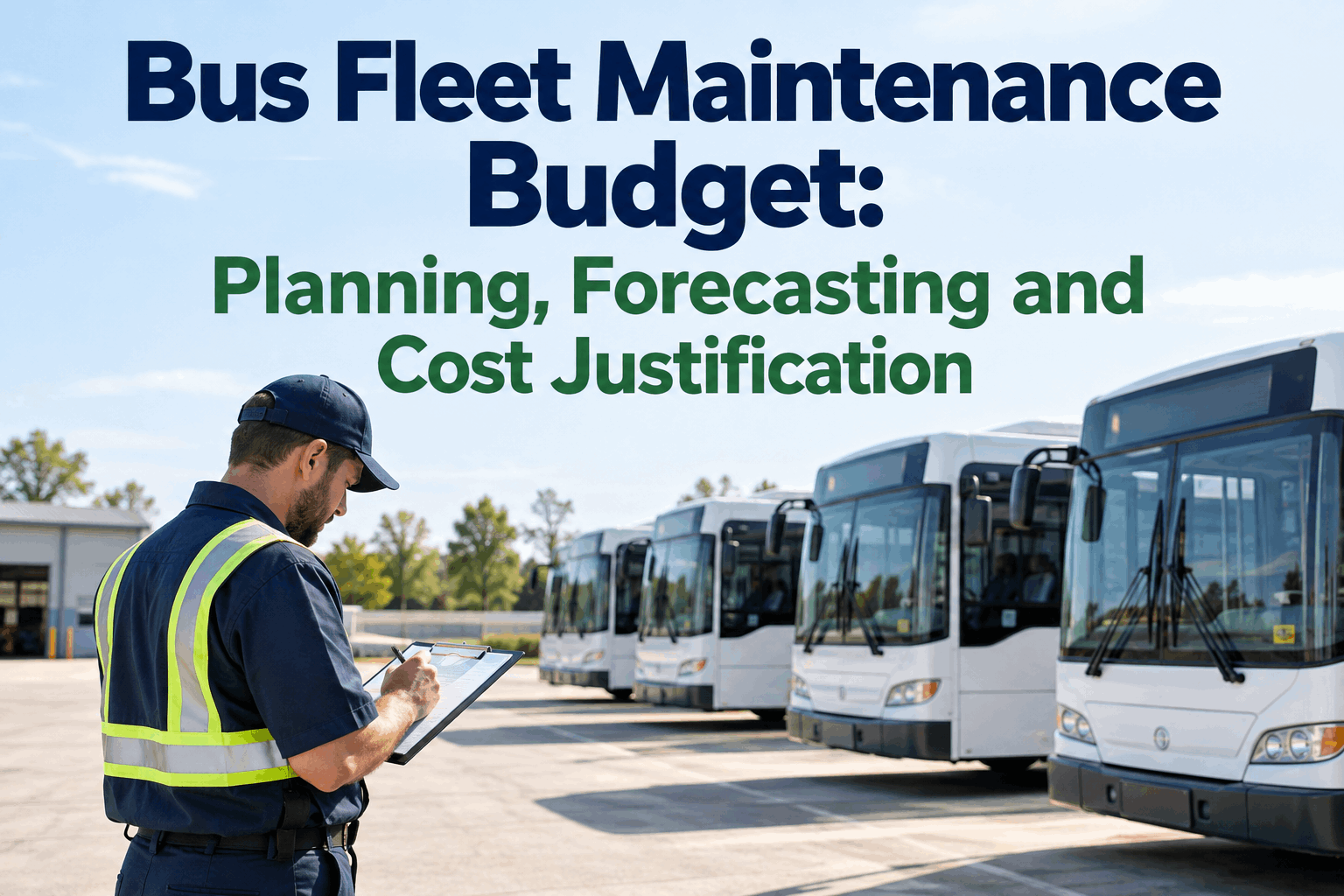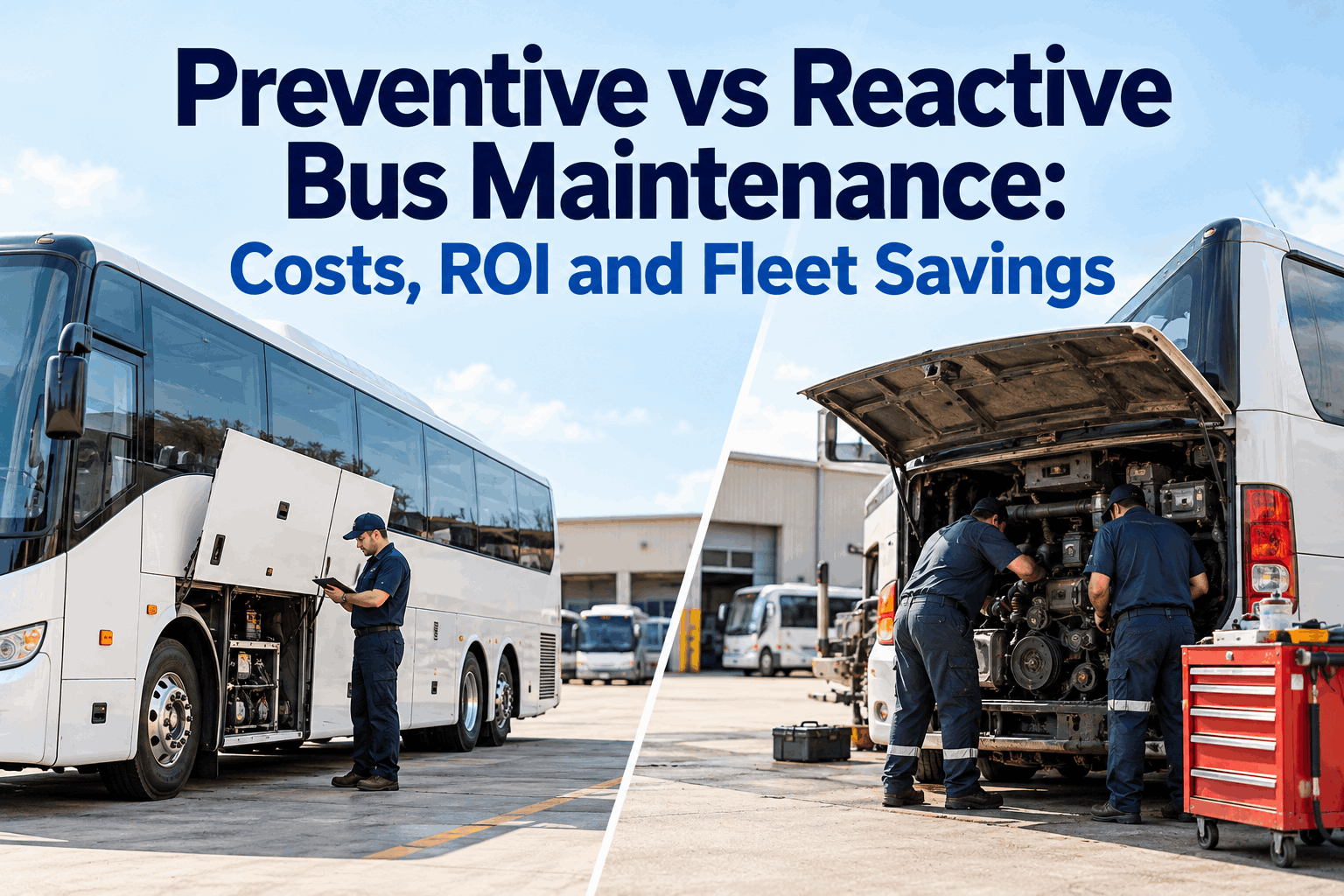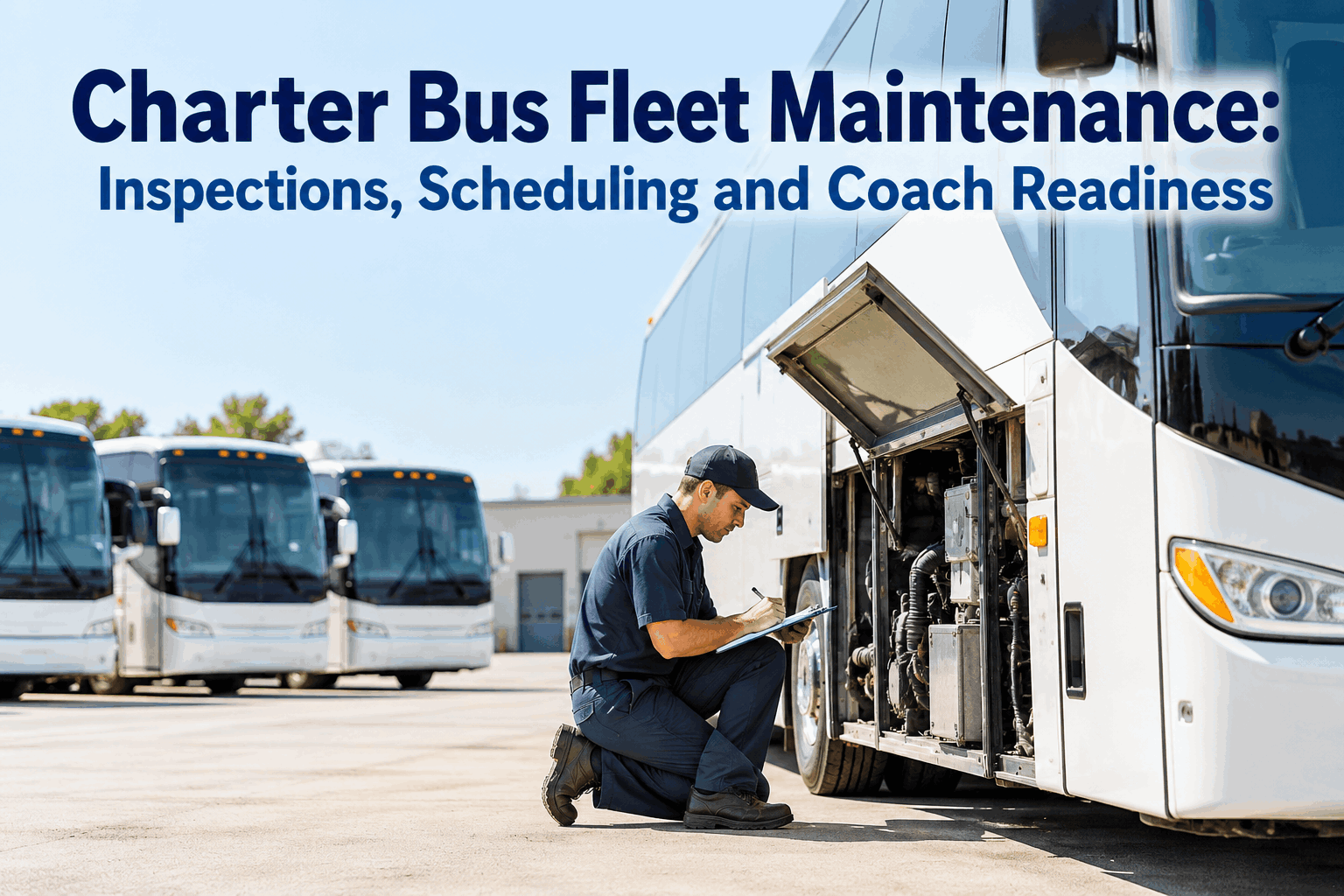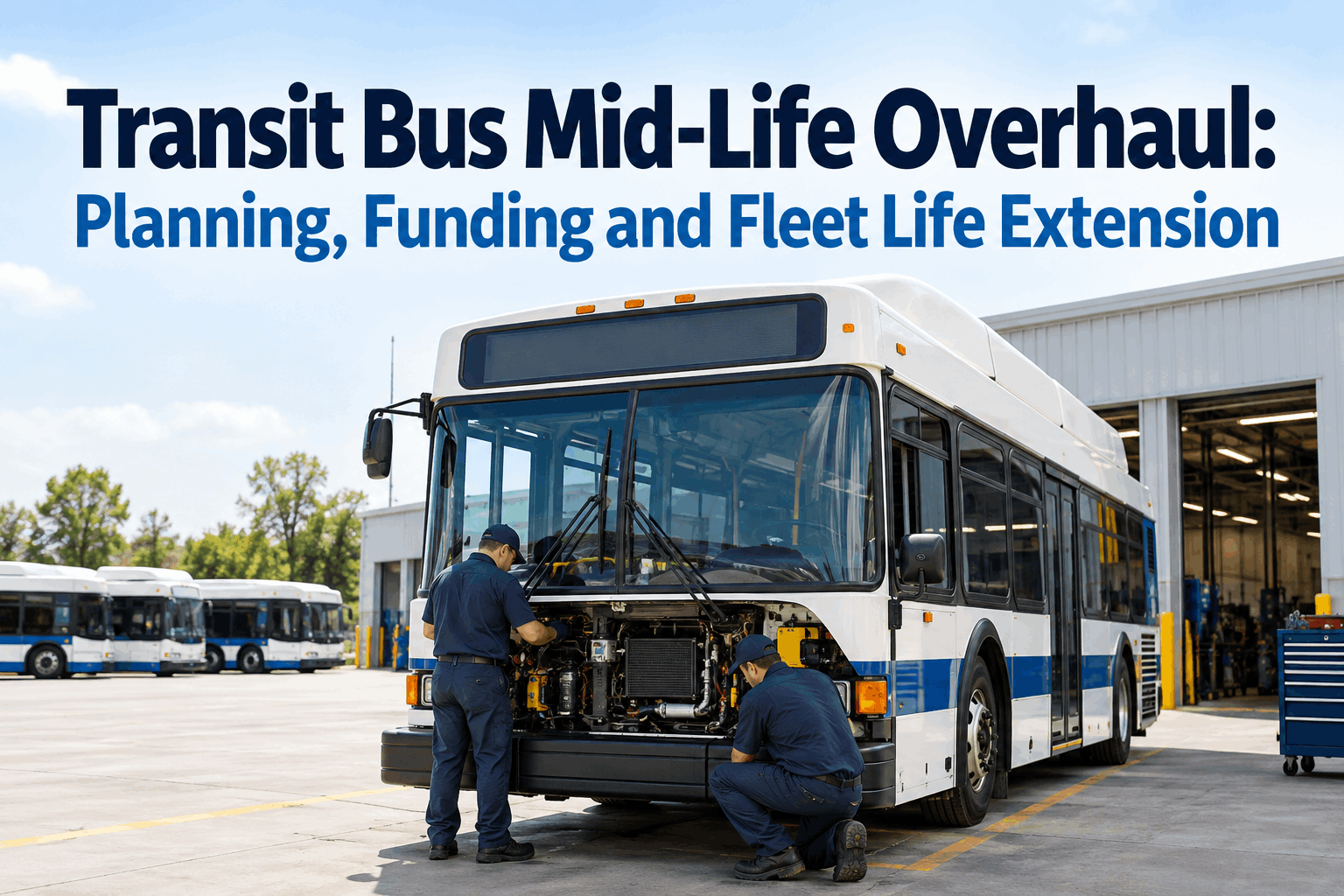
It is the third week of July. Your buses need to pass state annual inspection before the first day of school in September, and you are staring at a spreadsheet of 42 buses and 47 inspection line items each. Last year, 6 buses failed on the first attempt -- exhaust leaks, brake lining below spec, one crossing gate actuator that never quite worked right. Each failed inspection cost you a bus out of service for 5-14 days, emergency parts orders at premium pricing and the sinking feeling of explaining to the superintendent why route 12 might not have a bus on day one. This free school bus annual inspection checklist covers all 8 major inspection systems + 47 line items + the top failure points that trip up otherwise well-maintained fleets. Use it to prep before the state inspector arrives.
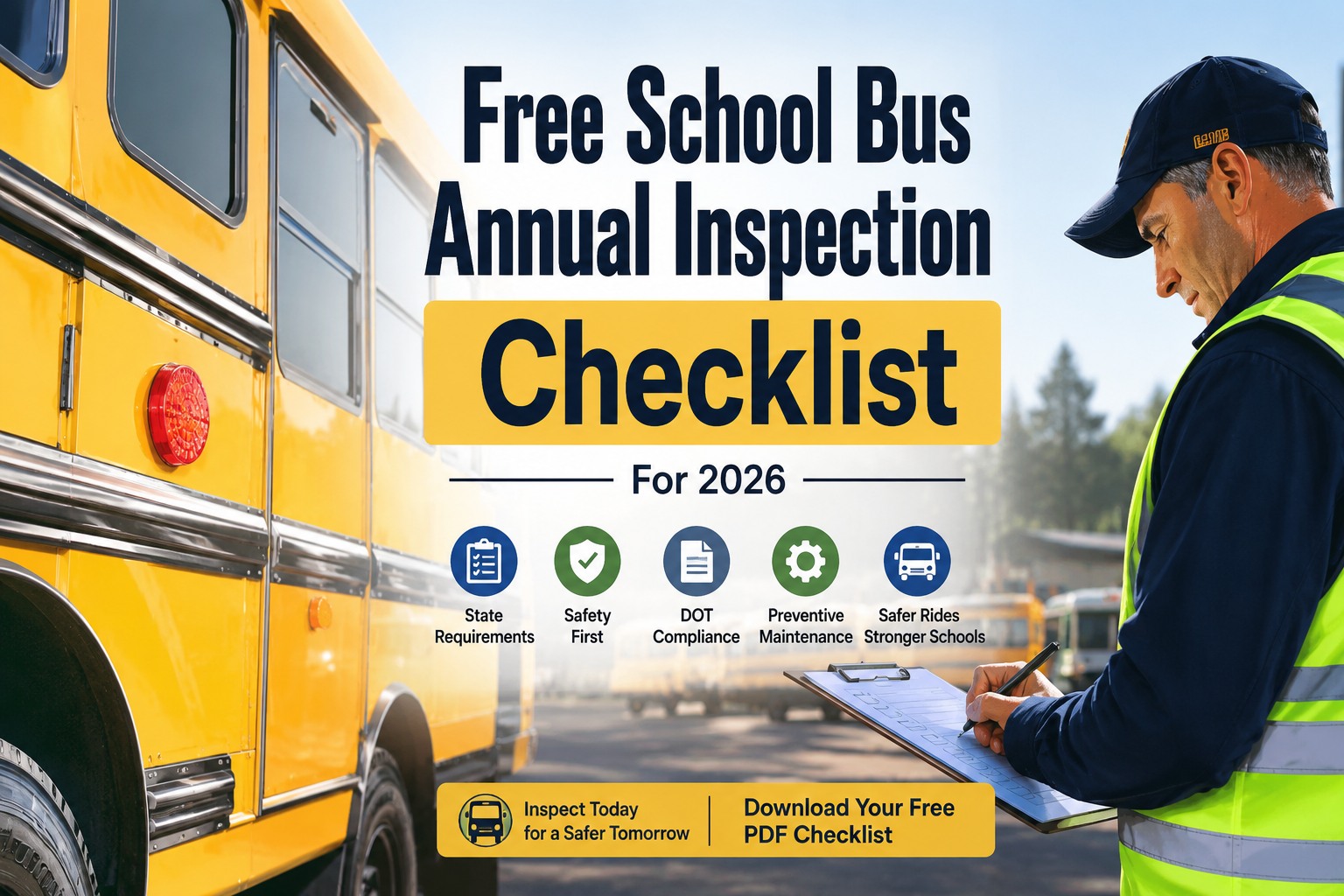
Free School Bus Annual Inspection Checklist (2026) + PDF
The complete pre-inspection checklist for the 8 systems every state DOT + FMCSA-based annual inspection covers -- with 47 line items, criteria values, top failure points, and the BusCMMS workflow that prepares your fleet before the inspector arrives.
- Brakes + Air System9 itemsPass
- Steering + Suspension7 itemsPass
- Tires + Wheels5 itemsPass
- Lighting + 8-Way Warning8 itemsPass
- Emergency Exits + Doors5 itemsPass
- Mirrors + Windshield4 itemsPass
- Interior + Safety Equipment5 itemsPass
- Engine + Exhaust + Fuel4 itemsRepair
Why Failed Annual Inspections Cost More Than You Think
One failed inspection puts a bus out of service. Multiple failed inspections put your entire route schedule at risk before the first day of school.
Bus out of service
Failed inspection means the bus cannot run routes until repaired + re-inspected. Typical downtime 5-14 days depending on failure severity + parts availability.
Emergency repair cost
Repairs made under inspection pressure cost significantly more -- expedited parts shipping, weekend labor, no time to shop competitive bids.
Re-inspection fees + delays
Most states charge re-inspection fees ($75-$300) and require scheduling that may push the bus service date back another week.
Route coverage exposure
Buses OOS mean spares run routes. Not enough spares means route consolidation, longer rides, or parent complaints -- all landing on the transportation director.
The 8 Major Inspection Systems Every Annual Covers
Every state annual inspection organizes checks into 8 core systems. Miss any one, and the bus fails the inspection.
Brakes + Air System
Air brake compressor, tanks, lines, linings, drums, slack adjusters, parking + emergency brake systems.
Steering + Suspension
Steering wheel play, linkage, power steering, kingpins, ball joints, tie rods, springs, shocks, U-bolts.
Tires + Wheels
Tread depth, sidewall condition, rim condition, valve stems, lug torque, spare (if carried).
Lighting + 8-Way Warning
Headlights, brake lights, turn signals, marker lights, 8-way warning system, stop arm, crossing gate.
Emergency Exits + Doors
Entry door, emergency door(s), emergency windows, roof hatch, warning buzzers, signage.
Mirrors + Windshield
West Coast mirrors, crossover mirrors, interior rearview, windshield damage, wipers, washer, defrost.
Interior + Safety Equipment
Seats + belts, wheelchair equipment, fire extinguisher, first aid kit, body fluid kit, reflective triangles.
Engine + Exhaust + Fuel
Engine fluids, belts, hoses, air filter, exhaust integrity (critical for student CO safety), fuel system.
Federal vs State Inspection Requirements
Annual inspection compliance sits at the intersection of federal + state rules. Understanding both prevents scope gaps.
- FMCSA 49 CFR § 396.17 -- annual periodic inspection required for commercial vehicles including school buses
- FMVSS 108, 111, 210, 217 -- lighting, mirrors, seat belts, emergency exits standards
- FMCSA Part 396 -- inspection, repair, maintenance record-keeping requirements
- Post-Trip DVIR -- driver reports of any defects; records preserved 3 months
- Records retained -- 12 months minimum + 6 months for out-of-service
- State Pupil Transportation Manuals -- most states publish specific school bus inspection standards
- Inspection frequency varies -- annual minimum, some states require semi-annual or quarterly
- State-certified inspectors -- some states require inspection at state-certified facilities
- School bus-specific items -- stop arm, crossing gate, 8-way warning, student mirrors, wheelchair lifts
- Pre-school year window -- typical inspection completion required by August-September
47-Point Annual Inspection Checklist
Every inspection item organized by system. Criteria values include the industry-standard thresholds inspectors use.
Brakes + Air System
9 items · B- B-01
Air compressor build-up rate
85-105 psi within 45 sec - B-02
Air tank drain (moisture check)
No excessive moisture - B-03
Brake lining thickness
Above 1/4 inch minimum - B-04
Brake drum condition
No cracks, within wear limit - B-05
Brake lines + hoses
No leaks, cracks, chafing - B-06
Slack adjuster travel
Under 1 inch free stroke - B-07
Parking brake application
Holds on 20% grade - B-08
Emergency brake system
Auto-apply below 40 psi - B-09
Low air warning system
Alerts at 55 psi minimum
Steering + Suspension
7 items · S- S-01
Steering wheel play
Under 10 degrees / 2 inches - S-02
Power steering fluid + pump
No leaks, level full - S-03
Kingpin + ball joint wear
Under manufacturer specs - S-04
Tie rod + drag link condition
No cracks, boots intact - S-05
Springs + shocks + U-bolts
No cracks, torque + intact - S-06
Wheel bearing play
Within OEM tolerance - S-07
Frame + torque rod inspection
No cracks or damage
Tires + Wheels
5 items · T- T-01
Front tire tread depth
Above 4/32 inch minimum - T-02
Rear tire tread depth
Above 2/32 inch minimum - T-03
Sidewall + tread damage
No visible cords or cuts - T-04
Rim + valve stem condition
No cracks, valves intact - T-05
Lug nut torque
Per OEM spec, all present
Lighting + 8-Way Warning
8 items · L- L-01
Headlights (high + low beam)
Both aimed properly - L-02
Brake + turn + marker lights
All functional, lenses clear - L-03
Backup lights + alarm
Audible + visible - L-04
4 amber warning lights
60-120 flashes per minute - L-05
4 red flashing lights
Sync with stop arm - L-06
Stop arm deployment
Full 90-deg extension - L-07
Crossing gate (if equipped)
Interlocked, no damage - L-08
Reflectors + reflective tape
Per FMVSS 108, no fade
Emergency Exits + Doors
5 items · E- E-01
Entry door operation
Smooth open + close - E-02
Emergency door(s) operation
Open freely, buzzer sounds - E-03
Emergency window release
All windows open properly - E-04
Roof escape hatch
Opens fully, seal intact - E-05
Emergency signage + instructions
All present + legible
Mirrors + Windshield
4 items · M- M-01
West Coast mirrors (both)
Adjusted, no damage - M-02
Crossover mirrors (both sides)
Show front + side of bus - M-03
Interior rearview mirror
Full aisle view - M-04
Windshield + wipers + defrost
Clear view, wipers function
Interior + Safety Equipment
5 items · I- I-01
Seat + seat belt condition
No damage, belts functional - I-02
Fire extinguisher
Charged, mounted, tagged - I-03
First aid + body fluid kits
Sealed, contents current - I-04
Reflective triangles (3)
All present in kit - I-05
Wheelchair lift + tie-downs
Cycle test, ADA compliant
Engine + Exhaust + Fuel
4 items · N- N-01
Fluid levels + no leaks
Oil, coolant, trans, power steer - N-02
Belts + hoses condition
No cracks, glazing, wear - N-03
Exhaust system integrity
No leaks, CO risk critical - N-04
Fuel tank + lines + cap
Straps intact, no leaks
Book a demo to see how BusCMMS auto-schedules pre-inspection checks against these exact items.
The 6 Failure Points That Cost Most Districts an Inspection
Fleet inspector reports show 6 issues account for the majority of first-attempt failures. Catch these in your pre-inspection walk and pass on the first try.
Exhaust Leaks
Cracked manifolds, deteriorated gaskets, rust-through pipes. The #1 automatic failure -- carbon monoxide risk to students is treated as absolute.
Zero toleranceBrake Lining Under Spec
Front brake linings below 1/4 inch. Gradual wear that gets overlooked between PM cycles. Measured on every annual, no exceptions.
1/4 inch minimumFaded Reflective Sheeting
Stop arm STOP letters, side reflective tape, chevron patterns. UV degrades sheeting over 3-5 years. Common late-fleet failure.
3-5 yr UV fadeEmergency Exit Buzzer Failure
Warning buzzer that sounds when emergency door opens. Simple part, easy to miss during PM. Auto-failure item on most state inspections.
All exits + buzzersWarning Light Failure
One of the 8 warning lamps failed or flash rate outside spec. Interlock issues between stop arm + red lights common in older fleets.
All 8 lamps workingMissing Safety Equipment
Fire extinguisher discharged, first aid kit incomplete, body fluid kit expired, reflective triangles missing. Fast fail on a slow year.
All kits completeHow BusCMMS Prepares Your Fleet Before the Inspector Arrives
Annual inspection is a snapshot of everything that happened during the prior 12 months. A CMMS-driven fleet arrives ready; a paper-driven fleet arrives hoping.
Pre-inspection dashboards
Every bus scored on inspection readiness. Open work orders, missed PM, DVIR concerns, and upcoming service items surface 30-90 days before annual.
Fleet-wide inspection scheduling
Auto-schedule buses for annual inspection based on last inspection date. Batch processing during summer window to hit deadlines before September.
DVIR + PM history exports
Every DVIR + PM record for the prior 12 months exports as a single compliance package per bus. Inspector questions get answered from the report.
Auto work orders from DVIR items
Driver flags something on pre-trip? Work order auto-generates. No paper handoff. Items get repaired instead of accumulating for the inspector to find.
Parts inventory for inspection prep
Common inspection failure items -- brake linings, wiper blades, reflective sheeting, warning bulbs -- stocked based on fleet age + prior years.
Fleet readiness reports for the board
Inspection prep status by bus, fleet-wide readiness score, list of buses at risk. Show the superintendent what "ready for September" actually looks like.
Book a demo to see the pre-inspection readiness dashboard live.
Annual Inspection Impact by District Size
Districts with systematic pre-inspection prep pass more buses first time, spend less on emergency repairs, and start school year with full route coverage.
What is included in a school bus annual inspection?
A complete annual inspection covers 8 major systems: (1) Brakes + air system, (2) Steering + suspension, (3) Tires + wheels, (4) Lighting + 8-way warning, (5) Emergency exits + doors, (6) Mirrors + windshield, (7) Interior + safety equipment, and (8) Engine + exhaust + fuel. Typical checklists span 45-55 individual line items across these systems. FMCSA 49 CFR 396.17 sets the federal baseline; each state adds school-bus-specific items like stop arm, crossing gate, 8-way warning lights, crossover mirrors, and wheelchair lift compliance.
How often does a school bus need annual inspection?
FMCSA requires annual periodic inspection at minimum for all commercial vehicles including school buses (49 CFR 396.17). Most states enforce this as an August-September pre-school-year requirement. Some states require additional inspections: semi-annual (every 6 months), quarterly (every 3 months), or even monthly for high-passenger vehicles like school buses. State DOT or pupil transportation office publishes the specific schedule for your state. Records must be retained 12+ months.
What are the most common reasons school buses fail annual inspection?
The top 6 failure points are: (1) Exhaust leaks -- automatic failure due to CO risk, (2) Brake linings under the 1/4-inch minimum, (3) Faded reflective sheeting on stop arm or side chevrons, (4) Emergency exit buzzer non-functional, (5) One of the 8 warning lights failed or flash rate out of spec, and (6) Missing or expired safety equipment (fire extinguisher, first aid kit, body fluid kit, reflective triangles). Together these account for the majority of first-attempt failures across districts.
When should a district start prepping buses for annual inspection?
Pre-inspection prep should start 60-90 days before the deadline -- typically June for August-September inspections. Districts that rely on last-minute prep (2-3 weeks before) run into parts availability issues, expedited shipping costs, weekend labor rates, and buses out of service on day one of school. A CMMS-driven fleet starts a formal pre-inspection cycle in June with PM catch-up in July and re-inspections in August, so every bus is ready by the state inspection date.
How does BusCMMS help with annual inspection preparation?
BusCMMS runs pre-inspection readiness dashboards per bus that surface every open work order, missed PM cycle, driver-reported DVIR item, and upcoming service item 30-90 days before annual inspection. Annual inspections auto-schedule against the last inspection date. Every DVIR + PM record from the prior 12 months exports as a single compliance package the inspector can review. Parts inventory pre-stocks common inspection failure items (brake linings, warning bulbs, reflective sheeting) based on fleet age. Fleet-wide readiness reports show the superintendent exactly which buses are on track for September. Book a 20-minute demo to see the workflow live, or start a 30-day free trial.