The Gillig Low Floor is the bus most of your service runs on — and the twelve-year-old one in bay three still has to pull a full day. Gillig transit bus maintenance is really about keeping a mixed-powertrain fleet reliable: diesel, CNG, hybrid, and now electric, each on its own clock. You can book a demo to see every Gillig tracked on one dashboard and stop running them all off one schedule.
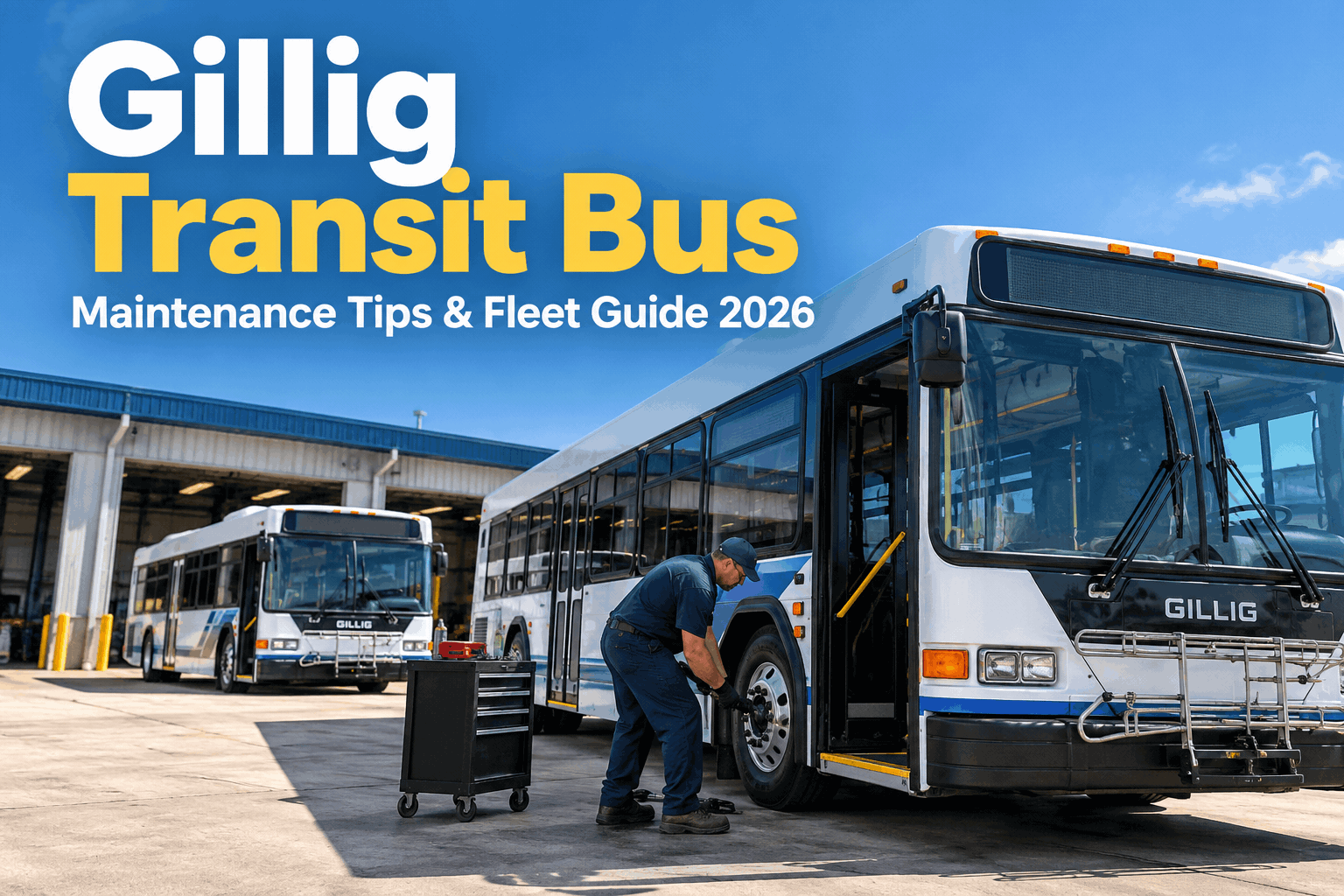
Gillig Transit Bus Maintenance Tips & Fleet Guide 2026
Gillig builds the low-floor workhorse of US public transit — one integral chassis, many powertrains. These are the systems that actually drive your downtime, the tips that keep them reliable, and how to track a whole Gillig fleet without a wall of binders.
Why Gillig Transit Bus Maintenance Is a Mixed-Powertrain Problem
The reason a Gillig fleet is tricky is not the bus — it is that the same Low Floor chassis ships with a diesel Cummins B6.7 or L9, a CNG L9N, a hybrid, or a battery-electric drive, and more agencies are running several of those at once. One PM schedule for the whole yard quietly does three things wrong.
Each fuel type wears differently
A diesel needs oil, fuel filters, and DPF service; a CNG bus needs fuel-system and leak checks a diesel never sees; an electric has no engine PM at all but its own high-voltage work. Same schedule cannot fit all four.
City duty is severe duty
Stop-and-go routes, constant door cycles, and long idle hours mean intervals come due on hours and calendar, not just the odometer — the same reason a transit Gillig wears faster than its mileage suggests.
Shared systems still fail
Whatever the powertrain, every Gillig has the same air brakes, low-floor ramp and kneeling, HVAC, and multiplex electrical — and those shared systems cause most of the day-to-day road calls.
The win is running one dashboard with the right PM logic per bus — diesel, CNG, hybrid, and electric Gilligs each on their own schedule, plus the shared systems tracked across all of them.
One Gillig Chassis, Four Preventive Maintenance Schedules
Here is the same Low Floor bus with each powertrain's distinct preventive maintenance focus. The chassis, brakes, ramp, and HVAC stay the same; the drive-specific work is what changes, and what a single schedule misses.
A tool built for one fuel type forces you to bolt the others on as custom fields. A bus-built system knows diesel, CNG, hybrid, and electric Gilligs each need their own schedule out of the box — you can create a free account and set the right PM template per bus.
Gillig Bus Maintenance Tips, by the Systems That Cost You Most
Not every system deserves equal attention. On a Gillig in transit service, downtime clusters around a handful of systems — here is roughly where it lands, and the one tip that matters most for each.
On diesels, let active DPF regens finish and service by hours, not just miles — city idle ages the engine faster than the odometer shows.
Check the air system daily for leaks and build-up time; a slow leak or a tired compressor is a safety item, not a someday fix.
Cycle the low-floor ramp and kneeling every day — it is the most-used moving part and an ADA item a rider depends on.
Clean condenser coils and change filters on schedule; a transit bus HVAC works hard, and a rider complaint is usually a missed PM.
Pull multiplex fault codes and log them; the Gillig electrical system flags trouble early if someone is reading and recording it.
The tips are easy; doing them on every bus, every interval, across a mixed fleet is the hard part — which is exactly where tracking earns its keep. You can book a demo to see these built into the PM schedule.
The Daily Gillig Transit Bus Inspection Checklist
Build these into the driver's digital DVIR so the safety-critical items cannot be skipped, and route anything that fails straight into a work order. Three are every-trip must-checks; two are logged by interval.
- Air brakes and air build-upCheck for leaks, proper build-up time, and low-air warning. Air-brake condition is the single most safety-critical daily item.EVERY TRIP
- Low-floor ramp and kneelingDeploy the ramp and cycle the kneeling fully — the most-used moving part, and the ADA access a rider cannot board without.EVERY TRIP
- Doors, lights, mirrors, and warningsPassenger doors cycle clean, all exterior and interior lights work, mirrors set, and no dash warning lamps ignored before pulling out.EVERY TRIP
- Powertrain PM by fuel typeDiesel oil/fuel/DPF, CNG fuel-system and leak checks, or electric HV and charging — each on its own interval by miles, hours, or date.BY INTERVAL
- HVAC, electrical, and fault codesService HVAC on schedule and pull multiplex fault codes regularly — log every code against the bus so trends show before failures.RECORD
When a failed check opens a work order automatically and a fault code lands in the queue the moment it appears, the daily checklist stops being paper and starts preventing road calls — start a free account and load the Gillig DVIR in minutes.
What Transit Fleet Maintenance Software Should Do for a Gillig Fleet
A generic fleet tool treats every bus the same and leaves the transit-specific work to you. A bus-built CMMS ships knowing what a Gillig fleet needs — you can book a demo to see it run on your own Gillig mix. Four capabilities matter most.
Fuel-type-aware PM
Diesel, CNG, hybrid, and electric Gilligs each on their own schedule, triggered by miles, hours, or date — whichever comes first.
Transit DVIRs and work orders
Pre-loaded daily checks for air brakes, ramp, doors, and HVAC — a failed item auto-opens a work order before the bus rolls.
Fault codes to the queue
Telematics and multiplex faults on a Gillig turn into work orders, so an electrical or engine code is a planned fix, not a road call.
Audit-ready transit records
Service history, PM compliance, and inspection logs ready for an FTA triennial review or NTD reporting, not scrambled together after.
Figures above are reported by BusCMMS from its own customer data, not independent third-party research.
A Transit Maintenance Manager's Take
Key Takeaways on Gillig Transit Bus Maintenance
Keep a Gillig fleet reliable and it comes down to four habits, all of which get easier when every bus is tracked on its own.
Powertrain decides the schedule
Diesel, CNG, hybrid, and electric Gilligs each need their own PM logic.
Shared systems cause road calls
Air brakes, ramp, HVAC, and electrical fail on every Gillig regardless of fuel.
Trigger on first-to-arrive
City duty makes hours and calendar hit before miles do — service on whichever comes first.
Track it, do not remember it
Checks, codes, and history logged per bus is what keeps nothing from slipping.
Run every Gillig on the right schedule and keep the shared systems in the daily check, and your availability number takes care of itself. For how it all fits together, our complete guide to what a bus CMMS does walks through the whole system.