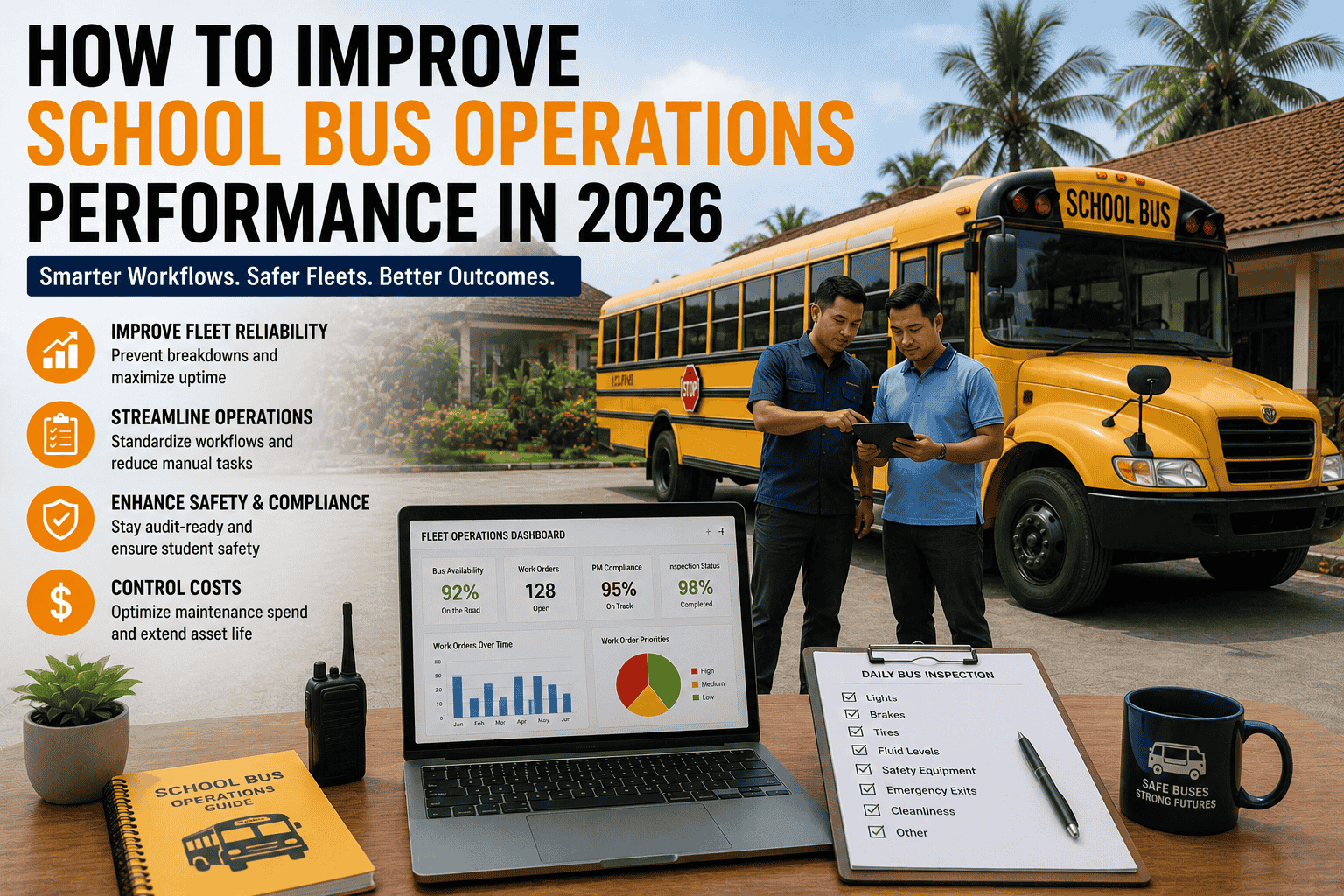
School bus operations performance in 2026 depends on more than routing and driver schedules. The fleets that run on time, reduce breakdowns, and control costs usually have one thing in common: their maintenance workflows are disciplined, visible, and measurable. A district can have experienced drivers and good buses, but if inspections are skipped, preventive maintenance is late, work orders are unclear, or asset records are incomplete, operational reliability drops quickly. Improving school bus operations means connecting maintenance planning, inspections, work orders, asset tracking, and fleet KPIs into one repeatable system. This guide explains practical ways to improve school bus operations performance, reduce operational risk, and increase fleet reliability using proven maintenance workflows, CMMS reporting, and data-driven accountability.
Improve school bus reliability, reduce operational risk, and increase fleet uptime with preventive maintenance, inspection management, work order control, and KPI tracking.
Many school bus fleets try to improve operations by adding spare buses, hiring more technicians, or changing routes. Those actions may help, but they do not fix the root problem if maintenance workflows are weak. The first step is identifying where reliability is being lost: late preventive maintenance, unresolved defects, poor inspection follow-up, slow work order completion, missing asset records, or lack of KPI visibility.
A strong school bus operation measures performance every week. Fleet leaders should know how many buses are available, how many PM services are overdue, how many defects were reported, how fast work orders were closed, and which vehicles caused the most downtime. Without these numbers, performance conversations become opinion-based. With CMMS reporting, they become action-based.
School bus operations become unreliable when maintenance is reactive. A bus breaks down, the shop rushes the repair, routes are reshuffled, and the team loses time. Preventive maintenance creates the opposite rhythm: scheduled inspections, predictable work, fewer emergency repairs, and better route confidence.
A CMMS helps by converting mileage, calendar intervals, inspection defects, and work order history into scheduled maintenance. Instead of relying on whiteboards or memory, the system alerts managers when a bus is approaching service. PM schedules should include oil and fluids, brakes, tires, lights, emergency exits, batteries, cooling systems, and seasonal readiness. Every completed PM should be attached to the vehicle record so managers can see compliance history during audits.
Pre-trip and post-trip inspections only improve operations if the reported defects are acted on. Paper forms often disappear, get reviewed late, or contain vague descriptions. Digital inspection workflows reduce this risk by forcing required fields, adding photos, timestamping submissions, and automatically creating work orders for failed items.
Every school bus fleet should separate defects into three categories: critical safety defects, route-impacting defects, and monitor-only observations. Critical defects require immediate review and possible out-of-service action. Route-impacting defects should be scheduled before the next run when possible. Monitor-only items should remain visible so trends are not ignored. This structured triage prevents minor issues from becoming route failures.
Work orders are the operating language of the maintenance shop. If work orders are incomplete, late, duplicated, or closed without detail, performance reporting becomes unreliable. A good work order should show the problem, priority, assigned technician, parts used, labor time, downtime impact, root cause, and closeout notes.
School bus operations improve when work orders are standardized. Repeated repair categories should use consistent names: brake inspection, tire replacement, battery failure, coolant leak, lighting repair, emergency exit inspection, and PM service. This makes reporting accurate. Managers can then see which issues are consuming time and which buses are repeatedly failing.
Separate emergency, same-day, planned, and monitor-only work so technicians know what matters first.
Track whether a job came from wear, driver report, inspection failure, PM finding, or repeat defect.
Connect parts to work orders so inventory planning and cost-per-bus reporting become accurate.
Require technician notes before closing safety-related work orders.
Not every metric helps operations. The best school bus KPIs are simple, repeatable, and tied to decisions. Track fleet availability, PM compliance, open safety defects, work order aging, cost per bus, repeat repairs, inspection completion, and parts stockouts. These metrics show whether reliability is improving or declining.
Leadership reporting should avoid overly technical shop details. A weekly operations report should answer four questions: Are enough buses ready? Are safety defects under control? Are PM services on time? Which buses are creating the most downtime or cost? When leaders see these trends regularly, maintenance becomes a strategic function rather than a cost center.
School bus performance improves when maintenance becomes measurable. The best fleets do not wait for breakdowns to reveal problems. They use inspections, PM schedules, asset records, and work order data to see risk early. CMMS helps because it makes the daily operating picture visible: what is due, what is open, what is aging, and what is repeatedly failing.
Improving school bus operations performance in 2026 requires better maintenance workflows, not just more effort. Start with PM compliance, inspection follow-up, work order discipline, asset data accuracy, and KPI reporting. Use a CMMS to connect these workflows so managers can act before breakdowns disrupt routes. The result is higher uptime, lower operational risk, better audit readiness, and more predictable service for students and families.