Massachusetts is one of the strictest states on bus safety, and the surprise is the cadence: the RMV inspects every full-size school bus at least three times a year. A Massachusetts school bus inspection is not a once-a-year box to tick, it is a rhythm you live with. If you would rather be ready for every visit than scramble, book a BusCMMS demo and see how fleets stay ahead of it.
Massachusetts School Bus Inspection Checklist & Rules
Two vehicle types, two rulebooks. Full-size yellow buses run under 540 CMR 7.00 and face the RMV three times a year; smaller 7D pupil vans run under 540 CMR 21.00 with a semi-annual safety inspection. Here is how both work, and the checklist that keeps you ready.
How the Massachusetts school bus inspection system works
Most of the confusion in Massachusetts comes from treating all student-carrying vehicles the same. They are not. The Registry of Motor Vehicles runs two separate programs, and which one applies depends entirely on the vehicle. A Type C diesel bus and a seven-passenger 7D van may both carry students down the same street, but they answer to different regulations, different inspectors, and different stickers. Get this split right and the rest of your compliance falls into place.
Full-size school bus
- VehicleType A, B, C or D yellow bus
- Inspected byRegistry of Motor Vehicles
- How often3 times a year + annual state check
- CoversConstruction, equipment, maintenance, inspection
7D pupil transport van
- VehicleVan, 10,000 lb GVWR or less
- Inspected byRMV-licensed Safety Inspection Station
- How oftenSemi-annual safety inspection
- Operator needs7D School Pupil Transport Certificate
i Both programs sit under the Registrar of Motor Vehicles. If you run a mixed fleet, you are tracking two different stickers on two different clocks — exactly the kind of thing a purpose-built bus CMMS is built to watch.
Pass, reject, or out of service
An inspection in Massachusetts has three possible endings, not two. The one that hurts most is out of service: a bus with a critical defect cannot be driven at all, even empty to the shop, until the defect is fixed. In 2025, Massachusetts districts lost dozens of buses to out-of-service findings at the start of the school year.
The difference between a reject and an out-of-service pull is often how fast you catch the problem. A worn brake found on a scheduled service is a work order; the same brake found by an inspector is a bus off the road. Catch it early and it is a line item; catch it late and it is a route with no bus and a round of calls to parents. That is the whole case for staying ahead of the calendar, and you can walk through preventive scheduling in a demo.
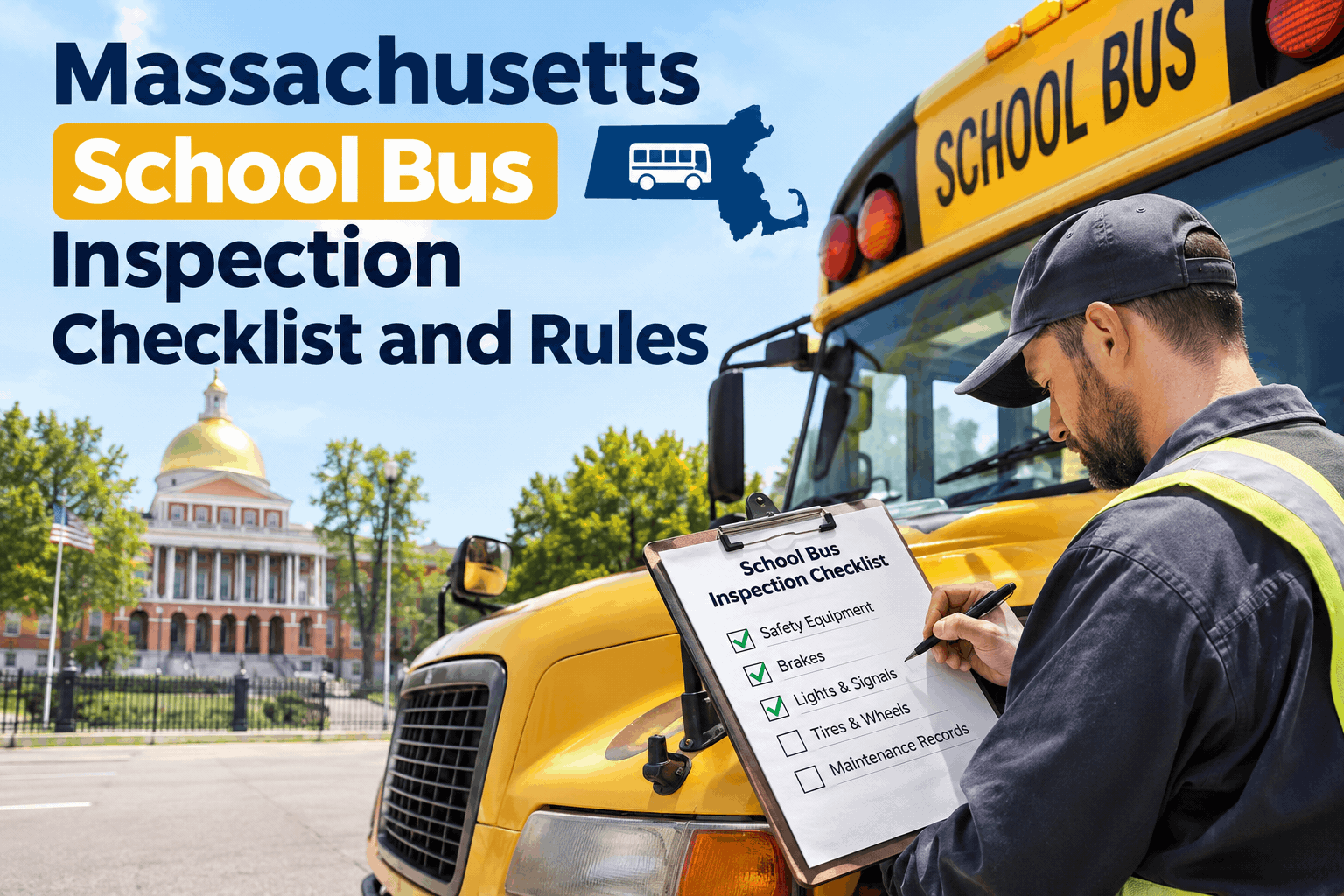
Your Massachusetts school bus inspection checklist
This is what separates a bus that sails through from one that gets pulled. The red items are defects that can put a bus out of service on the spot; the amber items are the habits that keep you from ever getting there. Build this into your routine, not your memory.
- CRITICALBrakes, steering and tires within limits on every active bus.These are the classic out-of-service triggers under the 540 CMR 7.08 criteria.
- CRITICALStop arm, 8-light warning system and crossing gate fully working.Student-safety equipment failures are treated as serious defects.
- CRITICALEmergency exits, lights and body panels secure and undamaged.Loose or protruding body parts and blocked exits are rejectable items.
- PLANCurrent inspection sticker or 7D certificate on every vehicle.A missing or expired certificate is an automatic rejection at re-inspection.
- PLANPreventive maintenance scheduled by mileage and calendar.Three inspection windows a year means readiness has to be continuous.
- PLANDaily driver pre-trip logged and repair history on file.Documentation proves defects were found and corrected between visits.
Most out-of-service findings trace back to something a scheduled check would have caught weeks earlier. You can start tracking these items free and stop relying on a clipboard.
What the inspector actually looks at
An RMV inspection walks the whole vehicle, inside and out. Brakes, steering and tires drive most out-of-service calls, while the student-safety equipment — stop arm, warning lights, mirrors and emergency exits — is where a reject usually hides. These are the zones where defects show up most, and the ones worth checking yourself before the inspector arrives.
Records that keep a Massachusetts fleet ready
Passing three inspections a year is a records problem as much as a wrench problem. BusCMMS ships with bus-specific inspection forms on day one and keeps the history tied to each bus — no weeks of custom setup borrowed from a trucking tool. When the inspector asks for a maintenance history, you want a two-minute export, not an afternoon in a filing cabinet.
Fuel-type PM
Separate preventive schedules for diesel, propane and electric buses, triggered by mileage or date.
Work orders from defects
A failed inspection item auto-creates a work order and tracks the repair to closed.
Sticker & certificate alerts
Expiration reminders for inspection stickers and 7D certificates before they lapse.
i BusCMMS reports districts saving an average of about $2,800 per bus a year and holding 95%+ fleet availability — its own published customer figures, worth confirming against your own numbers in a quick demo.
3x a year
Three inspections a year sounds brutal until your maintenance is actually scheduled. Now the RMV finds what we already fixed. Last fall we didn't lose a single bus to an out-of-service, and that is the first time I can say that.
Transportation Director, eastern Massachusetts district fleet
The short version
3x
RMV inspections a year for full-size buses, plus the annual state check — readiness has to be continuous.
2
Separate rulebooks: 540 CMR 7.00 for full buses, 540 CMR 21.00 for 7D pupil vans.
0
Miles an out-of-service bus can run — not even empty to the shop until the defect is fixed.
1
System to tie inspections, PM, repairs and sticker dates to each bus instead of a clipboard.
A clean Massachusetts school bus inspection record is really just steady daily maintenance that someone wrote down. Put the inspections, PM schedule, repairs and certificate dates in one place, and three RMV visits a year become routine instead of stressful. You can set up your fleet free and start building that record today.