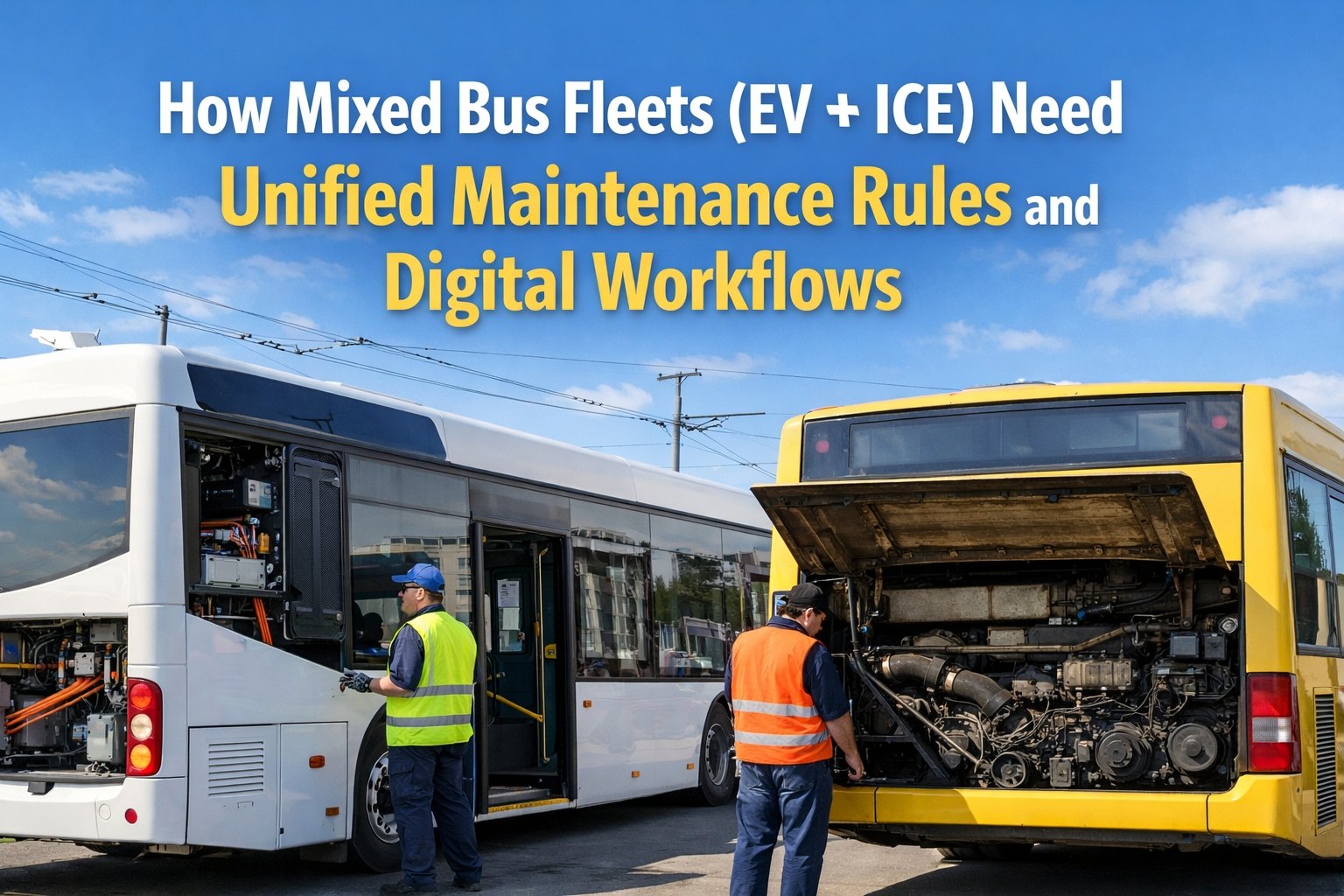
Running electric and diesel buses under one roof isn't just a transition — it's a balancing act. Two powertrains with completely different maintenance DNA, competing for the same technicians, shop bays, and budget dollars. 64% of transit fleets are now operating in this mixed phase, yet most are managing it with tools designed for a single-fuel world. The result? Missed PMs, wasted labor, and an electrification ROI that looks worse than it should. Here's the unified maintenance playbook that changes everything.
The Hidden Cost of Managing Two Worlds Separately
When EV and diesel maintenance live in different systems — or worse, different spreadsheets — the gaps compound fast. These are the failure points draining mixed fleet operations.
Diesel needs PM every 5,000 miles. EVs every 15,000. Same calendar, different rules — paper systems can't adapt.
EV work needs high-voltage certification. Diesel techs on EVs = safety risk. EV techs on oil changes = wasted skills.
Fuel, maintenance, labor in separate systems. Can't prove EV ROI. Can't justify fleet expansion to leadership.
Tired of juggling two maintenance worlds? Start your free BusCMMS trial and unify EV + diesel operations in one platform.
One Platform. Two Powertrains. Complete Visibility.
BusCMMS auto-detects powertrain type, applies the right PM schedule, routes work to certified techs, and tracks TCO side-by-side — so you stop guessing and start optimizing.
How Unified Maintenance Actually Works
BusCMMS doesn't treat EVs as "different" — it treats every vehicle as unique. The platform adapts automatically based on powertrain, usage, and certification requirements.
Asset Profile
Each vehicle flagged as BEV, diesel, or hybrid — triggering correct PM templates, parts, and tech requirements automatically.
Adaptive Scheduling
EVs get 15K-mile intervals with battery checks. Diesels get 5K-mile oil service. Both trigger from live telematics — zero manual tracking.
Smart Routing
EV work orders only go to high-voltage certified techs. Diesel tasks route to ASE staff. Skill mismatches blocked before they happen.
Side-by-Side TCO
Cost-per-mile, fuel efficiency, maintenance trends — EVs and diesels compared in real-time. Data that justifies your next fleet decision.
Ready to see adaptive scheduling in action? Book a 15-minute BusCMMS demo and watch unified workflows handle both powertrains.
From Chaos to Control: A Fleet Director's Story
We deployed 18 electric buses alongside our 42 diesel fleet. The first six months were chaos — applying diesel PM schedules to EVs, wasting hours on non-existent oil changes. After implementing unified CMMS with powertrain-specific workflows, our EV maintenance cost dropped to $0.32/mile while diesel stayed at $0.58. The side-by-side data finally gave our board the evidence to approve 20 more EVs.
Where Are You in the Electrification Journey?
Most fleets don't switch overnight. Each transition phase has different maintenance priorities — and BusCMMS scales with you.
Scaling your EV fleet this year? Get unified maintenance tracking before complexity outpaces your current systems.
Your Electrification Timeline Deserves Unified Data
From pilot to full deployment, BusCMMS tracks both powertrains, compares real costs, and gives you the evidence to make confident fleet decisions.
The Bottom Line
Mixed EV and diesel fleets aren't a temporary challenge — they're the operational reality through 2030 and beyond. The maintenance differences are real: EVs cost 44% less per mile, need service 21 days less often, and require entirely different technician skills. Managing both with separate systems creates waste, safety risks, and blind spots that undermine your electrification ROI. The solution is unified digital workflows that recognize powertrain differences automatically — routing work, scheduling PM, and tracking costs in one platform. That's exactly what BusCMMS delivers. Start your free 14-day trial and bring your mixed fleet under unified control.