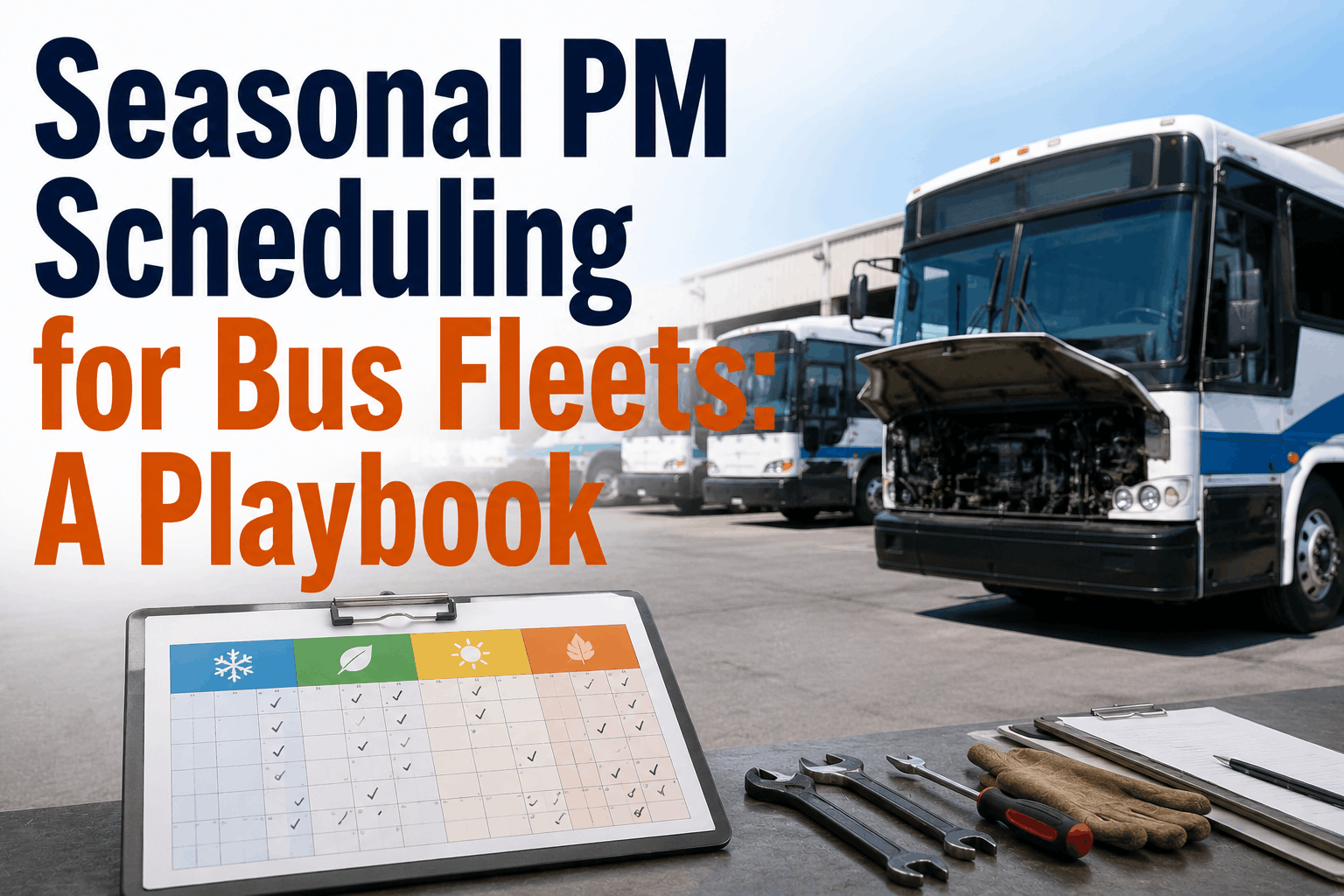
Bus fleet maintenance demands shift with seasons. Summer brings intense cooling system stress, air conditioning failures, and heat-related component degradation. Winter brings cold-start problems, battery weakness, heating system demands, and salt corrosion. Spring and fall represent transition periods requiring different focus. A one-size-fits-all preventive maintenance schedule ignores these realities. A bus scheduled for the same maintenance year-round regardless of season is either over-maintained in low-stress periods or under-maintained during high-stress seasons. Seasonal PM scheduling aligns maintenance intensity with operational demands: intensive cooling system focus in summer, intensive cold-weather readiness in winter, and transition maintenance in spring and fall. For fleets operating in regions with distinct seasons, seasonal PM scheduling reduces downtime, extends component life, and optimizes maintenance spending. Here's a comprehensive playbook for building seasonal PM schedules.
Demand and weather shift maintenance needs. Learn how to build seasonal PM scheduling that handles summer cooling and winter readiness.
Salt and corrosion cleanup: Winter road salt accumulates on undercarriage, frame, brake components, and suspension. Spring maintenance should include undercarriage washing to remove salt, inspection for corrosion damage that occurred during winter, and treatment of corroded areas. Rust-preventive coatings applied in spring protect against summer moisture. Spring is the ideal time for comprehensive undercarriage inspection and corrosion assessment.
Cooling system inspection and flushing: Before summer heat arrives, the cooling system should be comprehensively checked. Coolant strength should be tested; old or weak coolant should be flushed and replaced. Radiator condition should be inspected. Hoses should be checked for cracks or deterioration. Water pump operation should be verified.
Air conditioning system preparation: Summer air conditioning demand is intense. AC systems should be serviced in spring: refrigerant levels checked and topped if needed, compressor operation verified, condenser cleaned to remove winter debris, and system tested under load.
Battery and electrical system assessment: Winter stresses batteries; spring is time to check battery health and consider replacement of aging batteries before summer heat stress adds additional burden. Electrical system connections should be cleaned and loose connections tightened.
Tire and suspension inspection: Winter weather and road salt damage tires and suspension. Spring inspection should assess tire wear, suspension component corrosion, and alignment issues from winter potholes and rough roads.
Spring PM checklist: Undercarriage wash and corrosion inspection, cooling system flush and hose replacement, AC refrigerant check and system cleaning, battery health assessment, electrical system cleaning, tire wear measurement, suspension inspection, paint touch-up, and chassis lubrication.
Cooling system monitoring and maintenance: Summer heat is when cooling systems are stressed. Daily checks of coolant levels and visual inspection of hose condition should be part of summer operations. AC systems running at full capacity should be monitored for leaks or compressor problems.
Engine oil and transmission fluid management: Summer heat accelerates oil and fluid degradation. Oil analysis should be increased in frequency during summer to monitor degradation. Transmission fluid should be checked for contamination or degradation.
Brake system inspection: Summer heat can cause brake fade if the braking system is marginal. Brake pad thickness should be checked, brake fluid condition assessed, and brake hose integrity verified.
Tire pressure and wear management: Summer heat increases tire pressure; tires should be checked weekly during summer to maintain proper inflation. Summer driving on hot asphalt stresses tires, so rotation and wear inspection should be more frequent.
Fuel system and engine management: Summer heat can cause fuel system problems. Fuel filters should be checked and replaced if restricted. Engine sensors and electronics should be verified as summer heat stresses electrical connections.
Summer PM checklist: Daily coolant and AC system checks, increased-frequency oil analysis, brake system inspection, weekly tire pressure checks, fuel filter replacement, engine sensor verification, and preventive hose and belt replacement.
Cold-start and battery preparation: As temperatures drop, battery output decreases and cold-start demands increase. Battery testing should be performed, and weak batteries should be replaced before winter arrives.
Heating system inspection: Fall is time to inspect heating systems before winter arrives. Heating system operation should be verified, heater lines checked, and heating controls tested.
Antifreeze strength and coolant system winterization: Coolant should be tested for freeze-protection level. Antifreeze should be replaced if protection level is insufficient.
Tire preparation for winter: Tire condition should be assessed before winter. Tires with worn tread provide poor winter traction. Tire chains or other traction devices should be inventoried if needed.
Electrical system cold-weather readiness: Alternator output should be verified, starter motor operation checked, and electrical connections cleaned to ensure good conductivity.
Brake system and ABS readiness: Brake pad thickness and condition should be verified. ABS systems should be tested to ensure proper function on slippery surfaces.
Fall PM checklist: Battery testing, heating system inspection, antifreeze testing, tire assessment, block heater testing, electrical verification, brake inspection, windshield wiper winterization, and lighting system checks.
Salt corrosion prevention and monitoring: Winter road salt causes rapid corrosion. Regular undercarriage washing removes salt buildup. Brake system components, frame, and structural areas should be monitored for salt damage.
Cold-start system verification: Cold temperatures stress starting systems. Block heaters should be operational if equipped. Battery performance should be monitored and weak batteries replaced.
Tire traction and winter operations: Tire pressure should be monitored because cold temperatures reduce pressure. Tread depth should be adequate for snow and ice traction.
Heating system continuous operation: Heaters run continuously in winter. Heating system reliability is critical for driver and passenger comfort and safety.
Engine oil and fluid winterization: Oil weight should be appropriate for winter temperatures. Diesel fuel additives, winter washer fluid, and cold-weather fluid checks should be included.
Lighting system reliability: Winter darkness means lights are used extensively. Brake lights, turn signals, headlights, and reflectors should be checked frequently.
Winter PM checklist: Weekly undercarriage salt washing, corrosion inspection, battery monitoring, cold-start verification, heating system checks, tire pressure monitoring, winter fuel additives, washer fluid winterization, and lighting inspection.
CMMS configuration: Configure your CMMS to support seasonal maintenance scheduling. Create separate PM schedules for each season and set start and end dates so schedules activate in the right months.
Communication and driver involvement: Drivers should understand seasonal maintenance importance and report seasonal-specific problems such as AC failures in summer and cold-start issues in winter.
Parts inventory alignment: Stock seasonal-specific parts before peak demand. AC parts should be ready before summer, while antifreeze, batteries, and heating system parts should be ready before winter.
Staff scheduling: Mechanics should have adequate capacity during peak maintenance seasons. Planning ahead prevents maintenance backlogs during critical weather periods.