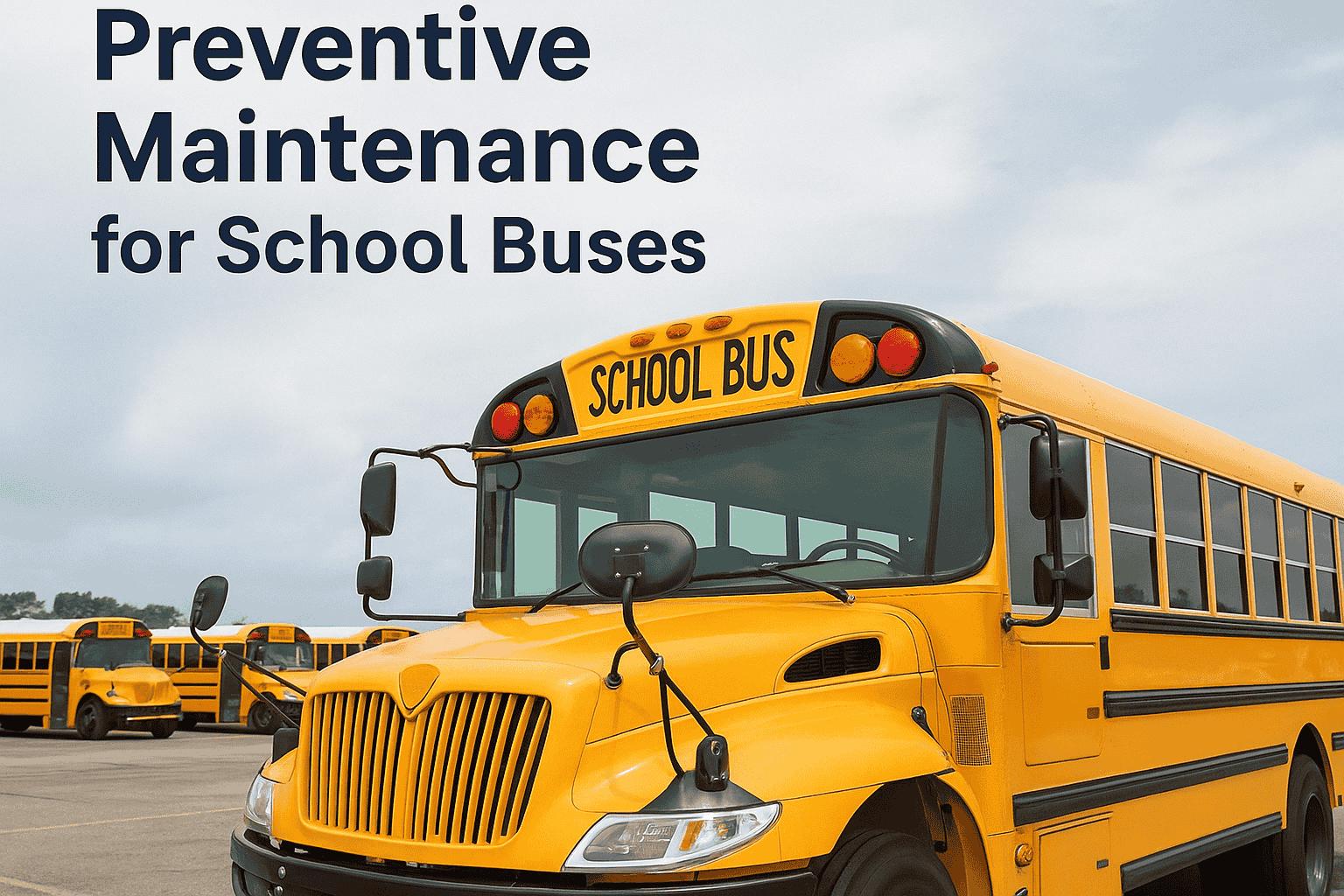
Every school day, over 26 million students across America depend on school buses to get them safely to and from school. For US manufacturing professionals managing these critical transportation assets, preventive maintenance isn't just about keeping vehicles running—it's about ensuring the safety of our most precious cargo while maximizing operational efficiency and controlling costs.
School bus breakdowns don't just cost money; they disrupt education, create liability risks, and strain relationships with school districts. A single major breakdown can cost upwards of $3,000 in repairs, plus the hidden costs of route disruptions, emergency transportation, and potential safety incidents. This comprehensive guide will transform your approach to school bus maintenance from reactive to proactive, potentially reducing your breakdown incidents by 60% or more.
Understanding School Bus Maintenance Fundamentals
School buses operate under unique conditions that differentiate them from other commercial vehicles. Multiple daily starts and stops, varying load conditions, and seasonal operation patterns create specific maintenance challenges that require tailored preventive strategies.
The Three Pillars of School Bus Maintenance
- Safety-First Approach: Every maintenance decision must prioritize student safety above cost considerations
- Regulatory Compliance: Adherence to federal, state, and local transportation regulations is non-negotiable
- Operational Efficiency: Maximizing uptime while minimizing total cost of ownership
Critical Systems Requiring Preventive Focus
School buses contain multiple interconnected systems that require specialized attention. Understanding these systems and their maintenance requirements is crucial for developing an effective preventive maintenance program:
| System | Maintenance Frequency | Critical Components |
|---|---|---|
| Engine & Drivetrain | Every 5,000-7,500 miles | Oil, filters, belts, hoses |
| Brake System | Every 3,000 miles | Pads, drums, air lines |
| Electrical System | Monthly | Lights, signals, battery |
| Safety Equipment | Weekly | Stop arm, mirrors, seats |
Creating Your Preventive Maintenance Schedule
A well-structured maintenance schedule is the backbone of any successful preventive maintenance program. For school buses, this schedule must account for seasonal variations, regulatory requirements, and the unique operational patterns of educational transportation.
Daily Pre-Trip Inspections
Every school bus journey should begin with a comprehensive pre-trip inspection. This 15-20 minute routine is your first line of defense against potential failures and safety hazards:
- Exterior Inspection: Check lights, mirrors, tires, and emergency equipment
- Interior Safety Check: Verify seats, emergency exits, and safety equipment functionality
- Under-Hood Inspection: Check fluid levels, belts, and visible components
- Operational Test: Test brakes, steering, and warning systems
Weekly and Monthly Maintenance Tasks
Beyond daily inspections, regular weekly and monthly maintenance tasks help identify developing issues before they become major problems:
- Weekly Tasks: Tire pressure checks, fluid level verification, battery testing, and cleaning
- Monthly Tasks: Detailed safety equipment inspection, exhaust system check, and interior deep cleaning
- Seasonal Tasks: HVAC system service, winterization procedures, and summer cooling system maintenance
Mileage and Time-Based Maintenance
School buses require both mileage-based and time-based maintenance schedules due to their unique usage patterns. Some buses may accumulate high mileage during field trips, while others primarily operate on short, stop-and-go routes.
Essential Safety Inspections and Compliance
School bus safety inspections go far beyond standard commercial vehicle requirements. Understanding and implementing comprehensive inspection protocols is crucial for maintaining safety certifications and avoiding costly violations.
Federal and State Inspection Requirements
School buses must comply with multiple layers of inspection requirements, each serving a specific safety purpose:
- Annual State Inspections: Comprehensive safety and emissions testing required in most states
- Semi-Annual Safety Inspections: Detailed mechanical and safety equipment verification
- Driver Walk-Around Inspections: Daily pre-trip and post-trip safety checks
- Periodic Unscheduled Inspections: Random roadside inspections by DOT officers
Critical Safety Systems Inspection
School buses contain unique safety systems that require specialized inspection procedures. These systems are mandated by federal regulations and must be maintained to exact specifications:
- Stop Arm System: Electrical, mechanical, and lighting components must function flawlessly
- Emergency Exits: All emergency doors and windows must open properly and be clearly marked
- Interior Safety Equipment: First aid kits, fire extinguisher, and emergency communication devices
- Passenger Protection Systems: Seat integrity, aisle clearance, and barrier effectiveness
Documentation and Record Keeping
Proper documentation is not just good practice—it's a legal requirement. Your maintenance records serve as proof of compliance and due diligence in case of accidents or regulatory audits.
Cost-Effective Maintenance Strategies
Effective school bus maintenance balances safety requirements with budget constraints. Manufacturing professionals understand that strategic maintenance investments yield long-term cost savings through reduced downtime, extended vehicle life, and improved fuel efficiency.
Predictive Maintenance Technologies
Modern school buses can benefit from predictive maintenance technologies that identify potential failures before they occur:
- Engine Diagnostics: OBD-II systems that monitor engine performance and alert to developing issues
- Fluid Analysis: Oil and coolant testing to predict component wear and optimize change intervals
- Tire Monitoring: Pressure and temperature sensors that prevent blowouts and extend tire life
- Brake System Monitoring: Air pressure and pad wear sensors for proactive brake maintenance
Inventory Management and Parts Sourcing
Efficient parts management can significantly impact maintenance costs and vehicle availability. School bus fleets require specialized inventory strategies due to seasonal operation patterns and safety-critical components:
- Critical Parts Inventory: Maintain stock of essential safety components and high-wear items
- Seasonal Preparation: Pre-purchase parts for summer maintenance and winter preparation
- Vendor Relationships: Establish relationships with reliable suppliers for emergency parts needs
- Remanufactured Components: Consider quality remanufactured parts for non-safety-critical systems
Labor Efficiency and Training
Skilled technicians are essential for effective school bus maintenance. Investing in proper training and efficient work processes pays dividends in safety, compliance, and cost control:
Technology Integration and Digital Solutions
Modern school bus maintenance leverages technology to improve efficiency, ensure compliance, and reduce costs. Digital solutions transform traditional paper-based processes into streamlined, automated systems that enhance both safety and profitability.
Computerized Maintenance Management Systems (CMMS)
A robust CMMS designed for school bus operations provides comprehensive maintenance management capabilities:
- Automated Scheduling: Prevents missed maintenance and ensures regulatory compliance
- Digital Work Orders: Streamlines maintenance processes and improves communication
- Inventory Management: Tracks parts usage and automates reordering
- Compliance Tracking: Monitors inspection schedules and regulatory requirements
- Cost Analysis: Provides detailed maintenance cost reporting and trend analysis
Mobile Technology for Field Operations
Mobile devices enable real-time communication between drivers, mechanics, and management, improving response times and maintenance efficiency:
- Digital Inspections: Drivers can complete pre-trip inspections using tablets or smartphones
- Immediate Issue Reporting: Problems are reported instantly with photos and GPS location
- Work Order Updates: Technicians update job status in real-time
- Parts Information: Instant access to parts catalogs and inventory levels
Conclusion: Your Path to Maintenance Excellence
Effective school bus preventive maintenance is a complex but manageable challenge that requires systematic planning, proper execution, and continuous improvement. The strategies outlined in this guide provide a foundation for transforming your maintenance operations from reactive to proactive, ultimately improving safety, reducing costs, and enhancing operational efficiency.
Remember that school bus maintenance is not just about keeping vehicles running—it's about protecting the lives of students, meeting regulatory requirements, and maintaining the trust of the communities you serve. Every maintenance decision should be made with safety as the primary consideration, followed by compliance and cost-effectiveness.
The investment in proper preventive maintenance pays dividends through reduced breakdowns, extended vehicle life, improved fuel efficiency, and enhanced safety. Most importantly, it ensures that every student reaches their destination safely, which is the ultimate measure of success in school transportation.
Start implementing these strategies today, and within months, you'll see measurable improvements in fleet reliability, cost control, and safety performance. Your students, drivers, and school administrators will notice the difference, and your bottom line will reflect the positive impact of proactive maintenance management.
Frequently Asked Questions
School buses require daily pre-trip inspections, weekly safety checks, and comprehensive maintenance every 5,000-7,500 miles or quarterly, whichever comes first. Critical systems like brakes should be inspected every 3,000 miles. Additionally, annual state inspections and semi-annual safety inspections are typically required by law.
The most frequent issues include brake system problems, engine overheating, electrical failures (lights and signals), tire wear, and air system leaks. These account for approximately 70% of school bus breakdowns. Regular preventive maintenance can prevent most of these issues from causing roadside failures.
Industry standards suggest budgeting $0.15-$0.25 per mile for routine maintenance, plus $3,000-$5,000 annually per bus for major repairs and overhauls. A well-maintained bus covering 12,000 miles annually typically costs $4,800-$8,000 in total maintenance expenses, including parts, labor, and inspections.
Critical safety equipment includes the stop arm system, emergency exits and windows, interior and exterior lighting, mirrors, fire extinguisher, first aid kit, reflective triangles, and passenger protection systems. Each item must be inspected according to federal and state regulations, typically during pre-trip inspections and formal safety inspections.
Technology improvements include CMMS software for automated scheduling and compliance tracking, mobile apps for digital inspections and work orders, predictive maintenance systems that monitor engine performance, and GPS tracking for route optimization. These tools can reduce maintenance costs by 15-25% while improving safety and compliance.