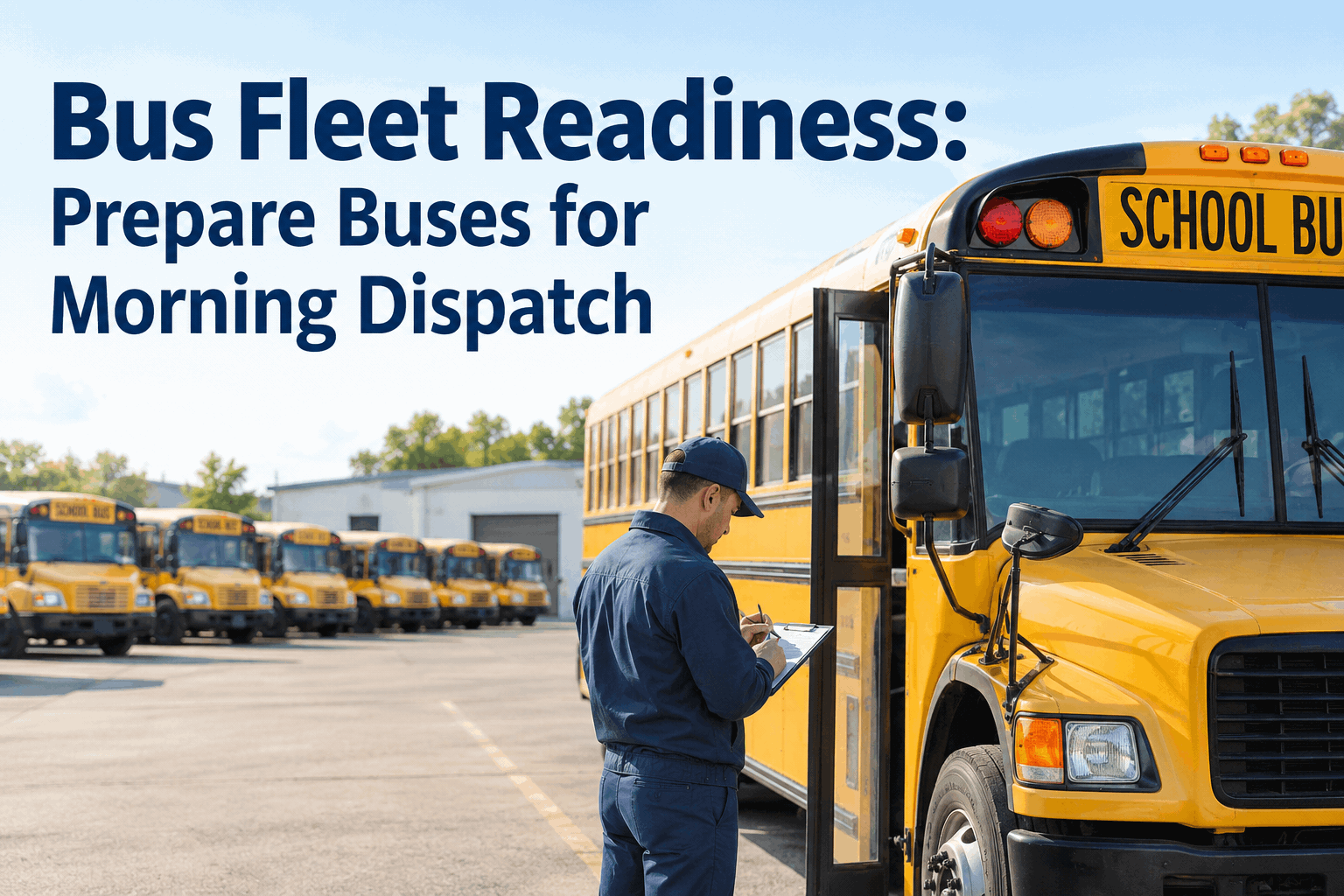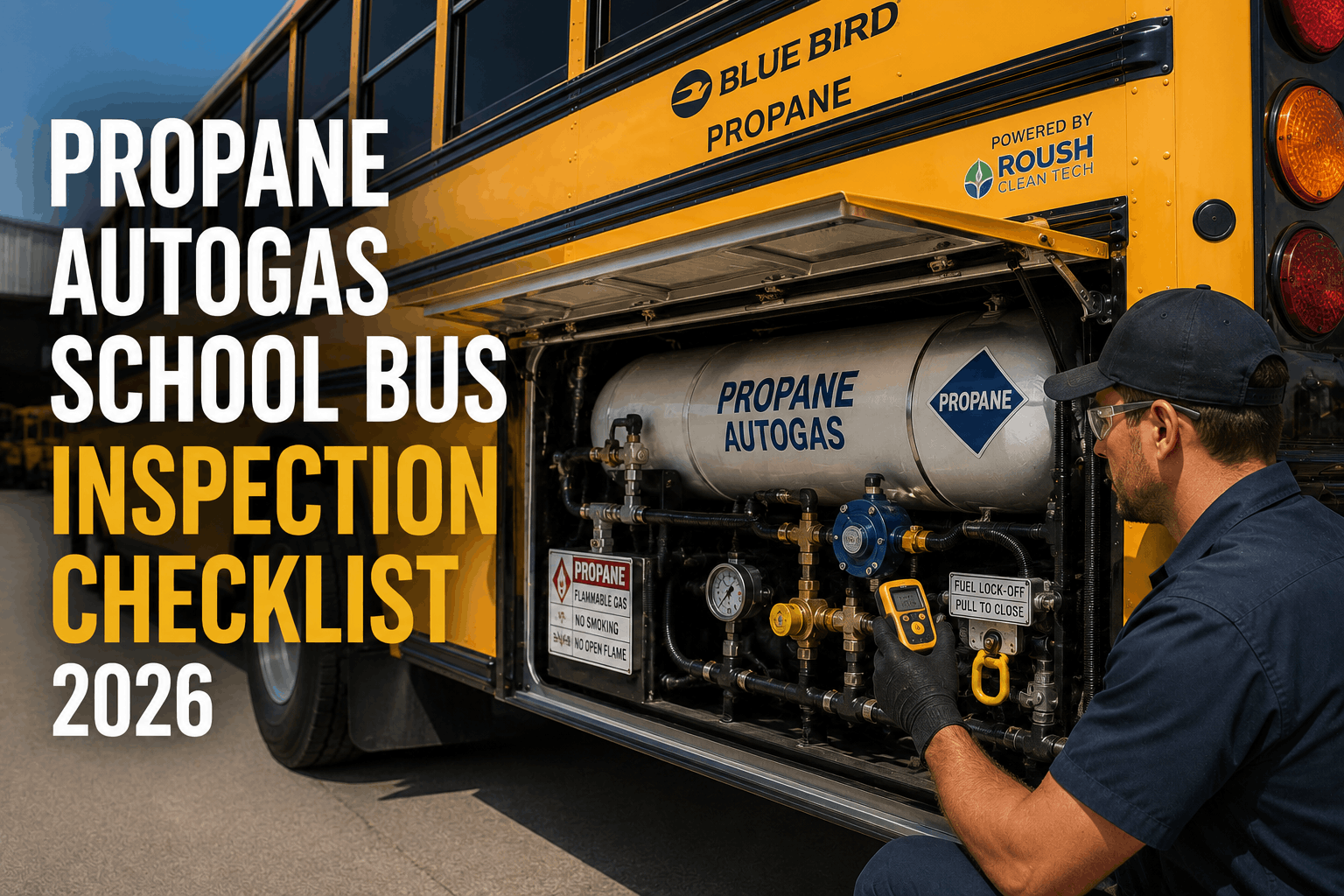
Propane autogas (liquefied petroleum gas / LPG) school buses represent one of the most cost-effective alternative fuel options available to American school districts. Propane costs $2.50–$3.50 per gallon versus diesel at $3.50–$5.00 per gallon, delivering 30–40% fuel cost savings while meeting EPA Tier 4 emission standards. School districts operating propane bus fleets (including Blue Bird Vision Propane and ROUSH CleanTech conversions) must conduct daily and weekly fuel system inspections to detect leaks, verify pressure regulation, and ensure propane safety equipment functions properly. Unlike CNG buses with high-pressure systems (3,000+ PSI), propane buses operate at moderate pressure (100–200 PSI) allowing somewhat simpler inspection procedures. However, propane fuel systems include unique components—fuel lock-off valves, vapor recovery systems, liquid withdrawal regulators—that diesel-only technicians often lack training to inspect. Most school districts adapt diesel bus checklists for propane buses, missing propane-specific requirements. Modern bus maintenance software includes propane-specific daily and weekly inspection templates that guide systematic fuel system checks and flag maintenance needs before safety incidents occur.
Keep Propane Autogas Systems Safe and Cost-Effective
BusCMMS provides propane-specific daily and weekly inspection checklists covering fuel leak detection, pressure regulation, lock-off valve function, and vapor recovery operation—with EPA and DOT compliance documentation.
Propane Autogas School Buses: Why Specialized Inspections Are Essential
Propane autogas systems operate at lower pressures than CNG (100–200 PSI versus 3,000+ PSI) but require equally rigorous inspection because propane leaks create explosion hazards and fuel loss. Propane fuel systems include components that diesel and CNG buses do not have: fuel lock-off shutoff valves operated by drivers, propane vaporizers that convert liquid propane to vapor for engine combustion, and vapor recovery systems that capture fuel vapors during refueling to prevent emissions. Each component has specific inspection requirements that generalized bus maintenance procedures do not address. Systematic propane bus maintenance procedures ensure fuel system integrity is verified daily, preventing leaks and failures that disrupt service or create safety emergencies.
Propane autogas costs $2.50–$3.50 per gallon versus diesel at $3.50–$5.00, delivering significant fleet operating cost reduction over a 12-year bus lifespan while meeting EPA Tier 4 emission standards.
Lower than CNG pressure but propane leaks at 100–200 PSI still create explosion hazards and fuel loss. Any mercaptan odor or wet residue at fittings requires immediate removal from service for technician inspection.
Drivers verify fuel lock-off valve accessibility, check for propane odor, confirm fuel lines show no obvious damage, and report any abnormal starting behavior. Immediate DVIR entry required for any anomaly.
Technicians perform soapy water leak detection at all connections, cycle lock-off and selector valves, inspect regulator body and vapor recovery line, and document all findings. Any anomaly requires service before the bus returns to route.
Propane Autogas Inspection Checklist: Daily, Weekly & Quarterly Tasks
Complete all applicable sections at the indicated service interval. Propane leaks and lock-off valve failures must be repaired immediately — never operate a propane bus with a detected fuel system defect. Minor regulator pressure drift may be monitored weekly, but any leak represents both a safety and cost risk that justifies removal from service.
Propane Component Specifications & Service Reference
| Component | Normal Operating Range | Inspection Interval | Action if Defect Found |
|---|---|---|---|
| Propane Fuel Tank | 100–200 PSI operating pressure | Daily visual; 5–10 year hydrostatic | Remove from service; certified hydrostatic facility evaluation |
| Fuel Lock-Off Valve | Moves freely ON/OFF; holds pressure closed | Daily driver check; weekly technician test | Replace immediately if sticking or leaking; cost $400–$700 |
| Propane Regulator | 10–25 PSI outlet (engine operating) | Weekly visual; quarterly functional test | Replace if leaking, cracked, or pressure drifting; cost $600–$1,100 |
| Vapor Recovery Check Valve | No backflow; free vent during refueling | Quarterly inspection | Replace if corroded or stuck; cost $200–$400 |
| Charcoal Canister (if equipped) | No fuel odor during normal operation | Quarterly saturation check | Replace if saturated; cost $400–$700 |
How BusCMMS Automates Propane Bus PM Scheduling
Propane buses require daily driver inspections and weekly technician PM — two distinct workflows that must be coordinated across potentially mixed diesel, propane, and electric fleets. Districts applying a single inspection template to all fuel types miss propane-specific components like lock-off valves, vapor recovery systems, and propane regulators. BusCMMS routes propane buses to propane-specific driver DVIR templates daily and auto-schedules weekly technician PM with propane-focused checklists. Driver-reported defects convert directly to technician work orders with no manual handoff. Book a demo to see the propane inspection workflow in a live fleet environment.
We switched 15 buses to propane autogas for cost savings, but our technicians had no training on propane-specific inspection. We were checking lock-off valves using diesel procedures—missing critical propane components. BusCMMS includes propane-specific daily and weekly checklists that guide technicians through proper inspection. We found a regulator that was slowly failing and replaced it proactively instead of having it fail mid-route.
Frequently Asked Questions: Propane Autogas School Bus Inspection
What is propane autogas and why is it becoming popular for school buses?
Propane autogas (LPG) is liquefied petroleum gas stored in pressurized tanks. It costs 30–40% less than diesel, meets EPA Tier 4 emissions standards, and delivers lower total cost of ownership for school districts over 12-year bus lifespan including fuel and maintenance savings.
How does propane fuel smell and how can drivers detect leaks?
Propane is naturally odorless; utility companies add mercaptan (rotten egg smell) to make leaks detectable. Any mercaptan smell near fuel system indicates propane leak. Drivers should report propane odor immediately and take bus out of service for technician leak inspection.
What is a fuel lock-off valve and why is it critical for safety?
Fuel lock-off valve is manual shut-off (handle ON = fuel flows, handle OFF = fuel stops) that drivers or first responders can activate in emergency. In accident or fire situation, lock-off valve prevents continued fuel delivery. Valve must move freely—sticking valve defeats safety function.
How often do propane fuel systems require inspection versus diesel buses?
Propane buses require daily driver inspection (fuel odor check, lock-off valve function) plus weekly technician fuel system inspection. Diesel buses typically require weekly driver inspection only. Higher frequency for propane reflects fuel system safety criticality.
What does propane regulator failure look like and how does it affect engine performance?
Regulator failures cause cold-start difficulty (propane not reaching engine), rough idle (fuel pressure too high or low), power loss (fuel starvation during acceleration), or propane odor in exhaust. Engine performance degradation after propane conversion indicates regulator problem requiring replacement.
How much does propane tank hydrostatic inspection cost and how often is it required?
Propane tank hydrostatic inspection costs $300–$600 per tank and is typically required every 5–10 years depending on tank age and regulatory jurisdiction. Tanks that fail hydrostatic testing (excess expansion under pressure) are destroyed and must be replaced.
Can I defer propane fuel system repairs if the bus still operates?
Minor issues (regulator pressure drift) can be monitored weekly, but leaks or lock-off valve failures must be repaired immediately. Propane leaks represent both safety (explosion) and cost (fuel loss) risks that justify removal from service until repair is completed.
Are there EPA or DOT regulations specific to propane school buses?
EPA regulates emissions (propane buses meet Tier 4 standards). DOT regulates fuel tank certification, shut-off valve functionality, and pressure relief. Propane buses must meet all applicable EPA emissions and DOT safety regulations. Systematic inspection ensures compliance.
Inspect Propane Systems Daily to Catch Leaks and Valve Failures Early
BusCMMS provides propane-specific daily driver checks and weekly technician inspections covering fuel leak detection, lock-off valve function, regulator operation, and vapor recovery system integrity—with EPA and DOT compliance documentation.