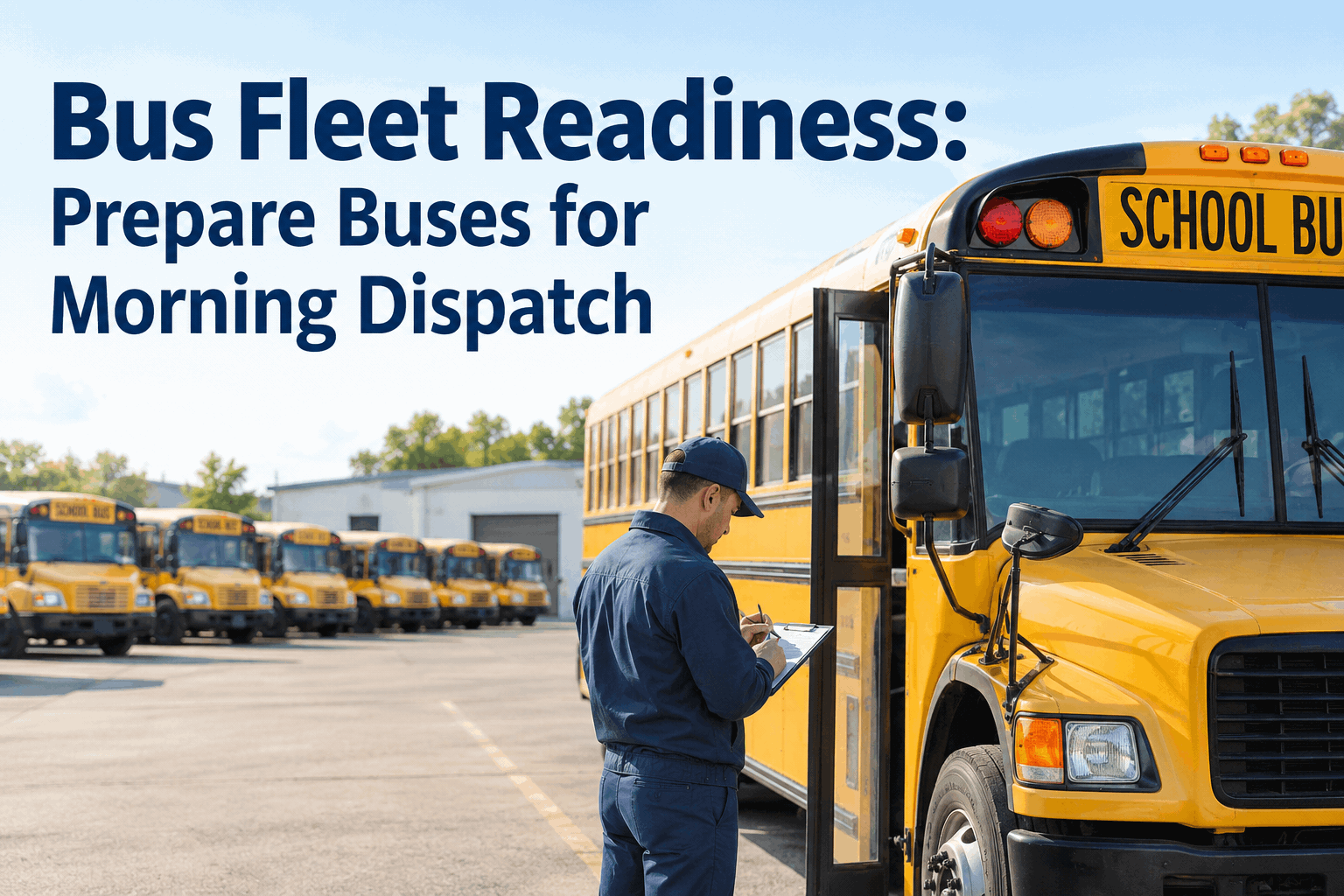
A 120-bus school district in Minnesota discovered that its fleet was idling an average of 47 minutes per bus per day — waiting for students, warming up in cold weather, and running during layovers. The fuel cost of that idling: $142,000 annually. The engine wear cost: impossible to calculate but significant. The emissions impact: unnecessary. After implementing an idle reduction program with telematics monitoring, driver training, and automatic idle timers, the fleet cut idle time to 14 minutes per bus per day. Annual fuel savings: $99,000. Payback period: 3 months. Idle reduction is the lowest-cost, highest-return fuel-saving strategy available to bus fleets. This guide covers how to measure idle waste, set effective policies, use technology to enforce limits, and train drivers to change behavior.
Bus Idle Reduction: How to Cut Idling Fuel Waste
Measure idle time. Set enforceable policies. Use automatic idle timers. Train drivers. Save thousands per bus annually.
Idle Reduction — Financial Impact
Idle reduction pays for telematics and driver training within months. Every minute of unnecessary idling is visible, measurable waste.
The True Cost of Idling: Fuel + Engine Wear
Idling is not free. A diesel bus consumes 0.5-1.0 gallon per hour at idle. At $4.00 per gallon, that's $2-4 per hour. A bus that idles 30 minutes daily costs $365-730 annually in fuel alone. A 100-bus fleet idling 30 minutes daily: $36,500-73,000 annually. But fuel is only part of the cost. Idling causes engine wear without moving the bus. Low idle oil pressure increases bearing wear. Incomplete combustion causes cylinder glazing. Carbon buildup in EGR systems and DPF. Cummins estimates that 1 hour of idle time causes equivalent engine wear to 30-60 miles of driving. Extended idling also shortens oil life, increases DPF regeneration frequency, and wears turbo seals. The total cost of idling is 2-3x the fuel cost alone when accounting for accelerated maintenance.
Annual Idle Cost per Bus (Fuel Only, $4.00/gal diesel)
Add 50-100% for engine wear, oil degradation, DPF impacts, and maintenance acceleration.
"We measured idle time across our fleet for the first time. The numbers were shocking — average 52 minutes per bus daily. The fuel waste alone was $178,000 annually. But the real surprise was engine wear. Our top-idling buses had 30% shorter engine life and required DPF cleaning twice as often. Idle reduction isn't just about fuel. It's about avoiding accelerated engine replacements."
Why Buses Idle: Understanding the Root Causes
Buses idle for four primary reasons. Cold weather warm-up: drivers believe engines need extended warm-up. Modern diesel engines need 2-3 minutes maximum — longer idling is unnecessary. Student loading/unloading: buses idle while waiting for students. Some states limit school bus idling to 5 minutes at stops. Route layovers: transit buses idle between runs. Drivers idle for comfort (heating/cooling) rather than shutting down. Driver habit: drivers who learned on old engines believe idling is required. The solution differs by cause. Cold weather: use electric block heaters and bunk heaters (plug in overnight). Student loading: enforce 5-minute idle limits with automatic shutdown. Layovers: train drivers to shut down beyond 5 minutes. Driver habit: education and idle monitoring reports.
Idle Cause & Solution
Contrary to popular belief, idling does NOT warm a diesel engine faster than gentle driving. Driving under light load warms the engine 2-3x faster than idling. Limit warm-up to 2-3 minutes maximum.
Measuring Idle Time: You Can't Reduce What You Don't Measure
Idle measurement requires telematics or direct CAN bus connection. Basic GPS tracks location but not engine runtime. Telematics systems read engine ECU data: total runtime, idle runtime, moving runtime, and idle percentage. Calculate idle percentage = idle time ÷ total runtime. A well-managed fleet has idle percentage under 15%. Typical fleets without idle management have 25-40% idle percentage. Set baseline idle time per bus before starting reduction program. Track idle time per bus and per driver. Idle reports should show: bus number, driver, date, total engine hours, idle hours, idle percentage, and estimated fuel wasted. Share reports with drivers weekly. Gamify: publish best and worst idle performers (anonymous or named). Fleets that measure and report idle time see 30-50% reduction within 90 days.
Idle Percentage Benchmarks (Diesel Buses)
Calculate idle percentage weekly. Share with drivers. Celebrate improvements. Set fleet targets (e.g., reduce from 25% to 15% in 6 months).
Idle Reduction Technologies: Automatic Idle Timers
Automatic idle timers are the most effective idle reduction tool. These devices (or software settings) automatically shut down the engine after a preset idle period — typically 5 minutes. The driver receives a warning (audible beep or dashboard message) before shutdown. The engine can be kept running by pressing a override button (for legitimate needs: extreme weather, PTO operation). Idle timers eliminate forgetful idling and enforce policy without confrontation. Most 2007+ diesel buses have programmable idle timers in the engine ECU — no additional hardware required. Ask your dealer or maintenance software provider to enable and set the timer. For older buses, aftermarket idle timers cost $200-500 installed. Payback: 2-6 months from fuel savings alone.
No Idle Timer — Typical Results
Drivers forget to shut down — extended idle events common
Policy enforcement difficult — no automatic compliance
Idle percentage typically 25-40%
Idle reduction requires constant driver reminders
$26,000-$104,000 annual waste per 100 buses
Some states require automatic idle timers on school buses by law.
With 5-Minute Automatic Idle Timer
Engine shuts down automatically at 5 minutes idle
Driver override for legitimate needs (PTO, extreme temps)
Idle percentage typically 10-15%
Reduction enforced by hardware, not reminders
Annual savings: $15,000-$60,000 per 100 buses vs no timer
Cost of enabling idle timer: $0–$500 per bus. Payback: 2-6 months.
Cold Weather Idling: Block Heaters vs Engine Idling
Cold weather is the #1 excuse for excessive idling. Drivers say "the engine needs to warm up" and "I need to keep the cabin warm." Both are solvable without idling. Solution for engine warm-up: electric block heaters (immersion heaters installed in engine block). Plug bus in overnight (2-4 hours before first start). Engine coolant and oil are pre-warmed to 80-100°F, allowing near-instant starting and reduced wear. Block heater consumes electricity ($0.50-1.00 per night) vs idling consumes 0.5-1.0 gallons ($2-4 per hour). Solution for cabin warmth: electric bunk heaters (parking heaters) that run on electricity (when plugged in) or diesel-fired coolant heaters (Espar, Webasto) that consume 0.1 gallon per hour — 5-10x less than engine idling. Fleets in cold climates that switch from idling to block heaters + bunk heaters save $500-1,500 per bus annually.
Cold Weather Warm-Up — Idling vs Alternatives
Block heater cost: $200-500 installed. Bunk heater cost: $1,500-3,000. Payback: 1-3 winters.
"Our drivers insisted on 20-minute warm-ups on winter mornings. We installed block heaters on all buses — $12,000 total cost — and set idle timers to 3 minutes max. Drivers were skeptical until they saw that block-heated buses started instantly at -10°F. Annual fuel savings from reduced idling: $28,000. Block heaters paid for themselves in five months."
Driver Training & Idle Reduction Policy
Technology alone is not enough. Drivers need to understand why idle reduction matters and what is expected. Write a clear idle reduction policy: maximum idle time (e.g., 5 minutes). Exceptions: extreme cold (below 10°F), PTO operation, traffic conditions. Consequences for repeat violations: coaching, written warning, route reassignment. Train drivers on: modern engines need 2-3 minute warm-up only. Block heaters eliminate cold-start idle. Idle timers are not punishment — they protect the engine. Show them idle cost calculations (real numbers for your fleet). Publish idle reports weekly — not to shame, but to recognize improvement. Gamify: reward drivers with lowest idle percentage each month (gift cards, preferred routes). Positive reinforcement works better than punishment. Fleets with active driver engagement see 50-70% idle reduction within 6 months.
Idle Reduction Policy Template
Fleet Expert Review
Idle reduction is the lowest-hanging fruit in fleet fuel management. The technology exists — automatic idle timers are standard on most post-2007 diesel buses. The measurement tools exist — telematics and engine ECU data provide idle reports per bus and per driver. The driver training exists — every driver can learn eco-driving and idle reduction. The only missing piece is management attention. Fleets that prioritize idle reduction see 40-70% reduction within six months. The savings are immediate and permanent. A fleet that reduces idle time by 30 minutes per bus daily on 100 buses saves $36,500-73,000 annually in fuel alone — plus reduced engine wear, longer oil life, fewer DPF regenerations, and lower emissions. Idle reduction pays for itself faster than any other fuel-saving strategy. There is no excuse for unnecessary idling in 2026.
The Bottom Line
Idling is visible, measurable, controllable waste. Every minute a bus idles unnecessarily burns fuel, wears the engine, and costs money. The solution is a three-part program: measure idle time per bus and per driver using telematics. Set enforceable policies with automatic idle timers (5 minutes maximum). Train drivers on why idle reduction matters and how to use block heaters and bunk heaters. The results: 40-70% idle reduction, $30,000-100,000+ annual fuel savings for a 100-bus fleet, extended engine life, reduced DPF maintenance, and lower emissions. BusCMMS tracks idle time per bus and per driver, generates weekly idle reports, integrates with telematics for real-time monitoring, and documents driver training completion. Every unnecessary idle minute adds cost. Stop paying for idling.
Every Idle Minute. Every Driver. One Dashboard.
Idle tracking per bus and driver, automatic reports, idle timer integration, training documentation. Cut idle waste 50% or more. Free 14-day trial.
Frequently Asked Questions
How much fuel does a school bus use idling per hour?
Does idling damage a diesel bus engine?
How long should you idle a diesel bus to warm it up?
What is a good idle percentage for a bus fleet?
Can BusCMMS track idle time per driver and per bus?
What is the payback period for installing automatic idle timers?
Diesel + Electric + CNG. All Fuel Types. One System.
Idle tracking for diesel and CNG. Charge management for electric. All powertrains. All idle waste eliminated. Free 14-day trial.