A CNG cylinder inspection lands in the queue, and you glance at the board: which of your techs is actually qualified to do it, and is their certification still current? If that answer lives in someone's head or a drawer, the wrong person does the work — or nobody does. Book a demo of qualification tracking to see how CNG and propane bus technician training records drive the assignment.
ALTERNATIVE-FUEL WORKFORCE
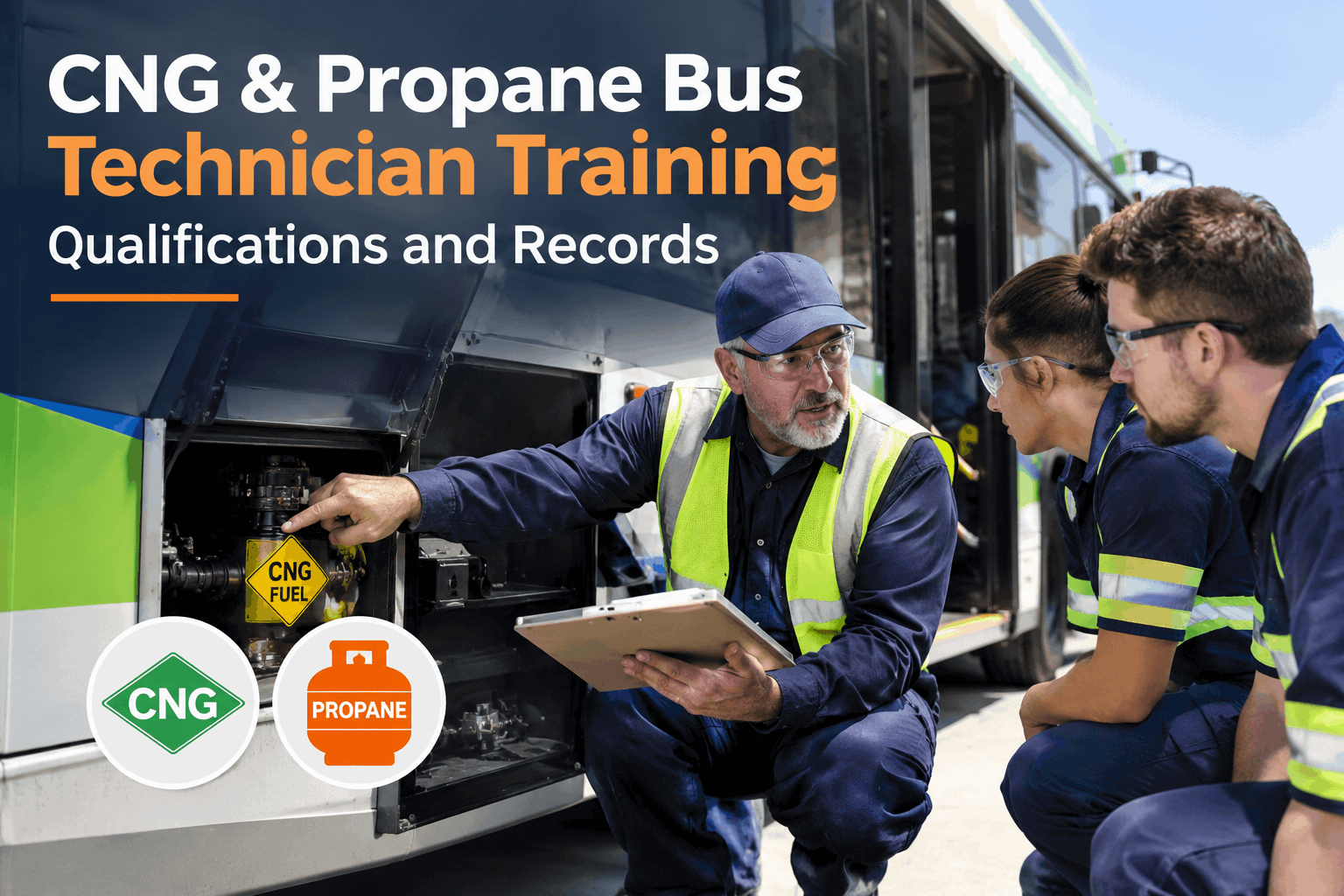
CNG & Propane Bus Technician Training: Qualifications and Records
CNG and propane bus technician training is only half the job — the other half is knowing who holds which qualification and when it expires. Here is what the training covers, how the records work, and how a skill matrix turns qualifications into the right work assignment.
5 yrvalidity of some CNG inspector certifications (Cummins/AFVi)
80%passing score on that certification exam
2 fuelsCNG and propane, each with its own training track
01 · WHY IT MATTERS
Why alt-fuel work needs its own training
An experienced diesel tech is not automatically a CNG or propane tech. The chassis carries over; the fuel system does not. These are the areas where alt-fuel work demands training a diesel career never provided.
High-pressure & gaseous fuelCNG runs at thousands of psi and propane is a pressurized liquid — both behave nothing like diesel in a tank, and both demand specific safety training.
Cylinder inspection skillsCNG cylinder inspection is a trained, detailed visual skill — using depth gauges to assess damage — not something picked up on the job.
Spark ignition & electronicsPropane and CNG engines use spark ignition and electronic controls — plugs, coils, and fuel electronics a diesel specialist hasn't worked on.
As propane and CNG bus sales rise, so does the demand for certified technician programs — and the need to prove, on paper, who in your shop holds which qualification.
02 · THE LIFECYCLE
A qualification isn't a one-time stamp — it's a lifecycle
The reason qualifications need tracking, not just filing, is that they move through stages and expire. Miss the renewal and a tech who was qualified last year is now assigned to work they can no longer certify.
Validity periods vary by program — some CNG inspector certifications run five years — so confirm each one against its issuing body. A quick demo shows how expiry dates surface before they lapse.
03 · THE CHECKLIST
The technician qualification records checklist
These are the records that turn training into a defensible assignment decision. Keep them current per tech and the question "who can do this job?" has an instant, auditable answer.
Qualification held, per tech per fuelRecord which CNG and propane qualifications each technician holds — fuel-system, cylinder inspection, high-voltage — not just "alt-fuel trained."
CORE
Issue and expiry dates loggedEvery certification carries a date and a validity period. Log both so a renewal window surfaces before the qualification lapses.
CORE
Issuing body and scope recordedNote who issued it and what it covers — an inspection cert and a repair qualification are different scopes, and the record should say which.
CORE
Assignment tied to qualificationRoute fuel-system work to someone whose record shows the matching, current qualification — so the right skill does the right job.
APPLY
Renewal reminders ahead of expiryA flag weeks before a cert expires gives time to schedule the refresher — no scramble, no gap where no one is qualified.
APPLY
Training history kept per techA dated record of courses and certifications shows a tech's growth and backs up the assignment decision in a review.
APPLY
On a spreadsheet these dates fall out of sight until they're past. As a free technician record set keeps them live, an expiring qualification flags itself and the skill matrix stays true.
04 · THE LANDSCAPE
Where the training comes from
You don't build this training in-house — a mature ecosystem of providers already does. Your job is choosing the right track per fuel and recording what your techs complete.
Fuel-neutral & industryConsortia and institutes offer CNG and propane technician and safety courses, inspector training, and certification exams for both fuels.
OEM & system suppliersBus makers and fuel-system suppliers run their own programs — propane autogas training and CNG master-tech qualifications tied to their systems.
Certification bodiesIndependent certifications — CNG fuel system inspector, transit-bus CNG engine endorsements — give a recognized, exam-backed credential.
Providers and exact credentials vary by region and change over time; confirm current programs with each body. Whatever track your techs take, a demo of record-keeping shows how the completions and dates live in one place.
The boardshould answer "who's qualified?" without a phone call
"I used to keep certs in a filing cabinet and the expiry dates in my head. Then one lapsed and I had a cylinder inspection with nobody current to sign it. Now the matrix tells me who's qualified and who's about to expire — I schedule the refresher before it's a problem."
— Fleet maintenance director, CNG and propane fleet
05 · THE SYSTEM
How BusCMMS turns qualifications into assignments
BusCMMS is built for bus fleets, not adapted from trucking software. It keeps each technician's training and qualification records current, tracks the expiry dates, and ties the assignment to the skill — so training actually drives who does the work.
Qualification & training recordsA record per tech of which CNG and propane qualifications they hold, with the training history behind each one.
Certification date trackingIssue and expiry dates logged per certification, so a renewal window surfaces well before the qualification lapses.
Skill-based work assignmentSupport assignment decisions with the recorded skills, so fuel-system work routes to a qualified, current technician.
Documented maintenance workEvery job records who did it and their qualification — so the work and the credential sit together for an audit.
However many techs and fuels you run, the qualifications stay visible and the assignments stay defensible. Book a walkthrough and we will set your technician skill matrix up.
06 · THE RECAP
Key takeaways for CNG and propane technician training
1
Diesel skill doesn't transferHigh-pressure gas, cylinder inspection, and spark-ignition electronics all need training a diesel career never provided.
2
Qualifications expireA certification is a lifecycle, not a stamp — track the expiry so a tech who was qualified isn't quietly out of date.
3
The matrix drives the assignmentA skill matrix turns "who can do this?" into an instant answer and routes work to the right qualified tech.
4
The record defends the decisionA dated qualification and training history is what proves the right person did the fuel-system work.
CNG and propane technician training FAQs
What training do CNG and propane bus technicians need?
Training in high-pressure and gaseous fuel safety, fuel-system diagnostics and repair, and cylinder inspection, plus the spark-ignition and electronic controls these engines use. CNG and propane each have their own tracks.
Can a diesel technician work on CNG or propane buses?
Not without additional training. The chassis work carries over, but the high-pressure fuel systems, cylinder inspection, and spark ignition are new skills that require specific courses and, often, a certification.
Do CNG technician certifications expire?
Many do. Some CNG fuel-system inspector certifications are valid for a set period, such as five years, after which the technician must renew. Tracking the expiry date is essential so no one works past their current qualification.
What is a technician skill matrix?
It's a grid of your technicians against the qualifications they hold, with status and expiry. It lets you see at a glance who is qualified and current for a given CNG or propane job, and who is coming up for renewal.
How does BusCMMS help manage technician qualifications?
It keeps each tech's qualification and training records, tracks certification issue and expiry dates, and supports routing work to a qualified, current technician. It records who did each job alongside their credential for audits.