A CNG bus comes in for a fuel-system repair, and the first question isn't which wrench — it's whether that bus should be defueled at all, and who's qualified to do it. Get that decision wrong and you've either wasted hours of fuel or put a tech next to 3,600 psi of gas. Book a demo of maintenance documentation to see how CNG bus defueling and its approvals get recorded per job.
CNG FUEL-SYSTEM SAFETY
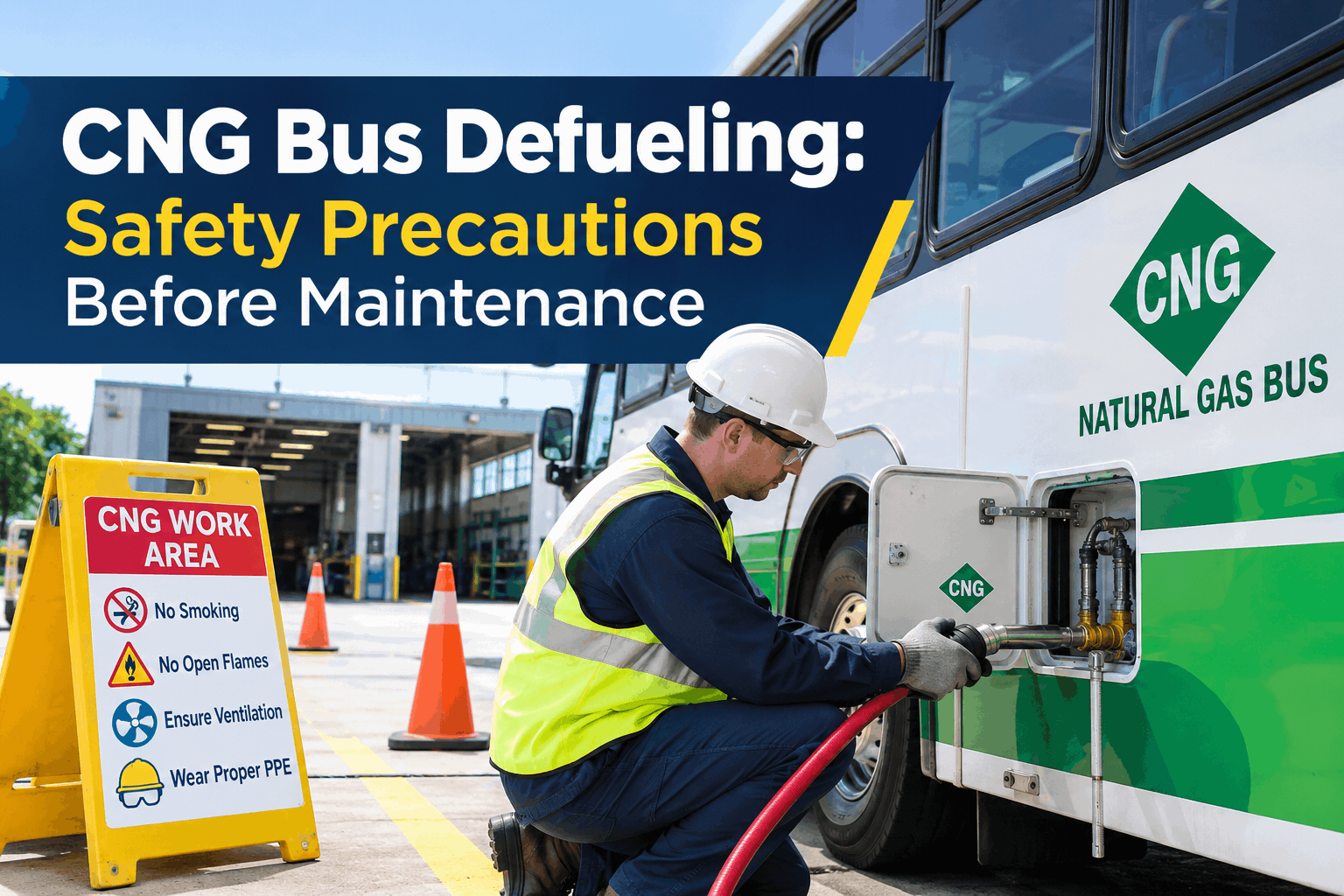
CNG Bus Defueling: Safety Precautions Before Maintenance
CNG bus defueling is a qualified-technician task, not a shortcut — and often not even necessary. Here is how to tell whether a job needs defueling, depressurizing, or neither, the precautions that apply, and how to document the approved procedure.
Qualifiedonly CNG-trained personnel may defuel (NHTSA/OEM)
Neverdefuel indoors, per OEM safety rules
Toweda defueled bus is immobile and must be towed
This is a planning and documentation guide, not a procedureDefueling and fuel-system work on a CNG bus must be performed only by qualified, trained CNG technicians following the vehicle OEM's published procedure and your facility's safety policies. Attempting it without proper training is dangerous. The steps that follow are principles for deciding, planning, and recording the work — not a substitute for OEM instructions or certified training.
01 · THE FIRST DECISION
Defueling is a last resort, not a default
The instinct to defuel every bus before indoor work is understandable — and usually wrong. Industry guidance is clear that defueling is time-consuming, wasteful, and introduces its own hazards, so it's reserved for the jobs that genuinely require it.
No isolationRoutine work away from the fuel system and with no hot work needs no defueling or depressurizing at all.
DepressurizeWork on or near the fuel system that doesn't open a cylinder calls for relieving system pressure first — not full defueling.
Full defueling applies only when high-pressure fuel-system work is required and pressure isolation isn't possible — cylinder or valve service, or after an accident or fire.Full defueling
Never bring a leaking CNG vehicle into a building, and after any accident or fire the cylinders and system must be examined by a qualified inspector before service.
02 · THE PRINCIPLES
The basic safety rules every defueling follows
When defueling is required, OEM bulletins converge on the same core rules. These are the principles your qualified techs work to — and the points your written procedure and training should cover.
1
Qualified personnel onlyOnly CNG-trained, qualified technicians attempt defueling, following the OEM procedure for that fuel system.
2
Minimize pressure firstConsume as much fuel as possible — drive the bus to near-empty — before defueling, rather than venting a full system.
3
Never defuel indoorsDefueling happens outdoors in a well-ventilated area, away from ignition sources and occupied spaces.
4
Ground the vehicleAlways ground the vehicle and fuel system; static electricity and arcing are ignition sources for natural gas.
5
Lock out the ignitionAttach a lock and tag to block vehicle start during the work — removing the ignition key can lock out the fuel system.
6
Notify and containNotify nearby personnel before starting, and capture removed fuel only in an approved storage container.
These are principles, not a work instruction — the exact valves, tools, and sequence come from your OEM manual. What a shop controls is making sure the right people do the work and that it's recorded, which a free work-order system makes routine.
03 · THE RECORD
The documentation checklist for a CNG fuel-system job
Whatever the OEM procedure requires, these are the records that prove a defueling or fuel-system job was done right and by the right person. Run them as a digital work order and nothing lives on a loose sheet.
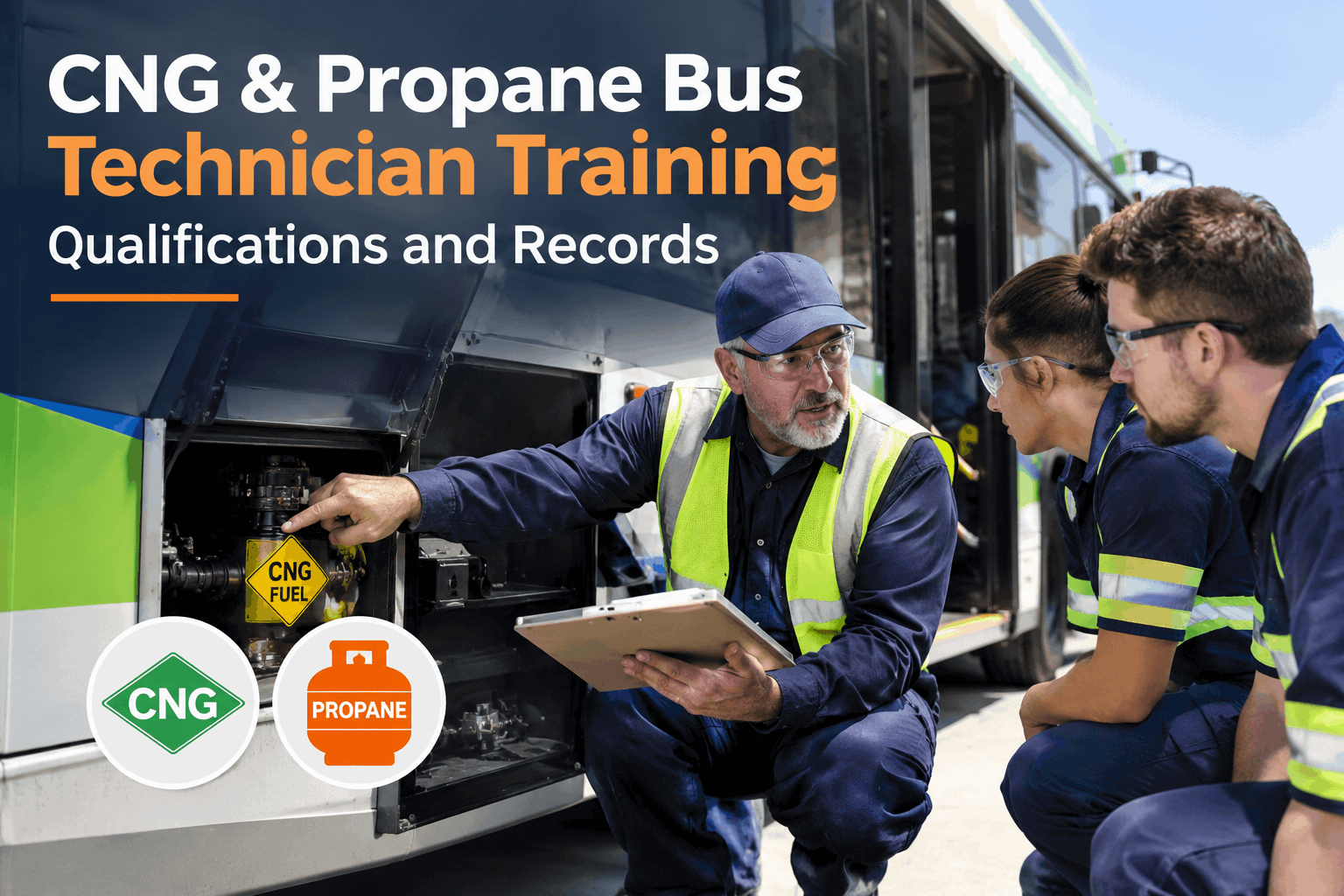
Qualified technician assigned and recordedThe work order names a CNG-qualified tech, so there's a record that the right person — not just any mechanic — did the fuel-system work.
CRITICAL
Approved OEM procedure attached to the jobLink the OEM bulletin or facility procedure to the work order, so the tech works to the current approved document, not memory.
CRITICAL
Decision logged: defuel, depressurize, or neitherRecord which isolation level the job needed and why, so the call is traceable and consistent across techs and shifts.
CRITICAL
Findings and parts documentedCapture what was found, what was replaced, and any defect noted — itemized apart from the routine task for clean records.
RECORD
Post-accident inspection flagged if applicableIf the bus was in an accident or fire, the record shows a qualified inspector examined the cylinders and system before return to service.
RECORD
Job closed with a dated service recordA signed, dated entry per bus means the whole fuel-system history is one lookup away for an audit or the next tech.
RECORD
BusCMMS doesn't defuel the bus or replace the OEM procedure — it makes sure the qualified person is assigned, the approved document is attached, and the record exists. A demo of fuel-system work orders shows how that comes together.
04 · WHEN IT'S REQUIRED
The jobs that genuinely need full defueling
Most fuel-system work needs depressurizing, not defueling. These are the cases where industry guidance says full defueling by a qualified tech is the right call.
Cylinder service or replacementAny work that opens or removes a cylinder requires the system empty — cylinders are replaced only by a qualified service facility.
Valve or PRD removalRemoving a pressure relief device or cylinder valve requires defueling, disconnecting lines first, and keeping clear of the valve's line of travel.
After an accident or fireA bus involved in an accident or fire must have its cylinders and system examined by a qualified inspector — book a demo to see how that inspection flag is tracked — before any return to service.
Isolation isn't possibleWhen high-pressure work can't be isolated with a valve, the whole system comes down — and the bus is then immobile and must be towed.
Who & whatthe two things a record has to prove on a CNG job
"The gas doesn't scare me — untrained hands on it do. My whole job is making sure the qualified guy gets that work order and the OEM procedure is on it, and that when someone asks later, I can show exactly who did it and what they found."
— CNG shop foreman, transit fleet
05 · THE SYSTEM
How BusCMMS supports safe CNG fuel-system work
BusCMMS is built for bus fleets, not adapted from trucking software. It doesn't perform the procedure — it makes sure the right qualified tech is assigned, the approved document is attached, and every fuel-system job leaves a dated record behind it.
Assign to qualified techsRoute fuel-system work orders to CNG-qualified technicians, so a defueling job never lands with someone untrained.
Attach the approved procedureKeep the OEM bulletin or facility procedure linked to the job, so the tech always works to the current approved document.
Document findings & work ordersCapture the isolation decision, findings, and parts on the work order, itemized apart from routine tasks.
Dated service historyEvery fuel-system job timestamped per bus — so who did what, and when, is one lookup away for an audit or incident review.
However your CNG shop is set up, the right person, the right document, and the record stay together. Book a walkthrough to see how fuel-system jobs get assigned and recorded.
06 · THE RECAP
Key takeaways for CNG bus defueling safety
1
Decide before you touch the busMost jobs need depressurizing or nothing — full defueling is a last resort for high-pressure work that can't be isolated.
2
Qualified techs, OEM procedureOnly trained CNG personnel defuel, working to the vehicle OEM's published procedure — never from memory or a generic guide.
3
The rules are non-negotiableMinimize pressure first, never indoors, ground the vehicle, lock out the ignition, notify, and contain the fuel.
4
The record proves itA dated work order showing who did the job and what they found is what stands up in an audit or an incident review.
CNG bus defueling FAQs
What is CNG bus defueling?
It's the controlled removal of compressed natural gas from a bus's fuel system before certain high-pressure maintenance. It's a qualified-technician task done to the OEM procedure, and it leaves the bus immobile until refueled.
Does every CNG bus need defueling before maintenance?
No. Most work needs only depressurizing the lines, or no isolation at all if it's away from the fuel system. Full defueling is reserved for high-pressure fuel-system work that can't be isolated, like cylinder or valve service.
Who is allowed to defuel a CNG bus?
Only trained, qualified CNG fuel-system technicians, working to the vehicle OEM's published procedure and the facility's safety policies. Attempting it without proper training is dangerous and against manufacturer guidance.
What are the basic CNG defueling safety rules?
Minimize pressure by running the bus near-empty first, never defuel indoors, ground the vehicle and fuel system, lock out the ignition, notify nearby personnel, and capture removed fuel only in an approved container.
How does BusCMMS help with CNG defueling and maintenance?
It assigns fuel-system work to qualified techs, keeps the approved OEM procedure attached to the job, documents the isolation decision and findings, and maintains a dated service record per bus. It supports the process; it doesn't replace OEM procedures or training.