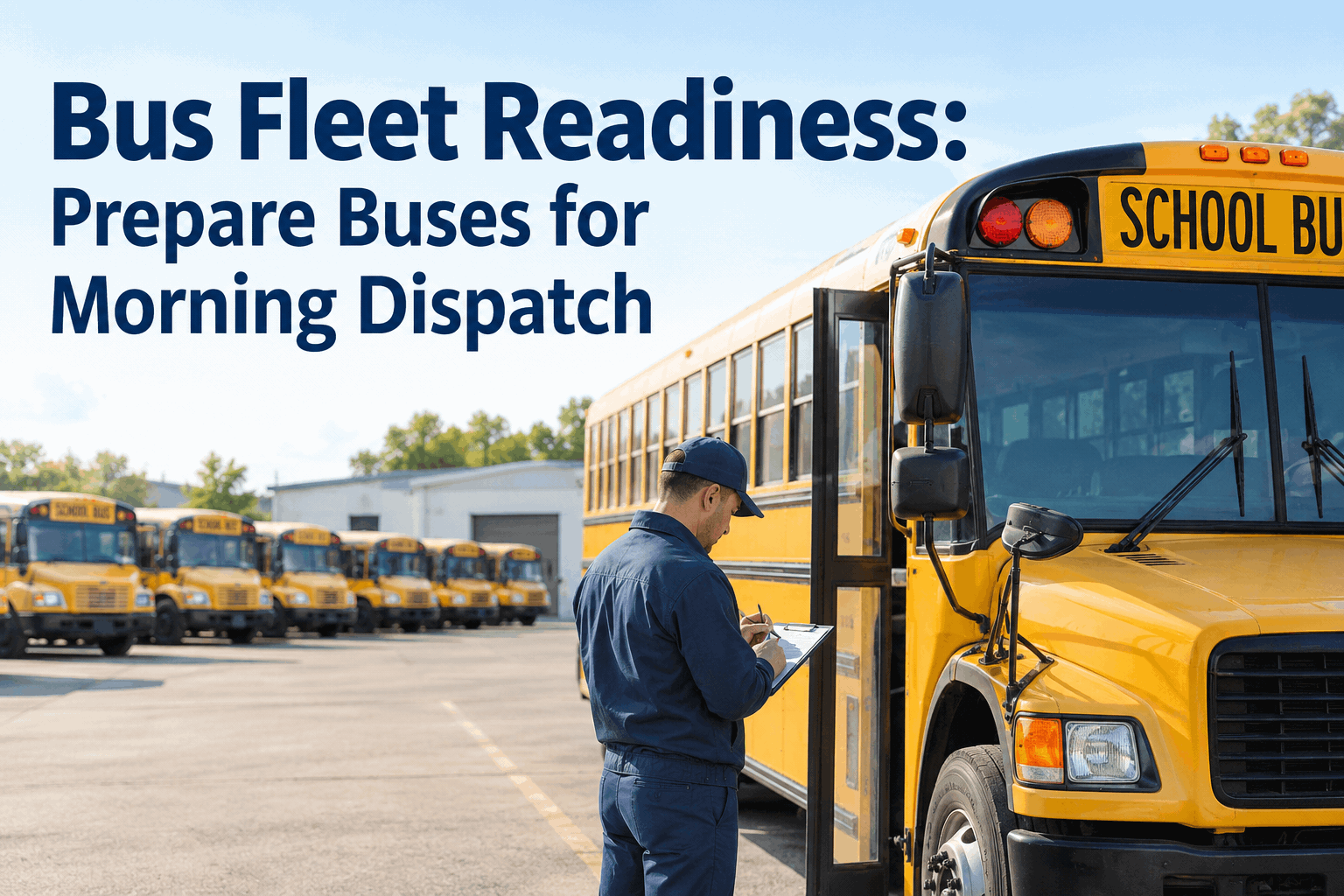
It's July 28th. First day of school is August 19th. Twenty-two days to complete state inspections on 63 buses, replace brake systems on seven vehicles flagged during spring maintenance, finish the transmission rebuild on Bus 34 that's been waiting for parts since June, and somehow squeeze in driver refresher training. Your predecessor always said August was manageable with proper planning. Your predecessor also retired to Florida and isn't answering your calls.
Every transportation director faces this same compressed timeline between summer maintenance season and first-day readiness. The difference between districts that achieve 100% on-time starts and those scrambling to rent buses at premium rates comes down to how effectively their CMMS turns chaos into coordinated execution. These seven hacks won't add hours to your day, but they will eliminate the time-wasting friction that derails back-to-school preparation.
47% of school districts report at least one bus unavailable on first day
$3,800 average cost of emergency bus rental for first week
6.2 hours wasted weekly on manual CMMS tasks that could be automated
Hack #1: Run the "Ghost Bus" Report Before You Sleep
Hidden in your CMMS database right now are buses your system thinks exist but can't physically be found. Maybe Bus 18 was sold to another district in May. Perhaps someone fat-fingered the asset transfer and Bus 52 appears twice. These phantom vehicles create inspection confusion, throw off parts ordering calculations, and waste technician time when work orders route to nonexistent assets.
What to Do Tonight
Generate your active fleet roster from CMMS and physically verify every asset. Walk the lot with a clipboard—old school works. Any bus on the list that isn't parked in your yard gets flagged for archive or deletion. Bonus points: photograph each bus with a date stamp and attach the image to its CMMS profile. When the state inspector asks about Bus 27's current location, you'll have proof it exists and is inspection-ready.
Time Saved: 4-6 hours of inspection scheduling conflicts and work order rerouting
This also reveals another common issue—buses still showing "in service" status that haven't moved since June because they're waiting for major repairs. Your August 1st fleet count needs to reflect operational reality, not aspirational thinking. If Bus 34's transmission rebuild won't complete before August 15th, that bus shouldn't appear on your first-week route assignments. Modern CMMS platforms let you flag vehicles as "maintenance hold" while keeping them in the system for historical tracking.
Hack #2: Batch Work Orders by Inspector, Not by Bus
Most districts schedule state inspections sequentiallyBus 1, then Bus 2, then Bus 3. This feels organized but creates bottlenecks when Inspector Rodriguez is available Tuesday through Thursday while Inspector Chen only works Wednesday and Friday. Your CMMS can optimize this if you stop thinking chronologically and start thinking strategically about inspector availability.
1 List all certified inspectors and their available hours through August 18
2 Calculate total inspection hours needed (typically 1.5 hours per bus including documentation)
3 Batch buses into groups matching each inspector's schedule blocks
4 Create work orders assigned to inspector names, not technician IDs
5 Let your CMMS auto-schedule based on inspector availability and vehicle readiness
The result? Instead of Bus 23 sitting idle for three days waiting for Chen's next shift, it gets inspected by Rodriguez who has availability tomorrow. Your completion rate accelerates without adding inspector hours or working weekends. Districts using this approach complete inspection cycles 40% faster than those scheduling sequentially.
Hack #3: Set Up "Parent Notification" Failure Alerts
Not all maintenance failures are created equal. An oil leak discovered during routine inspection creates a work order for your shop. A bus breaking down on the first morning route with 54 students aboard creates a parent relations crisis that reaches the school board by lunchtime. Your CMMS should distinguish between these scenarios and escalate accordingly.
CRITICAL: En Route Failure
Bus breaks down with students aboard during route service. Triggers immediate notifications to transportation director, superintendent's office, and communications team. Work order priority automatically elevates to P1 with mandatory 2-hour status updates.
HIGH: Pre-Route Failure
Bus fails driver pre-trip inspection within 2 hours of scheduled departure. Triggers backup bus assignment protocol and transportation director notification. Requires same-day resolution or route coverage plan by 3pm.
STANDARD: Maintenance Discovery
Issue identified during shop inspection or routine maintenance. Follows normal work order prioritization. Resolution scheduled based on parts availability and shop capacity without emergency escalation.
Configure these alert tiers in your CMMS before August 1st, not after you're managing your first crisis. The setup takes 20 minutes. The value appears when Bus 12 throws a check engine light at 6:42am on August 19th and your backup protocols activate automatically instead of waiting for someone to notice and manually coordinate response.
Don't face back-to-school chaos with last year's systems. Get your CMMS configured for first-week readiness with automated alerts, batch scheduling, and real-time fleet visibility that actually works when pressure hits.
Set Up Free Account Book DemoHack #4: Pre-Load First Week's Preventive Maintenance Into Next Month
Here's the trap: your CMMS shows 12 buses due for oil changes the week of August 19th. Technically accurate—they hit their 5,000-mile service interval right around first day of school. Practically suicidal—those buses need maximum reliability during the most stressful week of the year, not scheduled downtime for routine maintenance.
The fix requires breaking a sacred rule of preventive maintenance: you're going to perform service early. Not months early—that wastes money and parts. But 2-3 weeks early, completing first-week PM schedules during the calm of early August rather than the chaos of late August.
Original Schedule: Bus 7, Bus 19, Bus 23, Bus 31, Bus 38, Bus 42 all due for oil/filter service August 19-26
Adjusted Schedule: All six buses serviced August 5-9, pushing next service interval to September 23-30
Trade-off: You perform service 14 days early (minimal waste) to ensure vehicles operate without scheduled interruption during critical first week
Your CMMS should let you bulk-adjust PM schedules without losing interval tracking. Good systems preserve the original schedule date in historical records while updating next service dates forward. This matters for warranty compliance and audit trails—you want documentation showing intentional early service, not missed schedules.
Apply this same thinking to brake inspections, air system checks, and any other scheduled maintenance that would naturally fall during first week. Create a "dead zone" from August 19-30 where only emergency repairs happen and routine maintenance is either completed beforehand or deferred until September. Want to see how BusCMMS handles PM schedule adjustments? Book a 15-minute demo and we'll show you the exact workflow.
Hack #5: Build Your "Nuclear Option" Rental Matrix
Optimism says you'll have full fleet availability on August 19th. Experience says at least one bus will fail inspection at the last minute or suffer an unforeseen breakdown. Hope for 100% readiness but prepare for 94% readiness—which means having rental options pre-negotiated and documented in your CMMS for instant activation.
Vendor A: Quick Transit Rentals
Contact: Mike Chen, (555) 0123
Availability: 3 buses, 24-hour notice
Rate: $285/day, 5-day minimum
Insurance: Included, $500 deductible
Vendor B: Regional Bus Leasing
Contact: Sarah Johnson, (555) 0456
Availability: 5 buses, 48-hour notice
Rate: $240/day, weekly rate $1,200
Insurance: Separate, district covers
Vendor C: Emergency Fleet Services
Contact: James Rodriguez, (555) 0789
Availability: 2 buses, same-day possible
Rate: $350/day, no minimum
Insurance: Included, no deductible
Store this matrix in your CMMS as equipment vendor records with attached contact sheets and rate structures. When Bus 23 fails final inspection on August 17th, you're making one phone call based on pre-negotiated terms rather than cold-calling rental companies at emergency rates. Transportation directors who pre-arrange backup coverage pay 30-40% less than those negotiating during crises.
Hack #6: Deploy Driver Pre-Trip Templates in CMMS Mobile
August 19th at 5:30am, 47 drivers conduct pre-trip inspections across your fleet. Some drivers complete thorough checks taking 15 minutes. Others rush through in 4 minutes, signing off without verifying brake function or fluid levels. The inconsistency creates two problems: unreliable safety verification and zero documentation when issues are discovered later.
Your CMMS mobile app should standardize this process through digital pre-trip checklists that drivers complete before releasing any bus for route service. Not complicated multi-page forms—streamlined 12-point checks that take 8-10 minutes and create automatic work orders when issues are flagged.
Standard Pre-Trip Checklist (CMMS Mobile)
Each completed checklist timestamps and geostamps the inspection, creating audit trails that satisfy insurance requirements and liability protection. When a checklist flags an issue—say, Bus 8's brake light is out—the CMMS automatically generates a work order assigned to your shop with priority based on the defect severity. Driver continues inspection knowing the issue is documented and queued for repair.
Roll out this system during driver training in early August. By first day of school, it's muscle memory rather than a new procedure adding stress to already-chaotic mornings. Need driver pre-trip templates configured for your fleet? BusCMMS includes customizable mobile checklists you can deploy in under an hour.
Hack #7: Run Daily "Tomorrow's Failures" Predictions
The most powerful CMMS feature for back-to-school readiness isn't historical reporting—it's predictive analytics that warn you about tomorrow's problems while you can still prevent them. Think of it as weather forecasting for your fleet: knowing a storm is coming lets you prepare rather than react.
If your CMMS integrates with telematics (Zonar, Samsara, Geotab), it's monitoring battery voltage patterns, brake system performance, fluid temperatures, and dozens of other parameters that reveal developing failures. Starting August 10th, run a daily "risk report" showing buses most likely to experience issues in the next 7 days. This gives you a week to address problems proactively instead of three hours to react when they occur on route.
Sample Risk Report - August 10, 2025
Bus 16 - HIGH RISK
Battery voltage declining pattern over 14 days. Predicted failure: August 13-15. Action: Replace battery before August 12.
Bus 23 - MEDIUM RISK
Brake system air pressure build rate slowing. Predicted issue: August 17-20. Action: Inspect compressor and dryer before August 16.
Bus 42 - LOW RISK
Coolant temperature trending slightly high. No immediate action required. Monitor through first week.
Districts using predictive maintenance reduce first-week failures by 68% compared to those relying solely on reactive repairs. The technology exists, the integrations work, and the ROI appears immediately in the form of buses that don't break down when students are aboard.
Twenty-two days until first bell. Your fleet needs more than hope—it needs systems that predict problems, coordinate repairs, and guarantee readiness when parents are counting on you.
Get Your Fleet Ready Talk to ExpertDownload: Complete Back-to-School Readiness Checklist
Want the complete timeline broken down day-by-day from August 1st through first week? Our comprehensive checklist includes inspection scheduling templates, parts ordering timelines, driver training protocols, and emergency response procedures. Available free to transportation directors.
Week 1 (Aug 1-7): Foundation
Ghost bus audit, inspector scheduling, critical parts inventory verification, rental vendor pre-arrangements
Week 2 (Aug 8-14): Execution
Batch inspections begin, early PM completions, predictive risk reports, driver refresher training starts
Week 3 (Aug 15-18): Final Sprint
Complete all inspections, resolve flagged issues, finalize route assignments, deploy mobile pre-trip checklists
Week 4 (Aug 19-25): First Week
Daily morning readiness checks, real-time failure monitoring, backup activation protocols, incident documentation
Frequently Asked Questions
Q: What if my CMMS doesn't have mobile app functionality for driver pre-trip checks?
A: Paper checklists are better than no checklists, but they create documentation and tracking problems. If your current CMMS lacks mobile capability, consider this the forcing function to upgrade before next school year. For immediate needs, drivers can photograph completed paper checklists and text them to your shop, with manual entry into CMMS later—time-consuming but functional.
Q: How do I batch inspections by inspector when my state requires inspectors to sign off personally?
A: The batching strategy doesn't change inspection requirements—it optimizes scheduling around inspector availability. If Inspector Chen is only available Wednesdays and Fridays, you schedule all Chen-assigned inspections on those days rather than having buses wait idle because you're working through the fleet numerically. The inspector still personally inspects and signs off on each vehicle; you've just eliminated scheduling inefficiency.
Q: Is performing preventive maintenance early (Hack #4) really acceptable?
A: Yes, within reasonable bounds. Performing an oil change 2-3 weeks early on a vehicle due at 5,000 miles (completing service at 4,600 miles) is operationally sound and falls well within manufacturer tolerances. What you want to avoid is performing service months early or consistently running vehicles significantly past service intervals. The minor inefficiency of early service is vastly preferable to scheduled downtime during critical first week.
Q: What's the minimum CMMS feature set needed to implement these hacks?
A: You need: work order management with technician assignment, preventive maintenance scheduling with adjustable intervals, mobile access for driver checklists (even basic), vendor contact database, and asset tracking with status flags. Predictive analytics (Hack #7) requires telematics integration—not every district has this, but it's increasingly standard. Most modern CMMS platforms include all these features; legacy systems from 2015 or earlier may struggle.
Q: How much time should I allocate for implementing all seven hacks?
A: Ghost bus audit (Hack #1): 2-3 hours. Inspector batching setup (Hack #2): 4-5 hours. Alert configuration (Hack #3): 30 minutes. PM schedule adjustments (Hack #4): 2 hours. Rental matrix documentation (Hack #5): 1 hour. Driver checklist deployment (Hack #6): 3-4 hours including training. Predictive reports (Hack #7): ongoing daily, 15 minutes per report. Total first-time setup: approximately 15-20 hours spread across early August.