Every "best bus fleet maintenance software" article gives you the same list: Fleetio, Samsara, Verizon Connect, MaintainX. They rank them by star ratings and generic feature counts. But here's what those articles miss: the best CMMS for a 60-bus school district is completely wrong for a 400-vehicle transit agency — and neither works for a charter operator bidding on corporate contracts. A school district needs DOT-compliant DVIRs, wheelchair lift tracking, and state inspection records. A transit agency needs FTA triennial review documentation, NTD reporting, and multi-depot management. A charter operator needs DOT audit trails, FMCSA record keeping, and contract compliance documentation. Generic fleet software — built for trucking, construction, or delivery — lacks all of these. You end up spending $5,000–$15,000 on customization while maintaining parallel manual processes for every requirement the software can't handle. This guide evaluates bus fleet maintenance software by what actually matters: whether it's built for buses, and which type of bus operation it serves best.
The 6 Criteria That Separate Bus CMMS from Generic Fleet Tools
Before comparing any specific product, you need to know what separates purpose-built bus maintenance software from generic fleet management tools. These six criteria are non-negotiable for bus operations — and most generic platforms fail on all six.
Generic platforms score well on basic work orders and parts tracking — but those are table stakes. The six criteria above are what separate software that understands buses from software that tracks "assets." See how BusCMMS scores on all 6 criteria—book a demo.
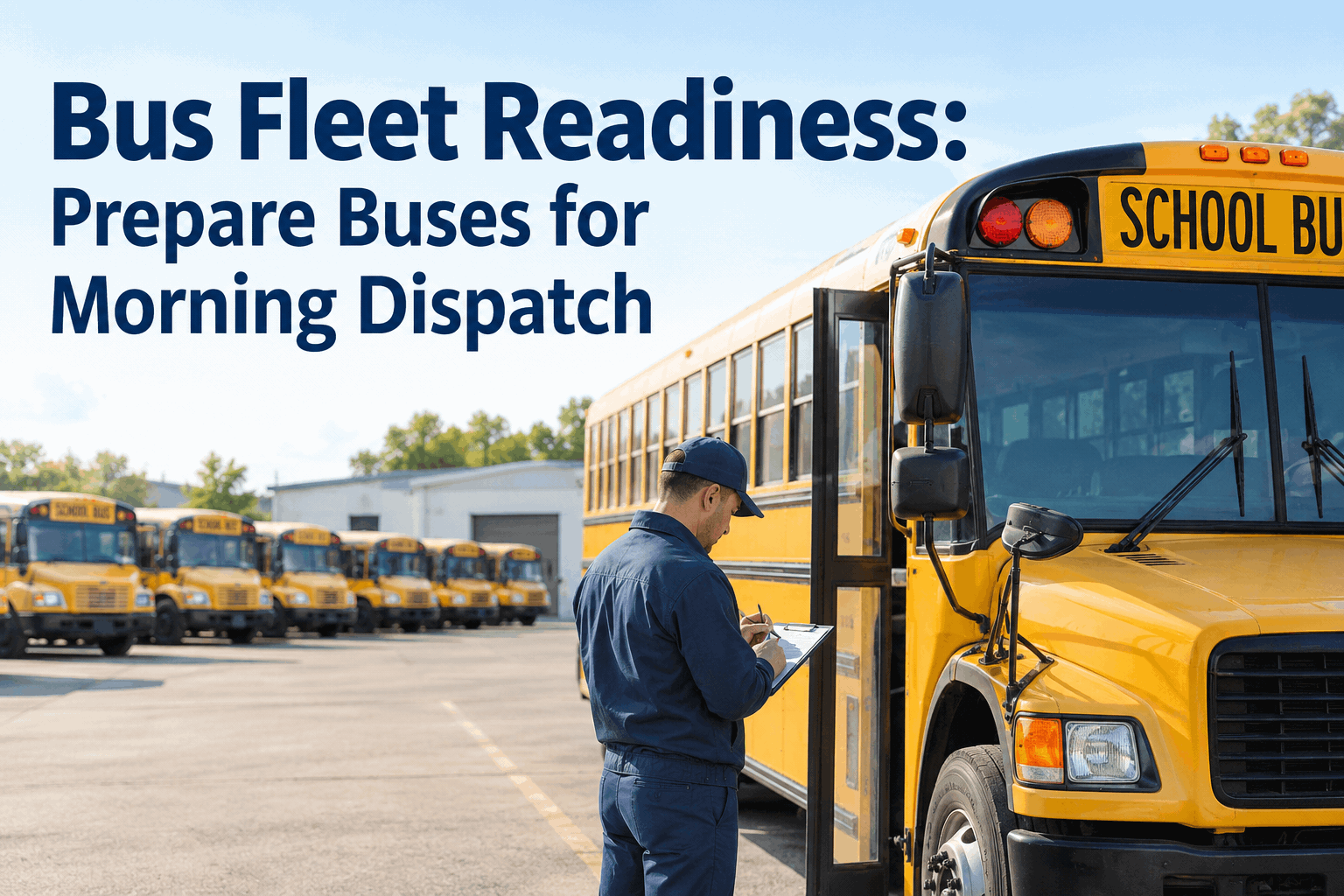
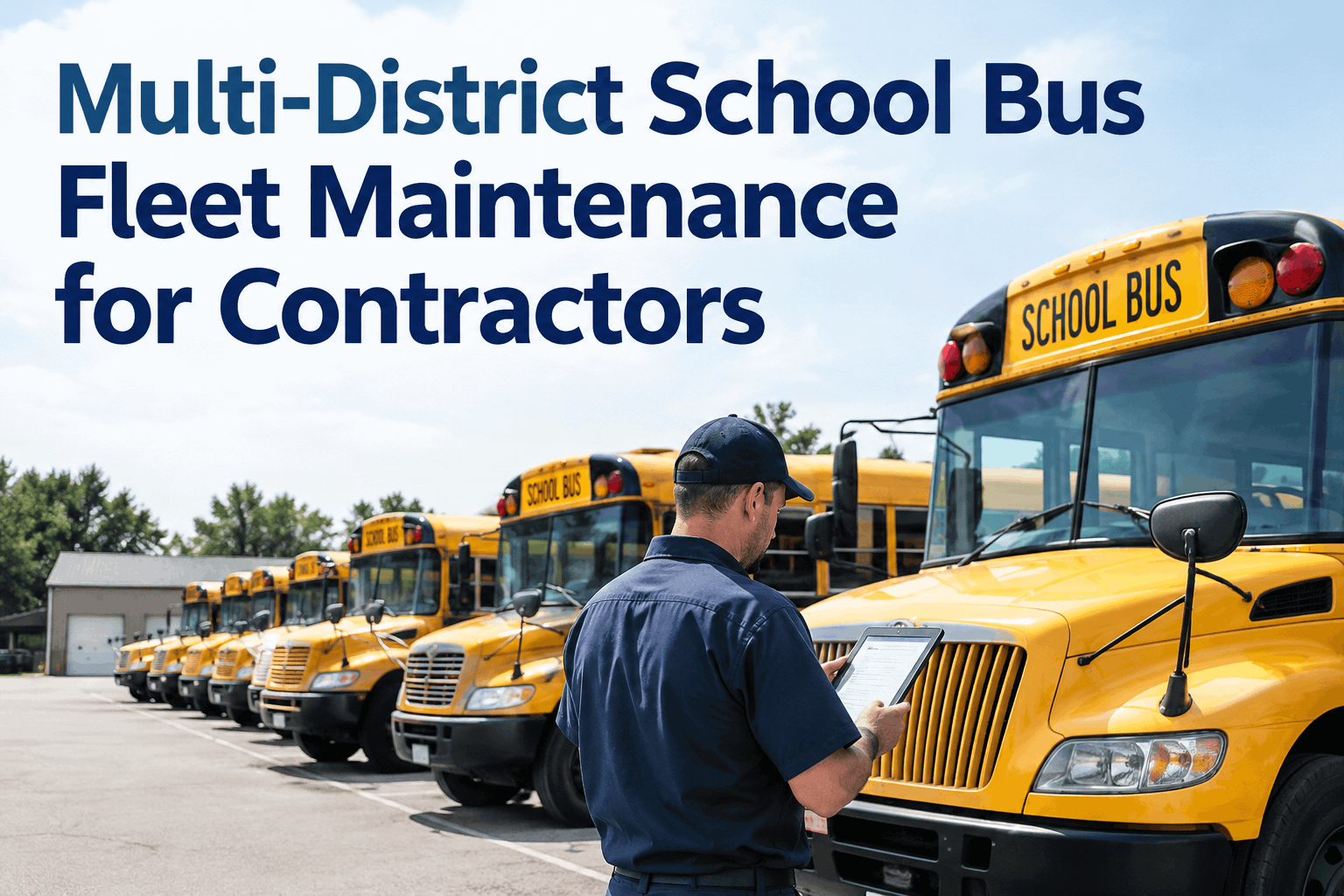
For School Districts
School bus maintenance has a unique pressure: every bus carries children. Compliance isn't optional. Inspections aren't suggestions. And the consequences of a missed defect aren't a late delivery — they're national news.
For Transit Agencies
Transit maintenance is federal compliance at scale. FTA triennial reviews require audit-ready records across every vehicle, every depot, every maintenance event. The penalty for gaps isn't just fines — it's funding loss.
For Charter & Private Operators
Charter operators compete on reliability. Your maintenance records don't just keep buses running — they win contracts. Corporate clients, school districts outsourcing routes, and event companies all want to see documentation that proves your fleet is maintained, compliant, and safe.
Expert Review: The Real Cost of Generic vs. Bus-Specific
The subscription price is the smallest part of your total cost. Here's where the real money goes.
The best bus fleet maintenance software isn't the one with the most features — it's the one built for buses. School districts, transit agencies, and charter operators all need compliance workflows that generic fleet tools don't provide. The total cost of a "cheaper" generic platform — customization, training, manual workarounds, delayed ROI — nearly always exceeds the cost of a purpose-built bus CMMS. Every district that implemented bus-specific CMMS saw positive ROI within 8 months.
Modern bus CMMS platforms save an average of $2,800 per bus annually while achieving 95%+ fleet availability. The key is choosing software built for your operation from day one — not spending months trying to make generic tools work. See why BusCMMS is rated #1 for bus fleets—schedule a demo.
Frequently Asked Questions
Can I use generic fleet software for a bus operation?
You can — but you'll spend $5,000–$15,000 on customization and still maintain manual processes for bus-specific requirements like DOT DVIRs, wheelchair lift tracking, FTA reporting, and state inspections. Purpose-built bus CMMS includes all of this from day one at comparable or lower total cost. See the difference side by side—book a demo.
How much does bus fleet maintenance software cost?
Bus-specific CMMS typically costs $60–$140 per bus per year. Enterprise generic platforms (Maximo, Infor) start at $50,000+ annually. The real cost comparison includes implementation ($0 vs. $5,000–$15,000), training time (1 hour vs. 4–8 hours), and time to ROI (4–8 months vs. 12–18 months). Purpose-built tools nearly always deliver better total value. Get transparent pricing for your fleet size—request a demo.
What ROI should I expect from bus CMMS?
Districts implementing bus-specific CMMS report $2,800 average annual savings per bus. Quick wins include 20–30% fewer emergency repairs (month 1–2), 15–25% lower parts inventory costs (month 2–3), and 30–40% less technician overtime (month 3–4). Most see positive ROI within 4–8 months. Calculate your fleet's potential savings—book a demo.
How long does implementation take?
Cloud-based bus CMMS is typically operational in 2–4 weeks: weeks 1–2 for configuration and data migration, weeks 2–3 for role-based training. Drivers learn mobile inspections in under 1 hour. Enterprise generic platforms require 3–6 months. The biggest variable is data migration from your current system (or paper records).
Does BusCMMS integrate with my existing telematics?
Yes. BusCMMS integrates with Geotab, Zonar, Samsara, Verizon Connect, and OEM telematics systems. Fault codes auto-generate work orders, mileage feeds PM scheduling, and real-time diagnostics trigger predictive maintenance alerts — no new hardware required. Over 90% of post-2015 buses are compatible. Verify your telematics compatibility—schedule a demo.