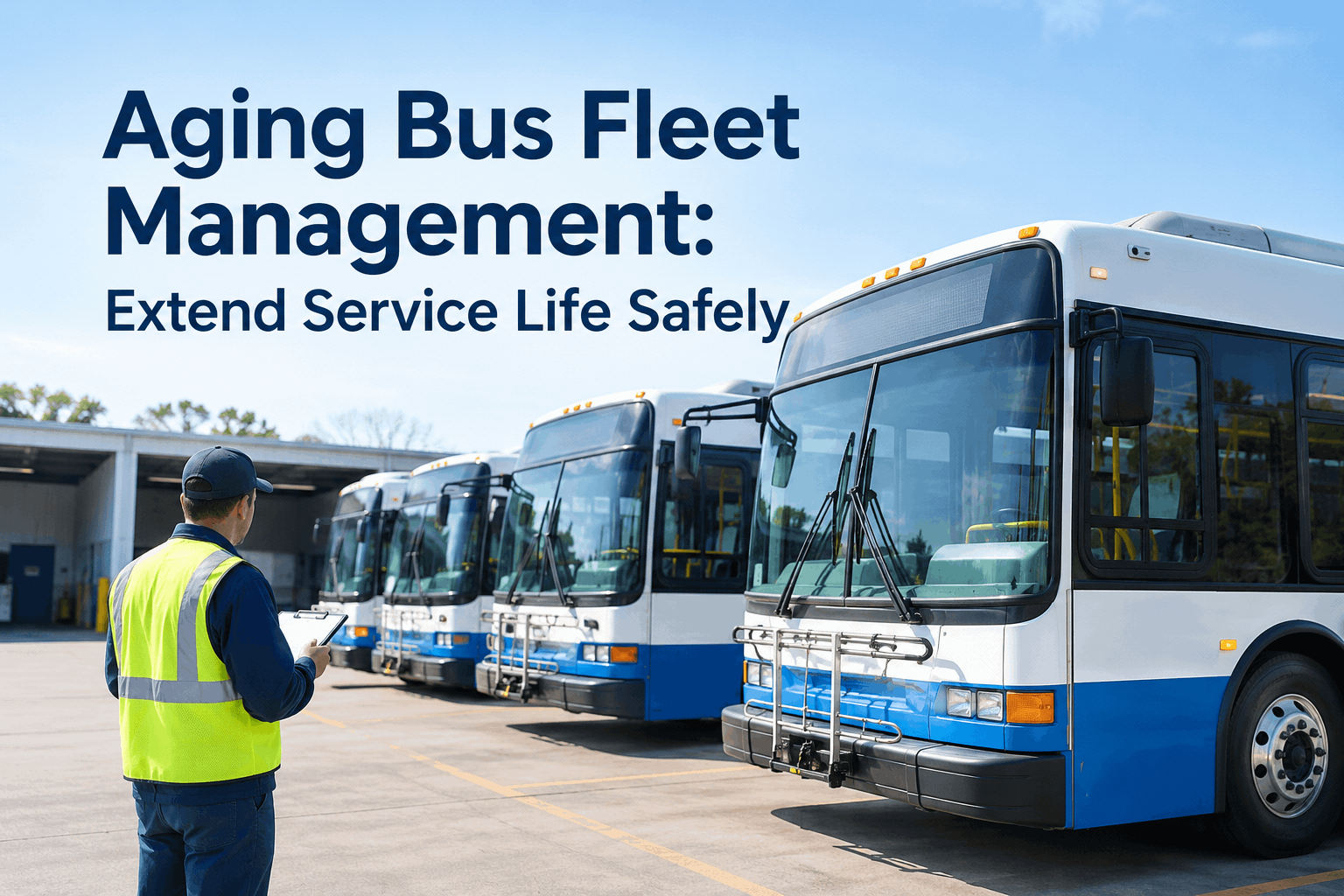
Electric buses require more than just a maintenance trackerthey need software that understands batteries, charging infrastructure, and high-voltage systems. The right CMMS transforms EV fleet operations from reactive firefighting to predictive excellence. Here's what to look for and which platforms deliver for transit agencies in 2026.
35%
Reduction in Unplanned Downtime
29%
Better Battery Longevity
15-25%
Maintenance Cost Savings
Why Electric Buses Need Specialized CMMS
Traditional fleet management software was built for diesel engines—oil changes, transmission service, exhaust systems. Electric buses have none of that. Instead, they have battery management systems, thermal cooling loops, regenerative braking, and charging infrastructure that needs its own maintenance schedule.
Generic CMMS platforms leave gaps. They don't track state-of-health metrics, can't predict battery degradation, and have no concept of charger uptime. Understanding these EV-specific challenges is the first step toward choosing the right software.
Generic CMMS
No battery health monitoring
No charging infrastructure tracking
No high-voltage safety protocols
No thermal management alerts
No EV-specific work order templates
EV-Specialized CMMS
Real-time SOH & SOC tracking
Charger uptime & PM scheduling
HV lockout/tagout workflows
Battery thermal anomaly detection
EV inspection checklists built-in
7 Must-Have Features for EV Bus CMMS
When evaluating CMMS platforms for your electric fleet, these capabilities separate effective solutions from expensive shelf-ware.
Battery Health Dashboard
Track SOH, charge cycles, temperature patterns, and degradation trends. Predict battery replacement timing before capacity impacts operations.
Charging Infrastructure Module
Monitor charger uptime, schedule preventive maintenance, track connector wear, and coordinate charging with off-peak energy rates.
EV-Specific Work Order Templates
Pre-built checklists include HV safety steps, battery inspections, thermal system checks, and regenerative brake verification.
Telematics Integration
Pull real-time data from OEM systems—fault codes, energy consumption, motor performance. Trigger work orders automatically.
Predictive Maintenance AI
Analyze patterns across your fleet to predict failures before they happen. Reduce emergency repairs by 40-50%.
Mixed Fleet Support
Manage diesel, CNG, hybrid, and electric buses in one platform with fuel-appropriate maintenance schedules for each.
Compliance Documentation
Generate audit-ready reports for FTA requirements, track technician certifications, and document HV safety compliance.
Want to see these features in action? Schedule a demo to explore how Bus CMMS handles EV-specific maintenance workflows.
Built for Electric Bus Fleets
Bus CMMS includes battery health monitoring, charger maintenance trackingand EV-specific templates—everything your electric fleet needs.
Top CMMS Platforms for Electric Bus Fleets
We evaluated platforms based on EV-specific capabilities, transit industry focus, integration options, and real-world fleet manager feedback.
Bus CMMS
Purpose-built for bus fleet operations
EV Features
Transit Focus
Ease of Use
Includes battery health dashboards, charger PM scheduling, and DOT compliance automation specifically designed for school districts and transit agencies.
Try Free →Fleetio
User-friendly with broad integrations
EV Features
Transit Focus
Ease of Use
Strong mobile apps and fuel card integrations. Growing EV capabilities but primarily designed for general fleet operations.
Samsara
Telematics-first with CMMS add-on
EV Features
Transit Focus
Ease of Use
Excellent real-time diagnostics and battery monitoring through integrated sensors. Best for fleets prioritizing telematics data.
Geotab
Data-rich analytics platform
EV Features
Transit Focus
Ease of Use
Comprehensive battery analytics and range tracking. Powerful but requires technical expertise to configure effectively.
Implementation Roadmap
Successful CMMS implementation follows a proven path. Here's what leading transit agencies recommend based on real deployments.
Assessment (Week 1-2)
Audit current maintenance processes, identify EV-specific needs, evaluate integration requirements with existing telematics.
Configuration (Week 3-4)
Set up asset hierarchy, configure PM schedules for EVs and chargers, customize work order templates.
Training (Week 5-6)
Train technicians on mobile apps, managers on reporting, and establish data entry standards.
Go-Live & Optimize (Week 7+)
Launch with pilot group, gather feedback, refine workflows, expand to full fleet.
Most districts see measurable ROI within 4-8 months—including 29% better battery longevity through optimized charging management and proactive maintenance.
ROI Calculator: What CMMS Saves EV Fleets
Here's what transit agencies typically save after implementing specialized EV fleet CMMS.
Emergency Repairs
-40%
Predictive maintenance catches issues before breakdowns
Parts Inventory
-25%
Right-sized stock, fewer rush orders
Technician Overtime
-35%
Better scheduling, fewer after-hours emergencies
Battery Replacement
+3 Years
Extended life through optimal charging management
A 50-bus fleet typically saves $8,000-12,000 monthly after implementation. Start your free account and calculate savings for your specific fleet.
Ready to Optimize Your Electric Fleet?
Join transit agencies using Bus CMMS to reduce downtime, extend battery life, and cut maintenance costs.
Frequently Asked Questions
What makes a CMMS "EV-ready" vs. generic fleet software?
EV-ready CMMS includes battery lifecycle management, high-voltage safety protocols, charging infrastructure tracking, and thermal management monitoring. These systems also track unique metrics like state-of-charge, regenerative braking efficiency, and energy consumption patterns that don't exist in diesel fleet management.
Can I use the same CMMS for my mixed diesel and electric fleet?
Yes, modern platforms like Bus CMMS support mixed fleets with fuel-appropriate maintenance schedules for each vehicle type. This unified approach simplifies operations while ensuring each bus gets the right maintenance protocols.
How long until we see ROI from CMMS implementation?
Most transit agencies see positive ROI within 4-8 months. Quick wins include 20-30% reduction in emergency repairs (month 1-2), 15-25% decrease in parts inventory costs (month 2-3), and 30-40% reduction in technician overtime (month 3-4).
Does Bus CMMS integrate with telematics from major EV manufacturers?
Yes. Bus CMMS integrates with telematics from manufacturers like BYD, Proterra, New Flyer, and Lion Electric. The platform pulls real-time data including fault codes, battery health metrics, and energy consumption to automate work order creation.
What about charging infrastructure—can CMMS track charger maintenance too?
Absolutely. Leading EV fleet CMMS platforms track charger uptime, schedule preventive maintenance for connectors and cables, monitor error codes, and coordinate charging schedules with vehicle maintenance windows. This prevents the common problem where charger failures strand buses at the depot.