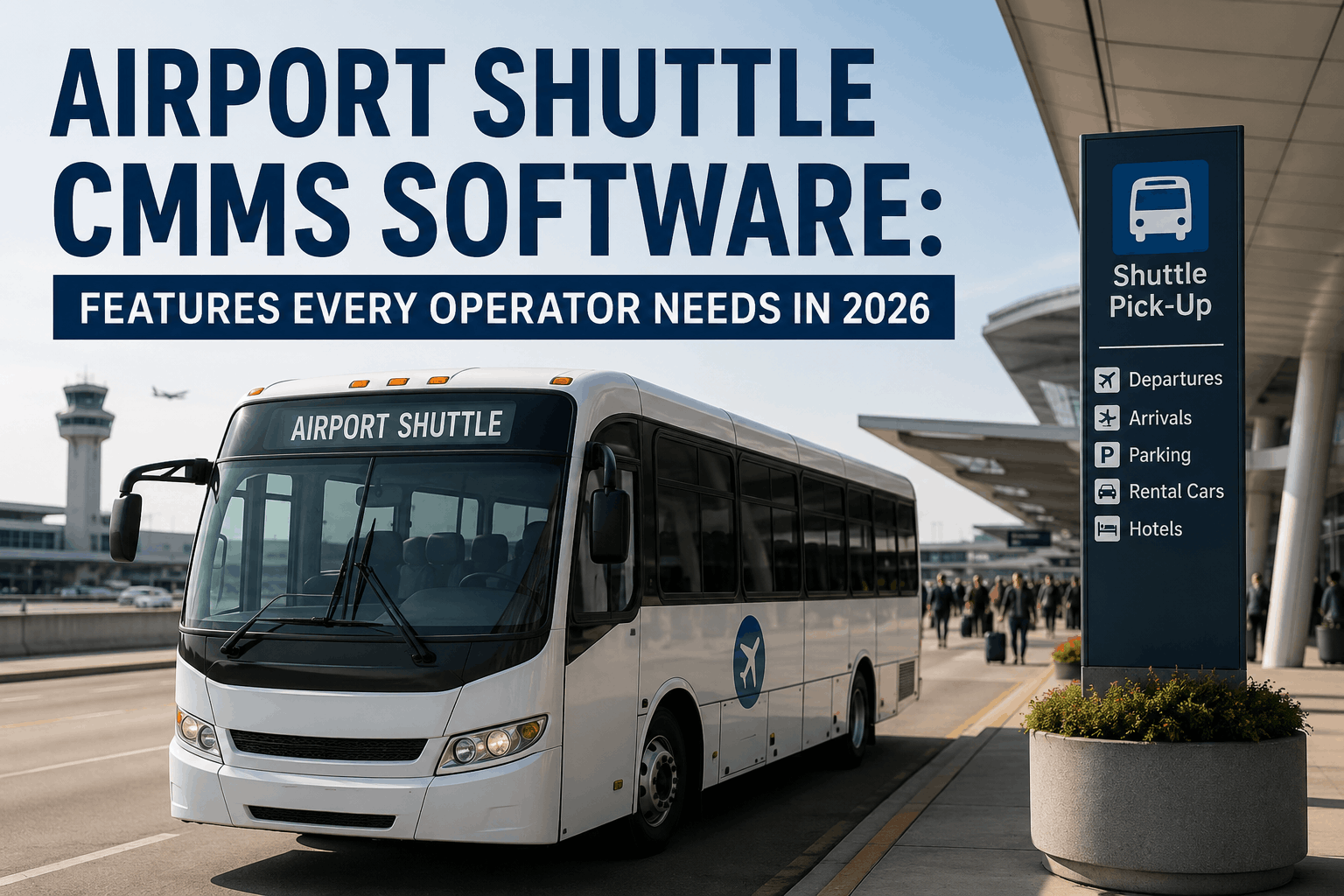
Airport shuttle operators face a unique set of operational challenges that demand a specialized approach to fleet management and maintenance. From curbside dispatching and terminal geofencing to TSA badge tracking and high-cycle door and lift maintenance, the demands of airport ground transportation require a CMMS (Computerized Maintenance Management System) that goes beyond basic fleet tracking. This guide outlines the essential features that airport shuttle CMMS software must offer in 2026 to help operators maximize uptime, maintain regulatory compliance, and deliver reliable service that meets the expectations of airlines, passengers, and airport authorities. Selecting the right CMMS is not just about maintenance tracking — it is about building a system that supports operational efficiency, passenger safety, and seamless airport logistics integration.
Choose the Right CMMS for Your Airport Shuttle Fleet
BusCMSS delivers the features airport shuttle operators need — curbside dispatch integration, terminal geofencing, TSA badge tracking, and high-cycle maintenance scheduling — all in one platform designed for ground transportation.
Essential Features of Airport Shuttle CMMS Software
Airport shuttle operations demand a CMMS that addresses the specific requirements of terminal-based transportation. The software must support real-time dispatch visibility, automated PM scheduling for high-cycle components, and seamless integration with airport security protocols. The following features represent the core capabilities that every airport shuttle CMMS should deliver in 2026.
Curbside Dispatching Integration
The CMMS must integrate with dispatch systems to provide real-time visibility into vehicle status, location, and availability. Curbside dispatching integration enables operators to optimize shuttle assignments based on terminal demand and arrival patterns.
Terminal Geofencing and Location Tracking
Geofencing capabilities allow operators to define terminal zones and track vehicle entry and exit in real time. This feature enables automated dispatch triggers, location-based maintenance alerts, and accurate service reporting.
TSA Badge and Security Credential Tracking
Airport operators must track driver TSA badges, security credentials, and airport-issued permits. The CMMS should manage credential expiration dates and provide automated alerts to prevent expired badges from disrupting operations.
High-Cycle Door and Lift Maintenance Scheduling
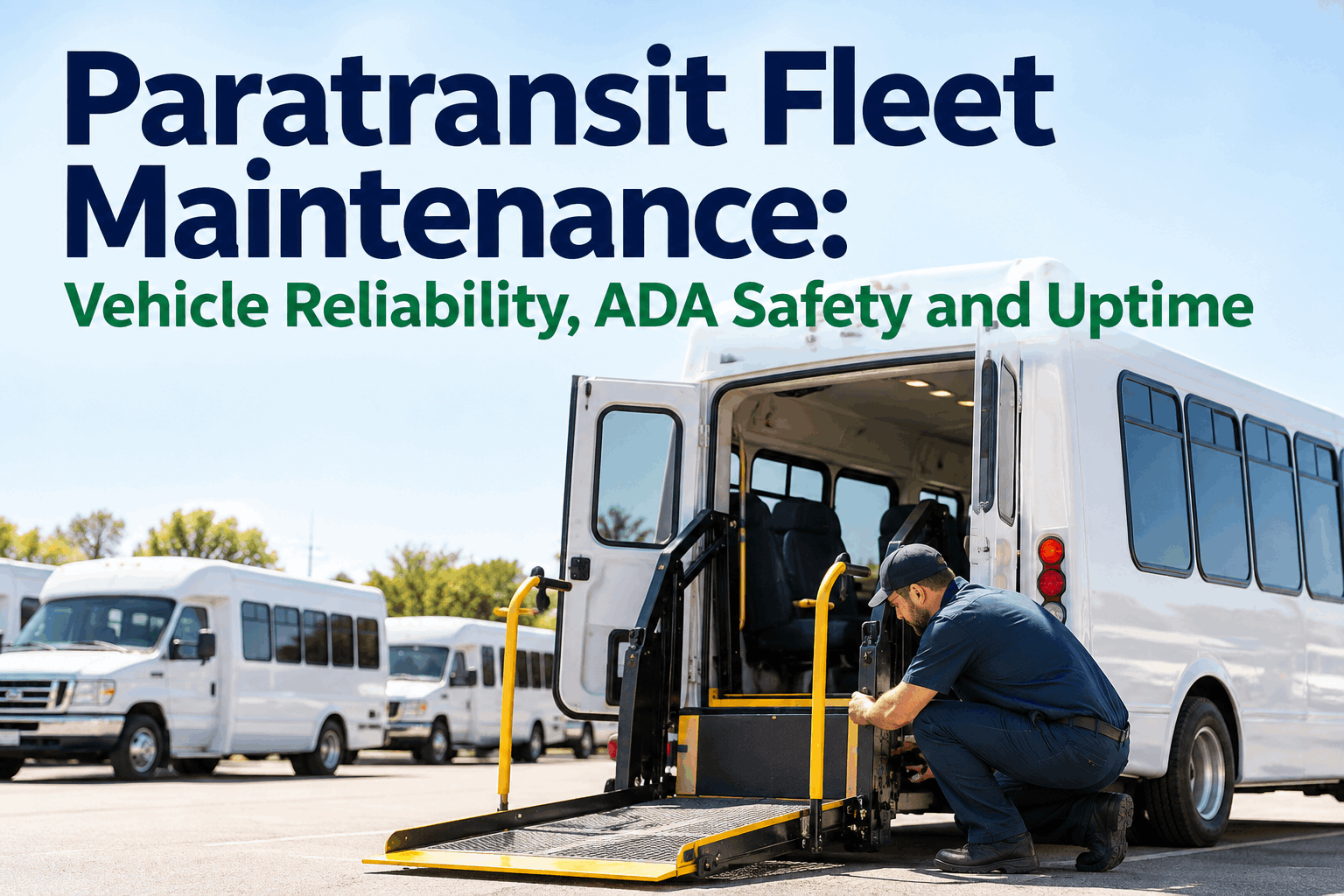
Airport shuttles experience high-cycle use of passenger doors, wheelchair lifts, and baggage doors. The CMMS must track cycle counts and schedule preventive maintenance based on actual usage rather than calendar intervals only.
Airport Authority Reporting and Compliance
Airport authorities require regular reporting on shuttle fleet performance, maintenance activities, and safety compliance. The CMMS should generate standardized reports that meet airport concession and regulatory requirements.
Real-Time Vehicle Health Monitoring
Integration with vehicle telematics and diagnostic systems enables real-time monitoring of engine health, brake performance, and critical system status. This data supports proactive maintenance and reduces unplanned downtime during peak airport service windows.
Airport Shuttle CMMS Software: Feature Breakdown and Benefits
The following detailed breakdown examines the essential CMMS features that airport shuttle operators need to maintain service reliability, regulatory compliance, and operational efficiency. Each feature is evaluated based on its specific application to airport ground transportation operations.
Curbside Dispatch and Vehicle Assignment
Operational Efficiency
The CMMS must provide a unified view of vehicle status, driver assignments, and terminal demand. Curbside dispatch integration enables real-time shuttle assignments based on airport arrival banks, terminal congestion, and passenger volume. Operators can reduce wait times, optimize fleet utilization, and improve passenger satisfaction with intelligent dispatch support.
Benefit
Reduced passenger wait times and optimized fleet use
Integration
Dispatch systems, terminal data feeds
Key Metric
Average response time, fleet utilization rate
Terminal Geofencing and Automated Alerts
Location Intelligence
Geofencing capabilities define terminal zones, parking areas, and maintenance facilities. The CMMS generates automated alerts when vehicles enter or exit zones, enabling maintenance triggers, dispatch coordination, and service confirmation. Geofencing also supports accurate service documentation and compliance reporting for airport authority audits.
Benefit
Automated service tracking and dispatch optimization
Integration
GPS, telematics, airport terminal maps
Key Metric
Geofence accuracy, alert response time
TSA Badge and Security Credential Management
Access Control
The CMMS must track TSA badge numbers, security credential types, issue dates, and expiration dates for all drivers and maintenance personnel. Automated expiration alerts prevent service disruptions caused by expired badges. The system should also support badge renewal tracking and airport security compliance documentation.
Benefit
Continuous airport access and security compliance
Integration
TSA database, airport security systems
Key Metric
Credential expiration rate, renewal compliance
High-Cycle Component Maintenance Tracking
Preventive Maintenance
Airport shuttles experience high-cycle wear on passenger doors, wheelchair lifts, baggage doors, and ramp systems. The CMMS must track cycle counts and usage metrics to trigger preventive maintenance based on actual wear rather than calendar intervals alone. This usage-based maintenance approach reduces component failures and extends the service life of high-wear parts.
Benefit
Reduced component failures and extended part life
Integration
Cycle counters, usage sensors
Key Metric
MTBF of high-cycle components
Airport Authority Reporting and Audit Support
Regulatory Compliance
Airport authorities require regular submission of fleet performance, maintenance, and safety data. The CMMS should generate standardized reports for airport concession audits, safety inspections, and service performance reviews. Automated report generation reduces administrative burden and ensures timely submission of required documentation.
Benefit
Streamlined airport compliance and audit readiness
Integration
Airport reporting portals, concession management
Key Metric
Report accuracy, submission timeliness
Telematics and Real-Time Diagnostics Integration
Predictive Maintenance
Integration with vehicle telematics and diagnostic systems enables continuous monitoring of engine health, brake performance, transmission status, and critical safety systems. The CMMS should process diagnostic trouble codes and generate maintenance alerts when predefined thresholds are exceeded. Predictive maintenance capabilities reduce unplanned downtime and improve fleet reliability.
Benefit
Reduced downtime and proactive repairs
Integration
Engine diagnostics, telematics platforms
Key Metric
Unplanned downtime events, diagnostic response time
Airport Shuttle CMMS Feature Comparison Matrix
The following matrix compares the essential CMMS features for airport shuttle operations, highlighting the capabilities that differentiate effective systems from basic fleet maintenance tools.
| Feature Category | Core Capability | Airport-Specific Requirement | Business Impact | Implementation Priority |
|---|---|---|---|---|
| Dispatch Integration | Vehicle status and assignment | Curbside dispatch, terminal demand matching | Passenger wait time reduction | High |
| Geofencing | Location-based tracking and alerts | Terminal zones, maintenance facility mapping | Automated service confirmation | High |
| Credential Management | Badge and permit tracking | TSA badge, security credential expiration | Airport access continuity | Critical |
| High-Cycle PM | Usage-based maintenance scheduling | Doors, lifts, ramps cycle tracking | Component life extension | High |
| Reporting | Standard and custom reports | Airport authority compliance reports | Audit readiness and concession compliance | Medium |
How BusCMSS Delivers Airport Shuttle CMMS Capabilities
BusCMSS provides airport shuttle operators with a comprehensive CMMS platform that addresses the unique requirements of terminal-based ground transportation. The system integrates curbside dispatch visibility, terminal geofencing, TSA badge tracking, high-cycle component maintenance, and airport authority reporting into a single, accessible platform. By centralizing these capabilities, BusCMSS enables operators to optimize fleet performance, maintain regulatory compliance, and deliver reliable service that meets the standards of airlines, passengers, and airport authorities.
Dispatch and Fleet Visibility
BusCMSS provides real-time visibility into vehicle status, location, and availability — enabling optimized curbside dispatching and reduced passenger wait times at terminal pick-up zones.
Geofencing and Automated Alerts
BusCMSS supports terminal geofencing with automated alerts for zone entry and exit — enabling service confirmation, maintenance triggers, and accurate operations reporting.
TSA Badge and Credential Tracking
BusCMSS tracks TSA badge numbers, security credentials, and expiration dates with automated alerts — ensuring uninterrupted airport access for drivers and maintenance personnel.
High-Cycle Component Maintenance
BusCMSS tracks usage cycles for doors, lifts, and ramps, scheduling preventive maintenance based on actual wear patterns — extending component life and reducing unexpected failures.
Airport Shuttle CMMS Implementation Steps
Assess Current Fleet Management Capabilities
Review existing maintenance processes, dispatch systems, and compliance documentation to identify gaps and define the functional requirements for your airport shuttle CMMS.
Define Airport-Specific Feature Requirements
Prioritize features based on airport terminal operations, TSA badge tracking, high-cycle component maintenance, and airport authority reporting requirements.
Evaluate CMMS Platforms for Airport Capabilities
Compare CMMS solutions based on their ability to support curbside dispatch integration, geofencing, credential tracking, and usage-based maintenance scheduling.
Integrate with Airport Systems and Data Feeds
Connect the selected CMMS with airport terminal data, TSA systems, dispatch platforms, and vehicle telematics to enable seamless data flow and automated processes.
Train Staff and Establish New Processes
Provide comprehensive training for dispatchers, drivers, and maintenance personnel on the new CMMS features and updated operational procedures.
Monitor Performance and Optimize Continuously
Track key metrics including fleet utilization, maintenance response time, and passenger satisfaction. Use CMMS data to identify improvement opportunities and optimize airport shuttle operations. Book Demo to see BusCMSS in action.
Frequently Asked Questions
What is CMMS software for airport shuttles?
Airport shuttle CMMS software is a specialized fleet management system that combines preventive maintenance scheduling, dispatch integration, geofencing, TSA badge tracking, and airport authority reporting in a single platform designed for terminal-based ground transportation operations.
Why do airport shuttles need geofencing capabilities?
Geofencing enables automated tracking of vehicle entry and exit from terminal zones, parking areas, and maintenance facilities. This supports dispatch optimization, service confirmation, maintenance triggers, and accurate operations reporting for airport authority audits.
What is TSA badge tracking in CMMS software?
TSA badge tracking is a CMMS feature that manages driver and personnel security credentials required for airport access. The system tracks badge numbers, issue dates, and expiration dates with automated alerts to prevent expired badges from disrupting operations.
Can BusCMSS integrate with existing dispatch systems?
Yes, BusCMSS integrates with airport dispatch systems to provide real-time visibility into vehicle status, location, and availability — enabling optimized curbside dispatching and reduced passenger wait times.
What are high-cycle components in airport shuttles?
High-cycle components include passenger doors, wheelchair lifts, baggage doors, and ramp systems that experience frequent usage in airport shuttle operations. These components require preventive maintenance based on cycle counts and usage metrics rather than calendar intervals alone.
Select the Right CMMS for Your Airport Shuttle Fleet
BusCMSS delivers the airport-specific features you need — curbside dispatch, terminal geofencing, TSA badge tracking, and high-cycle maintenance — in a single, integrated platform built for ground transportation operators.