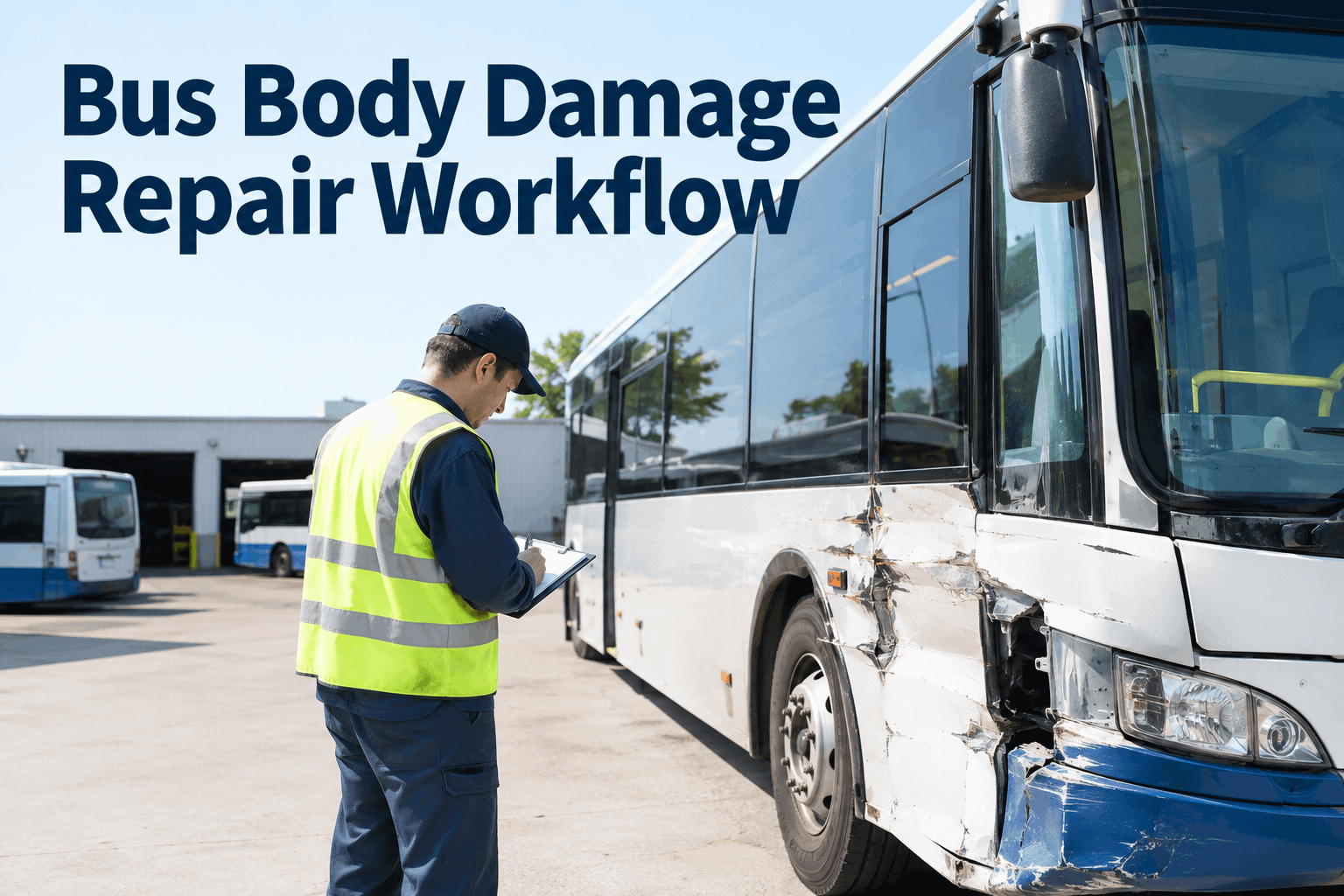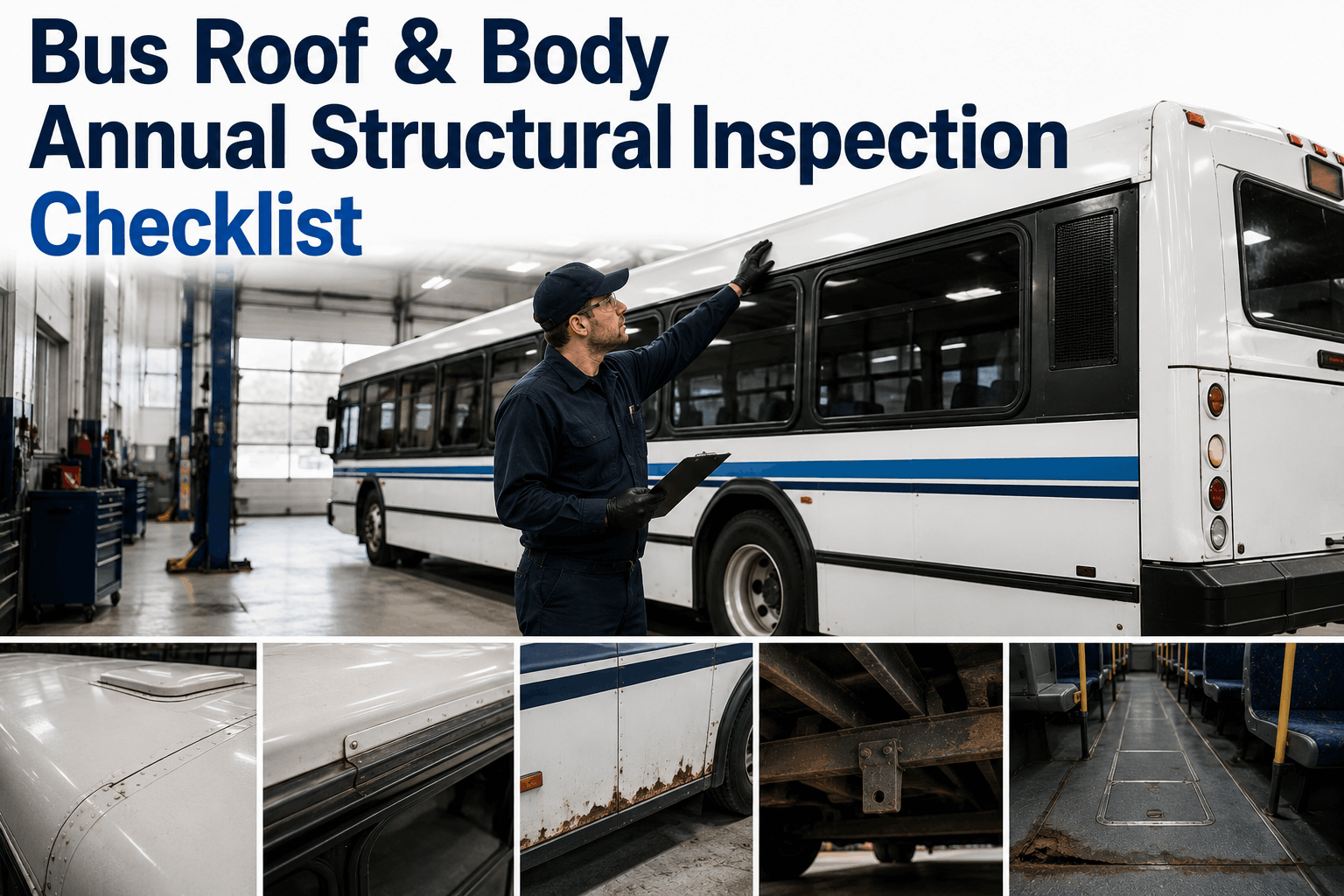
A bus body and roof structure endures constant vibration, road shock, and environmental attack. Corrosion that starts as a hairline seam crack can grow into a water‑intrusion path that destroys floor pans, weakens body mounts, and compromises rollover protection. This annual bus body and roof inspection checklist provides a systematic walk‑around procedure covering roof skin, seams, drip rails, sidewall panels, frame rails, undercarriage corrosion, floor rot, and body mount integrity. It is written for fleet maintenance teams managing school buses, transit buses, and motorcoaches that must meet annual DOT and structural safety requirements.
Fleet PM Guide 2026
Bus Roof & Body Annual Structural Inspection Checklist
Complete annual body inspection procedure for buses. Roof skin, seam sealant, drip rails, sidewall panels, frame rails, floor pans, body mounts and undercoating checks.
Why Annual Body & Roof Inspections Prevent Catastrophic Structural Failure
Buses operate in some of the harshest corrosion environments on the road. Winter de‑icing chemicals, coastal salt spray, and constant pressure‑washing drive moisture into every seam, rivet, and body mount cavity. A missed roof seam inspection can lead to ceiling panel delamination, electrical short circuits, and hidden floor rot that silently destroys the structural ladder frame. In worst‑case scenarios, untreated body mount corrosion allows the body to shift on the chassis, altering steering geometry and driveline alignment. Annual structural inspections are the only reliable defense. They catch early‑stage rust before it requires full panel replacement and keep buses in compliance with federal motor vehicle safety standards for body integrity.
Fleet data shows that buses over six years old exhibit a sharp rise in body‑related defects, especially around the rear wheel wells, battery box enclosures, and roof‑to‑sidewall joints. A proactive body inspection program that includes ultrasonic thickness measurement and seam‑sealant reapplication can double the effective service life of a bus body. Book a demo to see how BusCMMS enforces annual body inspection intervals and tracks structural condition across your fleet.
Body & Roof Inspection Categories: What Must Be Checked Annually
Roof Skin & Seams
Inspect roof outer skin for punctures, cracks, or lifting. Check all roof‑to‑sidewall seams for cracked sealant. Water stains on interior headliner indicate failed roof seam.
Drip Rails & Gutters
Clear all drip rails of debris and inspect for rust perforation. Damaged drip rails channel water into the body, causing hidden sidewall corrosion behind interior panels.
Sidewall Panels & Skirts
Examine exterior side panels for impact damage, delamination, or stress cracks around rivets. Check under side skirts for rust jacking between inner and outer panels.
Undercarriage & Frame Rails
Inspect main frame rails for rust scale, pitting, or thickness loss. Use a hammer test or ultrasonic gauge. Pay special attention to crossmember joints and spring hanger areas.
Floor & Wheel Well Corrosion
Lift floor mats and inspect floor pans for rot, especially at stepwells, wheel wells, and seat track mounting points. Soft spots indicate water damage requiring immediate repair.
Body Mounts & Isolators
Check all body mount brackets for corrosion and torque. Worn or rusted body mounts allow body shifting, resulting in cracked panels and misaligned doors.
Complete Bus Roof & Body Annual Inspection Checklist
This 10‑point checklist covers every structural inspection area mandated by annual DOT requirements and manufacturer body integrity guidelines. Use it during the annual PM, pre‑winter preparation, and anytime a bus is involved in an incident affecting the body shell.
Body & Roof Inspection Pass Rate by Structural Area
The chart reveals a critical gap: while roof and sidewall inspections achieve pass rates above 70%, floor and body mount areas fail first inspection in nearly half the fleet. BusCMMS addresses this by sequencing the inspection route to force under‑bus examination after the interior floor check, ensuring no area is skipped. Start a free trial to see how digital body inspection forms enforce complete coverage.
Common Roof & Body Structural Issues and Root Causes
Roof Seam Water Leaks
Cause: Aged, cracked seam sealant or failed rivet seals. Fix: Remove old sealant, clean seam, apply new OEM sealer. Replace any rivets showing moisture wicking.
Drip Rail Rust‑Through
Cause: Trapped organic debris holding moisture against the metal. Fix: Clean drip rails, cut out rusted sections, weld in repair patches, and repaint with epoxy primer.
Sidewall Stress Cracks at Rivets
Cause: Body flex and vibration loosening rivets, causing panel movement. Fix: Replace loose rivets with larger‑diameter or structural rivets. Reinforce cracked panel area.
Frame Rail Corrosion Below Spring Hangers
Cause: Road salt accumulation and poor drainage. Fix: Needle‑scale rust, apply rust converter, and reinforce with fishplate if thickness is below minimum. Keep area clean.
Soft Floor Pans at Wheel Wells
Cause: Water ingress from damaged inner fender liners or leaking seams. Fix: Cut out rotted floor section, weld in new panel, reseal wheel well seams and apply waterproof undercoating.
Body Mount Collapse
Cause: Rubber isolator deterioration or bracket corrosion. Fix: Replace isolators, sandblast and repaint brackets, retorque bolts. This restores correct body‑to‑frame alignment.
Our 140‑unit school bus fleet serves rural routes with heavy winter salt exposure. Before we adopted this annual body and roof inspection checklist in BusCMMS, we missed early roof seam corrosion on 17 buses that later required $4,000+ roof skin repairs. Now, every August the system locks out non‑compliance and forces a 10‑point body inspection. In two years we’ve cut body repair costs by 40% and identified frame rail thinning before it became a safety issue. The digital photo capture for seam defects is invaluable for warranty claims and DOT documentation.
Automate Annual Body Inspections with BusCMMS
BusCMMS schedules annual body and roof inspections by date, attaches a 10‑point checklist to each asset, requires photo evidence of seam and frame condition, and generates a permanent structural health history. No more missed underbody inspections or forgotten seam reseal intervals.
Bus Roof & Body Inspection FAQs (USA)
How often should a bus body and roof be structurally inspected?
Manufacturers and DOT guidance recommend a thorough body and roof structural inspection at least annually. Fleets operating in heavy road‑salt regions often perform them semi‑annually.
What is the most overlooked area during bus body inspections?
The roof seam and drip rail area are the most overlooked. Technicians rarely access the roof, leading to hidden leaks that cause extensive interior damage.
How do I check frame rail thickness without an ultrasonic gauge?
Use a ball‑peen hammer to sound for dead spots indicating internal delamination. Measure external thickness with calipers at accessible edges as a backup.
What causes bus floor pans to rot from the inside out?
Moisture trapped under floor mats from wet boots and cleaning creates a constant damp environment. Road salt residue accelerates the corrosion, especially at seat track bolts.
Can I patch a rusted roof seam with silicone?
No. Silicone sealants do not adhere long‑term to painted metal and will fail quickly. Always use the OEM‑specified two‑component seam sealer for permanent adhesion.
How do I inspect body mounts that are hidden behind panels?
Use an inspection camera (borescope) through access holes. Look for crushed isolators, rusted brackets, or missing bolts. Mark mounts requiring physical access for repair.
What is the minimum acceptable frame rail thickness for a school bus?
It varies by OEM, but generally frame rails must retain at least 70% of original thickness. Consult your body builder’s inspection manual for the exact specification.
Does BusCMMS track annual body inspection compliance?
Yes. BusCMMS schedules annual body inspections per bus, stores pass/fail results and photos, and generates a compliance dashboard showing which buses are overdue for structural checks.
Protect the Backbone of Every Bus — The Body and Roof Structure
Annual body and roof structural inspections are not a cosmetic exercise—they are the front‑line defense against frame rot, roof collapse, and passenger compartment intrusion. From roof seam sealant to body mount torque, every item on this checklist targets a failure mode that, left unchecked, can take a bus out of service permanently and create serious safety liability. Digitizing these inspections with BusCMMS ensures every step is completed, evidence is captured, and trends are visible across the fleet. When a bus body is maintained to this standard, the asset delivers a full service life with minimal structural repair cost.