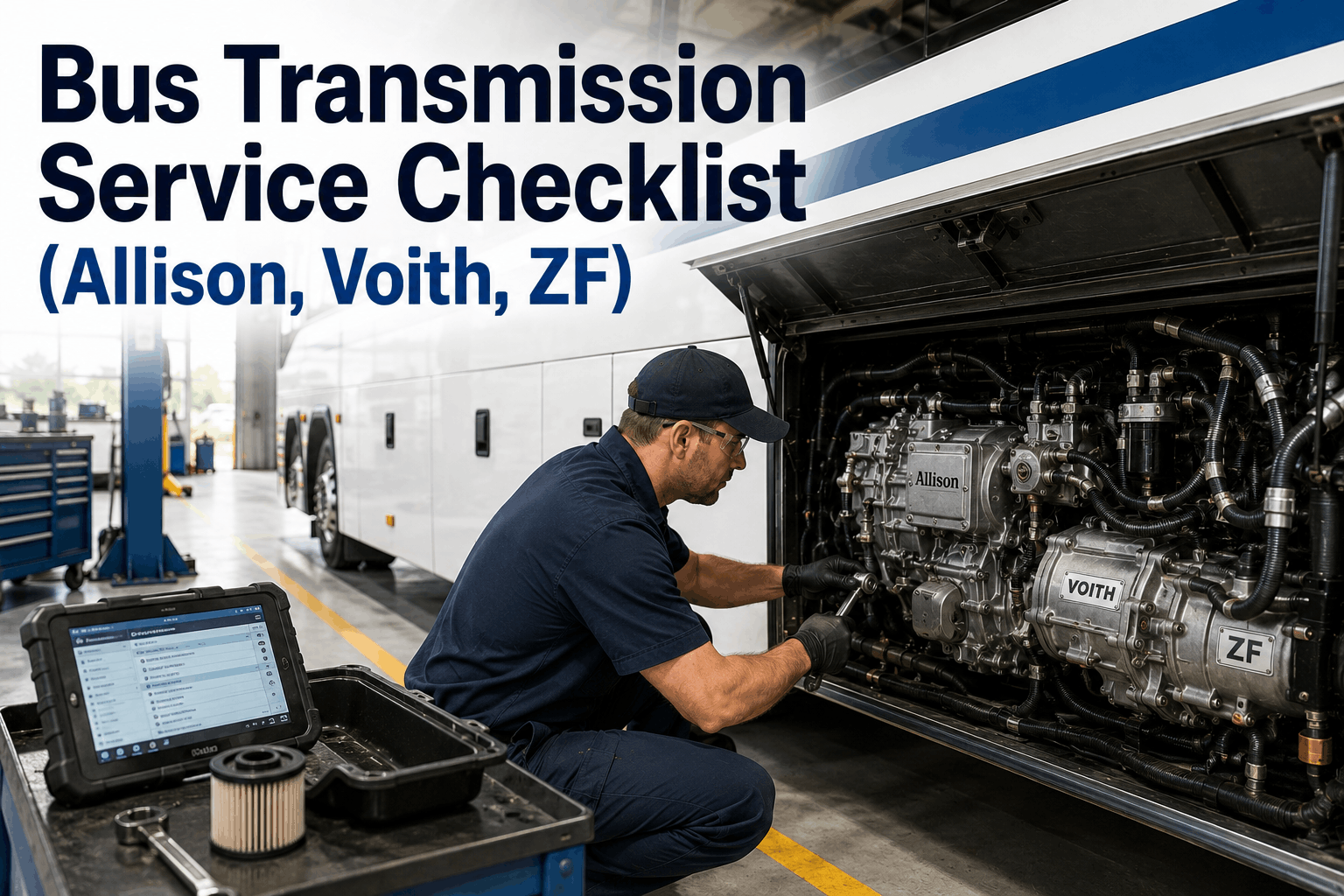
The transmission is the heart of a bus’s driveline. A single missed fluid change, a clogged filter, or an overlooked fault code can lead to a complete transmission failure—stranding passengers and destroying an expensive assembly. This service checklist covers the major North American coach and transit bus transmissions: Allison (TC10, B300/B400), Voith (DIWA.5/.6), and ZF (EcoLife). It aligns with manufacturer service literature and is designed to help maintenance teams standardize transmission preventive maintenance across mixed fleets.
Fleet PM Guide 2026
Bus Transmission Service Checklist (Allison, Voith, ZF)
Manufacturer‑aligned transmission inspection and service workflow. Fluid intervals, filter replacement, lockup tests, cooler inspection, and fault code retrieval for transit and motorcoach fleets.
Why Transmission Preventive Maintenance Must Be Manufacturer‑Specific
Buses operate under extreme stop‑and‑go cycles, heavy loads, and long idle times. Allison’s torque‑converter automatics, Voith’s DIWA hydrodynamic transmissions, and ZF’s EcoLife automated manuals each have unique fluid requirements, filter change intervals, and diagnostic protocols. Using a generic service checklist risks mismatched fluid or missed wear indicators. The most expensive repairs—overhauled valve bodies, torque converter replacement, or full transmission swaps—are almost always traceable to skipped fluid services or ignored fault codes. A systematic, brand‑specific inspection program directly reduces road calls and extends transmission life.
Heat is the primary enemy of automatic transmission fluid (ATF). In transit duty cycles, fluid sump temperatures routinely exceed 200°F, causing accelerated oxidation and viscosity breakdown. Fleets that adopt a proactive transmission service regimen—including cooler flow testing and lockup clutch verification—see a measurable decline in hard‑shift complaints and transmission‑related breakdowns. Schedule a demo to see how BusCMMS enforces brand‑specific intervals.
Transmission Service Categories: Manufacturer‑Specific Action Items
Allison Transmissions
Fluid & filter change every 25,000–50,000 miles (TES 295®/TES 668® fluid). Check for clutch material in pan. Retrieve Prognostics fault codes using Allison DOC® software.
Voith DIWA Transmissions
Fluid & filter service every 60,000–100,000 km (ATF Type A). Inspect retarder oil level. Verify DIWA shift logic; no harsh engagement during torque converter lockup.
ZF EcoLife Transmissions
Oil & filter change every 120,000 km or 3 years (ZF EcoFluid). Check pressure regulator and mechatronic module fault memory. Perform transmission adaptation reset after service.
Fluid Condition Analysis
Smell and sight check for burnt odor, milky appearance (water contamination), or excessive metal particles. Use blotter test or send sample to lab for oxidation and wear metals.
Cooler & Lines Inspection
Pressure‑test transmission cooler for flow restriction. Inspect steel lines for corrosion and rubber hoses for perishing. Clogged coolers are a leading cause of transmission overheating.
Shift Quality & Lockup Test
Road‑test bus through all gears. Monitor shift timing, shift shock, and lockup engagement using diagnostic scan tool. Record shift times and compare with manufacturer acceptable ranges.
Complete Bus Transmission Service Checklist
Use the interactive checklist below during every transmission PM service, fluid change interval, and post‑major repair inspection. Each item references the specific manufacturer requirement.
Transmission Service Compliance Rates by Brand
| Service Item | Allison (%) | Voith (%) | ZF (%) |
|---|---|---|---|
| Fluid & Filter Change | 92 | 89 | 87 |
| Fault Code Retrieval | 78 | 74 | 80 |
| Shift Quality Road Test | 65 | 61 | 63 |
| Cooler Flow Test | 44 | 41 | 46 |
| Pan Inspection & Magnet Clean | 82 | — | 79 |
The table highlights a clear pattern: fluid and filter changes enjoy high compliance, while cooler flow testing and documented shift quality evaluation lag significantly. BusCMMS combats this by embedding mandatory, non‑skippable road‑test and cooler test prompts directly into the transmission PM workflow. Start a free trial to see how digital checklists improve transmission service completeness.
Common Transmission Issues & Root Causes
Delayed Engagement
Cause: Low fluid, worn pump, or internal seal leakage. Fix: Verify fluid level, test pump pressure. Replace worn seals or pump if pressure is low.
Harsh or Erratic Shifting
Cause: Failed shift solenoid, contaminated fluid, or worn valve body. Fix: Scan for solenoid codes, service fluid, perform adaptation reset. Replace solenoid if stuck.
Torque Converter Lockup Shudder
Cause: Degraded fluid, worn lockup clutch, or faulty TCC solenoid. Fix: Change fluid and filter first. If shudder persists, inspect torque converter clutch and solenoid.
Transmission Overheating
Cause: Restricted cooler, low fluid, or excessive stall time. Fix: Flow‑test cooler, verify fluid level, educate drivers on idle reduction. Install auxiliary cooler if needed.
Fluid Leak at Seals or Pan
Cause: Degraded gasket, loose pan bolts, or output seal wear. Fix: Reseal pan with proper gasket, torque to spec. Replace leaking output or input shaft seals.
Intermittent Limp Mode / Check Trans Light
Cause: Corroded speed sensor connector, low system voltage, or internal wiring fault. Fix: Inspect connectors, clean and apply dielectric grease. Clear codes and retest.
We run 82 transit buses with a mix of Allison, Voith, and ZF transmissions. Before adopting this manufacturer‑aligned checklist through BusCMMS, our transmission fluid change intervals were inconsistent and cooler flow tests were rarely performed. Within 18 months, we identified 14 buses with restricted coolers, 9 with overdue filters, and 22 with stored shift quality fault codes that had never been retrieved. Transmission road calls dropped by 62%, and we extended the average transmission life by 15%. The digital workflow makes it impossible for a technician to skip the critical steps.
Enforce Transmission Service Intervals with BusCMMS
BusCMMS schedules transmission PMs by mileage or engine hours, tracks fluid and filter changes by brand, and forces mandatory road‑test signatures. Every transmission service action—from pan inspection to fault code clearance—is logged in a permanent, auditable history for each bus.
Bus Transmission Service FAQs (USA)
How often should Allison bus transmission fluid be changed?
Allison recommends fluid change intervals of 25,000–50,000 miles for severe duty cycles when using TES 295® fluid. Always check with a fluid analysis program to fine‑tune the interval.
What is the fluid service interval for Voith DIWA transmissions?
Voith specifies fluid and filter replacement every 60,000–100,000 km (approximately 37,000–62,000 miles) depending on operating conditions, with ATF Type A fluid meeting Voith spec.
When should ZF EcoLife transmission oil be changed?
ZF recommends oil and filter change every 120,000 km or 3 years, whichever comes first, using only ZF EcoFluid to preserve warranty coverage and mechatronic unit longevity.
What are the signs of transmission fluid breakdown?
Burnt smell, dark brown color, visible metal particles, or a milky appearance from water contamination all signal fluid breakdown. Immediate service and lab analysis are required.
Can I use generic ATF in an Allison bus transmission?
No. Allison requires TES 295® or TES 668® licensed fluid. Using unapproved fluid can cause clutch slippage and void warranty. Always verify the Allison approval number on the container.
How do I retrieve fault codes from a Voith DIWA transmission?
Use Voith DIWA Diagnostic software with a compatible interface. Codes are stored in the transmission ECU and can be read via the vehicle diagnostic connector; active codes illuminate the dashboard warning lamp.
Why does my bus transmission overheat in stop‑and‑go traffic?
Common causes include a restricted cooler, low fluid level, or excessive torque converter slippage at idle. Flow‑test the cooler circuit and verify fluid level under hot operating conditions.
Does BusCMMS track transmission service history for mixed fleets?
Yes. BusCMMS logs brand‑specific fluid changes, filter replacements, fault codes, and road test results. It automatically schedules the next service based on mileage or calendar, eliminating missed intervals.
Keep Every Bus Transmission on the Road
Manufacturer‑specific transmission preventive maintenance is not optional—it’s the only way to protect a six‑figure driveline asset. From Allison TES 295® fluid changes to Voith DIWA retarder service and ZF EcoLife adaptation resets, a structured checklist prevents oversight of fluid condition, cooler health, and shift quality deterioration. When that checklist is enforced digitally through BusCMMS, every pan inspection, cooler flow test, and fault code retrieval is captured in an unalterable record. The result is fewer hard shifts, cooler running temperatures, and a fleet that consistently avoids the massive cost of an unscheduled transmission removal.