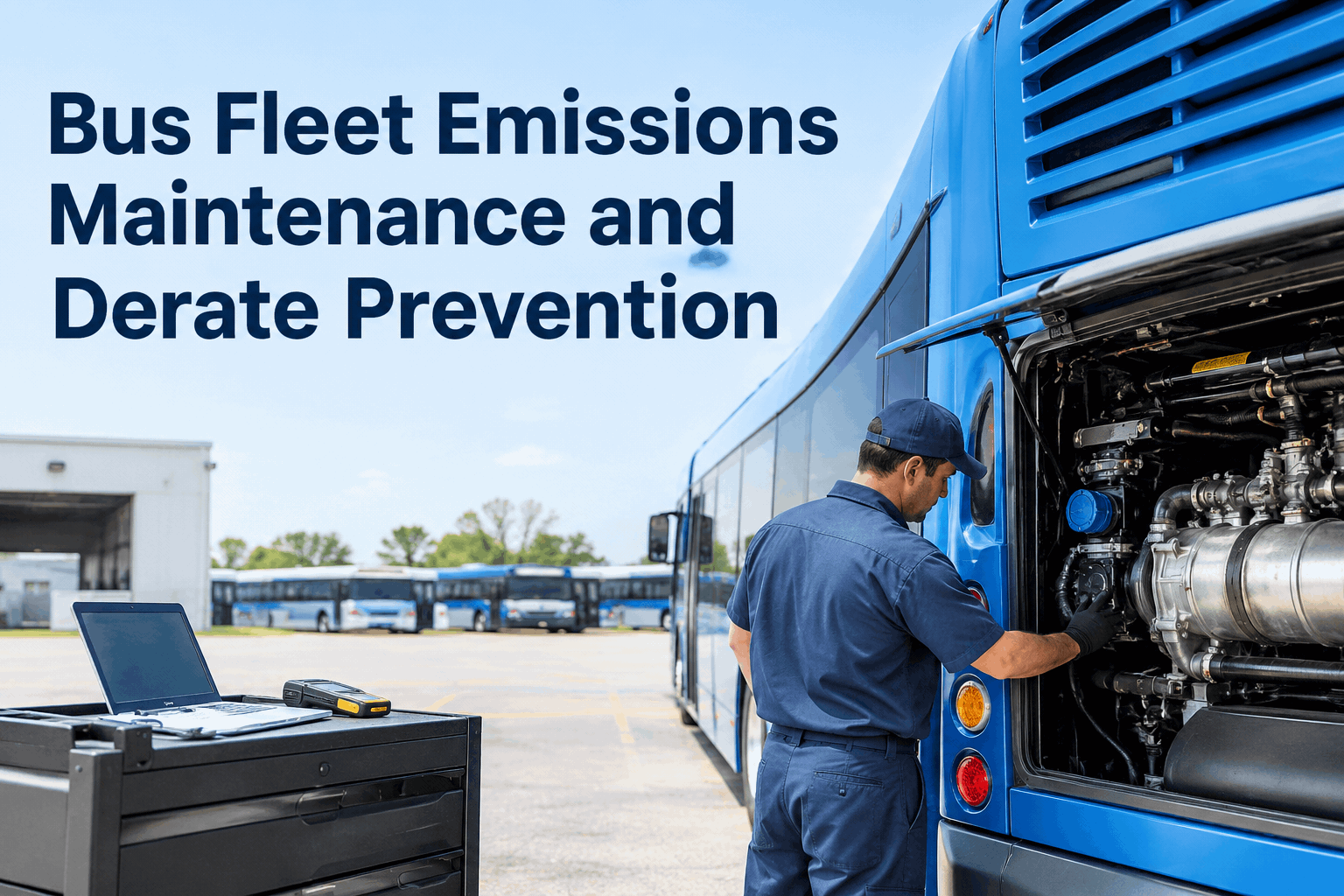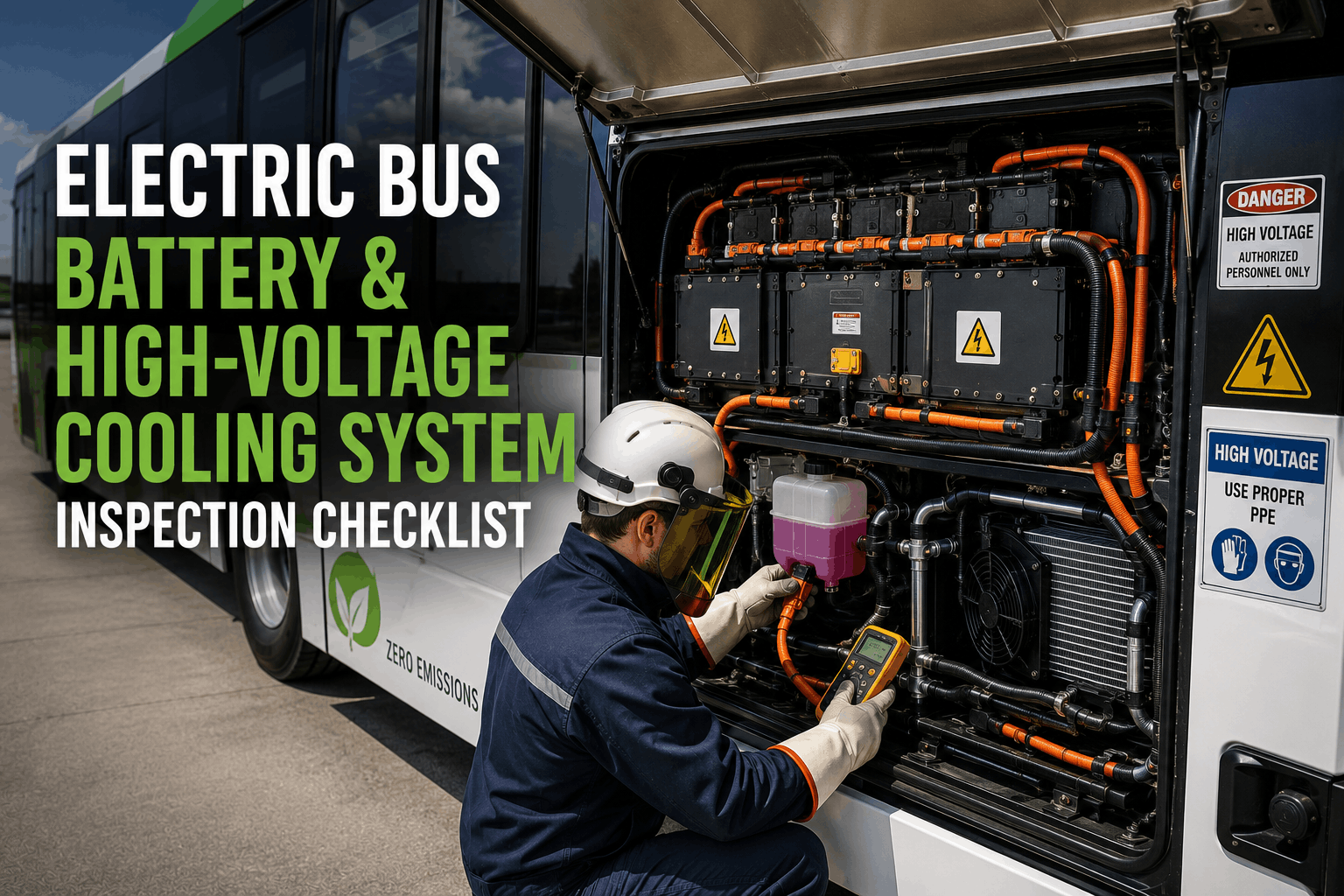
Electric school buses and transit buses represent the fastest-growing segment of fleet electrification in America, with federal and state incentives covering 50–100% of incremental purchase costs. Electric buses eliminate fuel and reduce maintenance costs by 50–60% compared to diesel, but introduce entirely new inspection and maintenance requirements around battery systems, high-voltage (HV) electrical systems, and thermal management. Battery packs on modern electric school buses store 150–300+ kWh of energy at voltages exceeding 600 volts DC—levels that can deliver lethal electrical shock if safety procedures are not followed. Cooling systems for battery packs and high-voltage components operate independently from engine coolant systems, requiring separate inspection and maintenance procedures. Most American school districts have limited experience with electric bus systems; maintenance staff trained on diesel and alternative fuel buses often lack technical knowledge to safely inspect battery packs and HV systems. This training gap creates compliance risks: electric bus battery inspections require specific safety procedures, protective equipment, and specialized diagnostic tools. Modern electric bus maintenance software includes pre-built battery system and HV safety inspection templates, mandatory HV safety certification tracking, and cooling system maintenance scheduling—ensuring technicians follow manufacturer procedures and safety protocols when inspecting electric bus systems.
Inspect Electric Bus Battery and HV Systems Safely and Systematically
BusCMMS provides electric bus daily and quarterly inspection checklists covering battery health monitoring, HV cable integrity, cooling system operation, and thermal management—with mandatory HV safety certification and audit-ready compliance documentation.
Electric Bus Battery Systems: Why HV Safety Training Is Mandatory
Electric school buses store massive amounts of electrical energy in battery packs (150–300+ kWh) at voltages of 600–800 volts DC—levels that can cause immediate cardiac arrest and death on contact. Battery management systems (BMS) monitor cell health, balance charge across cells, and prevent over-charge or over-discharge. Thermal management systems cool battery packs and HV components independently from engine cooling — if cooling fails, batteries overheat and catch fire. Most school districts do not have technicians trained to work safely on HV systems. Sending untrained staff to inspect battery packs creates catastrophic injury risk. The solution is mandatory HV safety certification for all technicians who touch electric buses, combined with systematic inspection procedures that keep technicians safe and ensure battery systems operate reliably.
Electric bus batteries operate at lethal voltage levels. HV safety certification (40–80 hours training, renewed every 2–3 years) is mandatory for any technician who services or inspects HV components. Untrained contact is fatal.
Battery state-of-charge and temperature are monitored daily through on-board BMS displays. When state-of-health drops below 70% of original specification, usable range becomes insufficient for full routes and replacement planning begins.
Dedicated battery cooling system uses separate coolant loops from engine cooling. Weekly coolant level, line, and pump inspection prevents thermal runaway — the uncontrolled battery heating that leads to fire if cooling fails mid-operation.
Quarterly HV testing covers cable insulation resistance, charging system functional testing, BMS diagnostic scans, and optional thermal imaging. Must be performed only by technicians with current HV safety certification — no exceptions.
Electric Bus Inspection Checklist: Daily, Weekly & Quarterly Tasks
Complete all applicable sections at the indicated service interval. HV system inspections must only be performed by technicians with current HV safety certification. Document all battery SOC readings, temperature baselines, coolant levels, and BMS fault codes — electric bus maintenance is data-driven, and trending reveals degradation before failures occur.
Electric Bus System Specifications & Service Reference
| Component / System | Specification | Inspection Interval | Action if Defect Found |
|---|---|---|---|
| Battery Pack (SOC Monitoring) | 80–100% SOC after overnight charge; 15–45°C operating temp | Daily by driver/technician | Technician diagnosis if SOC or temperature is abnormal |
| Battery Cooling Coolant | Within MIN/MAX; correct color per OEM spec | Weekly level and condition check | Top off and investigate source of loss; change if discolored |
| HV Cable Insulation | >1 megohm insulation resistance to chassis ground | Quarterly by HV-certified tech only | Cable replacement required immediately if below 1 megohm |
| HV Safety Certification | 40–80 hours training; renewed every 2–3 years per OEM | Track expiration per technician | Technician removed from HV work until recertification is complete |
| HV Insulated Gloves | Rated 600+ volts; no holes or cracks | Inspect before each HV task | Remove from service immediately; replace before any HV work |
| Battery Pack (SOH Trending) | Greater than 70% of original capacity | Monthly trending from daily readings | Begin replacement planning when SOH drops below 70% |
How BusCMMS Automates Electric Bus Inspection & HV Certification Tracking
Electric buses introduce inspection complexity that diesel fleet management systems are not designed to handle: daily battery SOC logging, weekly coolant checks on a separate cooling loop, quarterly HV cable testing that can only be assigned to certified technicians, and mandatory certification expiration tracking. BusCMMS tracks HV safety certification per technician, prevents uncertified staff from being assigned to electric bus HV work orders, auto-schedules daily battery monitoring reminders, weekly coolant checks, and quarterly HV testing. Battery SOC and temperature baselines are captured digitally for long-term trending. No more uncertified technicians touching HV systems. Book a demo to see the electric bus inspection workflow in a live fleet environment.
When we bought our first electric buses, we didn't realize our technicians needed HV certification. We almost let a diesel technician work on HV systems—could have been electrocution disaster. BusCMMS forced us to track HV certifications and flagged which staff could and couldn't touch electric buses. Now all our electric bus technicians are properly trained and certified. Safety first.
Frequently Asked Questions: Electric Bus Battery and HV Systems
Why is HV safety certification mandatory for electric bus technicians?
Electric bus batteries operate at 600–800 volts—lethal voltage levels that can cause immediate electrocution. Untrained technicians do not understand HV hazards and can be killed by touching energized components. HV certification ensures technicians understand hazards and follow safety procedures.
What does battery state-of-health (SOH) monitoring reveal about battery condition?
Battery SOH tracks remaining usable capacity as percentage of original specification. New batteries are 100% SOH; gradual degradation occurs over years of use. When SOH drops below 70%, usable range becomes insufficient for full routes and battery replacement becomes economically justified.
What causes electric bus battery overheating and thermal runaway?
Thermal runaway occurs when battery temperature exceeds safe limits and cooling system cannot dissipate heat. Causes include: cooling system failure, extreme ambient temperature, internal battery cell damage, or manufacturer defect. Thermal runaway causes uncontrolled temperature rise and fire.
How often do electric bus battery packs need to be replaced and what is the cost?
Electric bus batteries typically last 10–15 years or 250,000–350,000 miles. Replacement costs $50,000–$150,000 depending on bus manufacturer and battery capacity. Federal incentives may cover 50% of replacement cost. Battery warranties typically cover 10 years or 250,000 miles.
Can district maintenance staff with diesel bus experience transition to electric bus maintenance?
Yes, but only after completing HV safety certification training. Diesel experience helps with brake, suspension, and general bus maintenance, but HV systems require specialized training. Districts must budget for certification before assigning staff to electric buses.
What is the difference between battery management system (BMS) and thermal management system (TMS)?
BMS monitors individual battery cells, balances charge, and prevents over-charge/over-discharge. TMS cools battery pack and HV components using dedicated coolant loops. Both systems are critical—BMS failure causes unbalanced charging; TMS failure causes overheating.
How much does HV safety training cost and how long is certification valid?
HV safety training costs $2,000–$4,000 per technician including course materials and travel. Certification is typically valid for 2–3 years (varies by manufacturer) and must be renewed. Budget $500–$1,000 per technician annually for ongoing certification maintenance.
What are HV PPE requirements and what protective equipment must technicians wear?
HV PPE includes insulated gloves rated for system voltage (600+ volt gloves), arc-rated clothing, safety glasses, and insulated tools. HV gloves must be tested before each use for holes or degradation. PPE prevents electrocution when working near or on HV components.
Inspect Electric Bus Battery Systems Safely with Proper Procedures and Certification
BusCMMS provides electric bus daily battery monitoring templates, quarterly HV systems testing checklists, and mandatory HV safety certification tracking—ensuring technicians follow manufacturer procedures and prevent electrocution injuries.