Every year, school bus fleets face state DOT inspections that can ground vehicles for minor oversights. A failed inspection means costly comebacks, lost route time, and increased scrutiny. This guide gives transportation teams a pre-inspection playbook covering brake stroke measurement, lighting verification, photo evidence, and paperwork preparation so you pass on the first attempt.
Bus Inspection Guide 2026
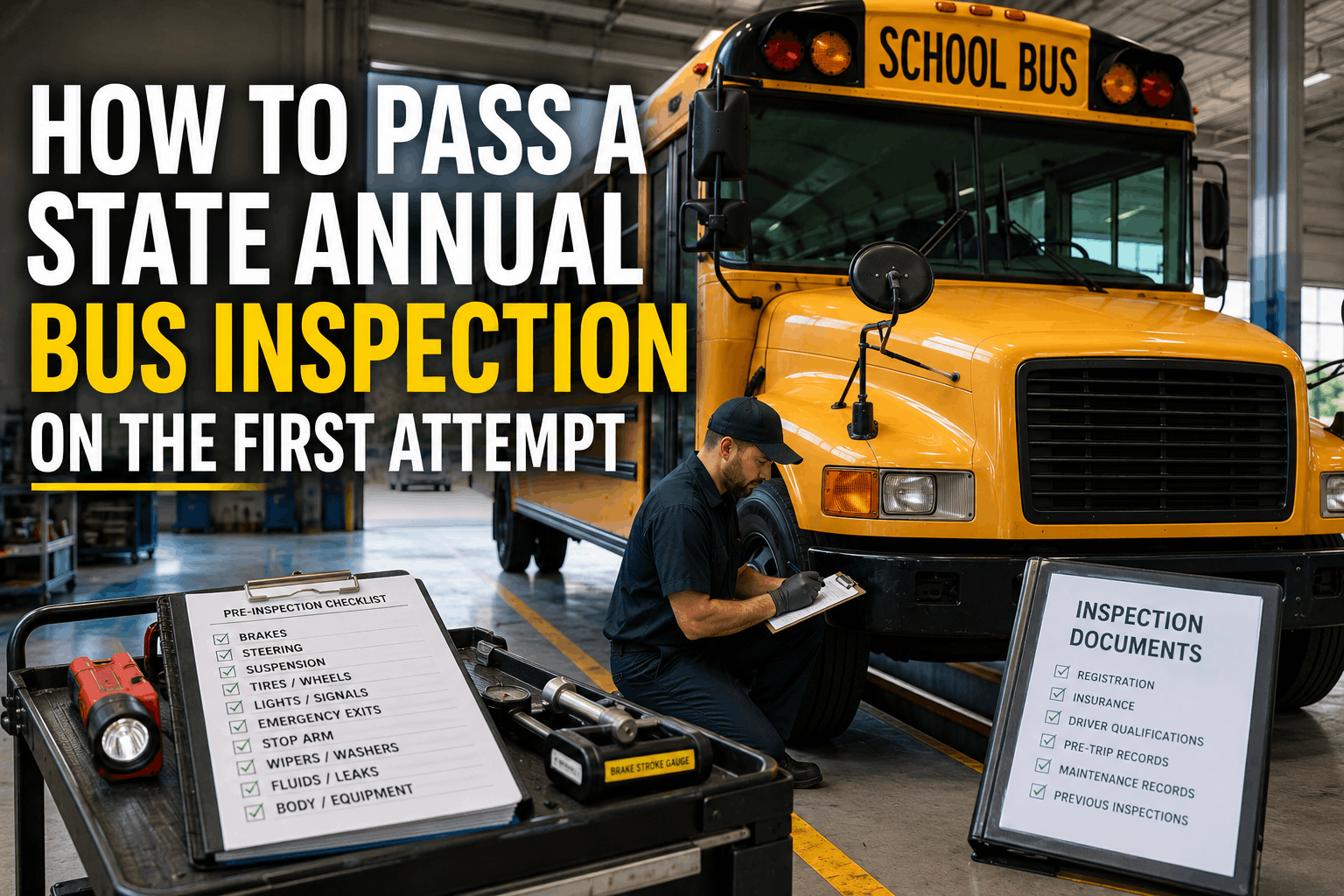
How to Pass a State Annual Bus Inspection on the First Attempt
Pass state annual bus inspections on the first try. Pre-inspect playbook, brake stroke measurement, lighting verification, photo evidence pack, paperwork.
Annual Bus Inspection: The Cost of a Comeback
State inspection failure rates for school buses range from 25–40% on the first attempt. Each comeback costs districts $500–$2,000 in mechanic overtime, re-inspection fees, and lost bus availability. A systematic pre-inspection process eliminates these risks.
25–40%
First-attempt failure rate
$500–$2,000
Average comeback cost per bus
8–12 hrs
Average downtime per failure
100%
Pass target with pre-inspection
Why Pre-Inspection Is Critical for Bus Fleets
Brake System Compliance
Brake stroke measurements, chamber sizing, and lining thickness are the top failure items. A pre-inspection brake check catches misadjustments before the inspector does.
Lighting & Electrical
Marker lights, stop arms, and warning systems must function perfectly. Pre-inspection walkarounds eliminate bulb-out failures that cause instant rejection.
Paperwork Accuracy
Incomplete or mismatched maintenance records cause administrative failures. A digital documentation trail proves every repair and inspection is current.
Steering & Suspension
Worn tie rods, ball joints, and shocks are safety-critical items. Pre-inspection checks identify wear before it becomes a violation.
Tire & Wheel Condition
Tread depth, inflation, and lug nut torque are scrutinized. A dedicated pre-inspection station ensures every wheel passes spec.
Exhaust & Emissions
Visible smoke or exhaust leaks fail visual inspection. Pre-testing identifies issues early and keeps the bus in the safety lane.
Pre-Inspection Progress Modules
Brake System & Adjustment
Measure pushrod stroke, verify chamber type, check lining wear. Target: 90% fleet readiness before inspection day.
Lighting & Signal Verification
Walk-around test of headlights, signals, stop arm, and warning lights. Fix bulb-outs and corroded sockets early.
Steering & Suspension Play
Check tie rod ends, ball joints, kingpins, and shock absorbers for excessive play. Replace worn components.
Tires, Wheels & Lug Nuts
Verify tread depth, air pressure, and torque all lug nuts to spec. Inspect sidewalls for cuts and bulges.
Exhaust System Integrity
Check for leaks, secure mounting, and tailpipe position. Run engine and listen for abnormal exhaust noise.
Paperwork & Digital Docs
Gather maintenance records, DOT forms, and prior inspection reports. Digitize everything for instant access at the lane.
Pre-Inspection Readiness by System
Pre-inspection drives readiness rates above 90% in most categories. Brakes, lighting, tires, and paperwork consistently reach near-perfect compliance. Steering and exhaust require additional attention.
Common State Inspection Failures & Fixes
Brake Adjustment Out of Spec
Solution: Measure and adjust pushrod stroke before inspection. Use a brake stroke indicator tool and record measurements for each wheel.
Inoperative Stop Arm Lights
Solution: Cycle the stop arm 10 times before inspection day. Replace any dim or flickering LEDs and test all microswitches.
Worn Tire Tread or Nails
Solution: Perform a tire tread depth check with a gauge. Remove any embedded objects and patch or replace tires below 4/32" remaining tread.
Exhaust Leak or Holes
Solution: Use a shop light to inspect the full exhaust run. Patch small holes with high-temp sealant; replace rusted sections and clamps.
Defective Windshield Wipers
Solution: Replace wiper blades if they streak or chatter. Top off washer fluid and verify spray pattern hits the glass within the swept area.
Missing or Illegible Placards
Solution: Verify DOT numbers, capacity placards, and emergency exit labels are present and legible. Replace any faded or peeling decals.
Pre-Inspection Photo Evidence Pack
Brake Stroke Measurements
Photograph the pushrod at full application with a ruler visible. Include the chamber type and date stamp.
Light Operation Video
Record a 30-second walk-around showing all exterior lights functioning, including stop arm and warning lights.
Tread Depth Gauge Shots
Capture tread depth readings on each tire with a gauge in the photo. Note position and measurement.
Steering & Suspension Close-Ups
Document tie rod ends, ball joints, and shock mounts. Show that boots are intact and no excessive play exists.
Exhaust System Overview
Capture the full exhaust path from manifold to tailpipe. Prove no visible leaks, holes, or insecure hangers.
Completed Inspection Form
Keep a pre-inspection checklist on a tablet or clipboard. Photograph the completed form as final proof of readiness.
Inspection Success KPIs
First-Attempt Pass Rate
Target: Above 95% for the fleet. Track per bus and per inspector. Rising rate indicates pre-inspection effectiveness.
Average Comeback Cost
Target: Below $200 per bus annually. Combine re-inspection fees, mechanic hours, and route disruption costs.
Pre-Inspection Completion
Target: 100% of buses pre-inspected 48 hours before scheduled state lane appointment.
Photo Evidence Coverage
Target: All required photos captured for each bus. Missing evidence correlates with higher failure probability.
Brake Adjustment Compliance
Target: Zero out-of-adjustment brakes found during state inspection. Track pushrod stroke measurements pre and post.
Inspection Readiness Scoring Matrix
Brakes & Adjustment (Weight: 30%)
Brake stroke, chamber type, lining condition, and ABS lamp check. Highest failure category; prioritize deep inspection here.
Lighting & Signals (Weight: 20%)
All exterior lights, stop arm, warning lights, and reflectors. Pre-inspect with two-person walk-around for 100% coverage.
Steering & Suspension (Weight: 20%)
Tie rods, drag links, ball joints, kingpins, shocks. Lift the axle and use a pry bar to detect any looseness.
Tires & Wheels (Weight: 15%)
Tread depth, inflation, lug nut torque, sidewall condition. Measure and document every tire before the inspection.
Exhaust & Emissions (Weight: 10%)
Leaks, smoke, mounting, tailpipe position. Run engine at high idle and inspect visually and audibly.
Documentation Pack (Weight: 5%)
Maintenance records, previous inspections, DVIR logs. Digital format preferred; ensure easy retrieval for the inspector.
Using a pre-inspection playbook and photo evidence pack, our 150-bus fleet improved first-attempt pass rates from 68% to 98% in one inspection cycle. The digital documentation alone cut administrative comebacks by 80%.
Streamline Your Inspection Prep With Digital Tools
BusCMMS helps transportation teams build pre-inspection checklists, capture photo evidence, track brake measurements, and maintain inspection-ready records. Schedule a demo to see how we reduce inspection failures and eliminate paperwork panic.
State Annual Bus Inspection FAQs
What are the most common reasons buses fail state inspection?
Brake adjustment out of spec, inoperative lights, worn tires, exhaust leaks, and missing paperwork are the top five failure items. A thorough pre-inspection catches most issues before the official lane.
How far in advance should pre-inspection begin?
Start comprehensive pre-inspections at least two weeks before the scheduled date. This allows time to order parts, complete repairs, and re-verify any corrective actions.
What brake stroke measurement is acceptable?
Maximum pushrod stroke varies by chamber size and type. Most states require 1.5 inches or less for standard type-30 chambers at 90–100 psi. Always consult your state's specific commercial vehicle inspection manual.
Do I need photo evidence for every bus?
While not mandatory, photo evidence protects your fleet from disputed failures. Photographing brake stroke measurements, light function, and tread depth creates an audit trail that speeds re-inspection if needed.
How can fleet management software help with inspections?
Software like BusCMMS provides digital pre-inspection checklists, stores photo attachments, tracks maintenance history, and generates ready-to-print reports that inspectors accept. It eliminates lost paperwork and incomplete records.
What paperwork must be present at the inspection lane?
Typical requirements include current registration, insurance, DOT annual inspection form, prior inspection reports, and preventive maintenance records. Check your state's specific documentation list and organize it digitally.
First-Attempt Inspection Pass Is a Process
Passing a state annual bus inspection on the first try is the result of a disciplined pre-inspection routine, not luck. Start with brake stroke measurements and lighting verification, build a photo evidence pack for every bus, and maintain digital documentation that inspectors trust. Districts that implement these steps regularly achieve first-attempt pass rates above 95% and eliminate expensive comebacks. When combined with a fleet management platform that automates checklists and recordkeeping, the annual inspection becomes a predictable event rather than a stressful scramble.