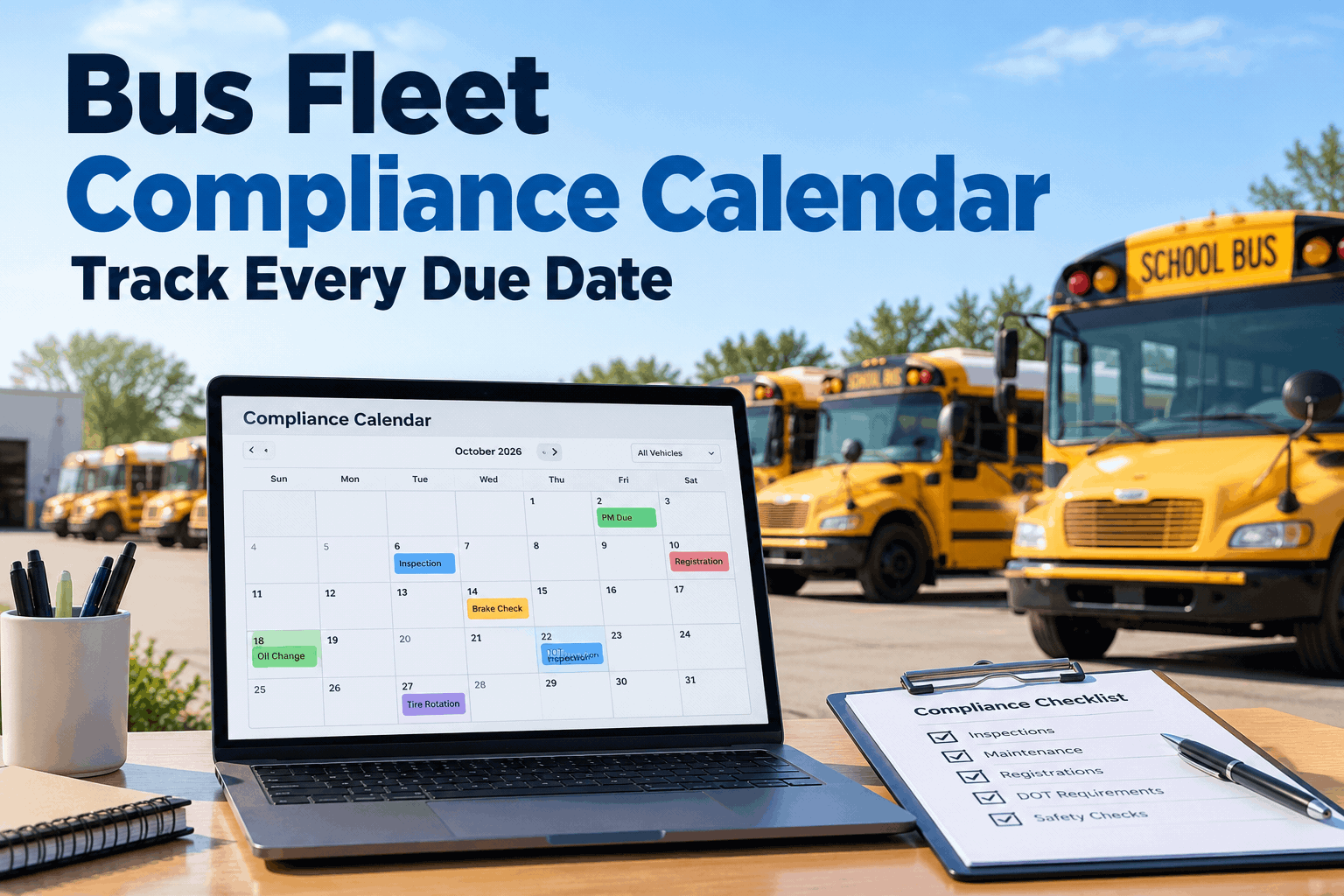
A single bus breakdown during peak service hours costs transit agencies an average of $1,200–$2,500 in direct expenses before factoring in passenger delays, replacement vehicle deployment, and reputational damage. For school districts, an unexpected failure can leave students stranded and parents questioning operational competence. Yet despite these consequences, industry data reveals that 68% of bus fleet maintenance remains reactive, with organizations responding to failures rather than preventing them.
The math is unforgiving: reactive maintenance costs 3–5x more than preventive interventions, while fleets operating without structured preventive maintenance programs experience 40–60% more unplanned downtime than their proactive counterparts. As electric buses introduce new maintenance complexities and regulatory requirements intensify across North America, the UK and Australia, building a comprehensive preventive maintenance program for bus fleets has shifted from operational best practice to competitive necessity.
This guide provides the complete framework for developing, implementing, and optimizing a bus fleet maintenance strategy that reduces breakdowns, ensures compliance, and delivers measurable ROIwhether you're managing 15 school buses or 500 transit coaches. Ready to see how modern CMMS platforms streamline this process? Schedule a personalized demo to explore your options.
Why Preventive Maintenance Is Critical for Bus Fleets in 2026
The bus transportation landscape has fundamentally changed. Fleet managers now navigate challenges that didn't exist five years ago: electric bus battery management, increasingly stringent emissions compliance, technician shortages driving labor costs up 18% since 2022, and supply chain disruptions extending parts lead times from days to weeks. In this environment, waiting for components to fail isn't just expensive—it's operationally catastrophic.
Preventive maintenance addresses these challenges systematically. By servicing assets based on manufacturer intervals, usage patterns, and condition monitoring rather than failure events, transit fleet maintenance management shifts from crisis response to planned optimization. The benefits compound across every operational dimension: vehicle availability increases 15–25%, maintenance costs decrease 20–35%, compliance violations drop by 60–80%, and asset lifespan extends by 20–40%.
For organizations transitioning to electric buses, structured preventive maintenance becomes even more critical. EV powertrains eliminate oil changes and reduce brake wear through regenerative braking, but introduce high-voltage system inspections, battery health monitoring, and charging infrastructure maintenance that require disciplined scheduling. Without a comprehensive electric bus maintenance plan, agencies risk voiding manufacturer warranties worth $150,000–$300,000 per battery pack. Learn more about tracking critical EV maintenance data to protect your investment.
The Compliance Imperative
Regulatory frameworks are tightening globally. In the US, FMCSA requires systematic inspection and maintenance programs for commercial motor vehicles. The FTA mandates documented maintenance for grant-funded transit buses. Canada's NSC Standard 11 establishes preventive maintenance requirements, while Australia's Heavy Vehicle National Law requires maintenance management systems for operators. Non-compliance triggers audit findings, funding delays, insurance complications, and potential operational shutdowns. A properly structured preventive maintenance program isn't optional—it's your compliance foundation.
Step-by-Step Framework: Building Your Preventive Maintenance Program
Developing an effective bus fleet maintenance strategy requires systematic planning across six interconnected phases. Each builds upon the previous, creating a comprehensive system that addresses both immediate maintenance needs and long-term operational optimization.
Asset Inventory and Documentation
Effective preventive maintenance starts with comprehensive asset documentation. You cannot maintain what you haven't inventoried. For each vehicle, document:
- Vehicle identification (VIN, unit number, license plate)
- Make, model, year, and chassis type
- Powertrain configuration (diesel, CNG, hybrid, electric)
- Current mileage/hours and acquisition date
- OEM maintenance schedules and warranty terms
- Component serial numbers (engine, transmission, battery packs)
- Historical maintenance records (if transitioning from paper)
Extend this inventory to support equipment: chargers, diagnostic tools, lifts, and shop equipment that require their own maintenance schedules. This asset foundation enables every subsequent planning step.
Failure Mode Analysis
Before establishing service intervals, analyze what actually fails in your fleet. Review 12–24 months of repair records to identify:
- Most frequent failure types by system (brakes, HVAC, electrical, drivetrain)
- Failures by vehicle age, mileage, and operating conditions
- Catastrophic vs. minor failure patterns
- Failures that could have been prevented with earlier intervention
- Seasonal or route-specific failure correlations
This analysis reveals where preventive attention delivers the greatest impact. If 40% of your roadside failures involve cooling system issues, prioritizing coolant inspections and hose replacements generates immediate returns. Data-driven prioritization ensures your fleet preventive maintenance schedule addresses actual risk rather than theoretical concerns. Understanding common electric bus failure modes helps you anticipate problems before they occur.
Service Interval Planning
Develop tiered service schedules that align OEM requirements with operational realities:
Level A: Daily/Pre-Trip
Driver inspections: lights, tires, fluid levels, safety equipment, DVIR documentation
Level B: Weekly/Bi-Weekly
Tire pressure verification, fluid top-offs, battery connections, interior cleaning/inspection
Level C: Monthly
Brake inspections, belt/hose checks, steering components, HVAC filter service
Level D: Quarterly/Mileage
Oil changes, transmission service, comprehensive safety inspections, DOT prep
Level E: Annual/Major
Annual DOT inspection, major component overhauls, warranty compliance service
For mixed fleets, create separate schedules for diesel and electric buses. Electric vehicles require different intervals—battery health assessments, high-voltage cable inspections, and charging system maintenance replace traditional powertrain services.
Compliance Mapping
Map every regulatory requirement to your maintenance schedule to ensure nothing falls through cracks:
- Federal requirements: Annual DOT inspections, FMCSA maintenance documentation, ADA equipment checks
- State/provincial requirements: Emissions testing, safety inspections, school bus-specific mandates
- Grant compliance: FTA maintenance requirements for federally-funded vehicles
- Insurance requirements: Documentation standards for coverage maintenance
- OEM warranty terms: Service intervals required to maintain warranty coverage
Build compliance checkpoints directly into your work order workflows so regulatory requirements are satisfied automatically through routine maintenance rather than requiring separate tracking systems. For a comprehensive compliance checklist, review our electric bus fleet audit checklist that covers all inspection requirements.
Work Order Workflows
Establish standardized processes for maintenance execution:
- Work order generation: Automatic creation based on mileage, hours, or calendar triggers
- Assignment protocols: Routing to qualified technicians based on skill requirements
- Parts integration: Automatic parts reservation when work orders generate
- Documentation standards: Required fields, photos, measurements, and sign-offs
- Quality verification: Supervisor review before returning vehicles to service
- Record retention: Compliant archiving for audit and legal requirements
Manual workflow management becomes unsustainable beyond 20–30 vehicles. Bus fleet maintenance software automates these processes, ensuring consistent execution regardless of which technician performs the work or which supervisor is on duty. Establishing clear standard operating procedures for fleet maintenance ensures every team member follows the same protocols.
KPI Tracking and Continuous Improvement
Establish metrics that measure program effectiveness and drive ongoing optimization:
- PM Compliance Rate: Percentage of scheduled services completed on time (target: 95%+)
- Preventive vs. Corrective Ratio: Proportion of planned vs. unplanned work orders (target: 70/30)
- Mean Time Between Failures (MTBF): Average operating time between breakdowns
- Vehicle Availability: Percentage of fleet ready for service (target: 90%+)
- Cost Per Mile: Total maintenance expenditure divided by miles operated
- Repeat Repair Rate: Same issue recurring within 30 days (target: under 5%)
Review these metrics monthly. Declining PM compliance signals scheduling or resource issues. Rising corrective work indicates PM intervals need adjustment. Data-driven refinement transforms your preventive maintenance program from static checklist to dynamic optimization system. Discover how to leverage fleet maintenance reporting and analytics for continuous improvement.
Building a preventive maintenance program from scratch? BusCMMS provides the complete platform—asset tracking, automated scheduling, compliance documentation, and KPI dashboards designed specifically for bus fleet operations.
Electric Bus Preventive Maintenance Considerations
Electric buses require fundamentally different preventive maintenance approaches than diesel vehicles. While EVs eliminate many traditional service requirements—oil changes, transmission fluid, exhaust system maintenance—they introduce new critical systems that demand specialized attention.
Your electric bus maintenance plan must address these EV-specific requirements:
Battery System Maintenance
- Monthly State of Health (SOH) documentation
- Cell balancing verification
- Thermal management system inspection
- Battery enclosure integrity checks
- Charging pattern analysis for degradation trends
High-Voltage Safety
- Orange HV cable inspection (daily visual, monthly detailed)
- Isolation resistance testing (quarterly)
- HV connector integrity verification
- Warning label condition assessment
- Emergency disconnect functionality testing
Charging Infrastructure
- Charger connector inspection and cleaning
- Cable condition assessment
- Firmware update management
- Error log review and resolution
- Electrical panel inspections
Technician Requirements
- HV certification tracking and renewal
- PPE inspection and documentation
- OEM-specific training compliance
- Work assignment based on qualifications
- Emergency response procedure training
Critical consideration: Most EV battery warranties require documented maintenance at specified intervals. Missing a single required service can void coverage worth $150,000–$300,000 per pack. CMMS for bus fleets with EV-specific capabilities automates these tracking requirements, ensuring warranty compliance while building the documentation trail necessary for claims. Start your free account today to begin tracking EV maintenance requirements immediately.
Common Preventive Maintenance Mistakes Fleet Managers Make
Using One-Size-Fits-All Intervals
Applying identical PM schedules to all vehicles regardless of age, mileage, or operating conditions wastes resources on newer vehicles while under-serving older ones. Segment your fleet and adjust intervals based on actual usage patterns and failure history.
Tracking Mileage But Not Hours
Urban transit buses with frequent stops accumulate engine hours faster than highway mileage suggests. School buses idling for student loading stress components differently than over-the-road coaches. Track both metrics and trigger PM based on whichever threshold arrives first.
Incomplete Documentation
Recording that service was performed without documenting what was found, measured, or replaced undermines the program's value. Require technicians to log specific measurements, part numbers, and observations that inform future maintenance decisions.
Ignoring Driver-Reported Issues
Drivers experience vehicle behavior daily. When their reported concerns aren't investigated promptly, small issues escalate to major failures—and driver engagement with inspection programs deteriorates. Build rapid response into your workflow.
Deferring PM During Busy Periods
Postponing scheduled maintenance when vehicles are needed most creates compounding risk. The vehicle most likely to fail is often the one with deferred service. Build schedule buffers and maintain spare ratios that allow PM completion without service disruption.
Relying on Spreadsheets Beyond Scale
Spreadsheet-based tracking works for very small fleets but fails as complexity grows. By 25–30 vehicles, manual tracking consumes excessive administrative time, misses scheduled services, and lacks the reporting capabilities needed for optimization and compliance demonstration.
Manual Maintenance vs. CMMS-Driven Maintenance
The choice between manual tracking and bus fleet maintenance software fundamentally shapes program effectiveness. Understanding the operational differences helps fleet managers make informed technology decisions.
| Capability | Manual/Spreadsheet | CMMS Platform |
|---|---|---|
| PM Scheduling | Manual calendar tracking; relies on administrator vigilance | Automatic triggers by mileage, hours, or date; zero missed services |
| Work Order Management | Paper forms or basic digital; limited routing capabilities | Automated generation, assignment, and tracking with full audit trail |
| Parts Integration | Separate inventory system; manual coordination required | Integrated inventory with automatic reservation and reorder alerts |
| Compliance Documentation | Requires manual compilation for audits; time-intensive | One-click report generation; always audit-ready |
| KPI Tracking | Manual calculation; often outdated by time of review | Real-time dashboards with trend analysis and alerts |
| Multi-Location Management | Difficult to maintain consistency; siloed information | Centralized visibility with location-specific access controls |
| Technician Accountability | Limited visibility into work quality and timing | Time stamps, photos, digital signatures, supervisor review workflows |
| Scalability | Administrative burden grows linearly with fleet size | Marginal effort increase as fleet expands |
The inflection point typically occurs around 25–30 vehicles. Below this threshold, disciplined manual processes can function adequately, though they still require significant administrative time. Above this threshold, manual tracking becomes unsustainable—missed services multiply, compliance documentation gaps emerge, and the administrative burden prevents focus on actual maintenance improvement.
For organizations operating electric buses, CMMS becomes essential regardless of fleet size. The complexity of EV-specific maintenance requirements, warranty documentation obligations, and high-voltage safety tracking exceeds practical manual management capabilities. The question isn't whether to implement transit fleet maintenance management software, but which platform best addresses your specific operational requirements.
See how BusCMMS compares to your current maintenance tracking approach. Our specialists will analyze your fleet operations and demonstrate exactly how automated PM scheduling can reduce your administrative burden while improving compliance.
ROI and Cost-Saving Analysis
Preventive maintenance programs deliver measurable financial returns. Understanding the cost dynamics helps justify investment and set realistic expectations.
Sample ROI Calculation: 50-Bus Fleet
Downtime Reduction
30% fewer unplanned breakdowns × $1,500 avg. incident cost × 80 annual incidents = $36,000 saved
Extended Component Life
15% longer brake life + 20% longer tire life + 10% extended HVAC service = $18,000 saved
Labor Efficiency
25% reduction in emergency overtime + improved first-time fix rates = $12,000 saved
Compliance Cost Avoidance
Eliminated audit findings, reduced insurance premiums, avoided penalties = $8,000 saved
Total Annual Savings: $74,000
Less CMMS Investment: ~$12,000–$18,000/year
Net Annual Benefit: $56,000–$62,000
ROI: 310–420% | Payback Period: 3–4 months
These figures represent conservative estimates based on industry averages. Fleets with older vehicles, challenging operating conditions, or currently high reactive maintenance ratios often see greater returns. The key insight: preventive maintenance doesn't cost money—poor maintenance costs money. Structured PM programs redirect those costs toward planned, efficient interventions rather than emergency responses.
Implementation Timeline
Foundation Setup
Complete asset inventory, import into CMMS, configure user accounts and permissions, establish PM schedules based on OEM requirements.
Workflow Configuration
Define work order templates, configure approval workflows, integrate parts inventory, establish documentation standards.
Team Training
Train technicians on work order execution, train drivers on digital DVIR completion, train supervisors on approval and reporting functions.
Parallel Operation
Run new system alongside existing processes, verify data accuracy, refine procedures based on user feedback.
Full Operation & Optimization
Transition fully to CMMS-driven maintenance, begin KPI tracking, implement continuous improvement based on data insights.
Frequently Asked Questions
What is the ideal preventive-to-corrective maintenance ratio for bus fleets?
Industry best practice targets 70% preventive and 30% corrective maintenance. World-class operations achieve 80/20 ratios. If your fleet operates below 60% preventive, significant improvement opportunity exists. Track this ratio monthly—it's your primary indicator of program maturity and effectiveness.
How do preventive maintenance requirements differ for electric buses versus diesel?
Electric buses eliminate oil changes, transmission service, and exhaust maintenance but introduce battery health monitoring, high-voltage system inspections, and charging infrastructure maintenance. Overall PM frequency may decrease, but individual tasks require specialized technician certification and more rigorous documentation for warranty compliance.
What PM compliance rate should we target?
Target 95% or higher PM compliance—completing scheduled services within their defined windows. Rates below 90% indicate scheduling conflicts, resource constraints, or system issues requiring attention. Below 80% signals fundamental program problems that will manifest as increased breakdowns and compliance gaps.
How long does it take to see ROI from a preventive maintenance program?
Most fleets see measurable improvements within 90 days: reduced emergency repairs, fewer roadside failures, and improved parts availability. Full financial ROI typically materializes within 6–12 months as component life extensions and systematic efficiency gains compound. CMMS implementations typically achieve payback within 3–4 months.
What documentation is required for DOT/FMCSA compliance?
FMCSA requires systematic inspection, repair, and maintenance records including: identification of the vehicle, dates of inspection/repair, nature of inspection/repair, and signature of person performing the work. Records must be retained for 12 months and be available for inspection. A properly configured CMMS satisfies these requirements automatically through normal operation.
Should PM intervals be based on mileage, time, or engine hours?
Use whichever threshold arrives first. Urban transit with frequent stops accumulates hours faster than mileage; school buses may sit idle seasonally while time-based degradation continues. Configure your system to track all three metrics and trigger service at the first threshold reached for each maintenance type.
How do we maintain preventive maintenance during peak service periods?
Build schedule buffers by completing PM services slightly early rather than at exact thresholds. Maintain adequate spare ratios (typically 10–15% of active fleet). Schedule intensive services during known low-demand periods. Never defer safety-critical PM regardless of operational pressure—the failure risk exceeds the inconvenience of temporary service reduction.
What's the minimum fleet size that justifies CMMS investment?
While any fleet benefits from systematic tracking, the administrative efficiency gains become compelling around 20–25 vehicles. Below this threshold, disciplined spreadsheet processes can function. Above it, manual tracking consumes disproportionate time while delivering inferior results. For fleets with electric buses, CMMS becomes essential regardless of size due to documentation complexity.
Building an effective preventive maintenance program for bus fleets requires systematic planning, consistent execution, and continuous refinement based on operational data. The framework presented here—asset inventory, failure analysis, interval planning, compliance mapping, workflow standardization, and KPI tracking—provides the foundation for transforming maintenance from reactive cost center to strategic operational advantage.
The stakes have never been higher. Electric bus complexity, regulatory scrutiny, and operational cost pressures make structured preventive maintenance essential rather than optional. Organizations that invest in proper programs and supporting technology will reduce bus downtime, extend asset life, ensure compliance, and ultimately deliver better service at lower cost. Those that don't will continue paying the premium for reactive maintenance while watching better-prepared competitors gain ground.
Ready to Build Your Preventive Maintenance Program?
BusCMMS provides everything you need: asset management, automated PM scheduling, compliance tracking, and analytics dashboards designed specifically for bus fleet operations.