The air compressor and air tank are the heart of the bus air brake system. A failed compressor means no air pressure—and no brakes. A waterlogged air tank can freeze in winter or send moisture through the brake system, causing corrosion and valve failure. A malfunctioning governor can cause over-pressurization or under-pressurization, both of which compromise brake performance. This comprehensive bus air compressor and tank inspection checklist covers compressor output, governor cut-in and cut-out pressures, tank drainage, air dryer cartridge condition, safety valve testing, and air system leak-down. Use it as your standard procedure for every air system PM and annual DOT inspection.
Air System Safety Guide 2026
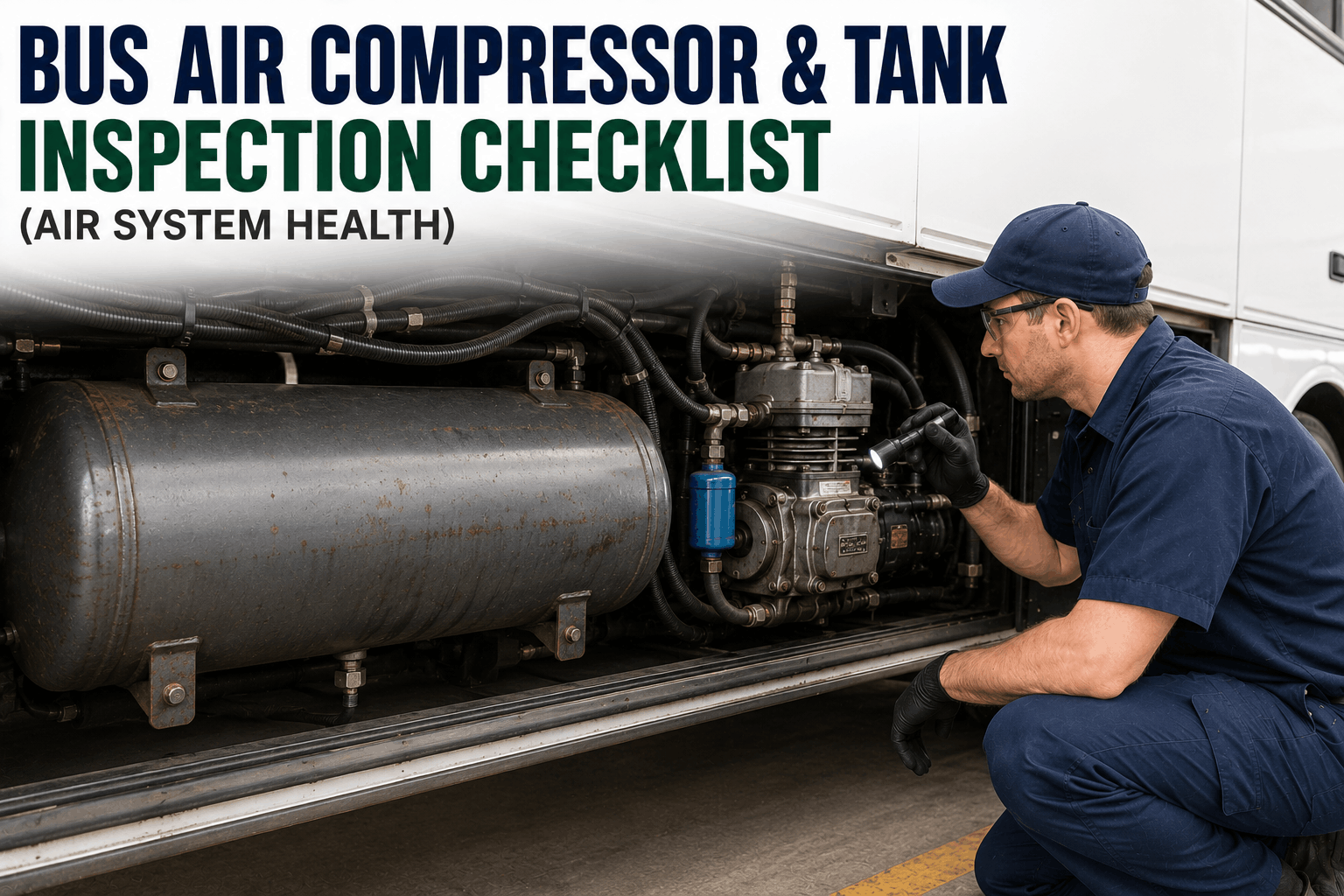
Bus Air Compressor & Tank Inspection Checklist (Air System Health)
Bus air compressor and tank inspection workflow. Compressor output, governor cut-in/cut-out, tank drainage, air dryer cartridge and safety valve testing.
Why Air Compressor and Tank Inspections Are Critical: The Brake Safety Reality
The air brake system is the most critical safety system on any bus. Air brakes rely on compressed air to apply braking force—without adequate air pressure, the brakes will not function. The air compressor is responsible for building and maintaining air pressure. The air tanks store compressed air for brake applications. The air dryer removes moisture that would otherwise cause corrosion and freeze-ups. The most common air system failures include: compressor failure (no or low pressure), governor malfunction (incorrect cut-in/cut-out), waterlogged or frozen tanks, failed air dryer (moisture in system), and safety valve failure.
FMCSA roadside inspection data shows that brake system violations are the #1 cause of out-of-service orders. Many of these violations are related to air system issues—low air pressure, excessive leak-down, and moisture in the system. A structured air compressor and tank inspection process is the most effective way to prevent brake system failures and ensure stopping power.
Air System Components: The Complete Breakdown
Air Compressor
Builds compressed air for the brake system. Inspect for output pressure, noise, and oil leaks. Compressor should build to governor cut-out (typically 120-140 psi). Listen for unusual knocking or grinding.
Air Governor
Controls compressor cut-in and cut-out pressures. Cut-out typically 120-140 psi. Cut-in typically 100-115 psi. Malfunctioning governor causes over- or under-pressurization.
Air Tanks
Store compressed air for brake applications. Inspect for corrosion, leaks, and damage. Drain moisture daily. Check tank mounting and integrity.
Air Dryer
Removes moisture and contaminants from compressed air. Inspect cartridge condition. Replace cartridge at manufacturer intervals. Check purge valve operation.
Safety Valve
Relieves excess pressure to prevent tank rupture. Test manually—valve should release air when pulled. Valve should reseat properly. Replace if stuck or leaking.
Air Lines and Fittings
Carry compressed air through the system. Inspect for chafing, cracking, or leaks. Check fittings for tightness. Replace damaged lines.
Air Compressor and Tank Inspection Checklist: The Complete Inspection
This comprehensive air system inspection checklist covers every major component. Use it during every air system PM service, brake inspection, and annual DOT inspection.
Air System Performance Trends
The chart above shows air compressor output performance over time. Compressor output should remain stable or increase with proper governor adjustment. Any decline in output pressure indicates compressor wear, intake restriction, or governor issues that require immediate attention. Regular testing and documentation of compressor output helps identify air system deterioration before it affects brake performance.
Common Air System Issues and Root Causes
Slow Air Build-Up
Cause: Worn compressor, intake restriction, or excessive leaks. Fix: Test compressor output. Check intake air filter. Inspect for leaks. Replace worn compressor.
Excessive Leak-Down
Cause: Leaking hoses, fittings, valves, or brake chambers. Fix: Identify leaks with soapy water or ultrasonic detector. Replace leaking components. Re-test leak-down.
Water in Air System
Cause: Failed air dryer, infrequent tank draining, or compressor bypass. Fix: Replace air dryer cartridge. Drain tanks daily. Check compressor unloader for leaks.
Governor Malfunction
Cause: Sticking valve, incorrect adjustment, or contamination. Fix: Clean or replace governor. Verify cut-in and cut-out pressures. Adjust if adjustable.
Compressor Oil Carryover
Cause: Worn compressor rings, failed separator, or overfilled oil level. Fix: Inspect compressor. Replace if worn. Check oil separator. Verify oil level.
Safety Valve Leak
Cause: Worn valve seat, debris, or over-pressurization. Fix: Test safety valve. Replace if leaking. Verify governor cut-out pressure.
We implemented this air system inspection checklist across our 95-bus fleet. In the first year, we caught 14 compressors with declining output, 8 governor malfunctions, and 22 air dryer cartridges that were past their service life. We also identified 36 air leaks during leak-down testing that were repaired before they became serious issues. Our brake system-related roadside violations dropped by 72%, and our brake system reliability improved significantly. The air system checks are now part of our weekly PM routine.
Digitize Your Air System Inspection Process
BusCMMS guides technicians through every air system inspection point—compressor output pressure, governor cut-in and cut-out, tank drainage, air dryer cartridge condition, safety valve testing, and leak-down verification. Auto-schedule air system PM intervals based on mileage. Complete audit trail for every air system component in your fleet.
Bus Air System FAQs
What is normal air pressure for a bus air brake system?
Normal air pressure for a bus air brake system is typically 120-140 psi at governor cut-out. Governor cut-in is typically 100-115 psi. Always verify your bus manufacturer's specific pressure requirements. Operating pressure below 100 psi may affect brake performance.
How often should air tanks be drained?
Air tanks should be drained daily—preferably at the end of each shift. Moisture accumulates in the tanks from normal compressor operation. Daily draining prevents water from entering brake system components and causing corrosion. Automatic tank drain systems are available.
What are the signs of a failing air compressor?
Signs include: slow air build-up (takes longer than 3 minutes to reach cut-out), excessive noise (knocking or grinding), oil in the air system, excessive moisture, and governor cycling constantly. Any of these symptoms should trigger immediate inspection.
How do I test for air system leaks?
Perform a static leak-down test: engine off, parking brake released, service brake applied. Air pressure should not drop more than 3 psi in 1 minute. Use soapy water or an ultrasonic leak detector to locate leaks. Repair all leaks found.
What is the air dryer and why is it important?
The air dryer removes moisture, oil, and contaminants from the compressed air. It protects brake system components from corrosion and freeze-ups. Replace the air dryer cartridge at manufacturer-specified intervals (typically every 50,000 miles or 2 years).
Can BusCMMS track air system inspection history?
Yes. BusCMMS tracks air pressure build-up times, governor cut-in/cut-out pressures, leak-down test results, air dryer cartridge replacement dates, and compressor repair history. This creates a complete air system history for each bus, helping identify wear patterns and predict maintenance needs before component failure occurs.
The Bottom Line
Bus air compressor and tank inspections are critical for brake system safety and reliability. The air brake system is the most important safety system on any bus—without adequate air pressure, the brakes will not function. Regular inspection of compressor output, governor operation, tank drainage, air dryer condition, safety valve function, and leak-down rate is the most effective way to ensure brake system reliability. This checklist provides the step-by-step procedure your technicians need to inspect every air system component—compressor, governor, tanks, air dryer, safety valves, and air lines. When combined with BusCMMS digital inspection forms, auto-scheduled PM intervals, and complete air system history tracking, your air system maintenance program becomes proactive—catching issues before they compromise brake performance or cause roadside violations.