The battery and charging system are the electrical lifeline of every bus. A failed battery can leave a bus stranded at the depot, and a failed alternator can shut down a bus on route. Corroded cables, loose connections, and failing voltage regulators cause intermittent electrical issues that are difficult to diagnose. This comprehensive bus battery and charging system inspection checklist covers battery voltage testing, specific gravity measurement, load testing, alternator output verification, voltage regulator function, and cable corrosion inspection. Use it as your standard procedure for every battery and charging system PM and pre-trip inspection.
Electrical System Guide 2026
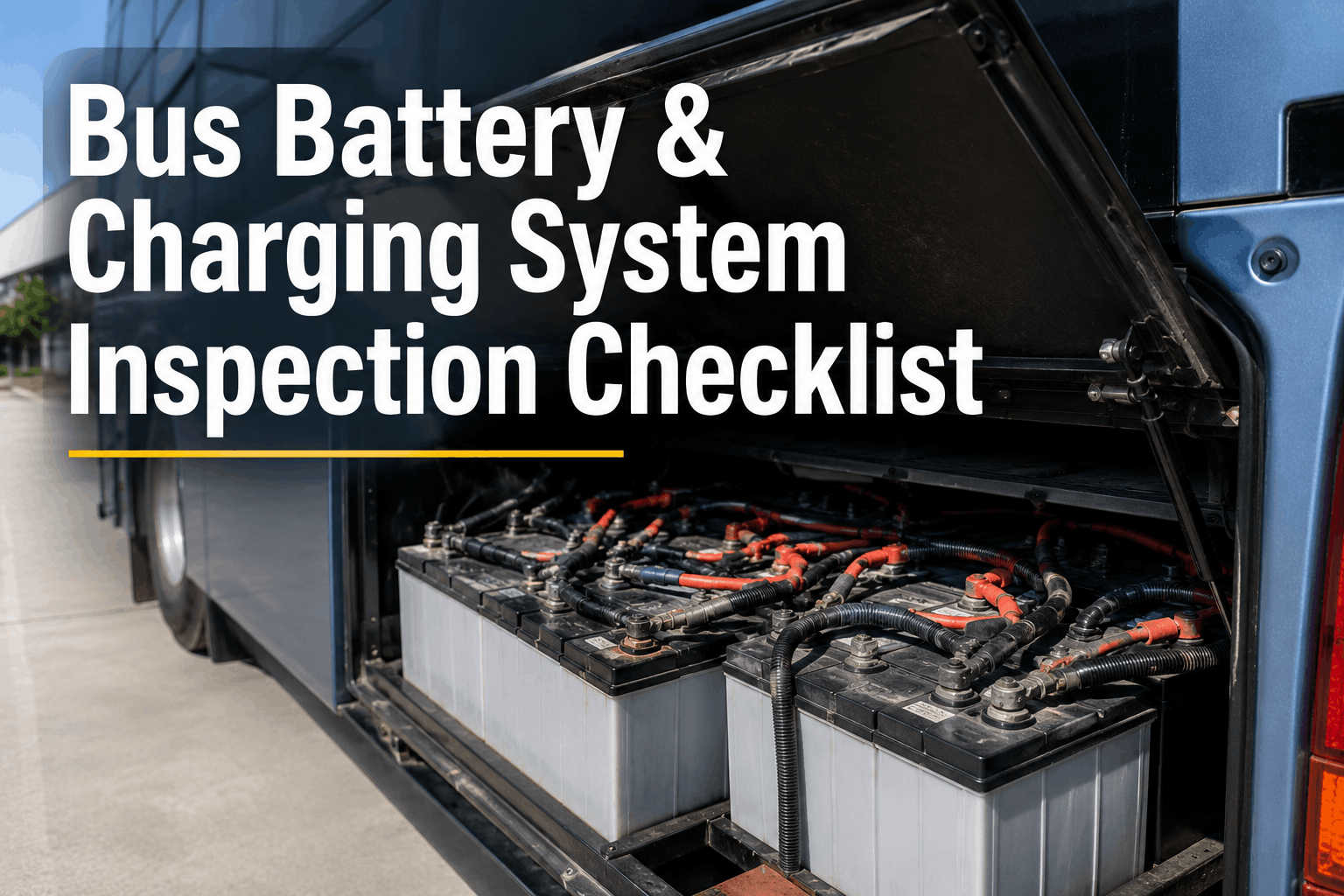
Bus Battery & Charging System Inspection Checklist
Bus battery and charging inspection workflow. Battery voltage, specific gravity, load test, alternator output, voltage regulator and cable corrosion checks.
Why Battery and Charging System Inspections Are Critical: The Electrical Reality
Battery and charging system failures are among the most common causes of bus breakdowns. A dead battery at the depot causes route delays. A failed alternator on the road causes complete electrical failure, loss of lights, and potential breakdown. The most common battery and charging system failures include: battery sulfation or internal short, low electrolyte level, corroded terminals or cables, failed alternator (no output), failed voltage regulator (overcharging or undercharging), and loose or damaged connections.
Heat is the #1 killer of batteries in bus fleets. Summer heat accelerates plate corrosion and evaporates electrolyte. A battery that tests at 80% capacity in spring may fail by August. Regular battery testing and charging system verification is the most effective way to prevent starting failures and electrical breakdowns.
Battery and Charging System Categories: The Complete Breakdown
Battery Voltage
Check resting voltage (12.6V+ for 12V systems, 25.2V+ for 24V systems). Voltage below specification indicates discharged or failing battery.
Specific Gravity
For serviceable batteries, check specific gravity with hydrometer. Readings should be between 1.225-1.265. Variations between cells indicate issues.
Load Test
Perform load test to check battery capacity. Replace any battery below 80% capacity. Load testing is the most reliable battery health indicator.
Alternator Output
Measure alternator output voltage. 12V systems: 13.5-14.5V. 24V systems: 27.0-29.0V. Check for AC ripple indicating diode failure.
Voltage Regulator
Verify voltage regulator maintains consistent output. Test with load applied (headlights, AC, defroster). Replace if voltage fluctuates.
Cable Corrosion
Inspect battery cables for corrosion at terminals and connections. Clean and protect terminals. Replace corroded cables.
Battery and Charging System Inspection Checklist: The Complete Inspection
This comprehensive battery and charging system inspection checklist covers every major component. Use it during every battery PM service, seasonal inspection, and annual DOT inspection.
Battery Health Compliance Rates
The chart above shows battery and charging system compliance rates by component. Load testing, voltage regulator function, cable condition, and ground connections have the lowest compliance rates—they are often overlooked during routine inspections. Batteries should be load tested at every PM service. Cables and grounds should be inspected for corrosion. Regular inspection and testing is the most effective way to prevent starting failures and electrical breakdowns.
Common Battery and Charging System Issues and Root Causes
Dead Battery
Cause: Sulfation, internal short, or excessive parasitic draw. Fix: Load test battery. Replace if below 80% capacity. Identify and repair parasitic draw.
Corroded Terminals
Cause: Battery acid vapor, moisture, or age. Fix: Clean terminals with baking soda solution. Apply dielectric grease. Replace cables if corroded.
Alternator Failure
Cause: Worn brushes, failed diodes, or bearing failure. Fix: Test alternator output. Check for AC ripple. Replace alternator if output is low or diodes failed.
Voltage Regulator Failure
Cause: Electrical failure or heat damage. Fix: Test regulator function under load. Replace if voltage fluctuates outside specification.
Poor Ground Connection
Cause: Corrosion, loose connection, or broken strap. Fix: Clean ground connections to bare metal. Tighten connections. Replace broken ground straps.
Slow Crank
Cause: Weak battery, poor connections, or failing starter. Fix: Load test battery. Check connections. Test starter draw. Address root cause.
We implemented this battery and charging system inspection checklist across our 95-bus fleet. In the first year, we caught 23 batteries that failed load testing, 12 alternators with failing diodes, 8 voltage regulator failures, and 34 corroded cable connections. We also identified 17 poor ground connections that were causing intermittent starting issues. Our battery and charging-related breakdowns dropped by 70% in year one. The checklist gives our technicians a systematic process for every battery and charging system inspection.
Digitize Your Battery and Charging System Inspection Process
BusCMMS guides technicians through every battery and charging system inspection point—battery voltage, specific gravity, load testing, alternator output, voltage regulator function, cable condition, and ground connection verification. Auto-schedule battery PM intervals based on mileage or calendar. Complete audit trail for every battery and charging system component in your fleet.
Bus Battery and Charging System FAQs
How often should bus batteries be tested?
Bus batteries should be tested at every preventive maintenance service (typically every 15,000–20,000 miles or 6 months). Load testing is recommended in spring and fall to catch batteries that may fail in extreme temperatures. Any battery below 80% capacity should be replaced immediately.
What is the correct alternator output voltage for a bus?
For 12V bus electrical systems, normal alternator output is 13.5–14.5V at idle and 1,500 RPM. For 24V systems, normal output is 27.0–29.0V. Output below specification indicates alternator or voltage regulator issues. Output above specification can damage batteries and electrical components.
What are the signs of a failing alternator?
Warning signs include: dim or flickering headlights, slow electrical accessories, dashboard warning light illuminated, battery not charging properly, unusual noise (whining or grinding) from alternator, and frequent battery drain. Regular alternator output testing catches these issues early.
How do I test battery specific gravity?
Use a hydrometer to test specific gravity in serviceable batteries. Fully charged cells should read 1.225-1.265. Variation between cells greater than 0.050 indicates a failing battery. Always wear safety glasses and gloves when handling battery acid.
What causes battery cable corrosion?
Battery cable corrosion is caused by battery acid vapor, moisture, and age. Acid vapor from the battery reacts with copper and moisture to form corrosion. Regular cleaning of terminals with baking soda solution and application of dielectric grease prevents corrosion.
Can BusCMMS track battery and charging system inspection history?
Yes. BusCMMS tracks battery test results, alternator output readings, voltage regulator checks, cable condition, and ground connection verification. This creates a complete electrical system history for each bus, helping identify battery life patterns and predict component failure.
The Bottom Line
Bus battery and charging system inspections are essential for electrical reliability and fleet uptime. A dead battery at the depot or a failed alternator on the road causes costly service delays and breakdowns. Regular inspection of battery voltage, specific gravity, load testing, alternator output, voltage regulator function, and cable corrosion is the most effective way to prevent starting failures and electrical breakdowns. This checklist provides the step-by-step procedure your technicians need to inspect every battery and charging system component. When combined with BusCMMS digital inspection forms, auto-scheduled PM intervals, and complete electrical history tracking, your battery and charging system maintenance program becomes proactive—catching issues before they cause starting failures or electrical breakdowns.